



A dandelion in an otherwise sound lawn and weeds forcing through a block-paved drive may look like the same problem. They are not. Choosing between selective versus total herbicide determines whether you remove the unwanted plant while retaining your grass, or clear every green plant the treatment reaches. Get that decision wrong and a quick weed-control job can become a reseeding project.
The reliable starting point is simple: use a selective herbicide where desirable grass must remain, and use a total herbicide only where complete vegetation control is the aim. Product labels, weather conditions and the growth stage of both weed and turf then determine whether the treatment performs as intended.
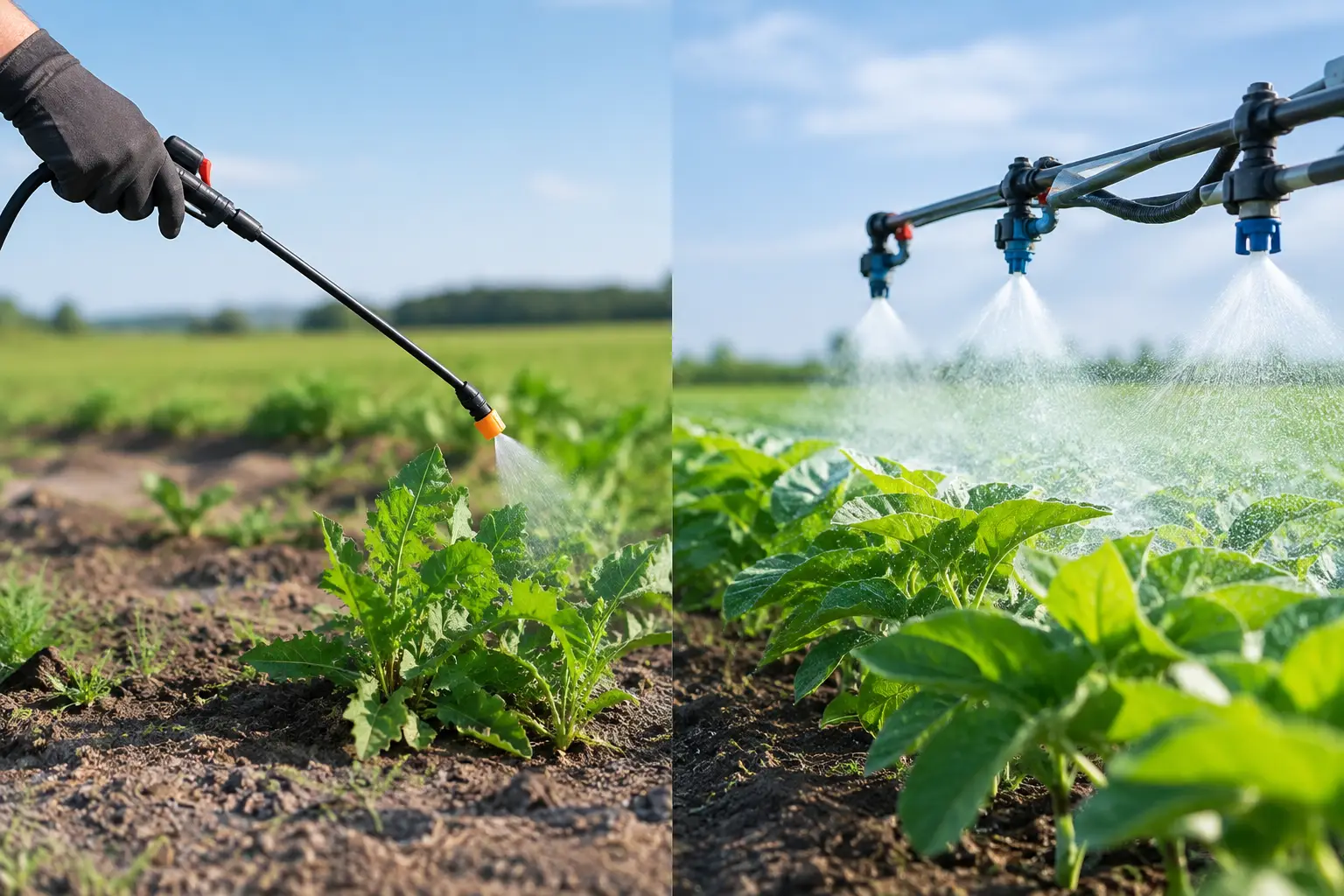
Selective versus total herbicide: the practical difference
A selective herbicide is engineered to control particular types of plant while leaving others largely unharmed when it is applied at the stated rate. Lawn weed killers are commonly formulated to target broadleaf weeds, including dandelions, daisies, clover, plantain and buttercups, without damaging established grasses. They exploit biological differences between broadleaf plants and grasses.
A total herbicide, also called a non-selective herbicide, controls a much wider range of vegetation. Glyphosate-based products are the familiar example. They are commonly used to clear annual and perennial weeds from paths, driveways, fence lines, neglected beds and areas being prepared for new landscaping. If it lands on actively growing lawn grass, ornamental plants or hedge foliage, it can damage or kill them too.
That does not mean total herbicide is a soil sterilant. Most systemic total herbicides act through green foliage and move within the plant to the roots. Once the spray has dried and the active ingredient has done its work in the soil, new growth can usually be established according to the product label. Always follow the stated waiting period before sowing or planting.
When selective herbicide is the right tool
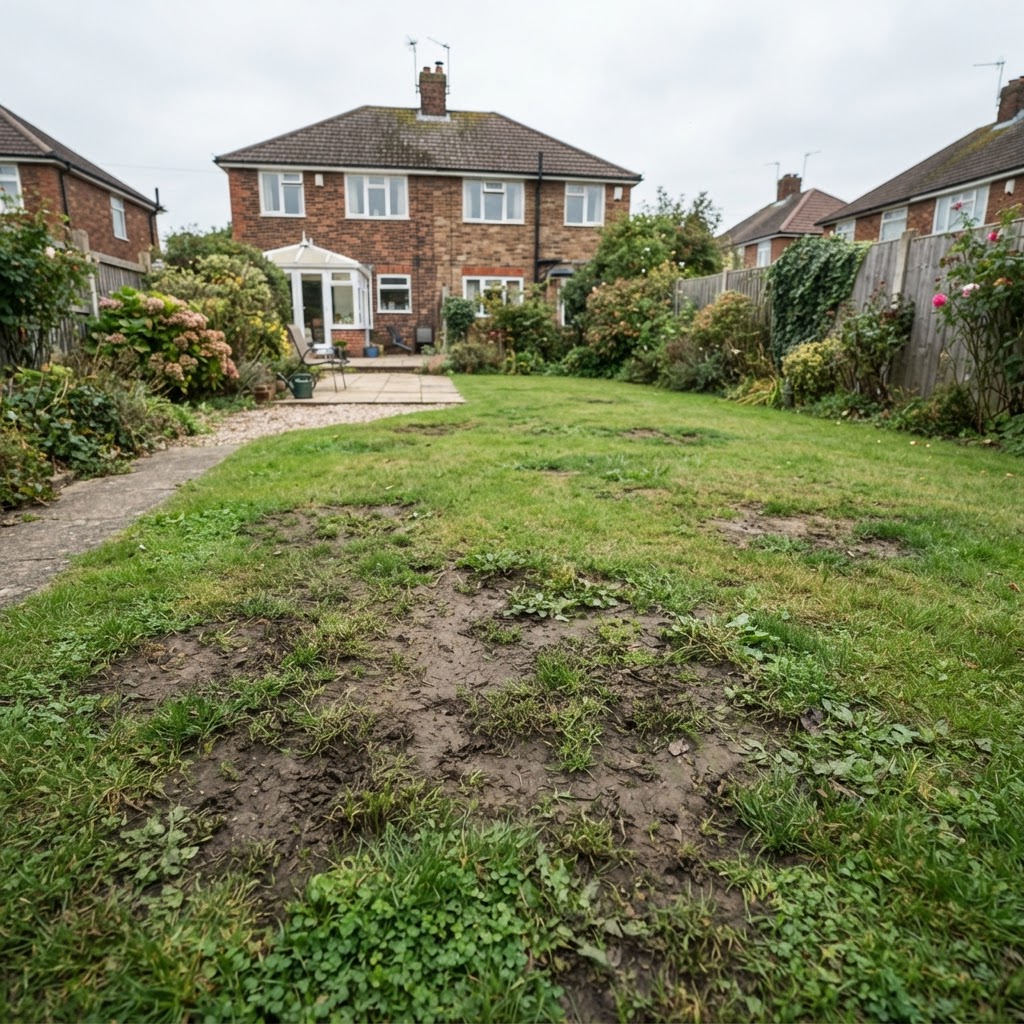
Selective treatment is for a lawn that is worth preserving. It is particularly useful where weeds are dispersed through established turf and hand removal would leave repeated holes or become impractical over a larger area.
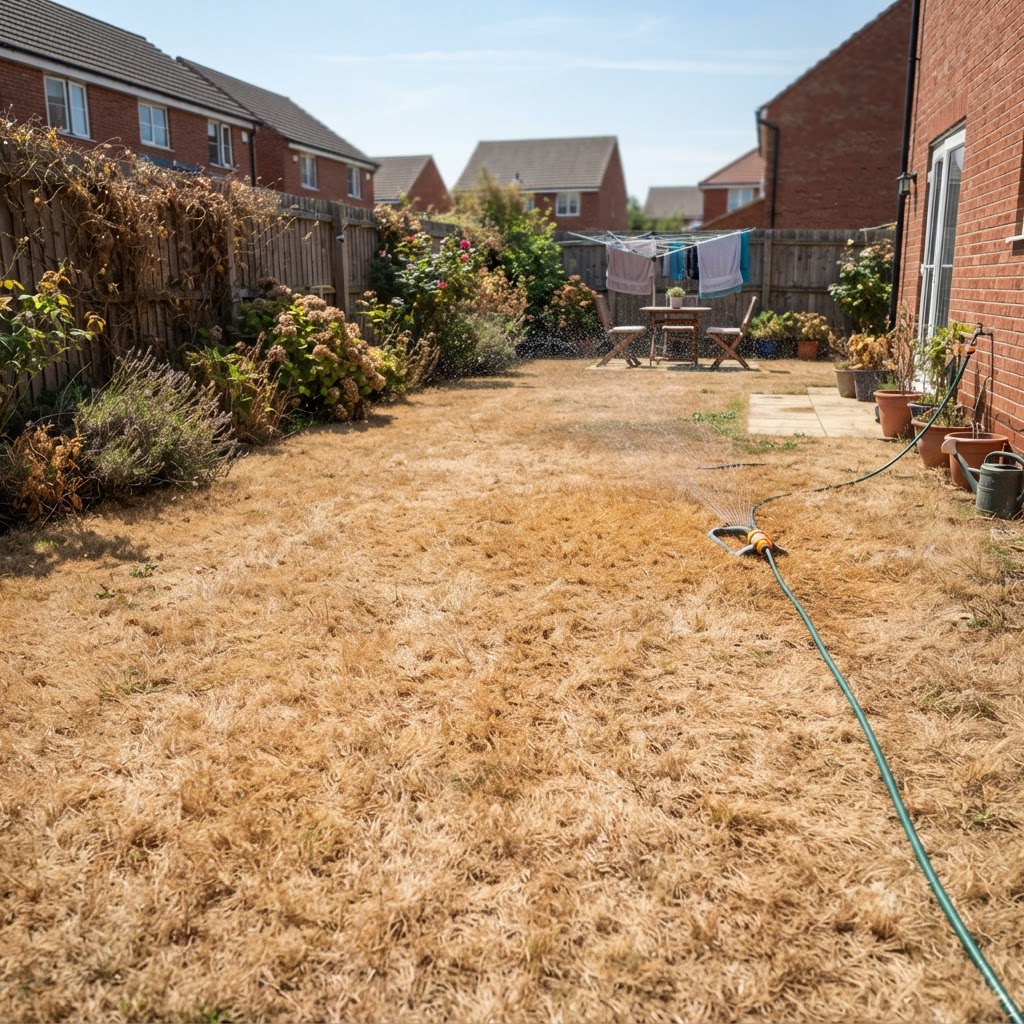
For best results, the grass should be actively growing, established and free from drought stress. The weeds also need enough leaf area to absorb the treatment. A mature rosette of dandelion or plantain presents a good target; freshly mown or weather-beaten foliage does not.
Avoid mowing immediately before application. Leaving the lawn for a few days before treatment gives weeds sufficient leaf surface. After treatment, allow the product time to translocate before mowing again. The exact interval varies by formulation, so the label is the working document rather than a general rule of thumb.
Selective herbicide is not normally suitable for newly sown grass or very young turf. Young seedlings can be more sensitive than mature lawns, and spraying too early may check establishment. If a new lawn has weeds, the sensible approach is often to mow regularly until the grass has rooted and thickened, then treat at the approved stage. A dense, well-fed sward is the best long-term defence because it limits the light and space available to weeds.
What selective products will not solve
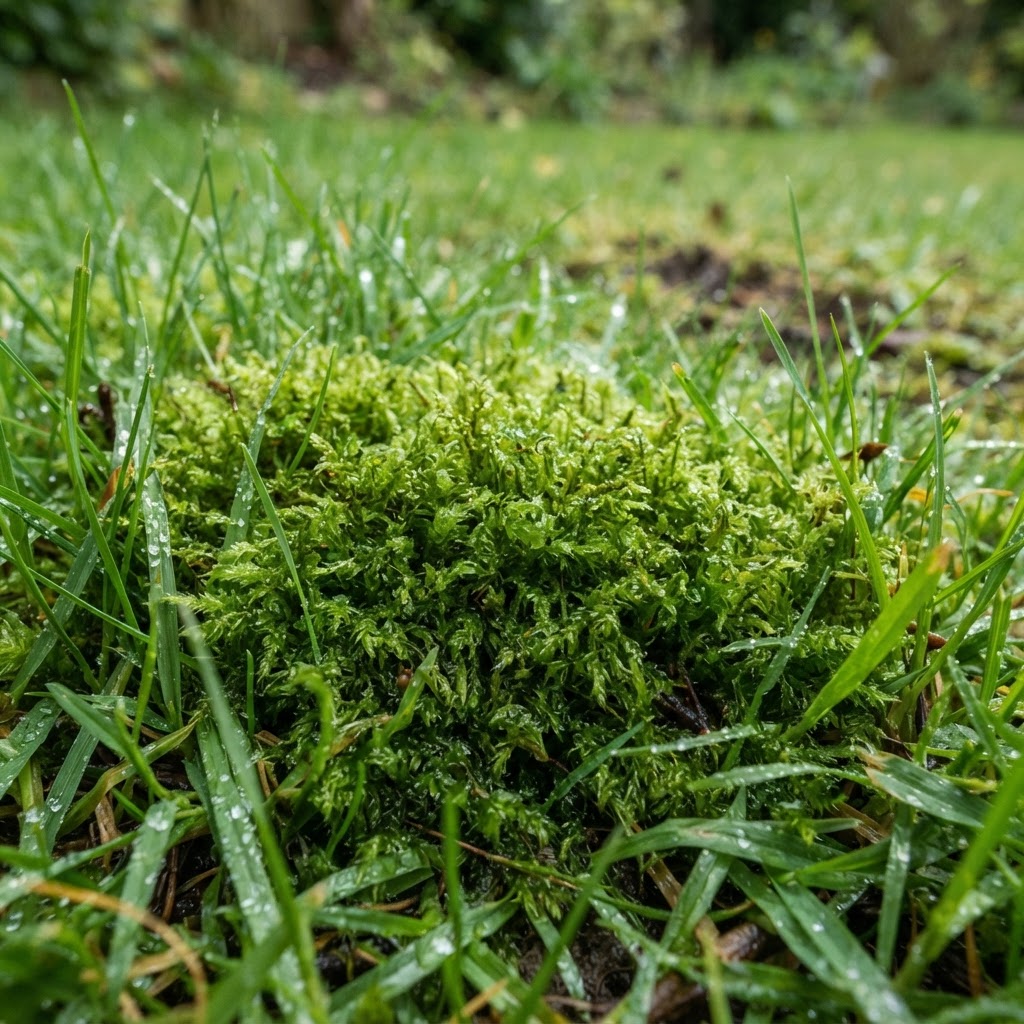
A selective lawn weed killer will not cure every green problem. It will not remove moss, and it will not correct shade, poor drainage, compaction, close mowing or thin grass cover. Those conditions are often the reason weeds establish in the first place.
For lawns carrying both moss and broadleaf weeds, a purpose-formulated multi-action treatment may be appropriate where its label matches the conditions and time of year. High-iron moss control can blacken moss quickly, but it still needs raking out once dead so grass can recolonise the space. Follow with appropriate feeding, aeration or overseeding where the lawn is thin.
When total herbicide makes sense
Use total herbicide when grass and other vegetation are not to be retained. Typical jobs include clearing a weedy gravel drive, treating growth along a wall base, removing vegetation before renovating a border, or preparing an old lawn for complete removal and re-establishment.
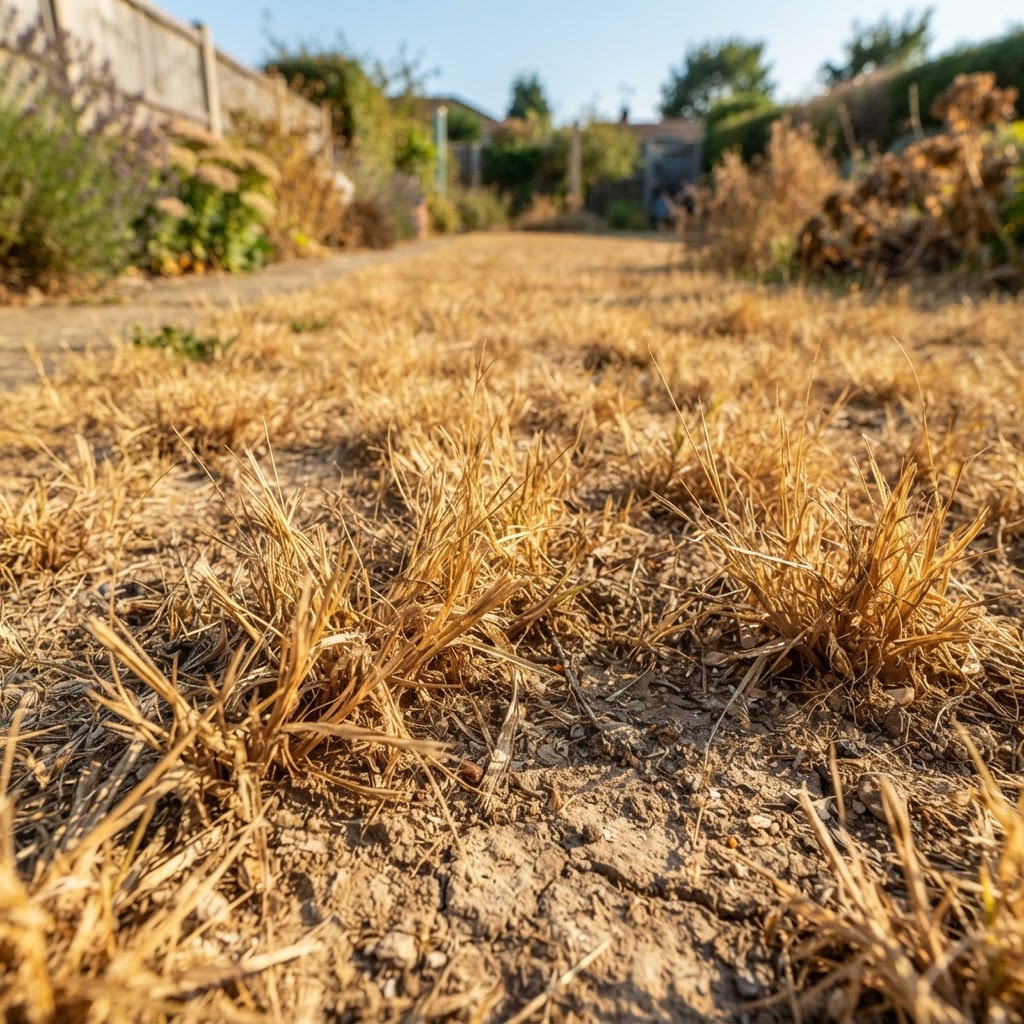
It is most effective on healthy, actively growing weeds. Systemic products need the plant to be moving sugars and water through its tissues so the active ingredient can travel down to the roots. A plant struggling through drought, cold or recent cutting may absorb less and recover more readily.
Perennial weeds deserve patience. Bindweed, brambles, couch grass and established docks have substantial underground reserves. They may require a carefully timed follow-up application after regrowth, provided the label permits it. Cutting them down immediately after spraying defeats the purpose, because it removes the foliage needed to move the herbicide to the root system.
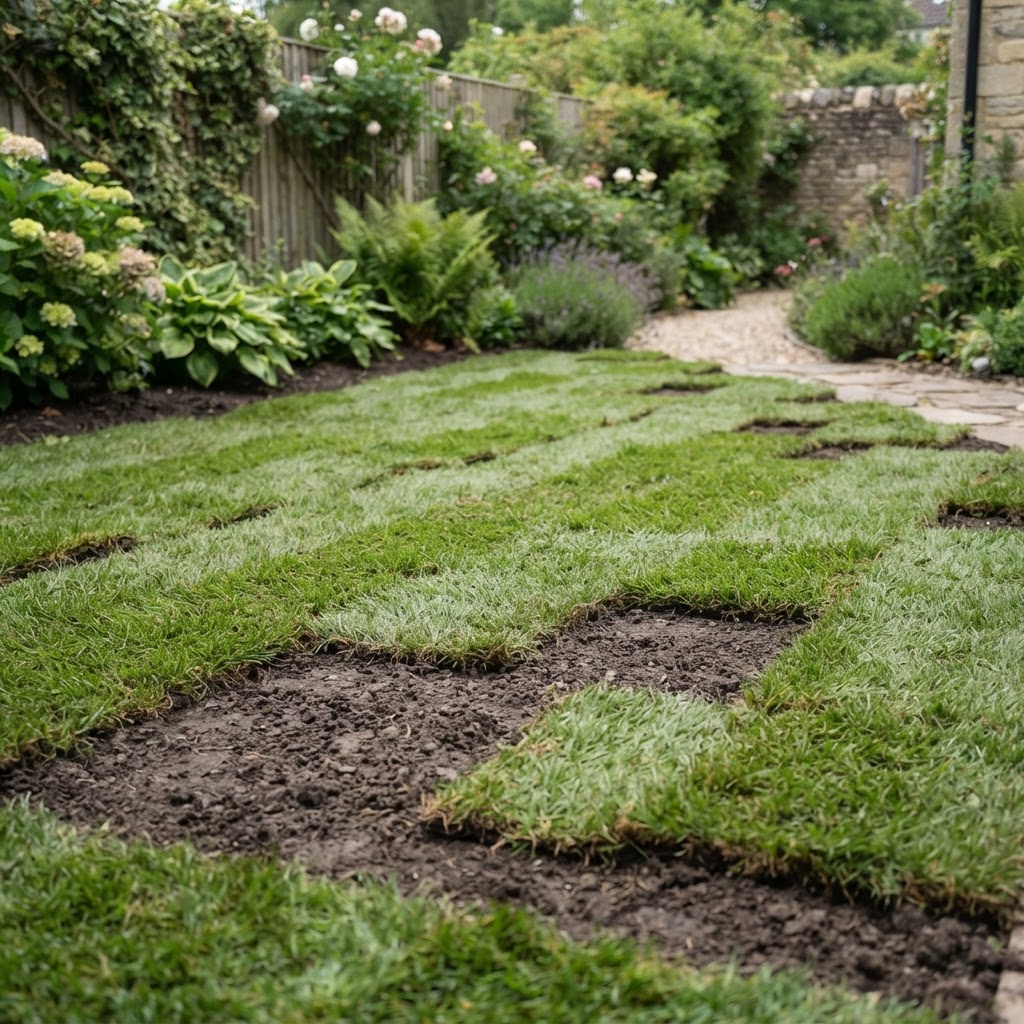
Total herbicide is often the cleanest route before a full lawn renovation. Rather than rotavating live weeds into the ground and spreading root fragments, allow the treatment to work first. Once the vegetation is fully dead, prepare the surface, correct levels and compaction, then sow a suitable grass mixture. For fast establishment on hard-wearing domestic or commercial areas, a tetraploid ryegrass blend can establish in around 7-14 days in suitable conditions, but it still needs sound seed-to-soil contact, moisture and correct preparation.
Application technique prevents expensive mistakes
Most herbicide failures are caused by poor timing or poor application rather than poor chemistry. Spray only on a calm, dry day, when rain is not expected within the product’s stated rainfast period. Wind drift can carry droplets on to lawns, borders and neighbouring plants. Fine droplets travel furthest, so use the nozzle, pressure and spray pattern recommended for the job.
Apply enough solution to wet the leaf surface evenly, but do not spray to the point of run-off. Dripping product is wasteful, increases the chance of soil or hard-surface contamination, and does not improve control. On a lawn, treat the full area only if weed coverage justifies it; isolated weeds can often be spot-treated with a suitable selective product.
Keep a separate, clearly labelled sprayer for total herbicide if possible. A trace of non-selective product left in a lance or nozzle can damage turf during a later lawn treatment. Rinse equipment in line with the label instructions, and never dispose of washings into drains, gutters or watercourses.
Wear the personal protective equipment specified on the product label. At minimum, that commonly means suitable gloves and covered skin, but requirements vary. Keep children, pets and livestock away until the treated surface is dry or for the stated exclusion period.
Do not confuse hard-surface weeds with lawn weeds
A weed growing from a crack in paving is not a reason to use a lawn weed killer. Selective herbicides are designed around the biology of grass and broadleaf weeds, not around complete clearance on impermeable surfaces. Total herbicide is normally the more appropriate category for hard surfaces, but application needs particular care.
Hard surfaces can shed spray into gullies and surface-water drains. Never treat when rainfall could wash product away, and do not spray near ponds, ditches or watercourses unless the product is explicitly authorised and you are trained and equipped to use it. For commercial work, check site risk assessments, product approvals and local requirements before starting.
A better weed-control plan starts after spraying
Herbicide removes competition; it does not automatically create a better lawn. Once selective treatment has controlled broadleaf weeds, assess why the turf was open enough for them to establish. Low fertility may call for a seasonally appropriate feed. Compaction may need aeration. Bare patches benefit from overseeding with a blend suited to shade, drought exposure or everyday wear.
Likewise, an area cleared with total herbicide should not be left as bare soil for long. Weed seeds will use that opportunity. Prepare, seed or plant promptly when the label’s interval has passed, and maintain the new surface properly from the outset.
The trade-standard approach is not to reach for the strongest product. It is to identify what must be controlled, protect what is worth keeping, and apply the correct herbicide precisely. That one decision saves grass, time and unnecessary repeat work.