
Find the Right Fertiliser for Your Lawn
Which feed suits your lawn depends on what the lawn needs, the time of year and the instructions on the product you buy. This page groups our lawn fertilisers by those choices so you can compare what is in stock and go straight to a product.
Lawn feeds by season and product type
Every card links to the live product page with the current price, pack sizes and the manufacturer's declared analysis and application rate. Where a product comes in more than one pack size, the card shows the lowest price.
Spring and summer lawn feeds
Granular feeds declared for the growing season. They differ in analysis and in how long the manufacturer says they last, so compare the NPK figure in each name with the rate on its product page.

7-7-7 Nutrigrow Growmore Fertiliser 20kg
In stock
£19.38
View
9-7-7 Nutrigrow Spring / Summer Blend Fertiliser 20kg
In stock
£20.82
View
9-7-7 Nutrigrow Spring / Summer Pro Compound Fertiliser 20kg
In stock
£27.82
View
16-16-16 Nutrigrow Triple-16 Fertiliser 20kg
In stock
£28.50
View
10-4-4+TE Nutrigrow Spring-Rise Fertiliser 20kg
In stock
From£34.20
View
Nutrigrow 18-3.5-8+1Mg Phased Release Fertiliser 20kg
In stock
From£44.09
ViewDeclared seasons: 10-4-4+TE Spring-Rise February–July; 9-7-7 March–August; 18-3.5-8 Phased Release spring, summer and autumn; 7-7-7 Growmore and 16-16-16 March–October. Rates differ between them, from 15–25g/m² on the 16-16-16 record to 100g/m² on the Growmore record, so spread at the rate printed on the bag.
Autumn and low-nitrogen feeds
Feeds declared for the end of the season, with phosphate and potash higher than nitrogen in the analysis while the record is aimed at roots rather than top growth.

3-12-12 Nutrigrow Autumn Fertiliser Blend 20kg
In stock
£28.19
View
3-12-12 Nutrigrow Autumn Turf Pro Compound Fertiliser 20kg
In stock
£39.26
View3-12-12 Autumn Turf Pro is declared for September–February, and the 3-12-12 Autumn Fertiliser Blend for August–November, both at a 35–70g/m² rate.
Liquid, water-soluble and iron products
Feeds diluted and applied with a sprayer or watering can, plus two iron products used for greening. Their labels state a faster response than granular fertiliser.

Emerald Pro Seaweed
In stock
From£20.39
View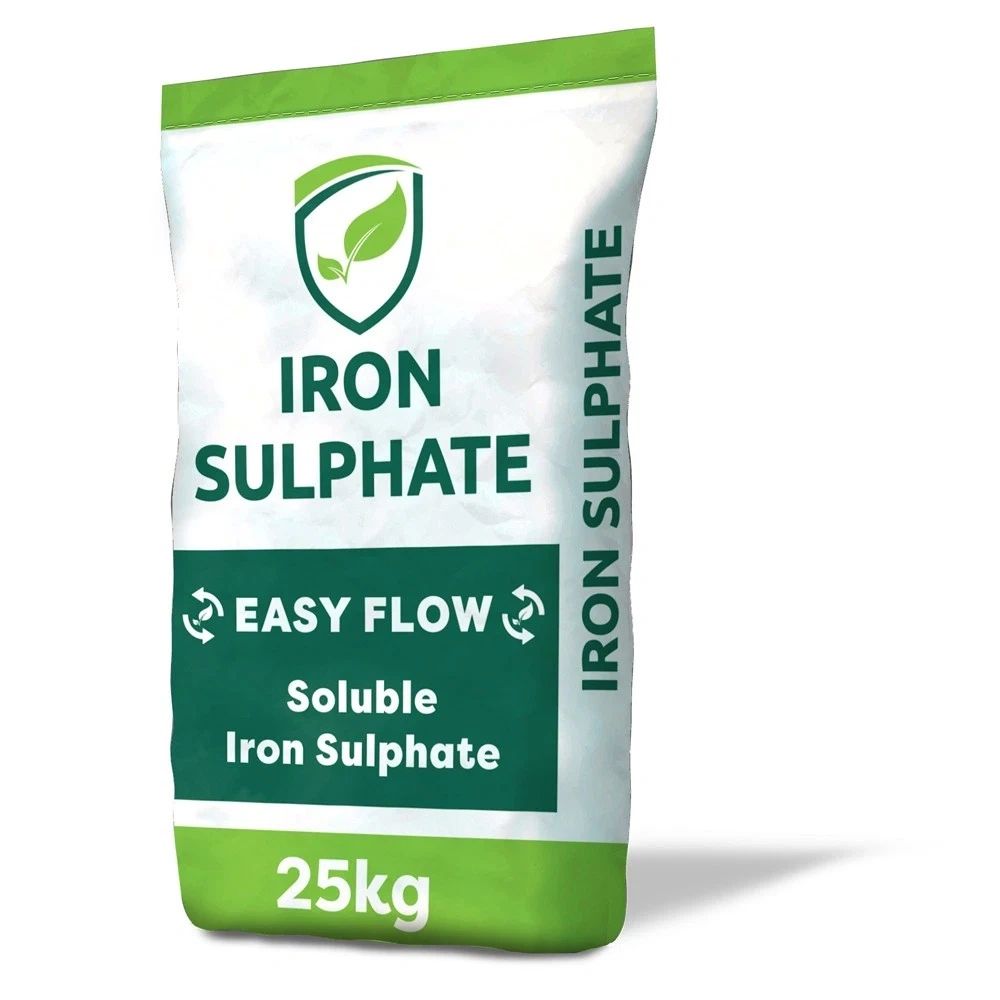
Easy Flow Soluble Iron Sulphate 25kg
In stock
£35.40
View
Autumn-Gem 4-2-16 Foliar Fertiliser 10L
In stock
£48.89
View
Ferro-Gem Liquid Iron
In stock
From£48.95
View
Spring-Gem 14-3-10 Foliar Fertiliser 10L
In stock
£52.50
View
Nutri-Gem® 15-15-15 Foliar Fertiliser
In stock
From£83.70
ViewSpring-Gem is declared for March–October and Autumn-Gem for late summer to autumn. Both labels state that they are compatible with certain pesticides and moss killers: that is a compatibility statement, not a claim that they control moss. Ferro-Gem Liquid Iron and Easy Flow Soluble Iron Sulphate are iron products for greening and iron deficiency (yellowing), not nitrogen feeds. Nutri-Gem 15-15-15 is a balanced soluble feed, and Emerald Pro Seaweed is a seaweed extract whose record describes stress recovery rather than an NPK analysis.
Feeding before or after sowing seed
A granular feed declared for use around seeding, with phosphate higher than nitrogen in its analysis so the new grass has roots to build on.

6-9-6 Pre-Seeder is declared for February–May and August–November, at 20g/m² for new seeding and up to 50g/m² on established areas.
Feeds that also treat moss or weeds
These are the products in our fertiliser and moss killer categories that do more than feed. They are not the same as a straight lawn feed, and the label sets what each one may be used on.

Nutrigrow Feed, Weed & Moss Killer 5kg
In stock
£19.64
View
Lawn Sand 3-0-0 +7Fe 25kg
In stock
£23.45
View
Nutrigrow Feed, Weed & Moss Killer 20kg
In stock
£32.21
View
6-5-10+Fe Nutrigrow Moss Top 20kg
In stock
£45.59
ViewNutrigrow Feed, Weed & Moss Killer is declared for lawns and sports turf and combines feeding with weed and moss control, naming daisy, plantain, dandelion and clover. 6-5-10+Fe Nutrigrow Moss Top and Lawn Sand 3-0-0+7Fe sit in our moss killer category. None of the straight feeds on this page control weeds or moss, and several only add iron for colour.
A lawn feed is not a weed or moss treatment
Most products in this collection only feed the grass. Adding iron can deepen colour and, on the labels that say so, help against moss, but a straight feed will not clear weeds or a moss problem on its own. If you need both jobs done, choose a product whose label covers both, or treat the weeds or moss separately and feed afterwards.
Working out how much feed you need
Our fertiliser calculator takes your lawn area and a feed type, then applies a typical rate: 35g/m² for its spring/summer and autumn options, 30g/m² for balanced and 20g/m² for pre-seeder. Two things to know before you rely on it.
- The feed types in the calculator use generic NPK examples rather than a specific product from this page, so the quantity is an estimate of how much material you need.
- The rate on the bag always wins. Declared rates in this range run from 15–25g/m² to 100g/m² depending on the product.
Lawn fertiliser buying questions
What to check before you add a feed to the basket.
Feeding advice and related collections
- Best lawn fertiliser UK: season-by-season comparison
- What fertiliser should I use this month?
- How often should I fertilise my lawn?
- Why is my lawn yellow?
- How to control moss in your lawn
- Spring lawn care checklist
- Autumn lawn care checklist
- Lawn care calendar: what to do each month
- Grass seed for patching, overseeding and new lawns
Not sure which feed your lawn needs?
Describe the problem and our lawn advisor will suggest a feed, or work out the quantity with the calculator first.
Product labels, not this page, set out how each fertiliser may be used, where it may be applied and at what rate. Analyses, seasons and rates quoted here come from the product records; always check the bag before spreading.