














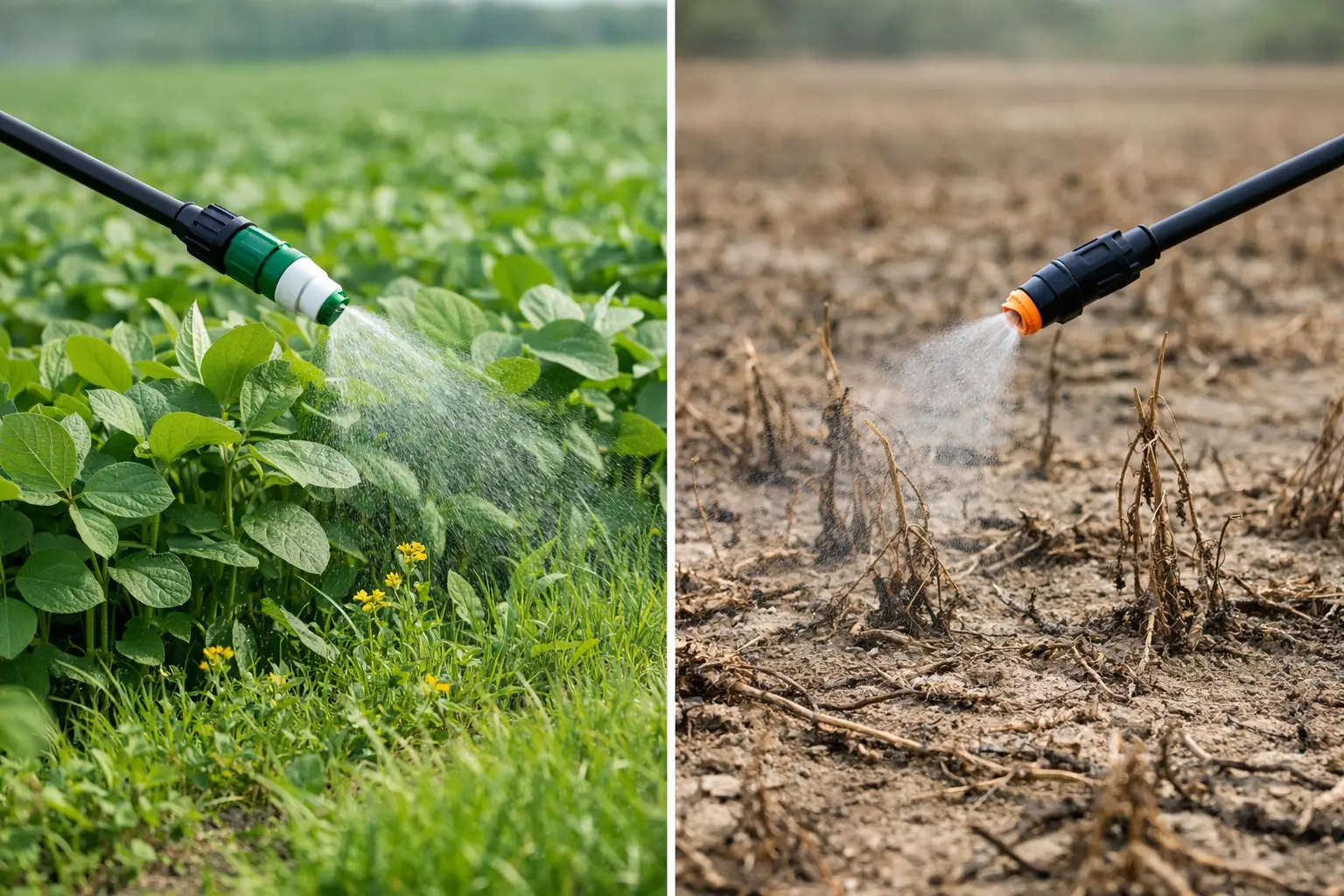
A lawn can look thin, uneven and tired because of weeds, but the wrong weedkiller can turn a manageable problem into bare ground. The selective herbicide vs total herbicide decision comes down to one practical question: do you need to remove weeds while keeping the grass, or clear every green plant from the area?
For established turf, the answer is usually selective control. For a driveway edge, an overgrown plot before replanting, or vegetation growing through paving, a total herbicide may be the proper tool. They are not interchangeable products, and treating them as such is one of the most expensive lawn-care mistakes.
What is a selective herbicide?
A selective herbicide controls certain plant types while leaving others largely unaffected when used at the stated rate. In lawn treatments, it is normally designed to target broad-leaved weeds in established grass. Typical targets include dandelion, daisy, clover, plantain, buttercup, catsear and creeping speedwell.
Grass is a narrow-leaved plant, whereas many common lawn weeds are broad-leaved. Selective lawn herbicides use this botanical difference. Their active ingredients are absorbed through the weed foliage and disrupt normal growth processes. The weed may twist, curl or distort before yellowing and dying back. This is not always instant. Depending on the weed, weather and product, visible results can take several days and full control can take several weeks.
That selectivity has limits. A selective lawn weedkiller is for established grass, not newly sown seed, fresh turf, ornamental borders or every plant described as a weed. It will not solve a moss problem, and it will not reliably control grass weeds such as annual meadow-grass. Read the label for the exact weeds controlled, grass species restrictions and application timing.
Where selective control earns its place
Selective herbicide is the correct approach when the lawn itself is worth preserving. It allows a homeowner or contractor to remove broad-leaved competition without starting again from bare soil.
A healthy, dense lawn helps the treatment work in the longer term. Once weeds have been controlled, improve the conditions that allowed them to establish: correct poor drainage or compaction, mow at a suitable height, feed according to the season and overseed thin areas. Weedkiller removes the symptom. Better turf density reduces the opportunity for weeds to return.
For lawns with moss as well as weeds, separate the diagnosis. Moss thrives where grass is weak, often because of shade, wet ground, compacted soil, close mowing or low fertility. A high-iron moss treatment can blacken moss for removal, while a selective herbicide deals with broad-leaved weeds. A combined granular treatment may be suitable where the label confirms all three actions are needed, but only apply it when conditions and turf age are appropriate.
What is a total herbicide?
A total herbicide, sometimes called a non-selective herbicide, is designed to kill or severely damage most green plants it contacts. Glyphosate-based products are a familiar example. They are commonly used for complete vegetation clearance before creating a new lawn, preparing a planting area, treating weeds on paths and driveways, or controlling growth around hardstanding where no vegetation is wanted.
Most total herbicides work through green leaves rather than through the soil. The foliage takes in the active ingredient, which moves through the plant to the roots. This makes thorough leaf coverage important, especially on established perennial weeds with substantial root systems. It also means a total herbicide can kill desirable grass, border plants and hedging if spray drift or splashes reach them.
A total herbicide is not automatically the strongest option in every sense. It is broader in what it controls, but success still depends on the weed being actively growing, sufficient leaf area being present and the correct application rate being used. A tired, drought-stressed weed in cold weather may respond slowly. Mature brambles, bindweed and perennial grasses can require repeat treatment or a carefully planned clearance programme.
When full clearance is the sensible option
There are times when preserving existing vegetation is no longer economical. A lawn dominated by couch grass, coarse grasses and perennial weeds may be better cleared and rebuilt properly. Likewise, an overgrown border being converted to lawn needs its existing vegetation removed before soil preparation and sowing.
The sequence matters. Apply a total herbicide to actively growing vegetation and allow enough time for it to travel through the plant before cultivating, digging or removing the top growth. Disturbing plants too soon can reduce control, particularly on deep-rooted perennials. Follow the individual product label for its stated wait period and any restrictions before sowing or planting.
After clearance, do not rush straight to seed. Remove dead debris where necessary, level the ground, address compaction and establish a firm, fine seedbed. A pre-seeder fertiliser with a balanced 6-9-6 NPK analysis can support root development at sowing without forcing excessive soft top growth. The best weed-control result is wasted if the replacement lawn is sown into poorly prepared ground.
Selective herbicide vs total herbicide: the practical choice
The decision is straightforward once the desired outcome is clear. If you want grass to remain, use a selective herbicide specifically labelled for lawns. If you want the entire area clear of living vegetation, use a total herbicide and protect anything you intend to keep.
Do not use total herbicide to spot-treat dandelions in turf unless you accept dead patches. Even a carefully aimed application can leave brown circles where grass foliage is contacted. Those patches then need raking, soil preparation and overseeding. On a small lawn, hand weeding may be quicker than repairing collateral damage.
Equally, do not expect a selective lawn weedkiller to clear paving, gravel or an uncultivated plot. It may affect some broad-leaved weeds, but grasses and many unwanted plants will remain. Choosing a product outside its intended setting wastes time and can lead to unnecessary repeat applications.
Timing, weather and application standards
Professional-grade results depend as much on application discipline as product choice. Apply only to actively growing plants and avoid periods when turf or weeds are under drought stress, frost stress or heat stress. Calm, dry weather reduces drift and helps product stay where it is needed. Rain shortly after treatment can reduce performance if the label's rainfast period has not passed.
Do not mow immediately before or after a selective lawn treatment. Weeds need enough leaf area to absorb the herbicide, and the treatment needs time to move within the plant. Product labels set the specific intervals, so treat those instructions as part of the application, not small print.
Use a dedicated, correctly calibrated sprayer for herbicides. Measure water and product accurately, apply evenly and avoid overlapping passes. Clean equipment as directed after use, but never wash residues into drains, gutters or watercourses. Keep children, pets and wildlife away until the treated area is dry or for the period specified on the label.
For contractors, this is also a matter of professional practice. Keep application records, use the approved rate and ensure the product is authorised for its intended amenity use. For homeowners, the same rule applies: the label is the legal and technical instruction for that formulation.
Common mistakes that weaken weed control
The first is treating too early after sowing. Young grass is less tolerant than mature turf, so observe the product's establishment requirement before applying selective herbicide. In many cases, mowing the new lawn several times first is necessary. If weeds are few, remove them by hand until the grass is sufficiently established.
The second is expecting one application to correct poor lawn conditions. Clover, for example, often becomes more visible where nitrogen is limited and grass coverage is thin. Weed control followed by suitable seasonal nutrition and overseeding produces a more durable result than herbicide alone.
The third is confusing dead-looking vegetation with a finished job. Total herbicide may kill the tops of weeds before all root systems have fully declined. Allow the recommended period, inspect the site and retreat regrowth only where the product label permits. A measured approach is better than applying more chemical because results were not immediate.
The right product protects the work already done
Selective herbicide protects an established lawn while removing broad-leaved weeds. Total herbicide clears a site when the existing vegetation has to go. That distinction is simple, but it determines whether you retain a usable lawn or create a repair job.
Before opening the sprayer, decide what must stay green. Then choose the treatment engineered for that result, apply it carefully, and give the grass or cleared ground the follow-up work it needs to perform properly.