














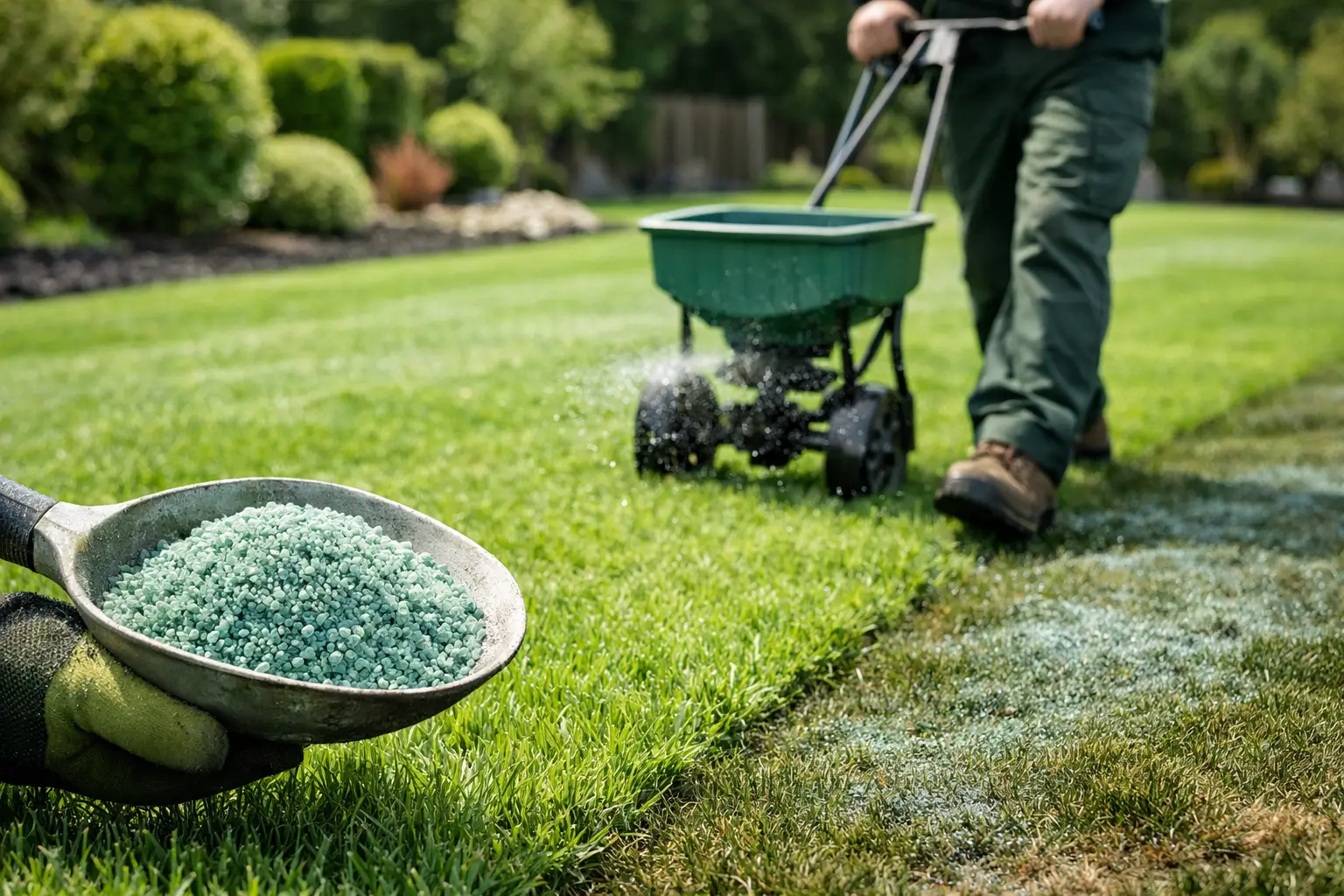
A search for iron sulphate usually means one thing: moss is spreading through a lawn and it is time for a proper treatment. The correct product name is iron sulphate, also known as ferrous sulphate or sulphate of iron. Spelling aside, choosing and applying it correctly matters far more than the name on the search bar.
Iron sulphate is a trade-standard moss control material with a useful secondary effect: it deepens turf colour by supplying iron, a nutrient involved in chlorophyll production. It is not, however, a complete lawn fertiliser, a cure for poor drainage or a substitute for repairing thin grass. Use it for the job it is engineered for, then address the conditions that allowed moss to establish.
What is iron sulphate used for on lawns?
Iron sulphate is chiefly used to blacken and suppress moss in turf. Moss has a limited root structure and reacts quickly to iron applications. Under suitable conditions, it commonly turns dark brown or black within a few days. Once dead and dry, it can be raked or scarified out, creating space for grass to tiller and fill the surface.
The iron also produces a noticeably darker green lawn. This is useful where a lawn is pale despite receiving adequate nitrogen, but it can mislead homeowners into thinking the grass has been fully fed. Iron improves colour; it does not provide the balanced nitrogen, phosphorus and potassium required for sustained leaf growth, rooting and recovery.
For that reason, a high-iron moss treatment and a seasonal fertiliser serve different purposes. A spring or summer lawn feed supports active growth. An autumn formulation is generally lower in nitrogen and higher in potassium to support roots and winter resilience. Iron sulphate sits alongside this programme when moss is the immediate problem.
Why moss returns after iron sulphate treatment
A successful treatment kills existing moss, but it cannot alter the growing conditions on its own. If the underlying issue remains, spores will return and moss will gradually reclaim bare areas. This is why repeated applications without follow-up work often deliver disappointing results.
Moss is favoured by damp, compacted, shaded or acidic ground, as well as lawns cut too low or carrying excessive thatch. It is also common where grass is simply too thin to compete. A north-facing garden beneath mature trees may need a different approach from an open, waterlogged new-build lawn.
Start by looking at the site rather than treating every lawn the same way. If water sits on the surface after rain, aeration and drainage are the priority. If tree cover prevents adequate light, choose a shade-tolerant seed mixture and avoid scalping the grass. Where the lawn is compacted by children, pets or regular foot traffic, hollow-tine aeration can make a substantial difference.
After moss has blackened, remove it with a spring-tine rake or scarifier when conditions are dry enough for the machine or rake to work cleanly. Overseed the exposed ground promptly. Leaving bare soil after scarification gives moss and weeds another invitation.
When to apply iron sulphate
The best application window depends on grass growth, weather and what work follows the treatment. Spring and autumn are usually the most practical periods because moss is active, soil moisture is often sufficient and temperatures are moderate. Autumn is especially useful if you plan to scarify and overseed afterwards, as the soil remains warm enough for grass seed establishment while weed pressure tends to reduce.
Apply to a dry lawn when rain is not expected immediately, following the individual product label. The treatment needs time on the leaf and moss surface before it is washed away. Avoid applying during drought, hard frost, heat stress or when the ground is saturated. Stressed turf is less able to tolerate any treatment, and wet ground is easily damaged by subsequent raking.
Do not treat simply because the calendar says so. A lawn that is frozen in January, drought-stressed in July or newly sown a fortnight ago needs a different decision. Young grass in particular can be sensitive, so check whether the selected product is suitable before use.
Granular or liquid iron sulphate?
Both formats can work well, but they suit different working methods. Granular products are convenient for larger domestic lawns and routine maintenance. Applied evenly with a calibrated spreader, they give consistent coverage and reduce the risk of missed strips. They are often the practical choice for contractors treating broad areas efficiently.
Liquid products offer more control on small lawns, awkward edges and targeted moss patches. They are also useful where a rapid visual response is required. The trade-off is preparation: dilution must be accurate, spray equipment must be properly calibrated, and coverage must be even. A concentrated overlap can mark turf, while under-dosing leaves moss untreated.
Whichever format you choose, do not guess application rates. The correct rate varies with product concentration, formulation and the severity of moss. More is not better. Excessive iron can scorch grass, acidify the surface and create unnecessary staining risks on paths, patios, decking and clothing.
A practical application routine
Mow the lawn a few days before treatment if it is long, but do not scalp it. Apply iron sulphate evenly to dry foliage using clean, suitable equipment. Keep granules and spray away from ponds, drains, watercourses and planted borders. Brush any stray material off hard surfaces before it becomes wet.
Allow the product to work, then wait until the moss has blackened before raking it out. The precise timing depends on weather and formulation, so the label is the operating instruction. Once debris is removed, assess the lawn honestly. If grass cover is thin, overseed rather than expecting fertiliser alone to close the gaps.
For worn or moss-prone areas, a hard-wearing ryegrass and fescue blend can provide the density needed to compete. Where rapid recovery is required, tetraploid ryegrass mixtures are valuable because their larger seed and vigorous rooting can establish quickly in suitable autumn or spring conditions.
Iron sulphate versus lawn feed with iron
This distinction prevents a common mistake. A lawn fertiliser containing iron is designed primarily to feed grass and may include a modest iron level for colour and moss deterrence. It is a sensible choice for routine nutrition where moss is light or absent.
A dedicated iron sulphate treatment contains substantially more iron and is intended to deal with active moss. It delivers a stronger, faster moss-blackening response, but it is not normally the product to apply repeatedly as a general-purpose feed.
If your lawn is green but mossy, iron sulphate followed by removal and overseeding is often the sensible route. If it is pale, thin and largely moss-free, a correctly timed seasonal fertiliser is likely to be more useful. If it is both thin and mossy, treat the moss first, clear it, then feed and seed according to the season.
Safety, staining and sensible handling
Iron sulphate is effective because it is chemically active. Treat it with the same care you would give any professional lawn treatment. Wear gloves, avoid breathing dust from dry products and wash hands after use. Keep children and pets off the treated lawn until the product instructions say it is safe to return.
Take particular care around stone, concrete and timber. Iron can create rust-coloured staining, especially when granules become wet on paving. Avoid applying in windy conditions if spraying, and never rinse surplus product into a drain. Store unopened and opened products dry, secure and clearly labelled.
Repeated use can gradually lower soil pH, particularly on naturally acidic soils. That is not automatically a problem, but it is a reason to test rather than assume. A simple soil test can show whether acidity, nutrient shortage or compaction is holding the lawn back. Lime should only be used where a test supports it, not as an automatic response to moss.
The result to aim for
The best iron sulphate treatment is one that becomes unnecessary as the lawn improves. A dense sward, sensible mowing height, good air movement, effective drainage and seasonal nutrition make it harder for moss to gain a foothold.
Treat the visible moss decisively, then use the cleared space to establish stronger grass. That is how a short-term blackening treatment becomes a lasting improvement to the lawn.