

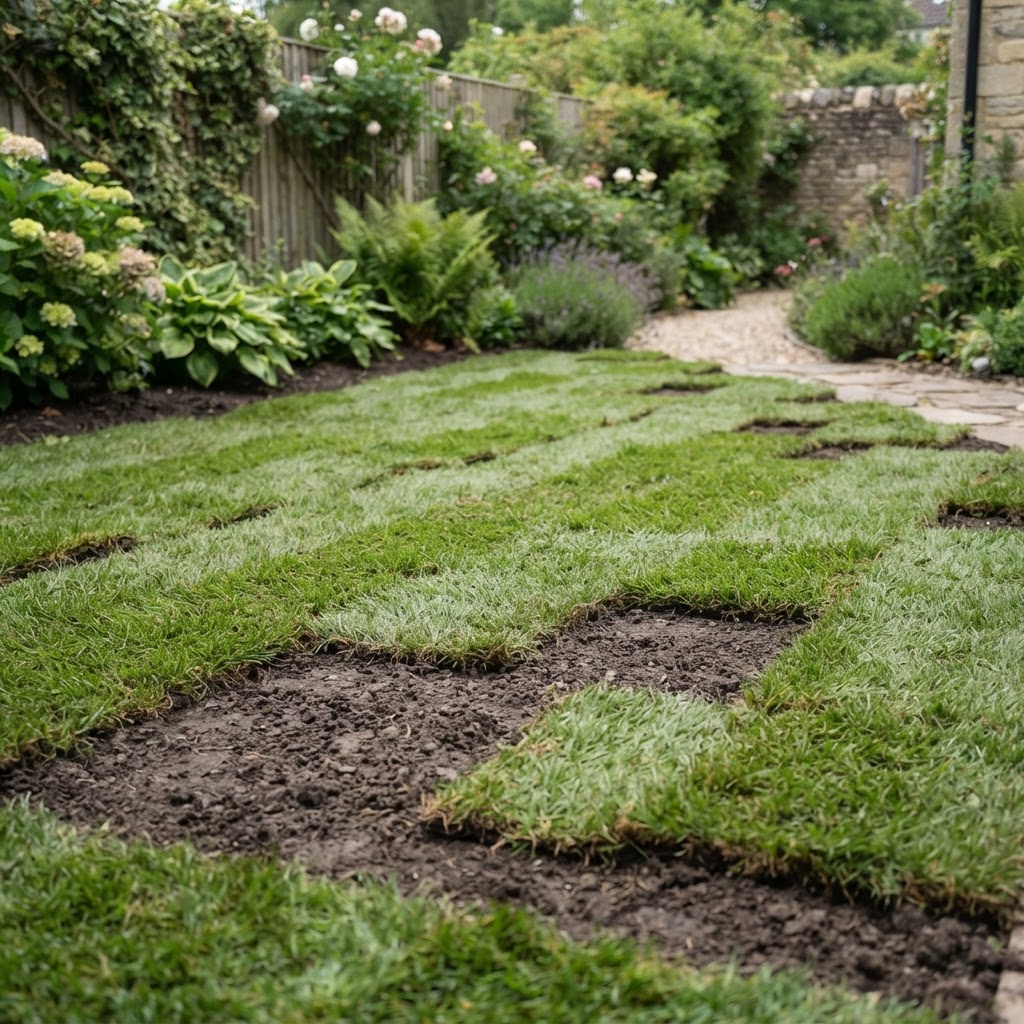
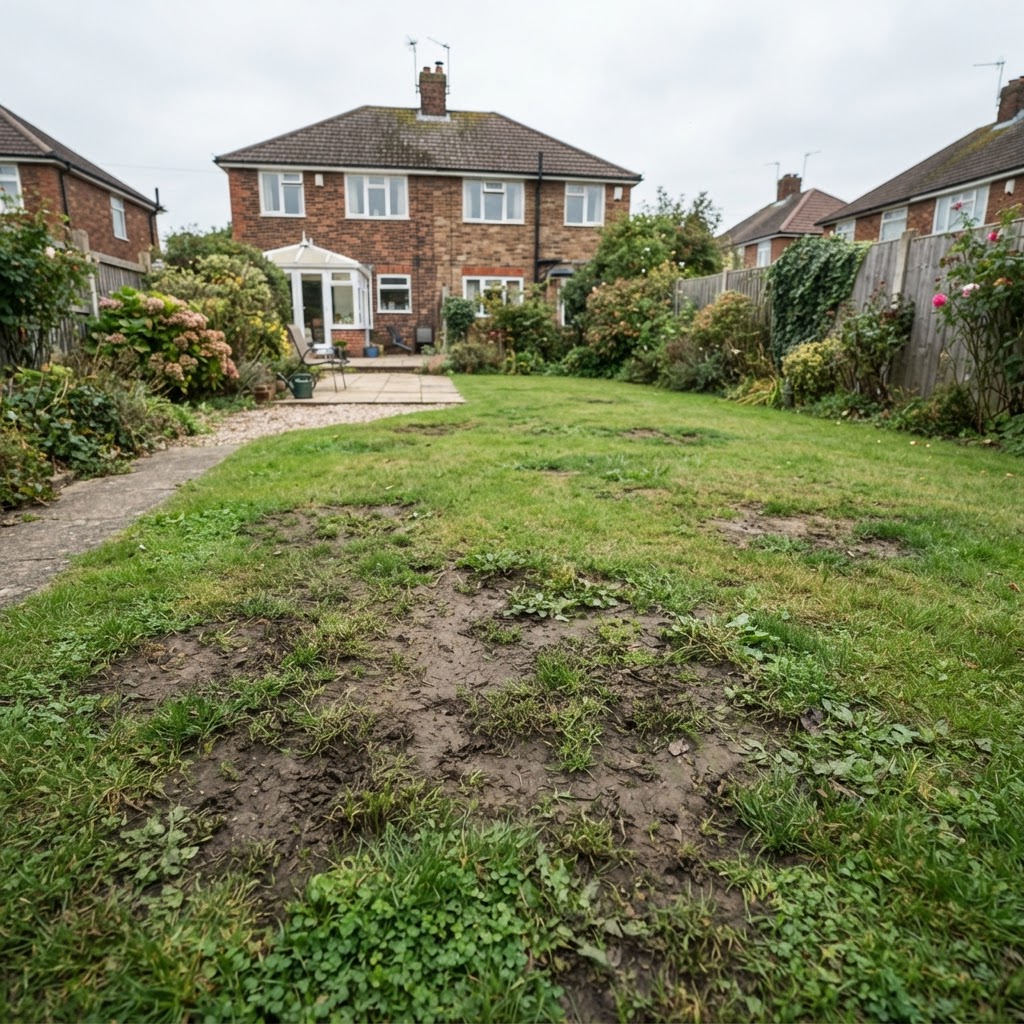
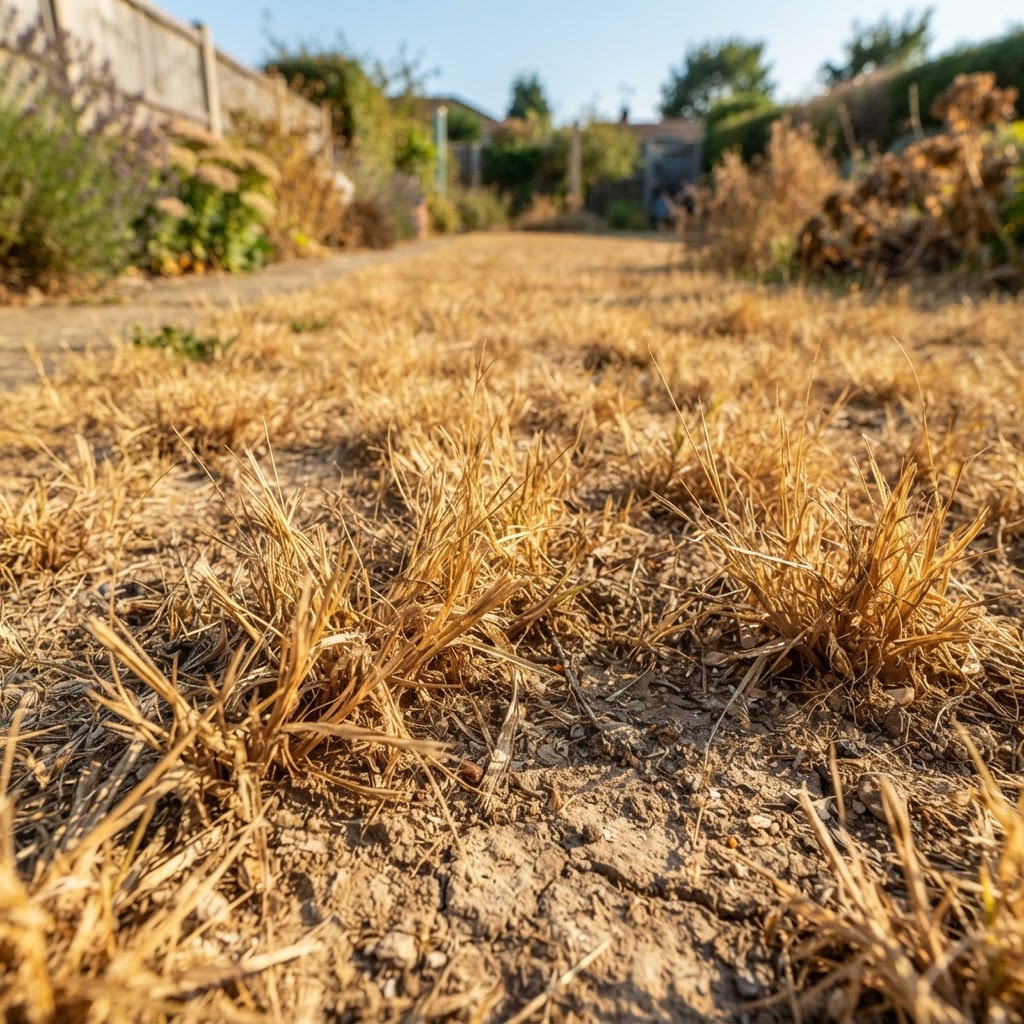
A commercial reseeding example is most useful when it deals with the reasons grass failed in the first place. Throwing seed across a thin, compacted amenity lawn may create a brief flush of green, but it will not produce a surface capable of taking regular footfall, machinery or changing weather. The durable result comes from diagnosis, ground preparation, correct species selection and a defined aftercare period.
This example follows the renovation of a worn grass area beside a managed residential development in Kent. The same method is relevant to school grounds, communal gardens, office parks and contractor-maintained public spaces where appearance matters, but traffic is the real test.
The commercial reseeding example: site conditions
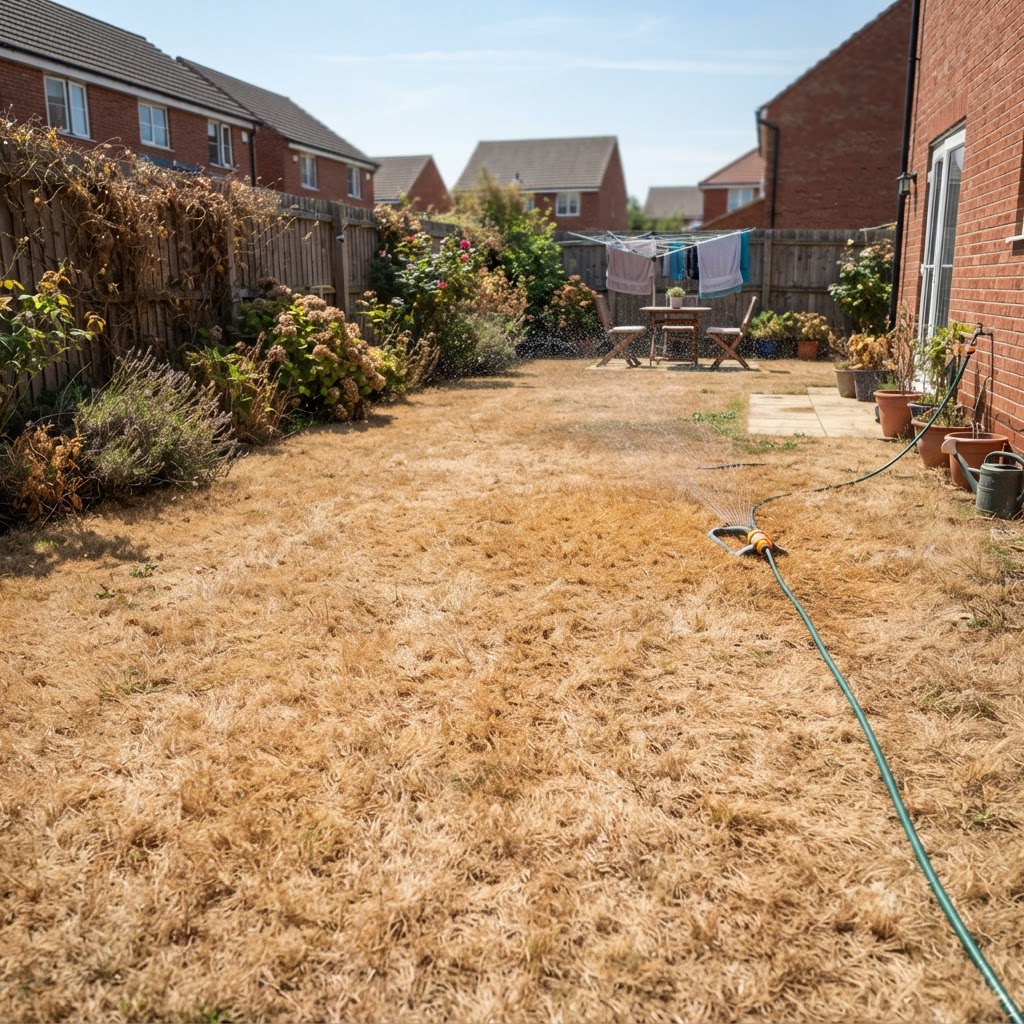
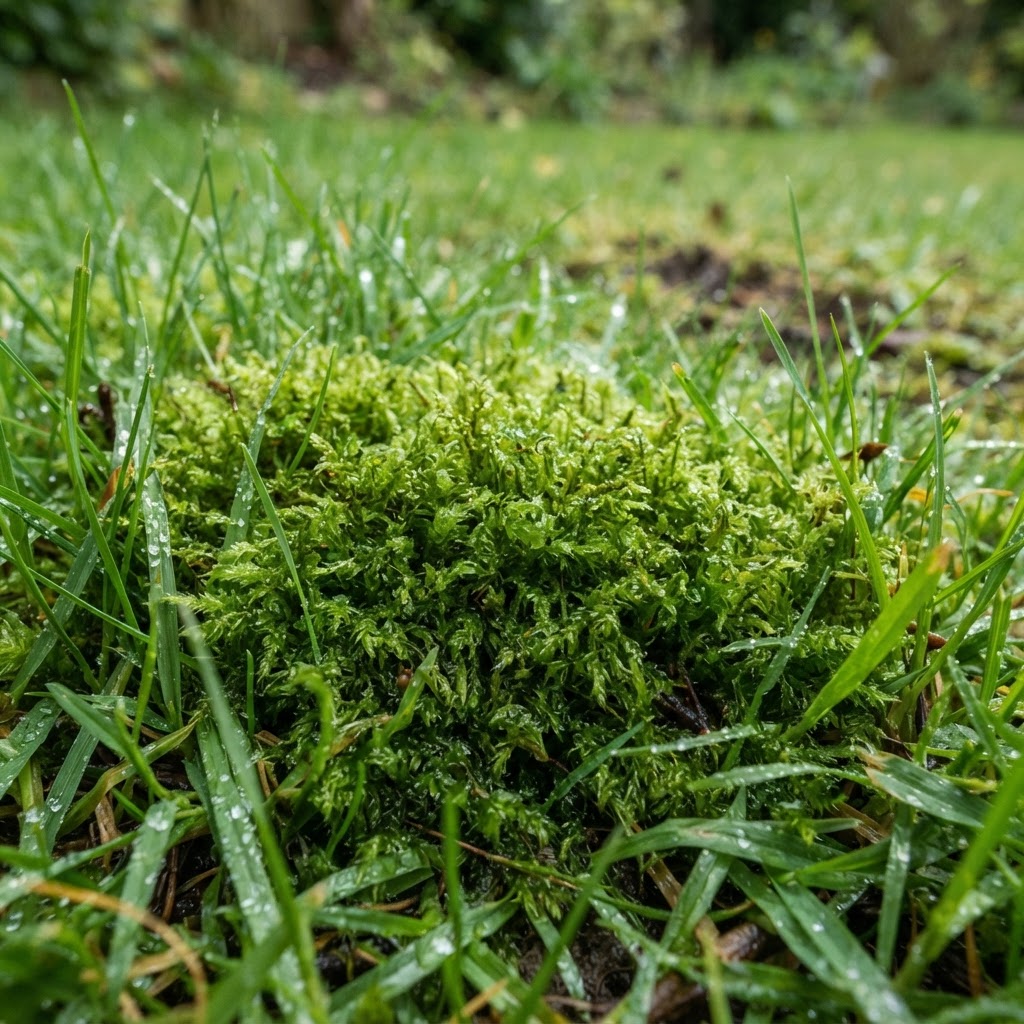
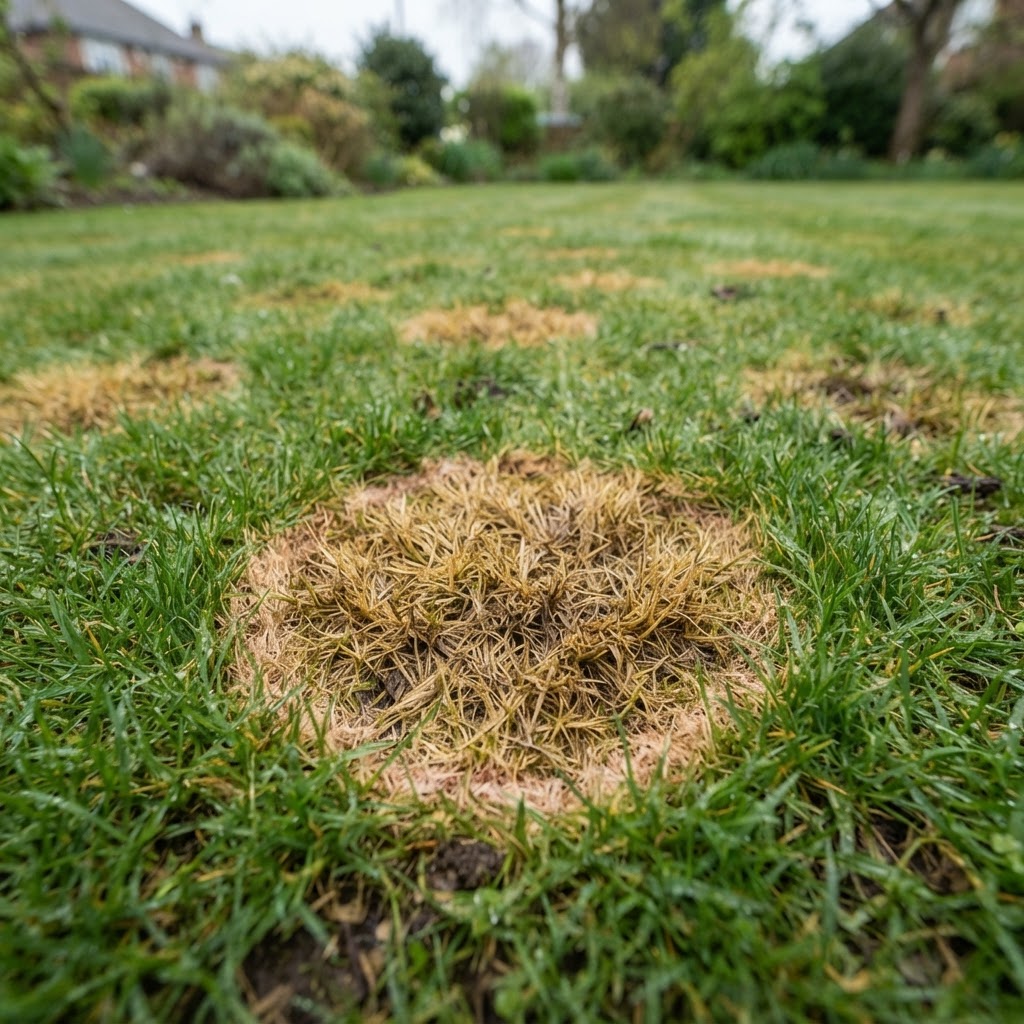
The area measured 1,200 square metres and sat between a car park and a pedestrian route. It had originally been laid with a general-purpose lawn mixture, but three years of repeated use had left thin grass cover, bare gateways and a noticeable band of compaction along the desire line. Moss occupied the shadier edge beneath mature trees, while the exposed central section dried quickly in late spring.
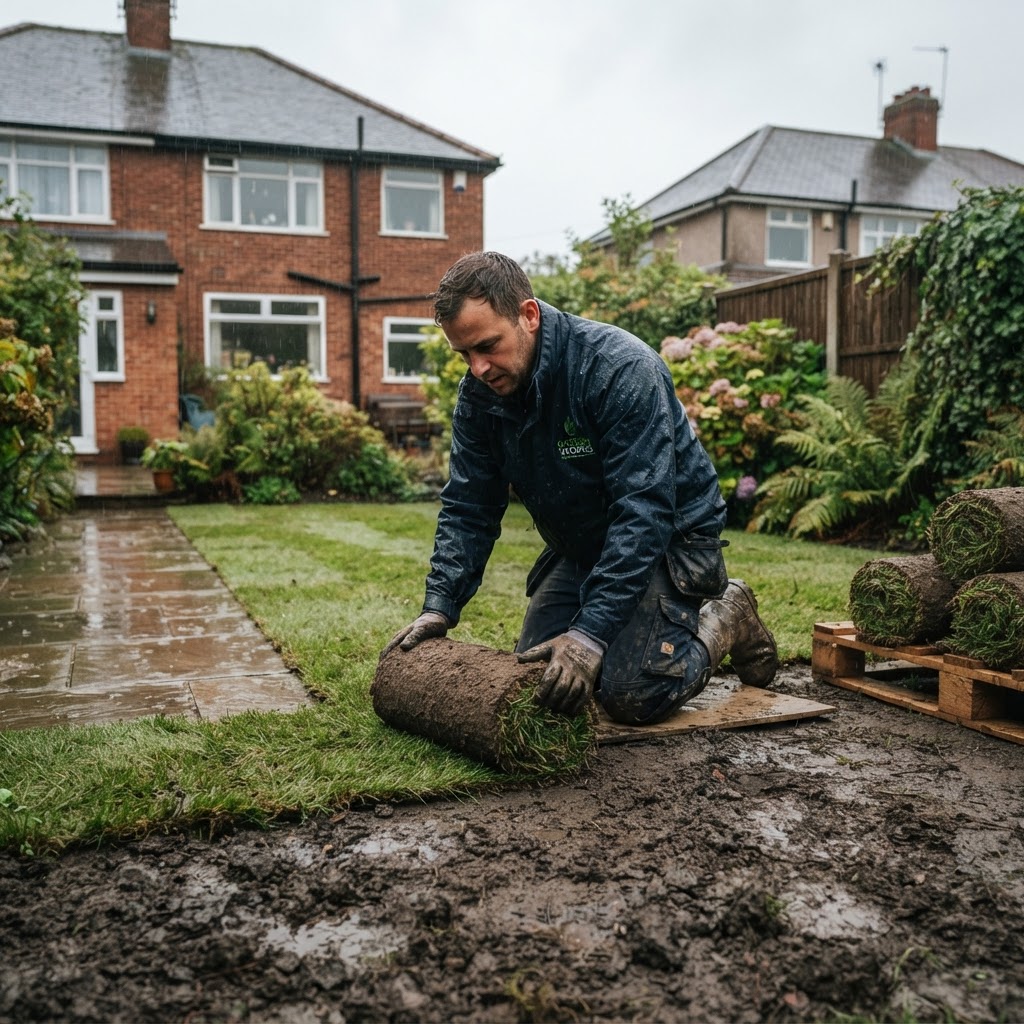
There were two possible approaches. The contractor could overseed into the existing turf, retaining as much cover as possible, or carry out a full renovation. Overseeding is often the sensible option where the sward is still more than half healthy grass and the surface remains level. Here, the thin cover, accumulated thatch and hard ground meant seed-to-soil contact would be too limited. Full reseeding was the more reliable commercial decision.
The programme was scheduled for early September. Soil was still warm enough for quick germination, rainfall was more dependable than in midsummer, and weed pressure was typically lower than during spring establishment. Autumn is not automatically right for every site. Areas prone to waterlogging, heavy leaf fall or persistent shade may require a more carefully timed spring programme. Site conditions should dictate the calendar, not habit.
The diagnosis before machinery arrived
A basic soil analysis showed a loam soil with a pH of 6.4, suitable for perennial ryegrass and fescue establishment without liming. The more immediate problem was physical: repeated trafficking had compressed the top 75 mm, restricting air movement, drainage and root penetration.
This distinction matters. Fertiliser cannot correct compaction, and more seed cannot compensate for poor contact with the soil. The site also had no major perennial weed infestation, so a complete vegetation clear was unnecessary. That avoided an additional delay before sowing and retained the soil structure that was worth saving.
Preparing the seedbed for a lasting result
The contractor first mowed the remaining grass close and collected all arisings. The surface was then scarified in two directions to remove thatch, dead material and loose moss. Scarification is not simply cosmetic. It opens the base of the sward and exposes soil, giving new seedlings somewhere to root rather than leaving them suspended in organic debris.
Next came hollow-tine aeration across the whole area, with closer passes at entrances and along the pedestrian route. The cores were removed where they were heavily compacted. This was followed by cultivation of the upper soil layer to create a workable tilth without bringing excessive wet subsoil to the surface.
A level finish is especially important on commercial sites. Depressions collect water, turn muddy under footfall and encourage uneven growth. The contractor used screened, free-draining topsoil only where levels needed correcting, rather than applying a thick blanket across the entire site. Any imported material should be suitable for landscape use and meet the relevant British Standard specification where required by the contract.
The final seedbed was firmed, raked and firmed again. A boot print should sit shallowly in the surface, not sink into loose soil or barely mark ground that has been over-consolidated. That balance allows seed to be covered lightly while preserving the air spaces needed for root growth.
Selecting seed for traffic and recovery
A fine ornamental mixture would have looked attractive initially but would have been poorly suited to this location. The specification called for a hard-wearing amenity blend based on dwarf perennial ryegrass with fine fescues. Ryegrass provides rapid establishment and wear tolerance; fescues contribute density, finer leaf texture and a more balanced appearance between mowing cycles.
For the exposed central area, a tetraploid ryegrass component was a sound choice. Tetraploid varieties have larger seed, establish strongly in suitable conditions and develop deep, vigorous roots. In a managed commercial setting, that is useful where summer dry spells and wear occur together. Under good moisture and soil temperatures, germination can begin within 7-14 days, although weather remains the deciding factor.
The shaded edge was treated differently. It received a shade-tolerant mixture with a higher proportion of suitable fescues. A single blend across the whole 1,200 square metres would have simplified application, but it would have compromised performance at one end or the other. Splitting the specification added a little labour and planning, yet reduced the likelihood of repeat repairs.
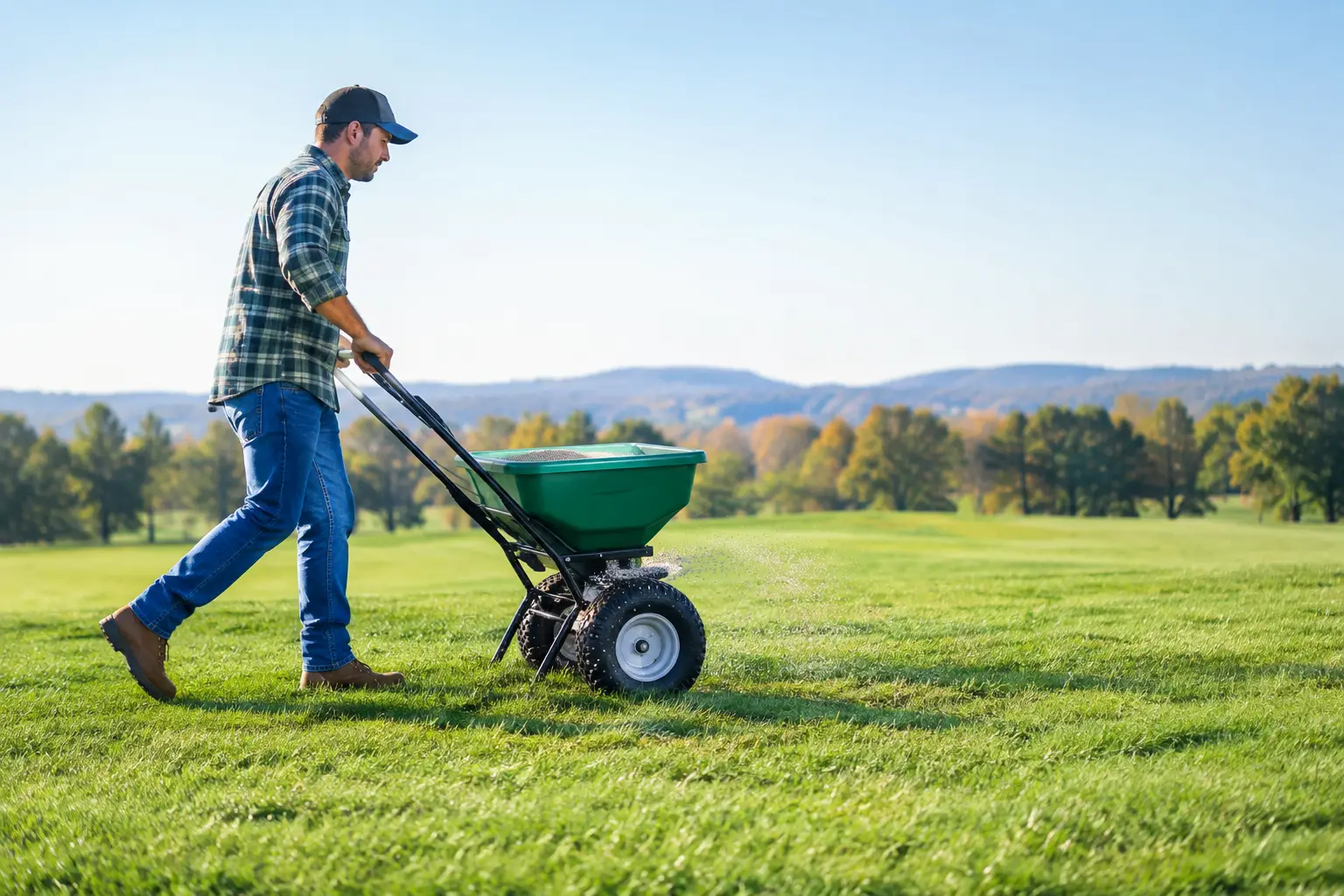
Seed was applied at the manufacturer’s recommended rate in two passes at right angles. Cross-sowing prevents stripes and makes it easier to achieve an even distribution, particularly where pedestrian access points interrupt a rectangular area. The seed was then lightly raked in and rolled to secure soil contact. It should not be buried deeply: grass seed needs moisture, oxygen and enough light at the surface to establish well.
Feeding without forcing weak top growth
A pre-seeder fertiliser with a 6-9-6 NPK analysis was applied immediately before sowing. The measured nitrogen supports early leaf growth, phosphorus assists root development, and potassium helps overall plant resilience. This is a controlled establishment feed, not a high-nitrogen push that encourages soft top growth before roots are ready to support it.
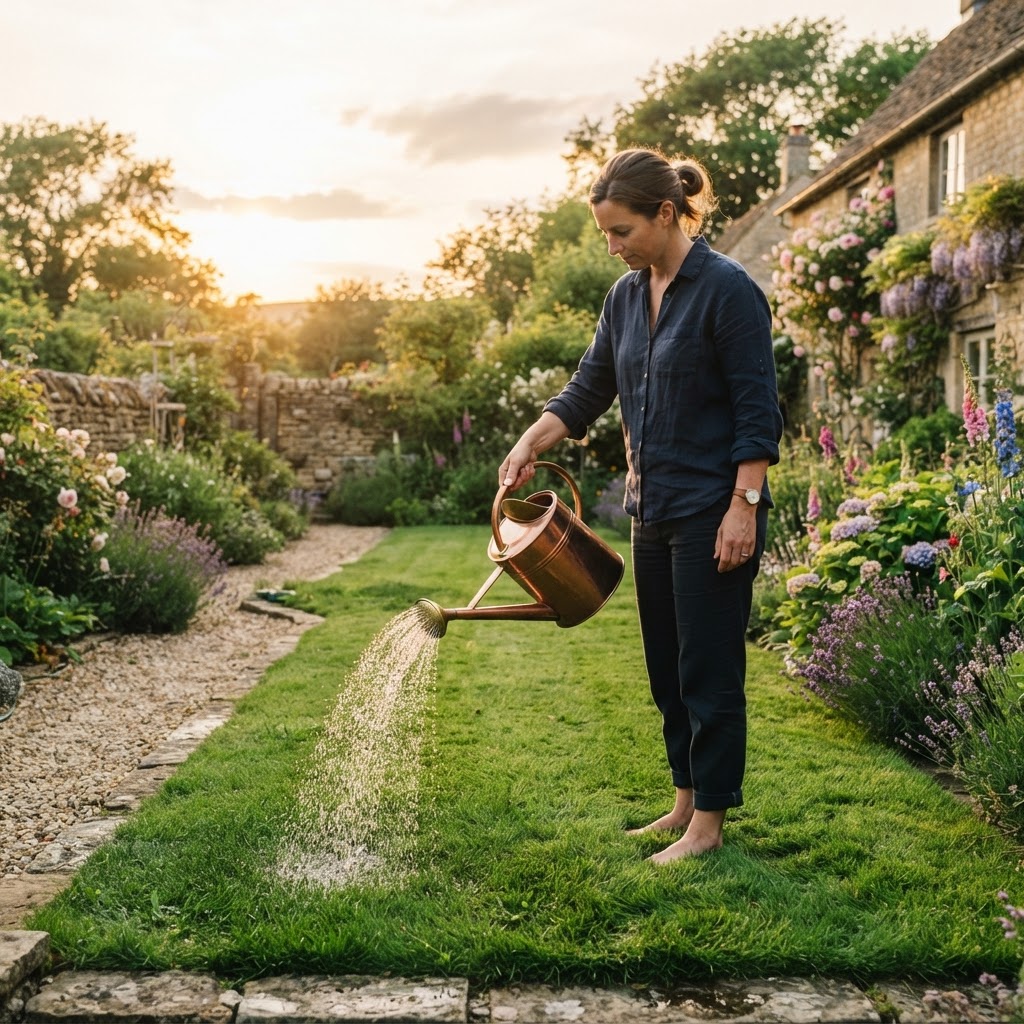
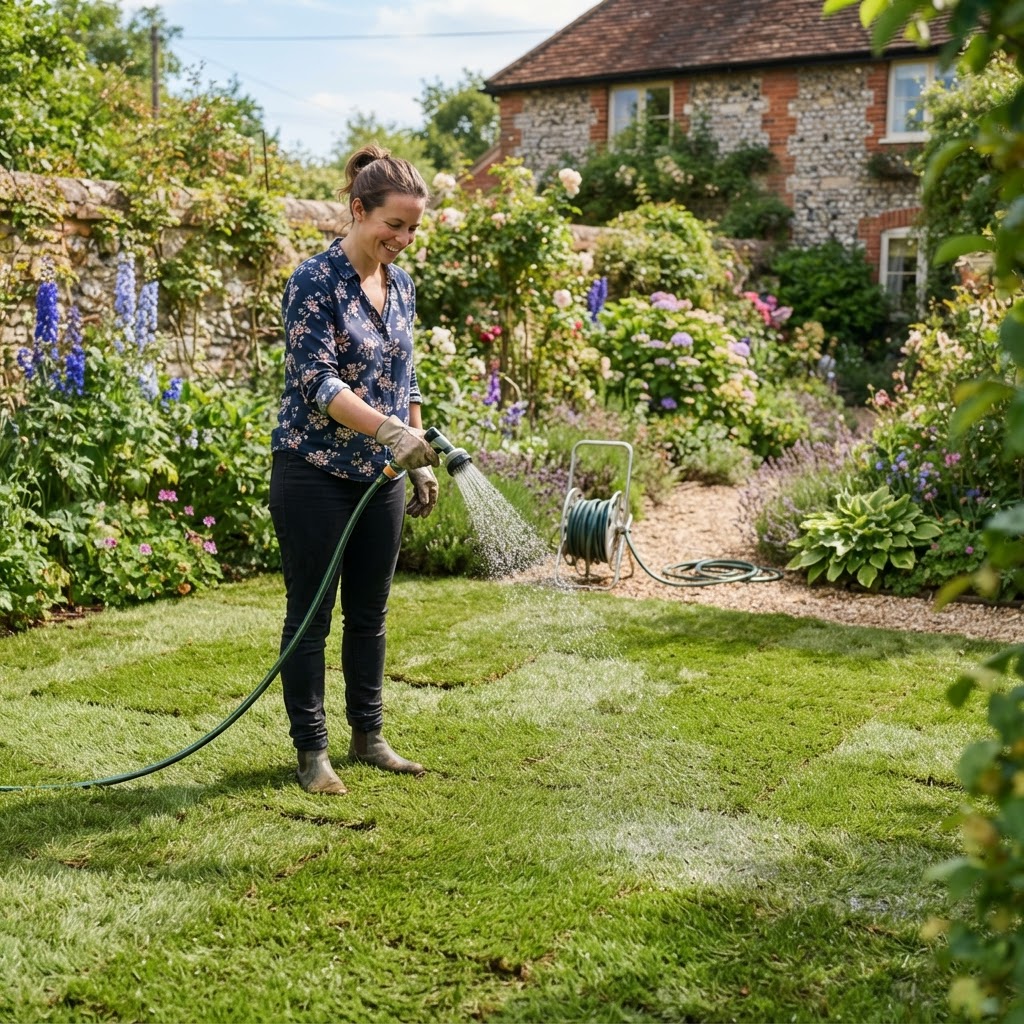
The ground was irrigated with fine applications after sowing. Heavy watering would have washed seed into low spots and created thin, striped patches. The aim was to keep the upper seed zone consistently moist until germination, then gradually water more deeply and less frequently to encourage roots to travel down through the profile.
The first eight weeks of aftercare
The most common failure in commercial reseeding is treating sowing day as the end of the job. On this site, barriers and clear signs kept foot traffic away during establishment. The property manager also altered the grounds maintenance schedule, ensuring that litter picking and other routine work did not disturb new seedlings.
The first cut took place once most plants had rooted firmly and reached around 50-75 mm. The mower was set high enough to remove only the tip, leaving sufficient leaf area for photosynthesis. Cutting too low at this stage weakens young plants and invites weeds into any gaps. Subsequent cuts gradually brought the height down to the agreed amenity level, with sharp blades used throughout.
A germination inspection at 14 days identified two small dry areas near a wall where rainfall had been intercepted. These were hand-watered and lightly overseeded rather than ignored. At six weeks, the contractor assessed density, colour and root hold across the site. Minor thinness at the main entrance was expected due to earlier compaction, so that section received a second light overseed after aeration.
No selective weedkiller was applied during establishment. Young grass needs time to mature before herbicide treatment is considered, and many early annual weeds can be managed by mowing. If broadleaf weeds persist, treatment should be timed according to the product label and the age of the new turf.
What made this reseeding project work
The visible change was clear by week six: even green cover had replaced bare, dusty ground, and the gateways no longer broke down under normal use. More significantly, the surface had a stronger root base beneath it. That is the difference between a short-lived cosmetic repair and a maintainable commercial lawn.
For sites with severe traffic, reseeding should also prompt a practical question: can the cause of wear be managed? Installing a path, moving a gate line, rotating access routes or improving drainage can protect the investment far better than repeating the same renovation every year. Seed selection and fertiliser are powerful tools, but they work best when the site is given a fair chance to recover.
Before specifying your next renovation, take a spade to the ground, inspect the roots and follow the likely route of feet, wheels and water. Those few observations will tell you more than the colour of the grass ever can.