














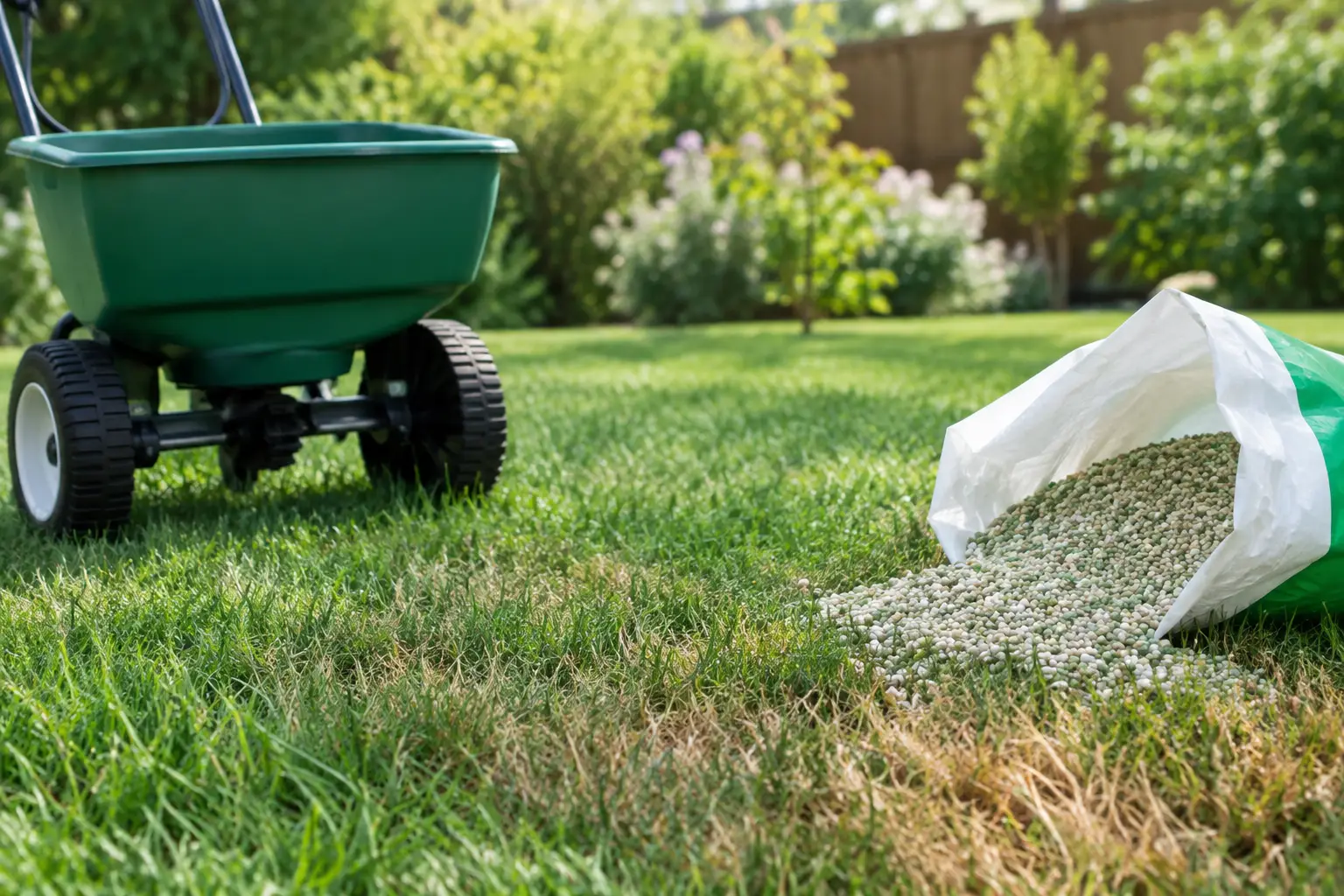
A lawn can change colour alarmingly quickly after feeding. One day it is pale and hungry; two days later it has yellow tips, brown stripes or scorched-looking patches following the path of the spreader. So, does lawn feed burn grass? Yes, it can - but fertiliser scorch is nearly always an application, timing or watering issue rather than a reason to avoid feeding altogether.
Used at the correct rate and at the right time, a quality lawn fertiliser is one of the most reliable ways to improve colour, density and recovery from wear. The key is to understand what causes burn, recognise it early, and match the feed to the season and the condition of the turf.
Why lawn feed can burn grass
Fertiliser contains mineral salts. When too much product is left around the leaf or root zone, those salts draw water out of the grass plant and surrounding soil. This is called osmotic stress. Instead of taking up moisture, the roots can lose it, leaving the leaf blade dehydrated, yellowed and eventually brown.
High-nitrogen feeds are particularly capable of causing scorch when misused because nitrogen encourages rapid leaf growth. That is valuable in spring and summer, when actively growing turf needs colour and recovery, but it also means the margin for error is smaller. Applying double the stated rate does not produce a lawn that greens up twice as fast. It can produce a burnt lawn.
Granules resting on damp leaf blades may also cause localised damage. This is why striping, clumps and sharply defined patches often point to uneven spreading rather than a wider lawn health problem. Liquid feeds can scorch too, particularly if mixed too strongly or applied in bright, hot conditions.
The usual causes of fertiliser scorch
Most cases come back to a few practical errors. The first is overapplication. A spreader set incorrectly, an estimate rather than a measured lawn area, or overlapping passes too heavily can put far more nutrient onto one section than intended.
The second is applying feed to dry, stressed turf. Grass already struggling through a warm, rainless spell has limited moisture available to dissolve and move fertiliser into the root zone. Adding a strong feed at that point can make matters worse. A lawn may need water and a pause from treatment, not more nitrogen.
Timing matters as well. Do not apply a conventional granular feed immediately before intense sunshine, during drought, or onto frozen, waterlogged or dormant turf. Heavy rain immediately after application is not ideal either: it can wash granules away, move nutrients into drains and leave the treatment unevenly distributed.
Finally, product choice matters. A high-nitrogen spring and summer formulation is engineered for active growth. It is not the best choice for late autumn, when excessive soft growth is more vulnerable to disease and frost. At that point, a lower-nitrogen, higher-potassium feed is the sensible route for root strength and winter resilience.
How to tell feed burn from other lawn problems
Fertiliser burn commonly appears within a few days of application. Look for yellow, tan or brown leaf tips, often progressing to larger areas of browning. The pattern is the strongest clue. Damage may follow wheel tracks, spreader runs, missed calibration points or places where a bag was tipped or a sprayer paused.
Drought stress is usually less precise, often affecting exposed areas, slopes and light soils first. Dog urine tends to create smaller circular patches, sometimes with a darker green ring. Disease can create patches too, but it rarely follows the exact route taken while applying feed.
Check the lawn surface closely. Visible granules gathered in one place, or leaf blades with scorched tips immediately after fertilising, make the diagnosis more straightforward. Do not add another treatment simply because the grass has lost colour. First establish why it has changed colour.
What to do if lawn feed has burnt the grass
Act promptly, but do not panic. Mild scorch often grows out once the excess salts have been diluted and the lawn resumes steady growth. The first job is irrigation.
Water the affected area deeply enough to move soluble nutrients away from the leaf surface and through the upper root zone. On a typical domestic lawn, this means a thorough soak rather than a quick sprinkle. Repeat over the following days if conditions are dry, while avoiding persistent saturation. The objective is dilution, not a waterlogged soil profile.
If granules are still clearly sitting on the surface in dense piles, carefully brush or rake them out across a wider area before watering. Avoid aggressive raking on already stressed turf. Do not mow very short to remove brown tips, either. Keep the mower height sensible and remove no more than one third of the leaf at a cut, giving the plant enough leaf area to recover.
Hold off on further fertiliser, weedkiller and moss treatment until new healthy growth is evident. A stressed lawn does not benefit from several corrective products applied at once. If areas are completely dead after several weeks, lightly rake out the damaged material, improve seed-to-soil contact and overseed when weather conditions suit. Early autumn is generally the most forgiving repair window in the UK, while spring can also work where reliable moisture is available.
How to apply lawn feed without scorching
The trade-standard approach is measured, even and weather-aware. Start by calculating the actual lawn area in square metres. Measure it or use a reliable plan of the garden. Guessing is how a 10 kg bag intended for a large lawn ends up on a modest back garden.
Read the product label and apply only the stated grams per square metre. If using a spreader, calibrate it on a small hard-standing area first, catching the material so it can be reused. Walk at a steady pace and use two lighter, crossing passes where the label permits rather than one heavy pass. This reduces the risk of stripes and patches.
Apply granular feed to a dry lawn when the soil is moist and the forecast offers a window for watering in. If rainfall is not expected, irrigate after application according to the product instructions. The aim is to wash granules off the leaves and begin moving nutrients into the soil, without creating run-off.
For liquid feed, use the dilution rate stated on the label, check that the sprayer is applying evenly, and avoid spraying when the grass is heat-stressed. Early morning or later afternoon is usually preferable to the hottest part of the day. Never leave mixed product standing in a sprayer where concentration or application accuracy may be compromised.
Match the NPK ratio to the job
NPK refers to nitrogen, phosphorus and potassium. Each nutrient has a different role. Nitrogen supports green leaf growth and chlorophyll production. Phosphorus supports root development, particularly useful around establishment where appropriate. Potassium helps overall plant resilience, including tolerance of wear, drought and winter stress.
A balanced 6-9-6 pre-seeder fertiliser, for example, is designed to support root development around sowing without the excessive nitrogen surge that can scorch tender new seedlings. This is very different from using a strong summer lawn feed on recently germinated grass.
Established turf should be fed according to season, not habit. A spring or summer programme can use more nitrogen while grass is actively growing. In autumn, reduce nitrogen and favour potassium-led nutrition to harden the lawn ahead of colder, wetter weather. This approach produces steadier turf and lowers the temptation to overfeed for quick colour.
Extra care for newly seeded and stressed lawns
Young grass has a shallow root system and limited reserves. It is more easily damaged by concentrated fertiliser, foot traffic and dry conditions than an established lawn. Use a fertiliser specifically formulated for seeding, apply at the stated rate, and keep the seedbed consistently moist during establishment. Once seedlings are growing strongly, the first mow should be light and undertaken only when the grass is tall enough to tolerate it.
Lawns under shade, on sandy soils or recovering from moss removal also need a measured approach. Sandy ground drains quickly and may need smaller, more frequent nutritional inputs rather than one heavy dose. Shaded lawns grow more slowly, so they need less nitrogen than a sunny, hard-wearing family lawn. Moss control products containing iron can blacken moss rapidly, but the dead material should be raked out once conditions allow so grass can reclaim the space.
The best-looking lawns are not fed hardest. They are fed accurately, watered intelligently and maintained in step with the season. If a product rate, weather window or lawn condition gives you doubt, wait for the right conditions - grass responds far better to steady management than to a rushed correction.