














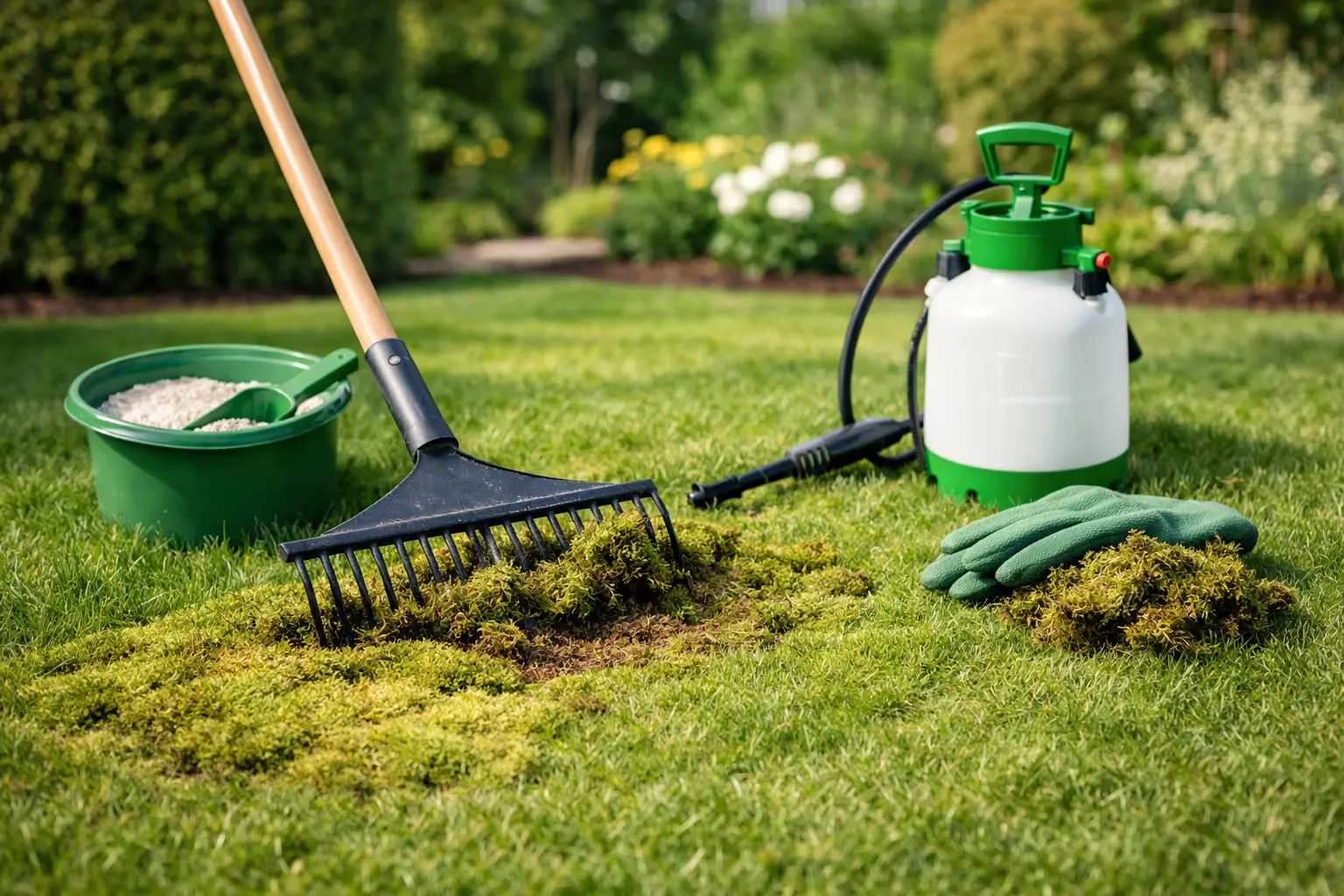
Moss rarely takes over a lawn because it is particularly aggressive. It takes over because the grass has stopped competing. The best lawn moss treatments therefore do two jobs: they remove existing moss efficiently, then correct the conditions that left the turf thin, damp or underfed in the first place.
For most UK lawns, a high-iron moss treatment followed by scarification, suitable nutrition and overseeding is the dependable answer. The exact programme depends on the time of year, soil condition, shade and how much moss is present. A quick chemical fix can blacken moss, but a lasting result requires grass that is dense enough to occupy the space.
What makes a lawn vulnerable to moss?
Moss thrives where grass growth is weak. The usual causes are compacted soil, poor drainage, low fertility, excessive shade, close mowing and an acidic soil. Autumn and winter compound the problem: grass slows down while rainfall, dew and low light keep the surface wet for longer.
A lawn beneath trees may be dealing with three pressures at once - shade, tree-root competition and a build-up of leaf litter. A heavily used family lawn may have compacted ground that holds water after rain. In each case, moss is a symptom. Treat it, certainly, but do not ignore the underlying turf condition.
Before choosing a product, inspect the lawn after rainfall. If water sits on the surface, aeration and drainage need attention. If the grass is pale and sparse but the ground drains freely, nutrition and overseeding are likely to make the greater difference. If the lawn receives fewer than four hours of direct sun in summer, a shade-tolerant grass seed blend is more realistic than trying to force a fine, sun-loving lawn into a difficult site.
The best lawn moss treatments by situation
High-iron moss killers for established lawns
Iron sulphate-based products are the trade-standard choice where moss is actively growing through established turf. Iron acts quickly, turning moss dark brown or black as it dies. This makes it much easier to see what needs removing and gives the grass a chance to reclaim the surface.
Granular high-iron treatments are practical for larger areas because application can be measured accurately with a spreader. Liquid iron products can be useful for targeted work, awkward lawn edges and small lawns, but even coverage still matters. A missed strip is usually obvious within days.
Follow the label rate precisely. More product does not produce a better lawn. Excessive iron can scorch grass, stain paving and temporarily darken the sward. Keep granules off patios, paths and painted surfaces, and sweep up any spills before watering or rain moves them.
Iron treatment is most effective when the lawn is moist, moss is actively growing and a period of mild weather is expected. Avoid application during drought, hard frost, waterlogged conditions or when heavy rain is likely to wash the treatment away immediately. In much of the UK, early spring and early autumn are reliable treatment windows.
Three-in-one treatments for busy maintenance schedules
A combined fertiliser, selective weedkiller and moss killer can be a sensible choice where a lawn has several issues at once. These formulations are engineered to control broadleaf weeds and moss while supplying nutrients for recovery. They can save time on a tired, weedy lawn, particularly in spring when grass has begun active growth.
The trade-off is flexibility. A combined treatment applies every active ingredient whether the lawn needs it or not. If moss is the only problem, a dedicated high-iron treatment followed by the correct seasonal feed is often more controlled. Likewise, do not use a weed-and-moss product before overseeding. Selective weedkillers can interfere with new grass establishment, so allow the full interval stated on the label before sowing.
For lawns requiring broad repair, a product such as a triple-action Renovator Pro treatment may suit an established sward, provided the timing fits the rest of the maintenance programme. It should be part of a plan, not a substitute for scarification and reseeding.
Lawn sand for light moss and wet surfaces
Lawn sand traditionally combines sand with iron sulphate and fertiliser. It can help dry the surface slightly and improve the spread of an iron treatment, particularly on fine turf with light moss. It is not, however, a cure for badly compacted clay or a lawn that floods after rain.
Adding a thin dressing of suitable sandy material can be useful after hollow-tine aeration, but dumping builders' sand onto a lawn can create layering and drainage problems. For persistent wet ground, improve the soil structure progressively with aeration, appropriate topdressing and, where necessary, proper drainage work.
The step that determines whether moss returns
Once an iron treatment has blackened the moss, remove it. Scarification is not cosmetic work. It lifts dead moss, thatch and organic debris from around the grass crowns, allowing light, air and water to reach the soil surface.
For a light infestation, a spring-tine rake may be sufficient. For a lawn carrying a thick moss mat, a powered scarifier provides a more even and effective result. Work in two directions if conditions allow, but do not strip the lawn bare. The aim is to remove debris while retaining enough healthy grass to recover.
A lawn can look remarkably rough immediately after scarification. That is normal. What matters is what happens next. Bare areas should be overseeded promptly, especially in early autumn when soil remains warm and moisture levels are generally favourable. A professional ryegrass and fescue blend gives rapid establishment alongside a finer, resilient finish. Where fast recovery is required, tetraploid ryegrass can germinate in around 7-14 days in suitable conditions and develops a strong root system.
Use a pre-seeder fertiliser with a balanced analysis such as 6-9-6 when sowing or repairing thin ground. The phosphorus supports root development while the moderate nitrogen level encourages establishment without pushing weak, lush top growth. Keep the seedbed consistently moist until seedlings are established, then reduce watering frequency and water more deeply where needed.
Correct the conditions beneath the turf
Improve air movement and drainage
Compaction is one of the most common reasons moss returns. On compacted lawns, rain cannot move through the profile and roots cannot access enough oxygen. Hollow-tine aeration removes small cores of soil and is especially valuable on heavy ground or lawns with regular foot traffic. Solid-tine spiking is useful for lighter maintenance, but it does not relieve compaction as effectively.
Aerate during active grass growth, ideally in autumn or spring, when the lawn can recover. Avoid working saturated clay, as this can smear the sides of holes and make matters worse. Brushing a compatible topdressing into aeration holes helps maintain the channels and gradually improves surface levels.
Feed for the season, not just for colour
A hungry lawn leaves gaps for moss. Spring and summer feeds with a higher nitrogen content encourage leaf growth and green colour when mowing is frequent. In autumn, use a lower-nitrogen, higher-potassium formulation to support root strength and winter hardiness rather than producing soft growth before frost.
Feeding cannot compensate for poor drainage or deep shade, but a properly nourished lawn is thicker, more resilient and quicker to recover after scarification. Apply fertiliser evenly, preferably in calm, dry conditions, and water in only where the product instructions require it.
Mow higher in shade and through autumn
Very low mowing weakens grass by reducing leaf area. That is particularly damaging in shaded areas, where the plant already has limited light for photosynthesis. Raise the cutting height gradually in autumn and retain a higher setting beneath trees or along north-facing boundaries.
As a practical rule, never remove more than one-third of the grass leaf in a single cut. Keep mower blades sharp, clear leaves promptly and avoid mowing when the ground is saturated. These small disciplines do more to prevent moss than repeated applications of treatment alone.
When treatment will not solve the whole problem
If a lawn is permanently shaded, regularly flooded or dominated by surface tree roots, it may never perform like an open, sunny lawn. The sensible answer may be to choose a shade-tolerant seed mixture, reduce the lawn area, improve drainage or accept moss as part of a low-maintenance garden zone.
Soil acidity is worth testing rather than guessing. Moss often appears on acidic soils, but it also grows on neutral ground where drainage and fertility are poor. Applying lime without a soil test can upset nutrient availability and is not a general moss remedy.
For most lawns, treat moss when it is growing, rake out the dead material, then give grass the seed, nutrition and root conditions needed to take the ground back. A dense lawn is the most reliable moss treatment you can apply.