














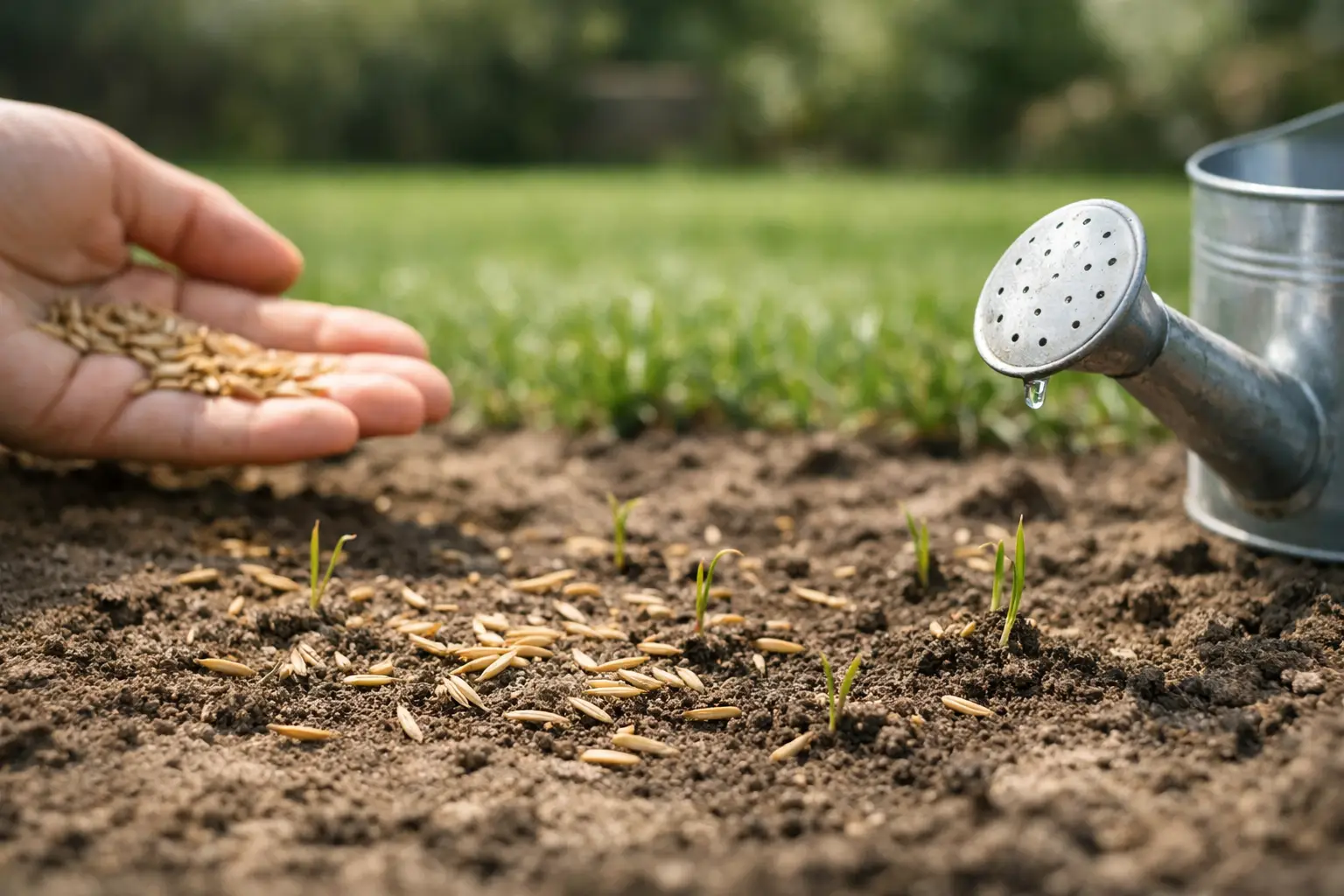
You sowed the seed, watered it, waited, and still the lawn looks much the same. When people ask why is grass seed not growing, the answer is rarely just one thing. Germination depends on a chain of conditions lining up properly - temperature, moisture, seed-to-soil contact, oxygen, and the right grass variety for the site. If one link in that chain fails, establishment slows or stops.
The good news is that grass seed failure is usually diagnosable. Whether you are patching a domestic lawn or establishing a larger landscaped area, there are a handful of common causes that account for most poor results in UK gardens.
Why is grass seed not growing in the first place?
Grass seed is a living material, not a decorative topping. It needs moisture to trigger germination, warmth to activate growth, and contact with the soil so the emerging root can anchor and start taking up nutrients. If seed sits dry on the surface, gets washed into low spots, or is sown into cold ground, it may remain dormant, rot, or be taken by birds before it ever gets started.
This is where many lawn jobs go wrong. Seed is often blamed when the real issue is preparation. Even high-quality, trade-standard seed will struggle in compacted ground, poor weather windows, or areas with heavy shade and root competition.
The most common reasons grass seed fails
Soil temperature is too low
In Britain, this is one of the biggest causes of disappointment. Air temperature can feel mild enough for gardening, but soil stays colder for longer, especially after winter rain. Most lawn seed germinates best once soil temperatures are consistently around 8 to 10°C and rising, though some mixtures respond better with a bit more warmth.
If you sow too early in spring, seed can simply sit there. It is not necessarily dead, but it is not actively growing either. That delay leaves it exposed to rot, pests and washout. Autumn can also work very well, but only while the soil still holds residual warmth.
The seed has dried out after sowing
Grass seed does not need a flood. It needs consistency. Once germination begins, even a short dry spell can stop the process and kill the emerging shoot. This often happens when people water heavily on day one, then lightly or irregularly afterwards.
New seedbeds should stay evenly damp near the surface, not saturated and not allowed to crust over. On lighter soils this may mean watering little and often. On heavier clay, it may mean less volume but careful monitoring to avoid puddling.
Poor seed-to-soil contact
Seed thrown onto a hard lawn or rough ground without raking in rarely performs well. The seed may be viable, but if it is perched on thatch, debris or clods, the root cannot properly enter the soil. That is when you see patchy germination, with growth only in the spots where the seed happened to settle well.
Good contact matters more than many people realise. A lightly raked surface, followed by firming with a roller or even careful foot pressure on small areas, gives far better establishment than broadcasting onto loose, uneven ground.
The ground is compacted
Compaction restricts oxygen, slows drainage, and makes root penetration difficult. Seed may germinate in compacted soil, but it often stalls soon after, leaving weak, sparse seedlings that never properly knit together.
This is common on new-build plots, heavily trafficked gardens, and lawns worked in wet conditions. If the top layer sets hard after rain or watering, young grass will struggle. In these cases, cultivation before sowing is not optional. It is the difference between a lawn that establishes and one that disappoints.
The seed is buried too deeply
Grass seed should sit close to the surface. If it is covered too deeply, the seedling can run out of energy before it reaches the light. A light rake-in is usually enough. As a rule, seed should be covered by only a very thin layer of soil.
The opposite problem also applies. Seed left fully exposed is vulnerable to drying out, birds, and wind movement. The aim is shallow, even coverage rather than burial.
Heavy rain has moved the seed
A sudden downpour after sowing can shift seed into lines, puddled corners and low spots. You then end up with dense green strips in one area and bare patches elsewhere. This is especially common on slopes and finely tilled surfaces.
If poor weather is forecast, it is often better to wait a few days. Seeding into unsuitable conditions is not efficient, even if the calendar says it is the right month.
Birds, pets and foot traffic
Freshly sown areas are vulnerable. Birds can reduce seed density more than people think, and regular disturbance from pets or foot traffic breaks the moisture cycle and damages emerging shoots. Seedlings at the thread stage are particularly delicate.
For domestic lawns, this often explains why one side near the patio fails while the rest comes through. Protection during the first two to three weeks makes a noticeable difference.
Why is grass seed not growing in some areas but not others?
When one part of the lawn establishes and another stays bare, look at site conditions rather than assuming the seed was spread unevenly. Shade is a common factor. Areas under trees, beside fences, or between buildings receive less direct light, but they also face root competition and drier soil. Standard seed mixtures can struggle there.
Likewise, south-facing edges may dry out faster, while low spots may stay too wet. A lawn is rarely one uniform environment. Matching the grass variety to the condition matters. Shade-tolerant seed for shaded areas and drought-resistant mixtures for exposed positions will outperform a one-size-fits-all approach.
Timing matters more than people think
There is no magic date, but there is a right window. In most of the UK, the strongest periods for sowing are mid-spring and early autumn, when soil temperature and moisture are generally more favourable. Summer sowing can work, but only with disciplined irrigation. Winter sowing is mostly a waiting game and often a waste of seed if conditions stay cold and wet.
Contractors know this already: successful establishment is usually less about speed and more about hitting the right weather pattern. A week later, with better ground conditions, often beats sowing immediately into poor conditions.
Feeding new seed the right way
Nutrition is often overlooked at establishment stage. Seed carries enough energy to germinate, but young roots still need phosphorus and balanced support to develop quickly. That is where a proper pre-seeding fertiliser helps. A measured 6-9-6 formulation, applied before or just after sowing, supports root development without forcing soft, excessive top growth.
Too much nitrogen too early can be counterproductive. You want rooting first, not lush leaf growth that the young plant cannot sustain. This is one of those areas where more product is not better. Correct specification is what matters.
How to fix a failed or patchy seed job
If the seed has been down for two weeks in good conditions with little or no sign of growth, inspect the area before reseeding. Scratch the surface and check whether the seed is still present. If it has swollen and then collapsed, moisture management may be the issue. If it is dry and unchanged, conditions were likely too cold or too dry. If there is hardly any seed visible, birds or washout may be to blame.
For repairs, start by loosening the top 25 to 50mm of soil, removing debris and breaking any surface cap. Rake level, sow evenly, and firm lightly. Then water carefully to keep the seedbed consistently damp. On poor soils, adding the right establishment feed improves the odds considerably.
If the area is shaded, switch to a shade-tolerant mixture. If rapid cover is needed in a family garden or on a working site, a tetraploid ryegrass blend can offer faster establishment, often within 7 to 14 days in suitable conditions. The seed choice should reflect the pressure the lawn will face once it is up and running.
A quick check before you sow again
Before reseeding, ask four simple questions. Is the soil warm enough? Is the surface prepared well enough for proper contact? Can you keep moisture consistent for at least the first couple of weeks? And is the seed suitable for that exact location?
If you can answer yes to all four, germination rates improve sharply. If one answer is no, address that first. Lawn establishment is less about luck than method.
A good lawn usually starts long before the first green shoot appears. Get the groundwork right, and the seed has every chance to do its job.