














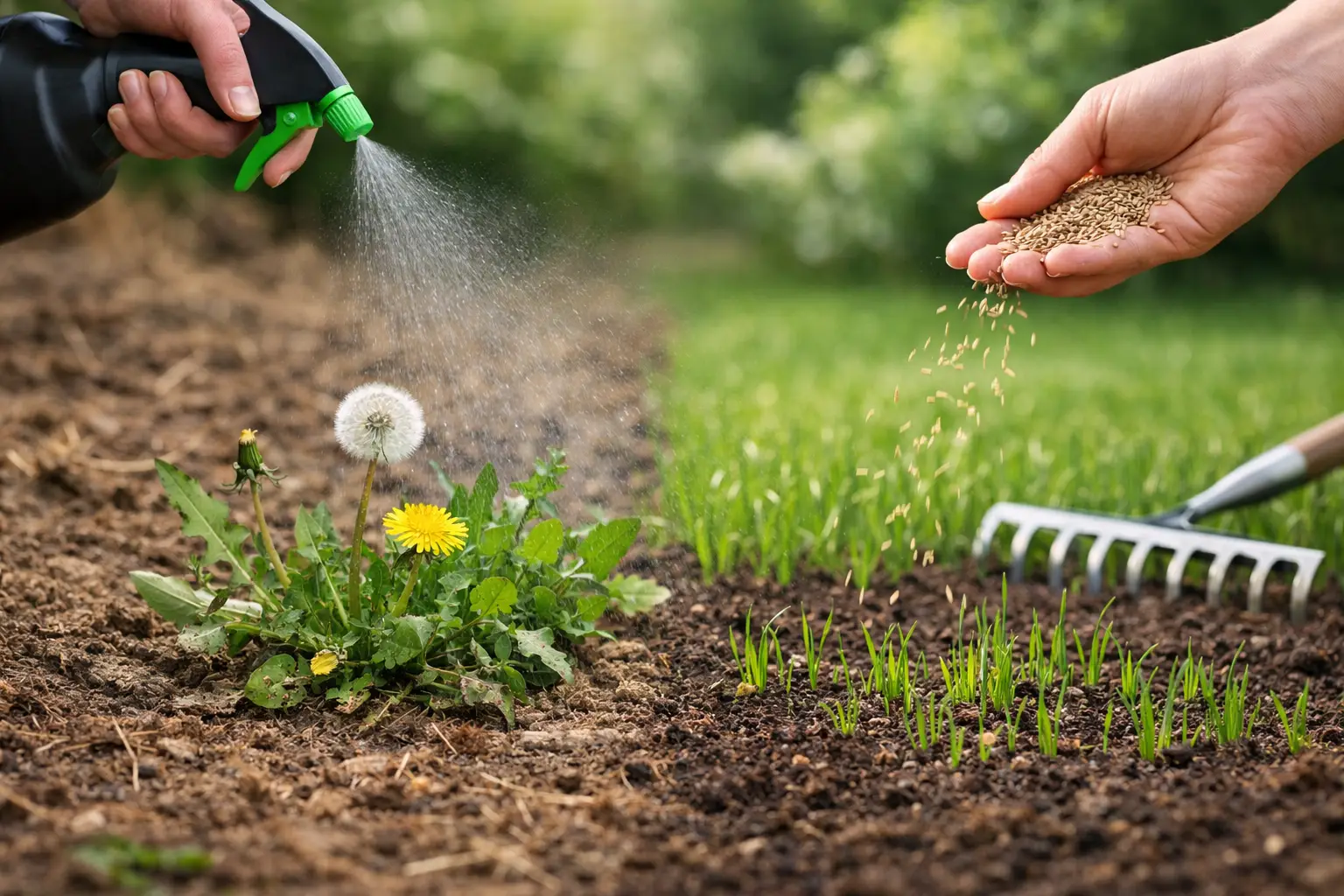
A lawn usually goes wrong at the same point - the ground is prepared, the seed is ready, and then comes the question that catches out even experienced gardeners: weedkiller before or after seeding? Get the timing wrong and you can slow germination, damage young grass, or leave weeds free to outcompete the new sward.
The short answer is this: in most cases, weedkiller is used before seeding, not immediately after. But that depends entirely on the type of weedkiller. A total herbicide, a selective broadleaf killer, and a combined weed-and-feed all behave differently, and new grass is far less tolerant than an established lawn.
Weedkiller before or after seeding - what is the right order?
If you are establishing a new lawn from bare soil, the standard order is straightforward. First remove existing weeds and unwanted vegetation. Then allow enough time for the product to work and break down as directed on the label. After that, prepare the seed-bed, sow the grass seed, and support germination with moisture and a suitable pre-seeder fertiliser.
That sequence matters because grass seed is vulnerable in its first few weeks. Young seedlings do not have the waxy leaf surface, root mass, or resilience of mature turf. A product that is safe on a well-established lawn can be far too harsh on newly emerged grass.
If you are overseeding into an existing lawn, the answer becomes more nuanced. In that situation, a selective weedkiller may be useful before seeding, but only if you leave an adequate interval. Applying it after overseeding is where many people create problems, because the herbicide may suppress or distort the young seedlings before they have matured.
Why timing matters more than many gardeners realise
Weeds compete aggressively at exactly the point young grass needs every advantage. They shade the soil surface, take up water, and draw on available nutrients. Broadleaf weeds such as dandelion, plantain and clover are particularly troublesome in open, freshly cultivated ground.
At the same time, freshly sown grass needs a stable environment. It needs close seed-to-soil contact, even moisture, and enough phosphate and potassium to encourage root initiation. Disturbing that process with the wrong spray or granule often leads to patchy establishment rather than a clean start.
This is why lawn professionals tend to separate operations. Kill what needs killing first. Sow into clean ground. Then allow the grass to establish before tackling any weeds that return.
Using weedkiller before seeding
For a full renovation or a new lawn on weedy ground, treating weeds before seeding is usually the safest and most effective route. If perennial weeds are present, simply rotavating or raking them out often spreads the problem rather than solving it. Roots of docks, dandelions and couch grass can quickly regrow.
A total herbicide is commonly used at this stage where the aim is to clear all vegetation. This gives you a clean surface to cultivate and level. The key point is patience. You should not spray and sow on the same day unless the product label explicitly permits it, which is uncommon for total weedkillers used in lawn preparation.
Allow the weeds to die back fully. Then remove debris if needed, cultivate the topsoil, level it, and lightly firm the surface. If the ground is poor, this is the point to incorporate a lawn pre-seeder with a balanced analysis such as 6-9-6, which supports root development without forcing soft, excessive top growth.
One practical complication is dormant weed seed in the soil. Even after killing visible weeds, fresh cultivation can bring buried seed to the surface. That does not mean the earlier treatment failed. It simply means some follow-up weeding is often part of lawn establishment.
How long should you wait after weedkiller before sowing?
There is no single answer that covers every product, because active ingredients vary. Some break down rapidly in the soil, while others persist longer or carry stricter intervals before reseeding. The label is the authority here.
As a working principle, wait until the treated weeds have clearly died and the recommended reseeding interval has passed. For professional contractors, that might mean programming the job in two visits rather than trying to compress it into one. For homeowners, it usually means resisting the urge to rush because the weather has turned favourable.
Can you apply weedkiller after seeding?
Immediately after sowing, the answer is usually no. Even if the seed has not yet germinated, the risk is unnecessary. Once the seed is in the ground, the priority should be irrigation, protection from disturbance, and even establishment.
After germination, the answer is still mostly no for standard lawn weedkillers. Selective herbicides are designed for grass, but that means established grass, not seedlings at the two-leaf or four-leaf stage. Young plants can suffer yellowing, twisting, checked growth, or outright loss.
This is where people often confuse selective with harmless. A selective weedkiller may spare mature turf while injuring juvenile grass. That distinction matters.
Weedkiller after seeding on an established lawn
Overseeding into an existing lawn is the scenario that causes the most uncertainty. You may have broadleaf weeds in the lawn, bare areas that need fresh seed, and a narrow seasonal window to get the work done.
In most cases, deal with the weeds first, then overseed later. Apply the selective weedkiller to the existing turf, wait the full interval stated for reseeding, then scarify or rake as needed and sow the new seed. This gives the herbicide time to work without exposing new seedlings to unnecessary stress.
If you have already overseeded, hold off on weedkiller until the new grass is well established. As a rule, that means waiting until it has been mown several times and is growing strongly. Exact timings differ by product and conditions, but spraying too early is one of the quickest ways to thin out a promising renovation.
What about combined weed, feed and moss products?
These are useful on established lawns, but they are not a first step for newly seeded ground. A multi-action granular treatment may contain fertiliser, iron and herbicidal ingredients, all of which can be too aggressive for emerging grass.
Likewise, high-iron moss killers have their place, especially where moss has colonised thin turf. But if you are about to seed, remove the cause as well as the symptom. Moss usually points to shade, compaction, poor drainage, low fertility, or a weak sward. Killing it without improving the growing conditions rarely produces a lasting result.
If weeds appear in a new lawn, what should you do?
The first response should not be chemical. Many weeds in a new lawn are annuals that arrive from the soil seed bank and fade with mowing. Others can be hand-removed if numbers are light.
Mowing is more effective than many people expect. Once the new grass reaches a suitable height, regular cutting helps the sward tiller out, thicken, and compete. A denser lawn is the best long-term weed suppressant.
If weeds persist, wait until the grass is established enough for the chosen selective product. For many lawns, that means several months rather than several weeks. It can feel slow, but it is usually faster than damaging the young grass and having to reseed again.
A practical approach for UK lawns
For most domestic and trade situations, the safest method is simple. Clear existing weeds first. Wait the correct interval. Prepare the seed-bed properly. Sow at the correct rate. Feed with a pre-seeder fertiliser suited to new grass. Then let the lawn establish before using any selective weedkiller.
This approach suits both full lawn creation and smaller repairs. It also works well with modern, professional-grade seed mixtures, including rapid-establishing ryegrass blends, because quick germination is only useful if the seedlings are not checked by avoidable chemical stress.
Weather still plays a part. In spring and early autumn, grass seed usually has the best chance of even establishment in the UK. Very dry periods, cold soils, and heavy washout after rain all complicate matters. If conditions are poor, delaying the job is often better than trying to correct multiple problems at once with more product.
The mistake to avoid
The biggest mistake is treating weed control and seeding as if they are one operation. They are not. One is about clearing competition. The other is about establishing a healthy, juvenile plant population.
Keep those stages separate and the decision on weedkiller before or after seeding becomes much easier. If you need a clean start, use the right weedkiller first and give it time. If the grass is already sown, protect it until it is strong enough to cope. A good lawn is rarely built by rushing the sequence.