



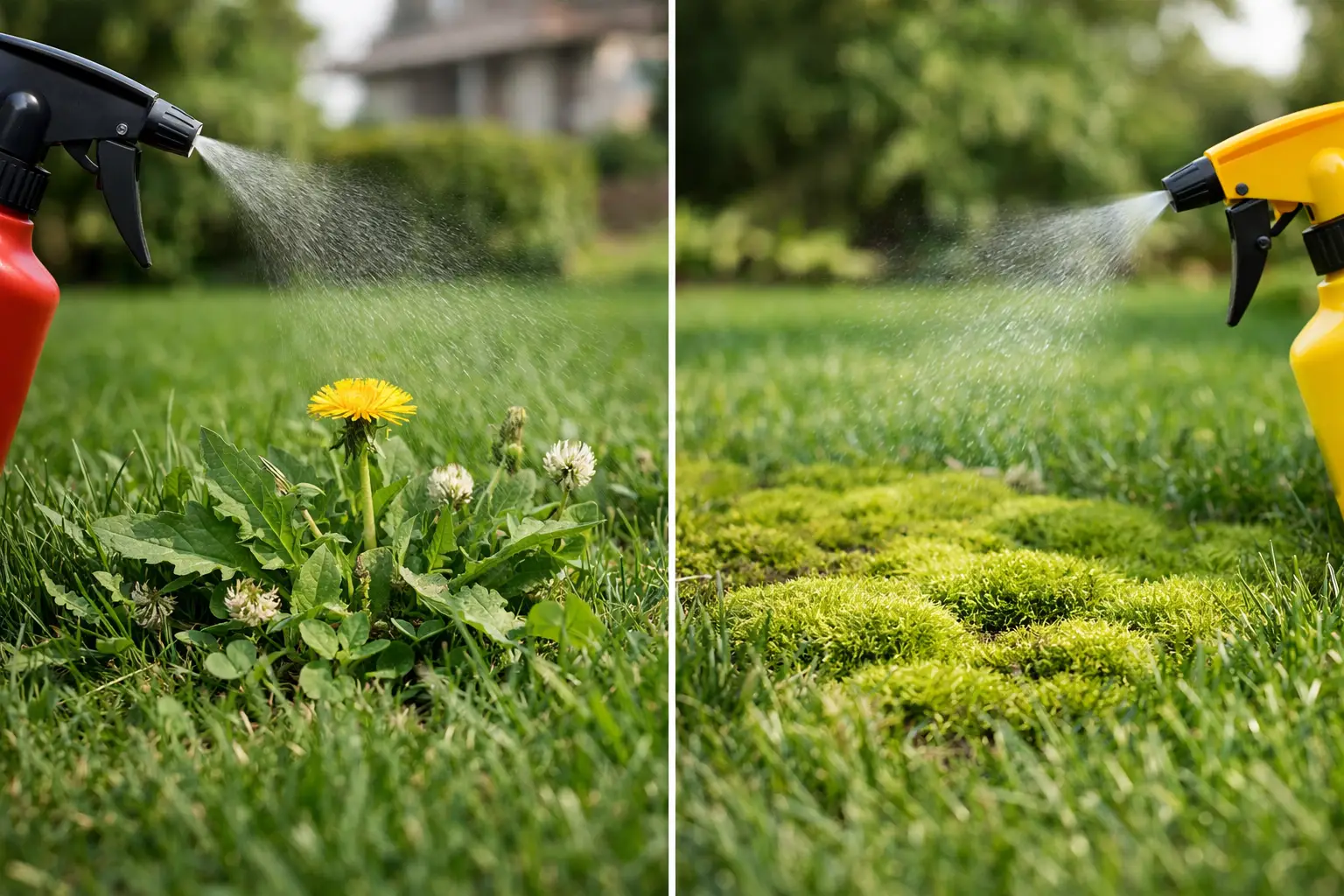
A lawn with daisies, dandelions and clover needs a different remedy from one covered in soft green moss. In the weed killer vs moss killer decision, choosing the wrong treatment wastes time, leaves the original problem untouched and can set back a lawn that is otherwise healthy. Start by identifying what is growing, then treat the cause as well as the symptom.
Weed killer vs moss killer: the essential difference
Weed killers and moss killers are designed for entirely different plant groups. A selective lawn weed killer controls broadleaf weeds while leaving established grass largely unaffected when applied at the labelled rate. Moss killer targets moss, usually through iron-based ingredients that damage the moss and allow it to be removed.
Neither is a general lawn tidy-up product. A weed killer will not clear a mossy surface, and a moss treatment will not remove a crop of dandelions. That distinction matters most in spring and autumn, when lawns can look untidy for several reasons at once.
What a selective lawn weed killer controls
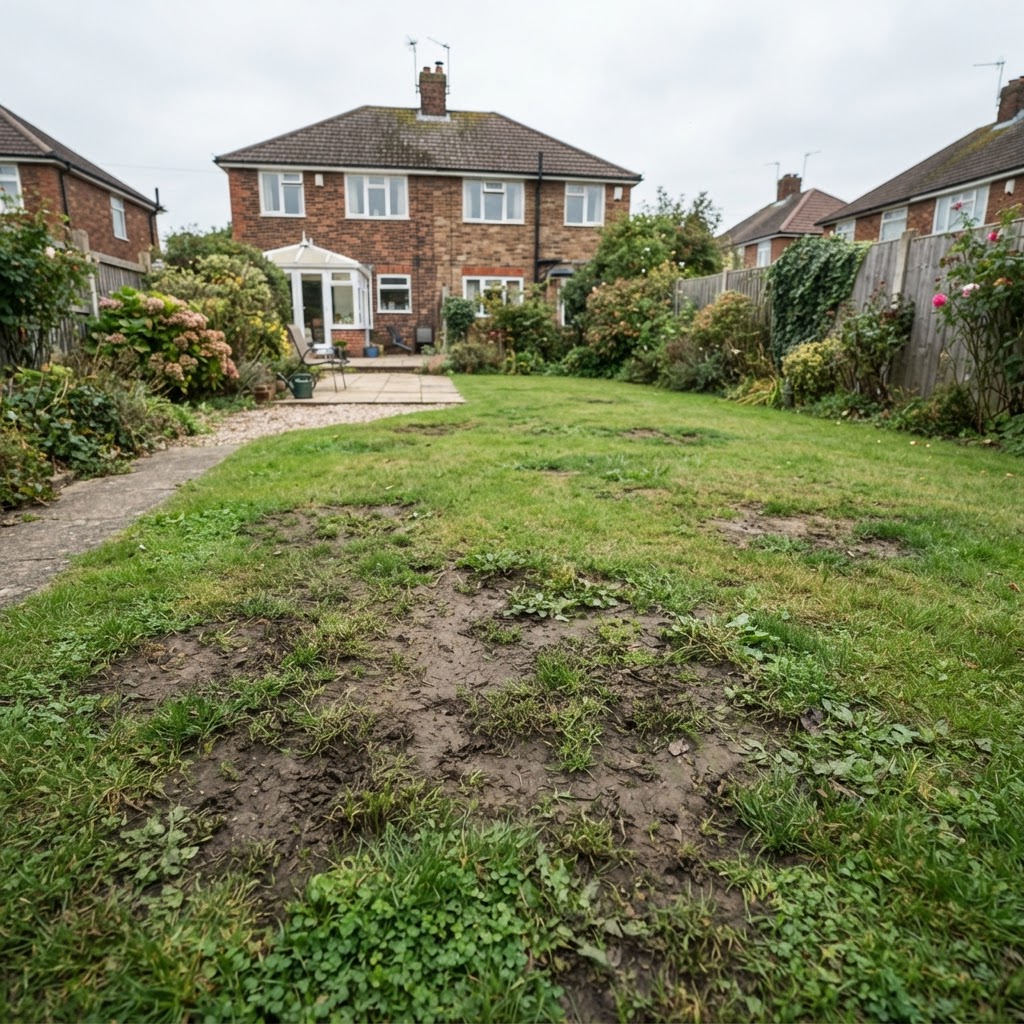
Selective herbicides are formulated to deal with broadleaf weeds in turf. These include dandelion, daisy, clover, plantain, buttercup and catsear. They work because broadleaf weeds respond differently to the active ingredients than grasses do.
This does not mean every unwanted plant in a lawn can be sprayed safely. Coarse grass species, couch grass and sedges are not broadleaf weeds, so a standard selective weed killer may not control them. Likewise, a total herbicide such as a glyphosate-based product kills green vegetation indiscriminately. It has a proper place when clearing a bed, path edge or hard surface, but it is not a treatment to apply across a lawn you want to keep.
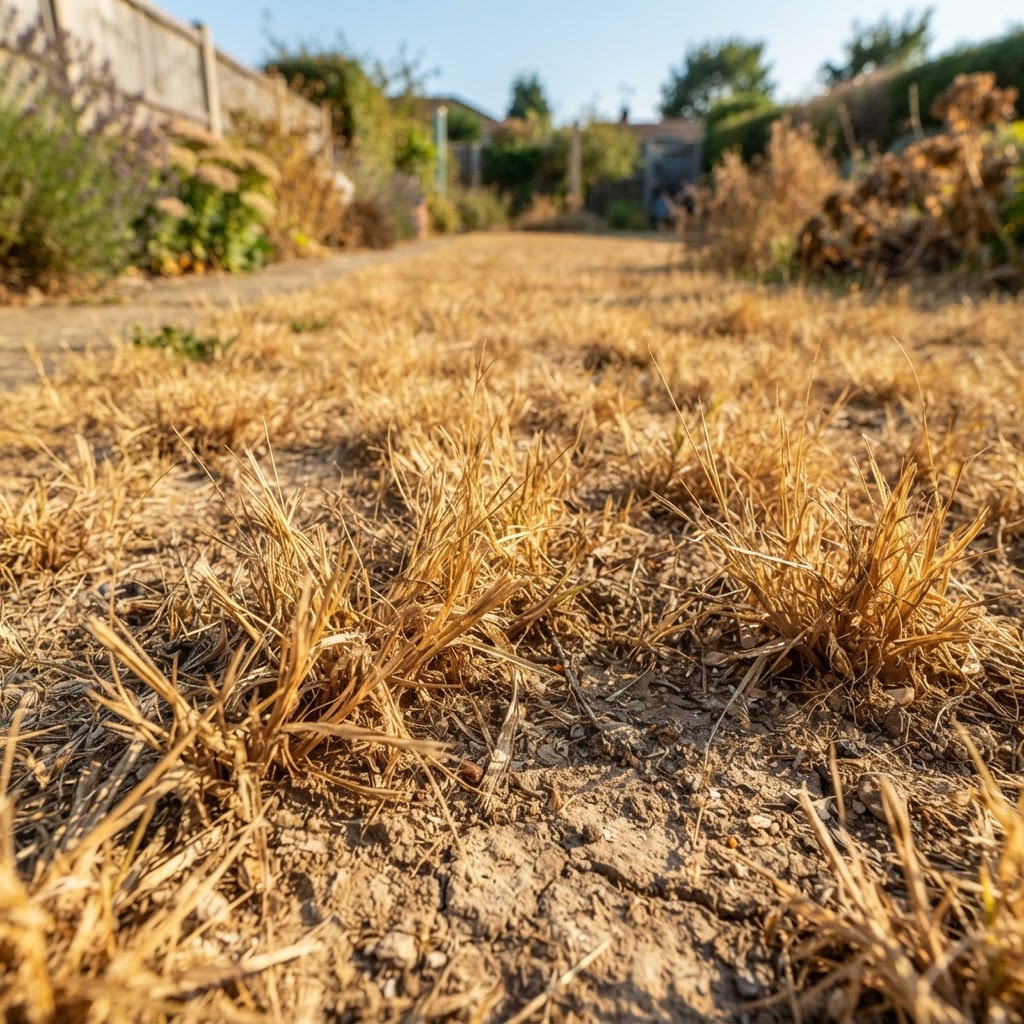
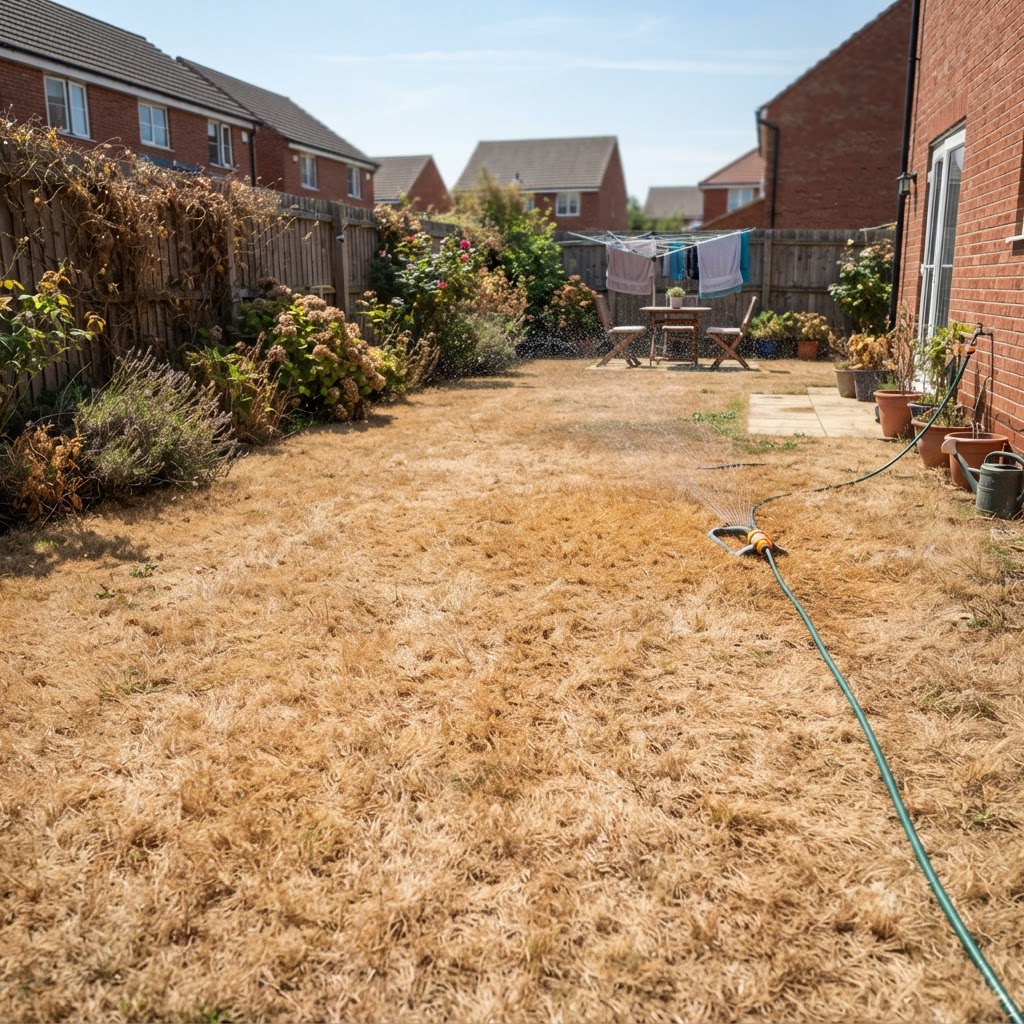
Selective products also rely on active growth. A weed sitting dormant through cold weather or struggling in drought will not take in treatment as effectively. For best results, apply during mild growing conditions, when the grass and weeds are dry and rain is not expected for the period stated on the label.
What moss killer does
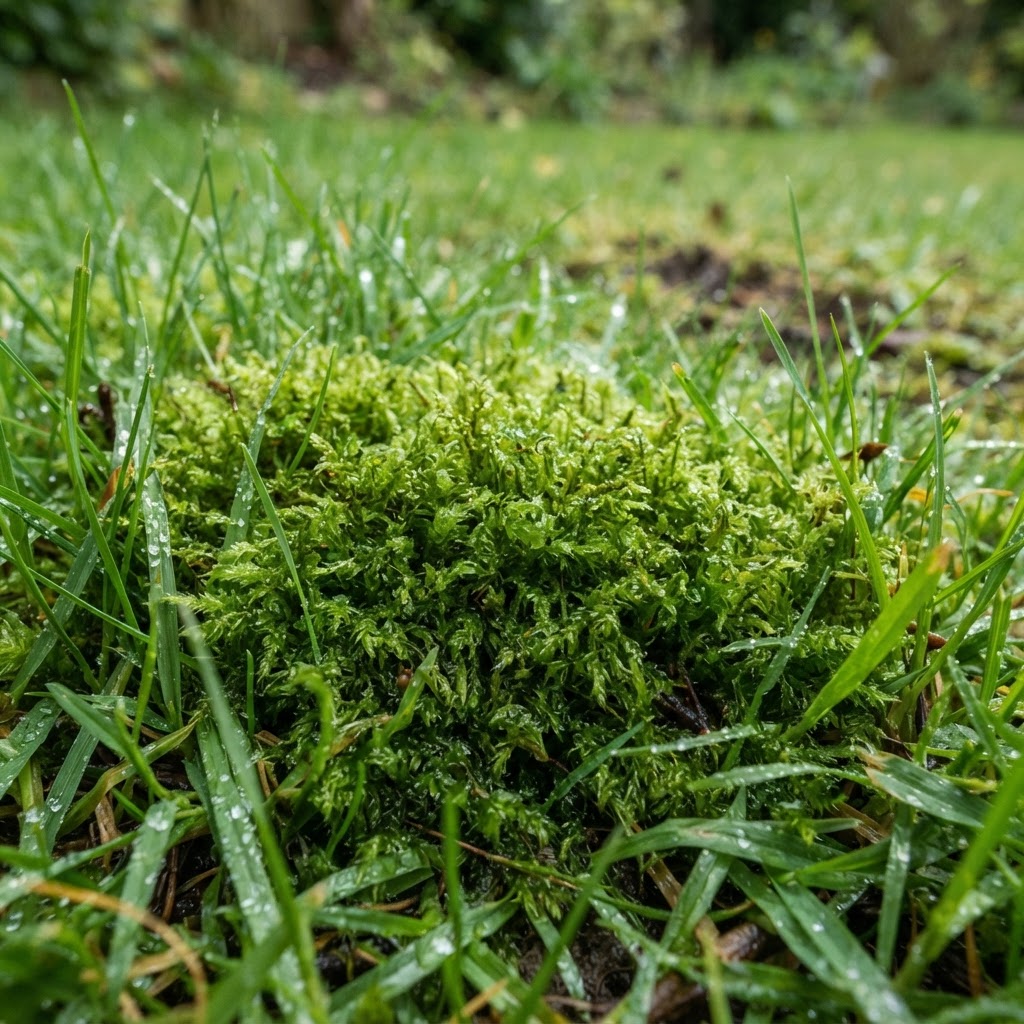
Moss is not a flowering weed. It reproduces by spores and thrives where grass is thin, stressed or unable to compete. High-iron moss treatments, commonly based on ferrous sulphate, blacken moss as it dies. The lawn may also take on a deeper green colour because iron supports chlorophyll production.
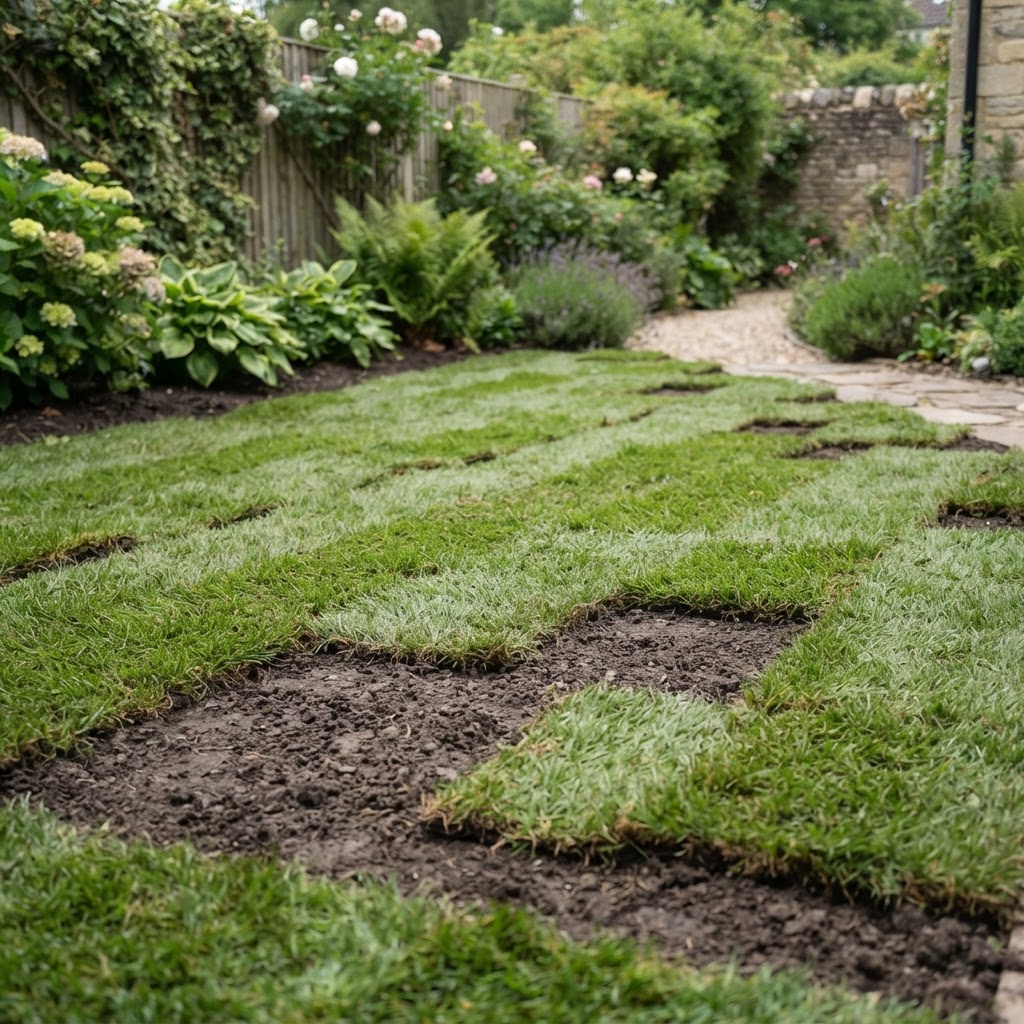
Blackened moss must then be scarified or raked out. Leaving it sitting at the base of the sward creates a dead, spongy layer that blocks light and air from the soil surface. Removing it gives grass plants space to tiller and, where necessary, gives overseeded grass seed contact with soil.
Iron treatments are effective, but they require care. They can stain paving, timber, clothing and concrete, particularly when wet. Sweep granules from paths before watering in, follow the stated application rate precisely and keep the material away from ponds and watercourses.
Diagnose why the lawn is inviting the problem
A treatment can clear visible weeds or moss, but the lawn will soon revert if its growing conditions remain poor. Moss is particularly useful as a diagnostic sign. It often points to compacted soil, poor drainage, shade, low fertility, excessive thatch or mowing too close.
In a shaded garden, grass receives less light and stays damp for longer after rain. A fine, shade-tolerant grass mixture and a slightly higher mowing height will normally perform better than repeatedly treating moss alone. On heavy soil, aeration can relieve compaction and help water move down through the rootzone rather than sitting at the surface.
Weeds tell a slightly different story. Clover can become prominent where nitrogen is low, while plantain often indicates firm, compacted ground. Daisies may simply exploit thin turf where there is open space. Improving density through correct feeding, aeration and overseeding is not an alternative to treatment in every case, but it is the reliable way to reduce future invasion.
Choosing the right treatment for your lawn
Where broadleaf weeds are the main issue and the grass is established, use a selective lawn weed killer. Apply evenly and avoid mowing immediately before or after treatment if the product instructions require leaf area for absorption. Do not assume a stronger dose will work faster. Overapplication can injure turf, breach the label conditions and create patchy results.
Where moss is the dominant problem, choose a purpose-made moss killer and plan to rake out the dead material. If the lawn is compacted, aerate after moss removal when soil conditions allow. If it is sparse, overseed with a mixture suited to the site, then use an appropriate fertiliser to support rooting.
A lawn carrying both weeds and moss needs a measured approach. Treating both on the same weekend can put unnecessary stress on grass, especially if the lawn is already thin or weather conditions are difficult. In many cases, control the moss first, remove it, then allow the lawn to recover before addressing weeds. The product label is the final authority, particularly where treatments specify intervals before sowing, mowing or applying another product.
When a three-in-one treatment makes sense
A combined fertiliser, selective weed killer and moss killer treatment can be useful on an established lawn with all three requirements: broadleaf weeds, active moss and a clear need for feeding. A trade-standard granular product such as Renovator Pro is engineered for this type of broad maintenance pass.
It is not automatically the best answer, however. If moss is caused by deep shade and waterlogging, a combined treatment will not correct either condition. If the lawn is newly seeded, recently turfed or due for overseeding, herbicide content may restrict when it can be used. Separate treatments give more control where the problem is specific or the renovation programme is more involved.
Timing and application make the difference
For most UK lawns, spring and early autumn offer the most dependable windows. Grass, weeds and moss are active, temperatures are moderate and soil moisture is usually more favourable. Avoid treatment during frost, drought, heat stress, waterlogged conditions or when strong winds could carry spray onto borders, hedges or neighbouring ground.
Read the label before opening the pack, not afterwards. It sets the approved rate, weather conditions, watering requirement, personal protective equipment and re-entry advice for children and pets. Use a calibrated spreader for granules or a properly measured sprayer for liquid products. Uneven application is one of the most common reasons for stripes, missed weeds and over-treated patches.
Take particular care around newly established grass. Young seedlings have limited roots and may be sensitive to selective herbicides. Allow them to establish fully and check the product's stated waiting period after sowing. If weeds appear among fresh seedlings, hand removal is often the safer short-term option.
Build a lawn that can compete
The best long-term moss and weed control is dense, well-rooted turf. Mow regularly but avoid scalping. For many domestic lawns, keeping the cut around 35-50 mm through the main season gives grass enough leaf area to photosynthesise while shading the soil below. Raise the mower further in shade or dry weather.
Feed according to the season rather than applying high nitrogen whenever the lawn looks pale. Spring and summer feeds support colour and growth, while an autumn formulation with lower nitrogen and higher potassium helps strengthen roots ahead of winter. Where soil is compacted, aerate. Where thatch is heavy, scarify carefully. Where bare ground remains, overseed promptly so weeds and moss do not claim the space first.
A clean treatment is satisfying, but it is the recovery work afterwards that changes the lawn. Give the grass light, air, nutrition and room to root, and it becomes far less welcoming to both moss and weeds.