














A new lawn can look promising one week and scruffy the next. Thin seedlings, bare patches and a flush of broadleaf weeds often arrive together, which is why weed control for new lawns needs a measured approach rather than a heavy hand. Treat too early and you can check young grass before it has anchored. Wait too long and weeds compete for light, moisture and nutrients when establishment matters most.
That balance is what catches many people out. Freshly sown grass is not the same as an established lawn, and it should not be managed like one. New turf also has its own timetable. The right answer depends on whether you have seeded or turfed, how many cuts the lawn has had, the species in the mix, and what sort of weeds you are dealing with.
Why weeds appear in new lawns so quickly
Weeds are opportunists. Disturbed ground, exposed soil and regular watering create ideal conditions for germination. The same moisture and warmth that help perennial ryegrass or fescue establish will also wake up chickweed, annual meadow-grass, fat hen, dandelion and clover.
In a seeded lawn, there is usually a short window where the grass is still knitting together and sunlight reaches the soil surface. That is enough for weed seeds already present in the ground to sprout. With newly laid turf, the rolls may look finished from day one, but the root system is still shallow. Any open joints, weak rooting or overwatering can give weeds room to move in.
This does not always mean something has gone wrong. A few weeds in the first season are common. The real question is whether they are temporary nuisance weeds that mowing will suppress, or persistent broadleaf weeds that need selective control later.
Weed control for new lawns starts before weeds emerge
The cleanest weed control programme starts before the first seed is sown. Good site preparation reduces pressure later and gives the grass a competitive advantage.
If the area is heavily infested with perennial weeds such as docks, nettles, couch grass or bindweed, clear them before sowing. That often means allowing existing growth to leaf up fully, then removing it properly before cultivation. Simply rotavating live perennial weeds through the seedbed usually spreads the problem.
Seedbed preparation matters too. A fine, firm surface helps even germination and reduces the hollows where water sits and weeds establish first. Fertility should also be sensible rather than excessive. A balanced pre-seeder fertiliser, particularly a 6-9-6 analysis, supports root development without forcing lush, weak top growth. Young grass with sound roots fills space faster, and a dense sward is still one of the best weed suppressants available.
Choice of seed plays a part. Fast-establishing mixtures, especially those with strong perennial ryegrass content, close the surface more quickly than slower, finer ornamental blends. That does not remove the need for weed control, but it shortens the vulnerable period.
The biggest mistake - spraying too early
This is where patience pays. Most selective lawn weed killers are designed for established grass plants, not seedlings at the cotyledon stage. If applied too soon, they can scorch, thin or check a new lawn just when you want steady tillering and root extension.
For seeded lawns, the safe rule is to wait until the grass is well established and has usually been mown at least three times. In practical terms, that often means several weeks after germination, but the number of cuts is more useful than the number of days because weather affects establishment speed. A lawn sown in a warm, moist spell can move quickly. One sown into cooler conditions may lag behind.
For new turf, wait until it has rooted firmly into the soil beneath and is actively growing. If a corner lifts easily, it is not ready for chemical treatment. Turf needs time to stitch down and recover from being harvested, transported and laid.
If you remember one point, make it this: immature grass is easier to damage than most weeds.
What to do before any herbicide is used
The first line of defence is simple maintenance. Keep the lawn evenly moist during germination, then gradually water more deeply and less often to encourage rooting. Avoid constant light irrigation once the grass is up, because that favours shallow roots and can help annual weeds.
Mowing is equally important. Start cutting as soon as the grass reaches a sensible height and the ground is firm enough to carry the mower without rutting. For most new lawns, that means taking only the top off on the first cut with a sharp blade. Never scalp seedlings. A clean first cut encourages tillering, thickens the sward and starts to suppress upright weeds.
Many early weeds are weakened simply by repeated mowing. Annual species that shoot above the grass canopy lose vigour each time they are cut back. Broadleaf weeds with low rosettes may persist, but even then, mowing buys time until the lawn is strong enough for selective treatment.
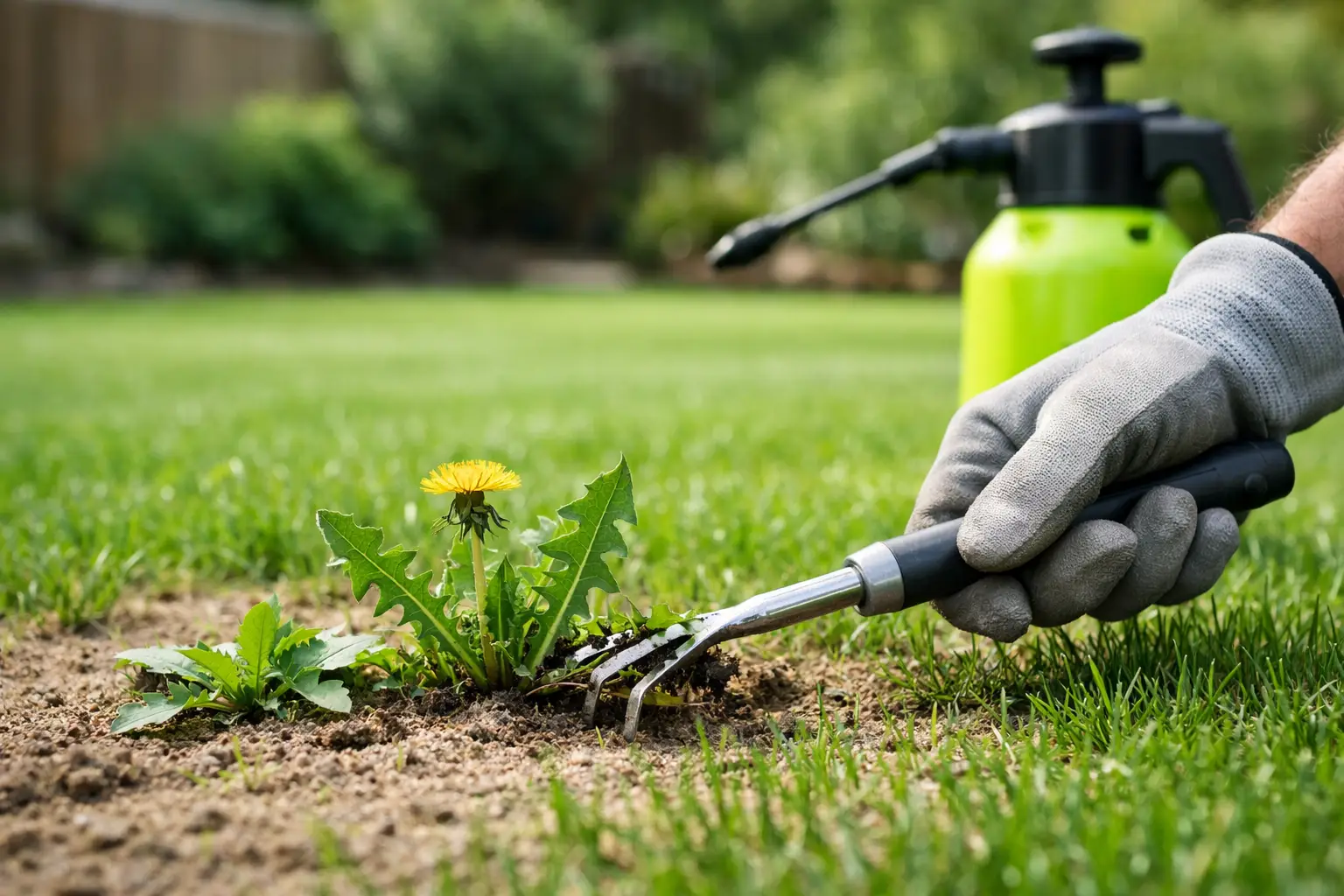
Hand removal has a place in smaller areas. A few isolated docks, dandelions or plantains are often better lifted individually than sprayed across a whole young lawn. That is especially true if the grass is still in its first establishment phase.
Choosing the right treatment for a new lawn
Once the lawn is established enough, selective weed killers are the proper tool for broadleaf weeds. These formulations are designed to target weeds such as clover, daisies and dandelions without harming grass when used at the correct stage and rate.
That said, not every product is suitable for very young turf. Always check the label for timing after sowing or laying. Some selective herbicides are approved only for mature lawns. Others can be used earlier, but still require a minimum number of cuts.
Granular combination products can be useful later in the season where weeds and moss are both present, particularly if they also include a fertiliser element. On a brand-new lawn, however, caution is sensible. A triple-action treatment may be effective on an established lawn, but newly sown grass often benefits from keeping feeding and weed control as separate operations until the sward is properly settled.
Avoid non-selective herbicides anywhere near a lawn you want to keep. These products kill grasses as readily as weeds and are for total vegetation control on hard surfaces or when clearing an area before creating a lawn, not after.
Seeded lawns versus newly turfed lawns
The weed control approach changes slightly depending on how the lawn was made.
Seeded lawns usually see more early weed emergence because bare soil is exposed during establishment. The upside is that if the seed mix is vigorous and the first few cuts are timed properly, the lawn can thicken rapidly and outcompete many annual weeds. Here, restraint is often the right call for the first phase.
New turf tends to look cleaner initially, but weeds can still appear through joints, edges and poorly prepared ground beneath. The risk with turf is assuming it is established because it looks finished. Chemically treating unrooted turf can set it back badly. Check rooting first, then manage weeds.
In both cases, nutrition should support rooting rather than force soft growth. If nitrogen is pushed too hard early on, you may get quick colour but weaker structure and more mowing pressure. A steady establishment feed is usually the better route.
Timing through the UK season
In the UK, spring and early autumn are the main lawn establishment windows. Both can work well, but weed pressure behaves differently.
Spring sowings often face strong weed germination because soil temperatures are rising across the board. Grass grows well, but so do annual weeds. This is where mowing discipline and patience with herbicides matter most.
Autumn sowings usually see less aggressive annual weed pressure, and warm soil can support rapid grass establishment. The trade-off is shorter days and slowing growth as temperatures drop. If the lawn is sown late, there may not be enough active growth left in the season for any selective treatment, so some weeds are simply dealt with the following spring.
That is not failure. It is sensible scheduling.
When a few weeds are not the main problem
Sometimes weeds are only a symptom. If a new lawn remains thin, patchy or pale, ask why the grass is not competing properly. Compaction, poor seed-to-soil contact, low fertility, dry patches, shade or the wrong seed mixture can all leave space for weeds to fill.
This is where a trade-standard approach makes the difference. Rapid-establishing seed, appropriate fertiliser analysis and attention to mowing height usually do more for long-term weed reduction than reaching for the sprayer at the first sight of a daisy. Ransley Pro Grow has long supplied that kind of specification-led approach because lawn establishment is won by good sequencing, not guesswork.
A practical standard to work to
If you want a simple rule, aim for a dense, actively growing lawn before you treat weeds chemically. Until then, keep the surface moist but not sodden, mow little and often once growth allows, and deal with isolated invaders by hand where practical. Once the grass has had several cuts and is clearly established, selective weed control becomes a useful finishing tool rather than a risky first reaction.
Young grass does not need drama. It needs clean preparation, measured feeding, sharp mowing and time to do its job. Give it that, and most weed problems become manageable rather than structural.
A new lawn is always a test of timing. Get that right, and the grass usually wins.