


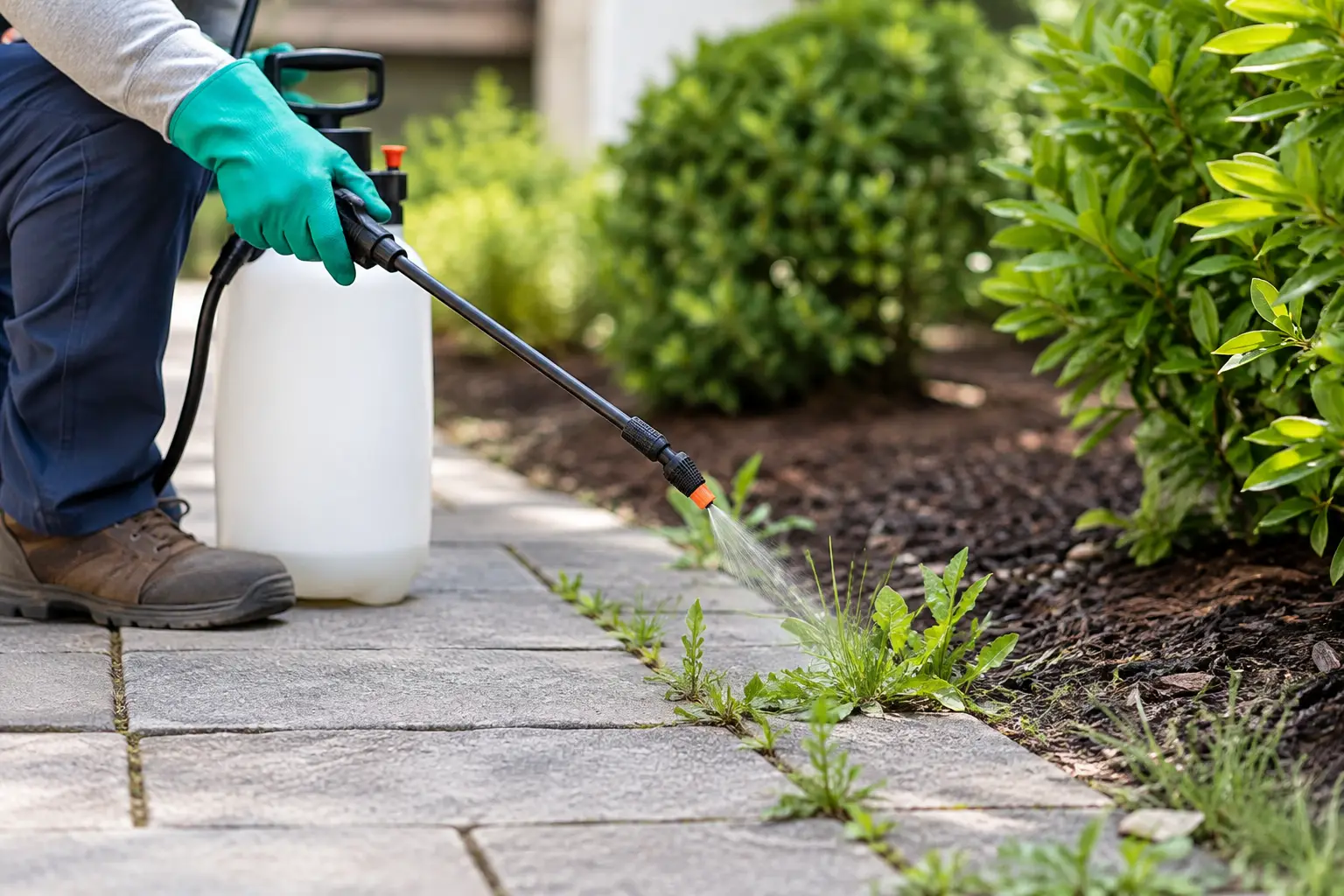
A weed growing through block paving is not just untidy. Its roots can widen joints, trap moisture and create a repeat maintenance job. Total weed control is designed for this sort of complete clearance: removing all green vegetation in a defined area, rather than picking out one type of weed while preserving another.
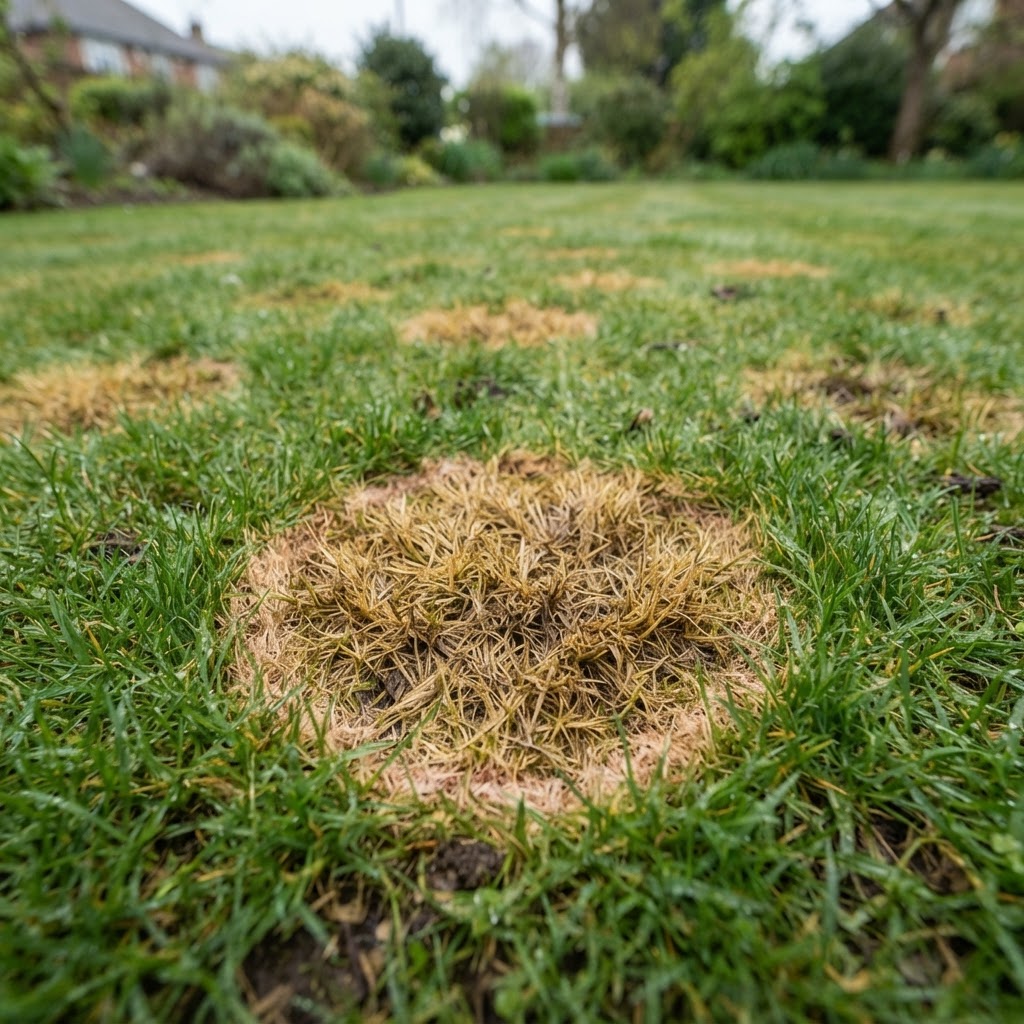
That distinction matters. A total herbicide is the correct tool for paths, driveways, fence lines, neglected borders being renovated and ground being prepared for a new project. It is not a lawn weedkiller. Used carelessly around turf, it will damage or kill the grass just as readily as the dandelion.
What total weed control actually means
Total weed control normally refers to a non-selective herbicide treatment. Unlike a selective lawn weedkiller, which is formulated to control broadleaf weeds while leaving established grasses intact, a non-selective treatment affects most actively growing plants it contacts and absorbs.
Many total weed killers use glyphosate as their active ingredient. Glyphosate is systemic, meaning it moves from treated foliage through the plant towards the roots. This is why it can give more reliable control of established perennial weeds than simply scorching the leaves. The plant needs to be growing and carrying the product through its system for the treatment to work properly.
This is also why a quick spray is not always a quick result. Annual weeds may begin to yellow within days, but deep-rooted perennials such as couch grass, bindweed, brambles and ground elder can take longer. In difficult ground, one application may suppress top growth without fully exhausting the underground root system. Inspection and follow-up treatment are often part of a proper clearance plan.
Where total weed control earns its place
Hard surfaces are the most common use. Weeds establish wherever dust, organic debris and moisture collect: between paving blocks, alongside kerbs, at the base of walls and in cracks in tarmac. Pulling them can be useful for isolated plants, but it often leaves roots behind or disturbs paving joints. A carefully directed total herbicide treatment can clear the vegetation without unnecessary mechanical disruption.
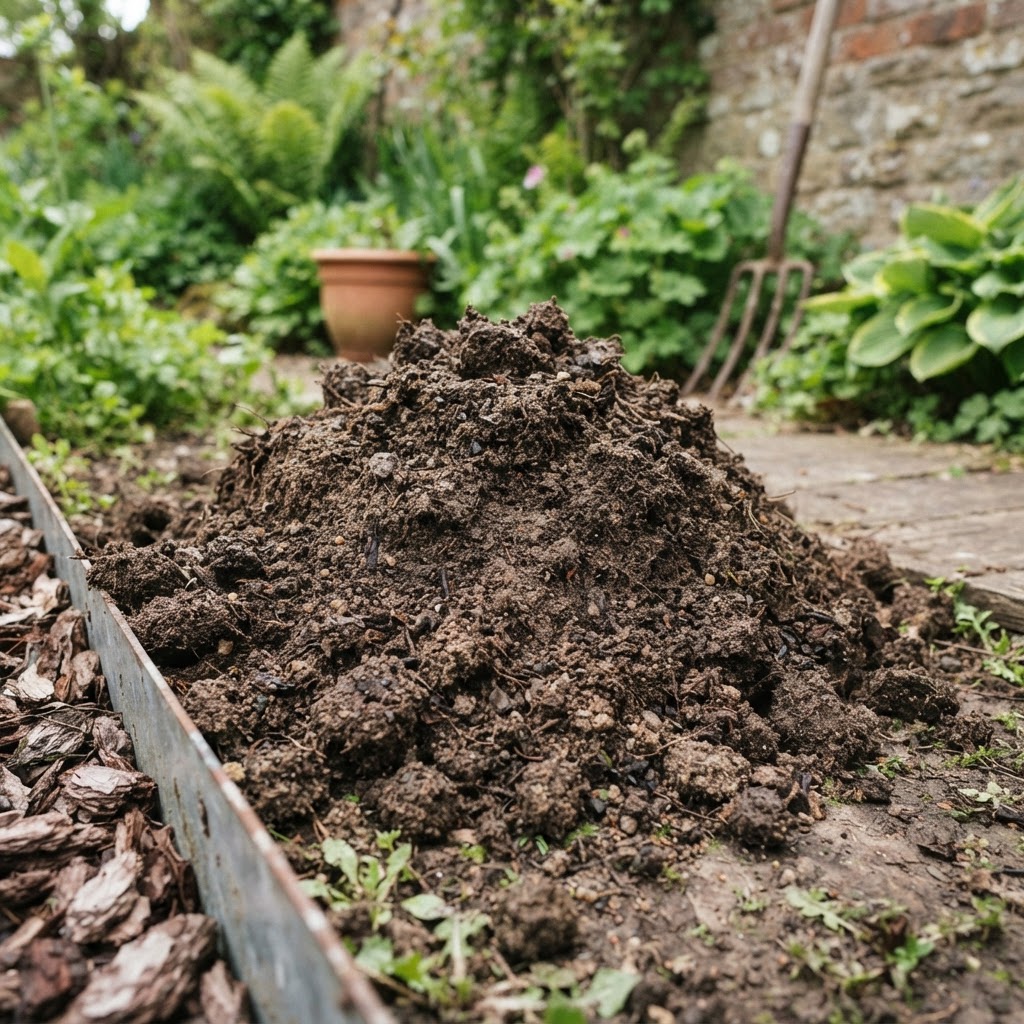
It is equally useful when reclaiming an overgrown bed. If the intention is to remove existing weeds, turf or rough vegetation before installing a new border, sowing a wildflower area or laying turf, complete control creates a clean starting point. The trade-off is time. A rushed renovation usually means living roots are buried under fresh soil or mulch, only to emerge through the finished surface a few weeks later.
For contractors, total control can also be a practical line-management treatment along fence runs and around fixed obstacles where mowing is inefficient. The target area should be tightly defined. There is no benefit in treating more ground than the job requires.
When it is the wrong choice
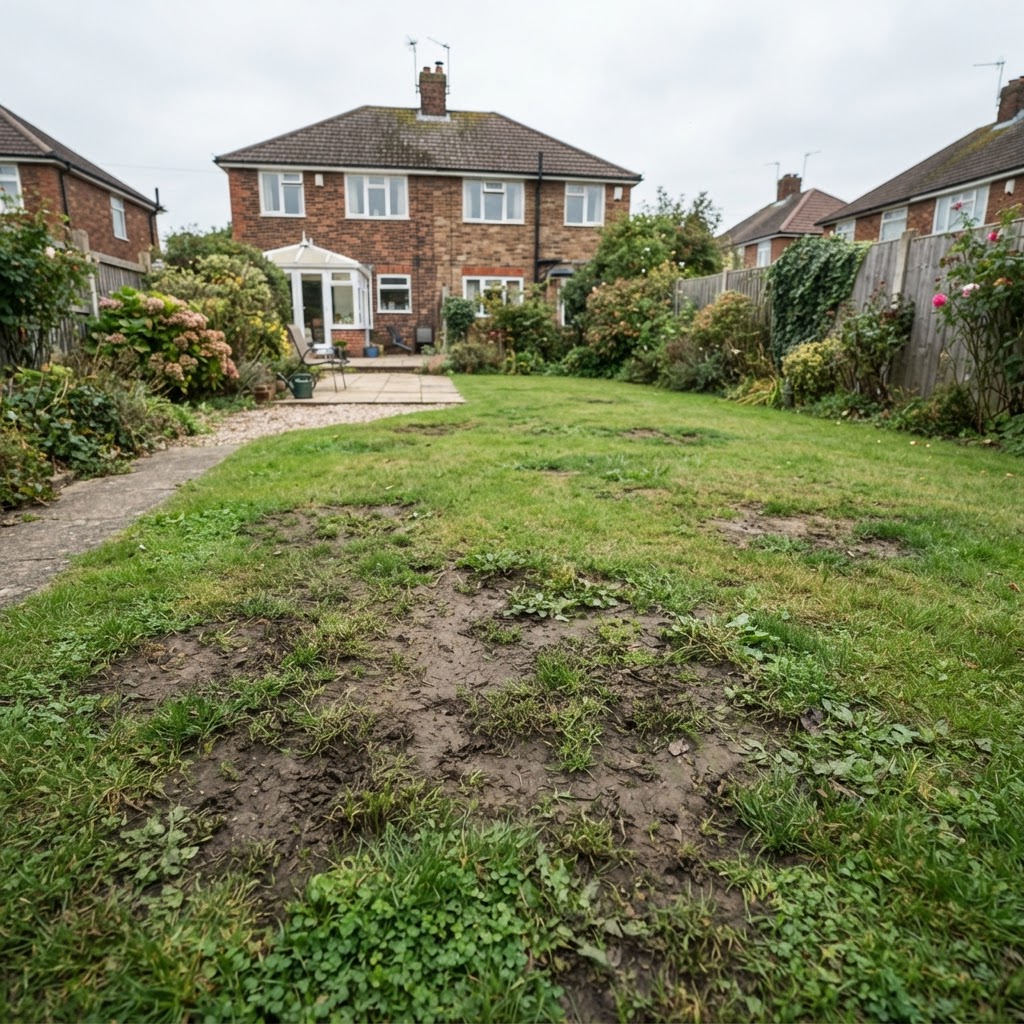
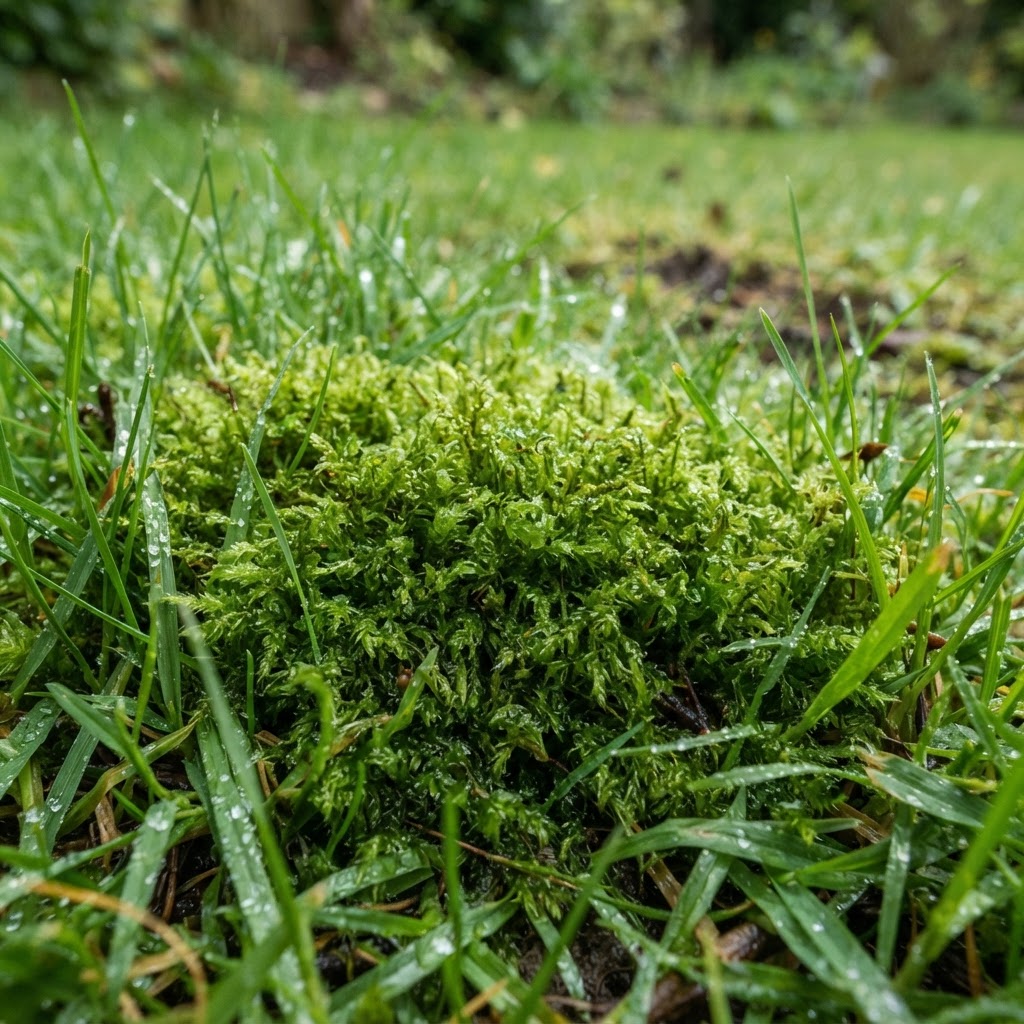
Never treat a lawn with a total herbicide if the aim is to retain the lawn. A patch of daisies, clover or plantain needs a selective weedkiller that is suitable for turf, applied at the label rate and at the right stage of grass growth. If moss is the main issue, an iron-based moss treatment followed by scarification addresses the cause far better than blanket spraying.
Total weed control is also a poor substitute for diagnosis. Weeds repeatedly colonising a driveway may point to open joints and accumulated debris. Weeds in an empty border may indicate that the soil has been left bare for too long. Treat the current growth, then correct the conditions that allow new seedlings to establish.
Take particular care near ponds, watercourses, drains, desirable plants and newly planted hedges. Spray drift and run-off do not recognise boundaries. Do not use a total herbicide where the product label prohibits it, and do not assume that a treatment approved for one surface is appropriate for another.
How to apply total weed control properly
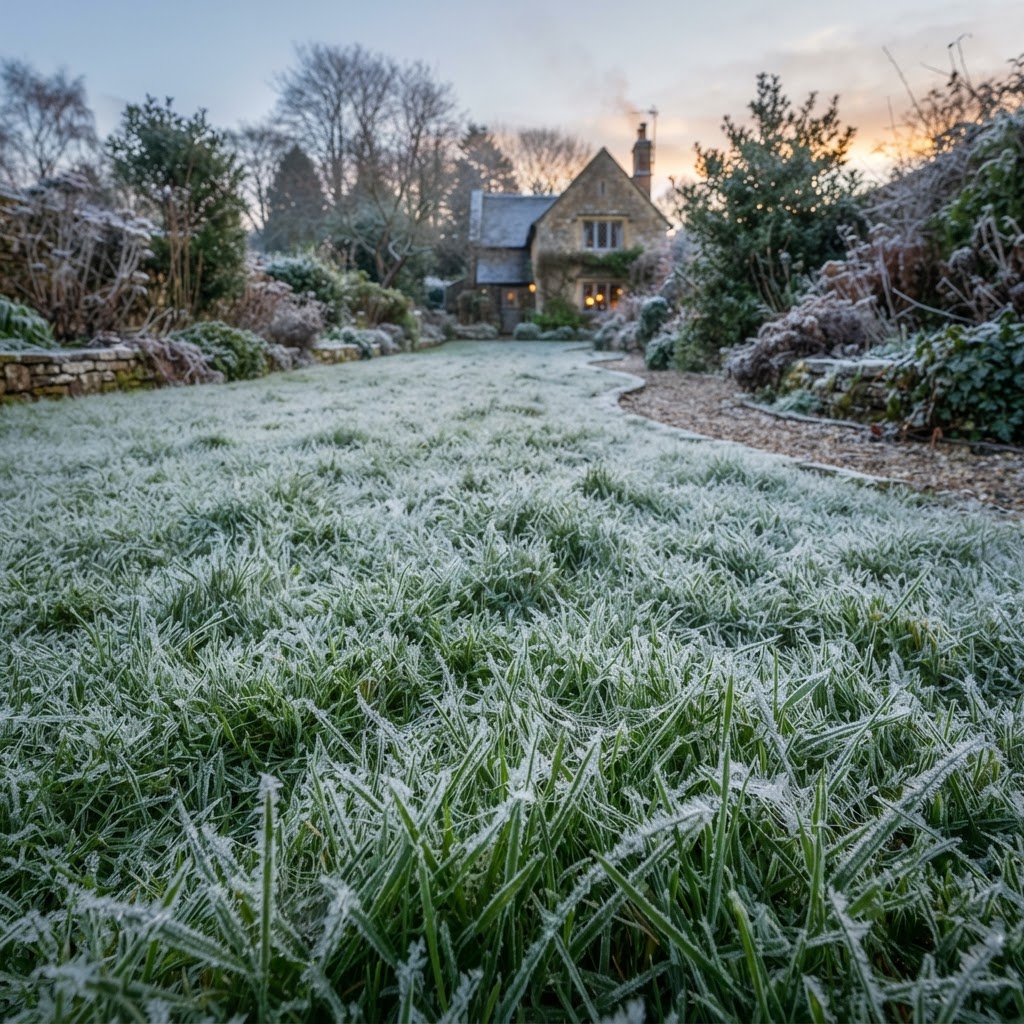
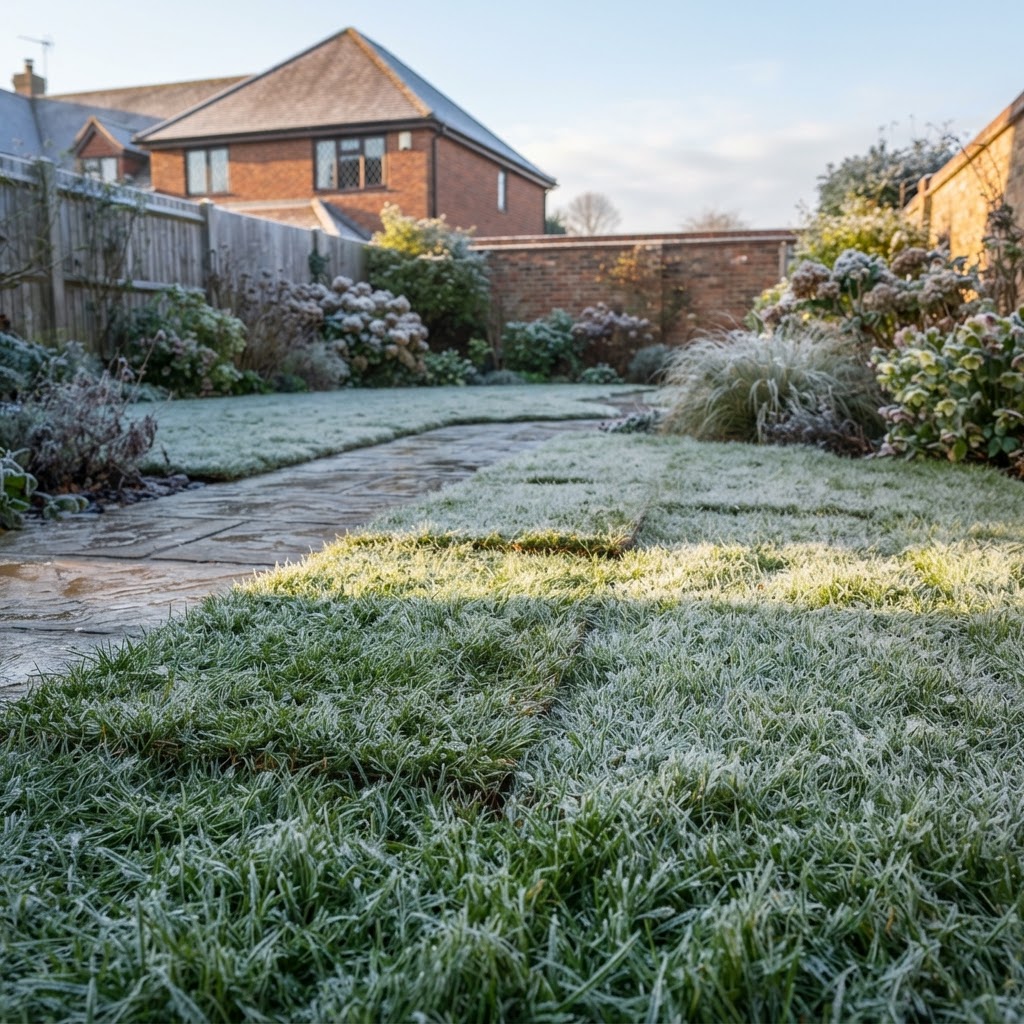
Good results come from timing and accuracy, not from using extra product. Choose a dry, calm day when weeds have sufficient leaf area and are actively growing. Avoid spraying drought-stressed plants, frosted foliage or weeds that have recently been cut back. There must be enough healthy green leaf to absorb the treatment.
Use a clean sprayer reserved for herbicides where possible. Set the nozzle to produce a controlled coarse spray, then wet the foliage evenly without soaking it to the point of run-off. The aim is coverage of the target weed, not a wet pavement, adjacent border or lawn edge.
Before applying, check the product label for dilution rate, application method, rainfast period, maximum number of treatments and the interval before cultivation or replanting. These details vary between products and formulations. The label is a legal instruction, not a suggestion.
Do not spray in wind. Even a light breeze can carry fine droplets onto roses, shrubs, vegetable crops or turf. Shielded spraying, a hand-held guard or a weed wiper may be more suitable where desirable planting is close to the target. On paving, take care that spray cannot enter surface-water drains or be washed into them by rain.
Wear the personal protective equipment specified on the label, keep children and pets away until the treated area is dry, and store products securely in their original containers. Measure concentrates accurately. Stronger is not better: over-mixing wastes product, increases the risk of off-target damage and does not overcome poor application conditions.
Allow enough time before clearing and replanting
It is tempting to strim, dig or pull treated weeds as soon as they wilt. Resist that urge. Systemic herbicides need time to move through the plant. Cutting foliage too early can reduce control, particularly on perennial weeds with substantial roots.
Once the label interval has passed and vegetation has died back, remove the debris where needed and inspect the site. Any green regrowth should be allowed to develop enough leaf before a targeted follow-up treatment. This is especially relevant with brambles, Japanese knotweed and other invasive or persistent species, where specialist advice and a longer management programme may be appropriate.
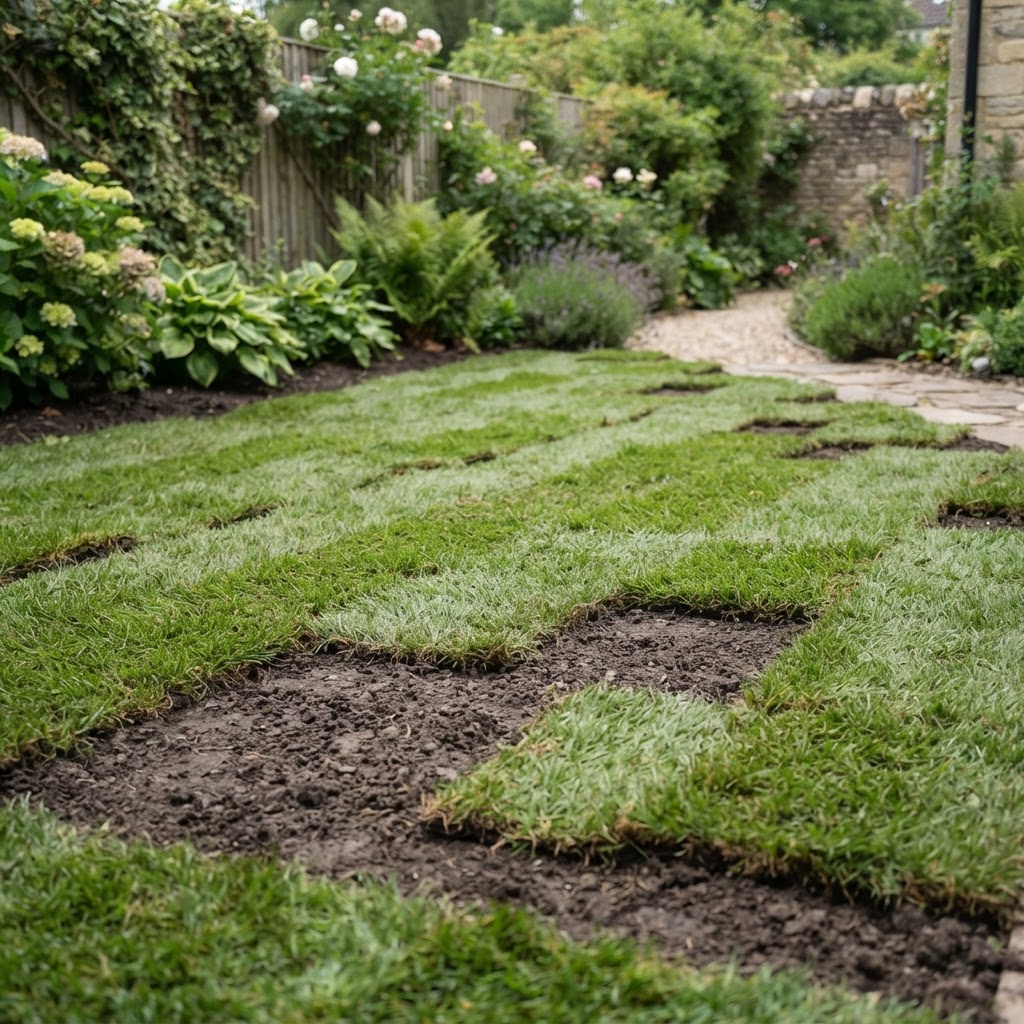
For a new lawn area, complete weed control is only the first stage. After clearance, prepare the ground properly: remove stones and old roots, level the surface, improve soil where required and allow any remaining weed seeds to germinate before final preparation. A clean seedbed gives grass seed the light, moisture and space needed for rapid establishment.
Preventing weeds after clearance
Bare ground invites fresh weed seed. On beds, a suitable mulch layer can reduce light at the soil surface and make hand-weeding easier. On driveways and paths, regular sweeping removes the debris that becomes a seedbed in paving joints. Repairing damaged pointing or loose blocks also reduces the places where roots can gain a hold.
In lawns, density is the best long-term defence. Mow at an appropriate height, feed according to the season, relieve compaction where necessary and overseed thin areas. A vigorous grass canopy shades the soil and leaves fewer opportunities for weed seedlings to establish. Ransley Pro Grow's approach is simple: match the treatment to the surface, then strengthen the ground cover you want to keep.
Total herbicides are powerful maintenance tools when used with restraint. Apply them only where complete vegetation removal is genuinely required, follow the label exactly, and give the site a plan for what comes next. A cleared surface stays cleaner for longer when the underlying cause has been dealt with.