
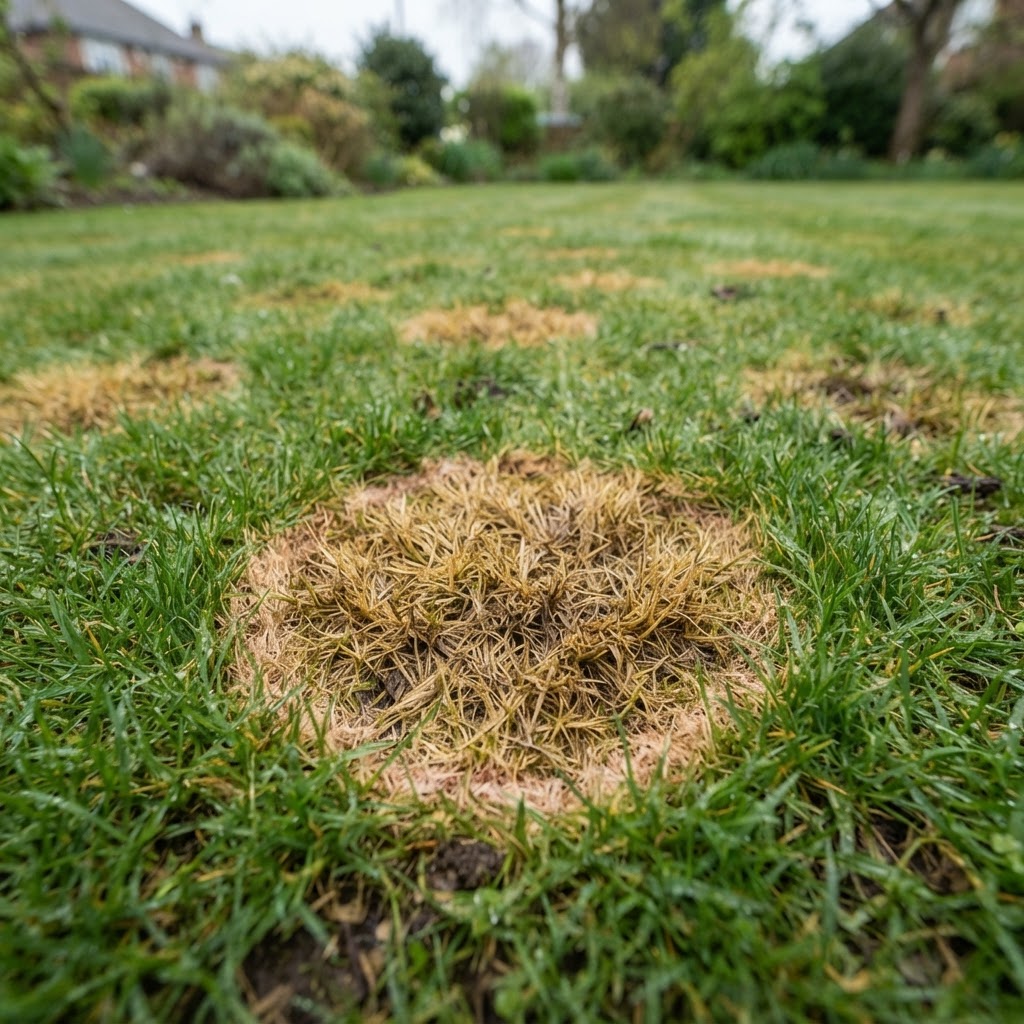
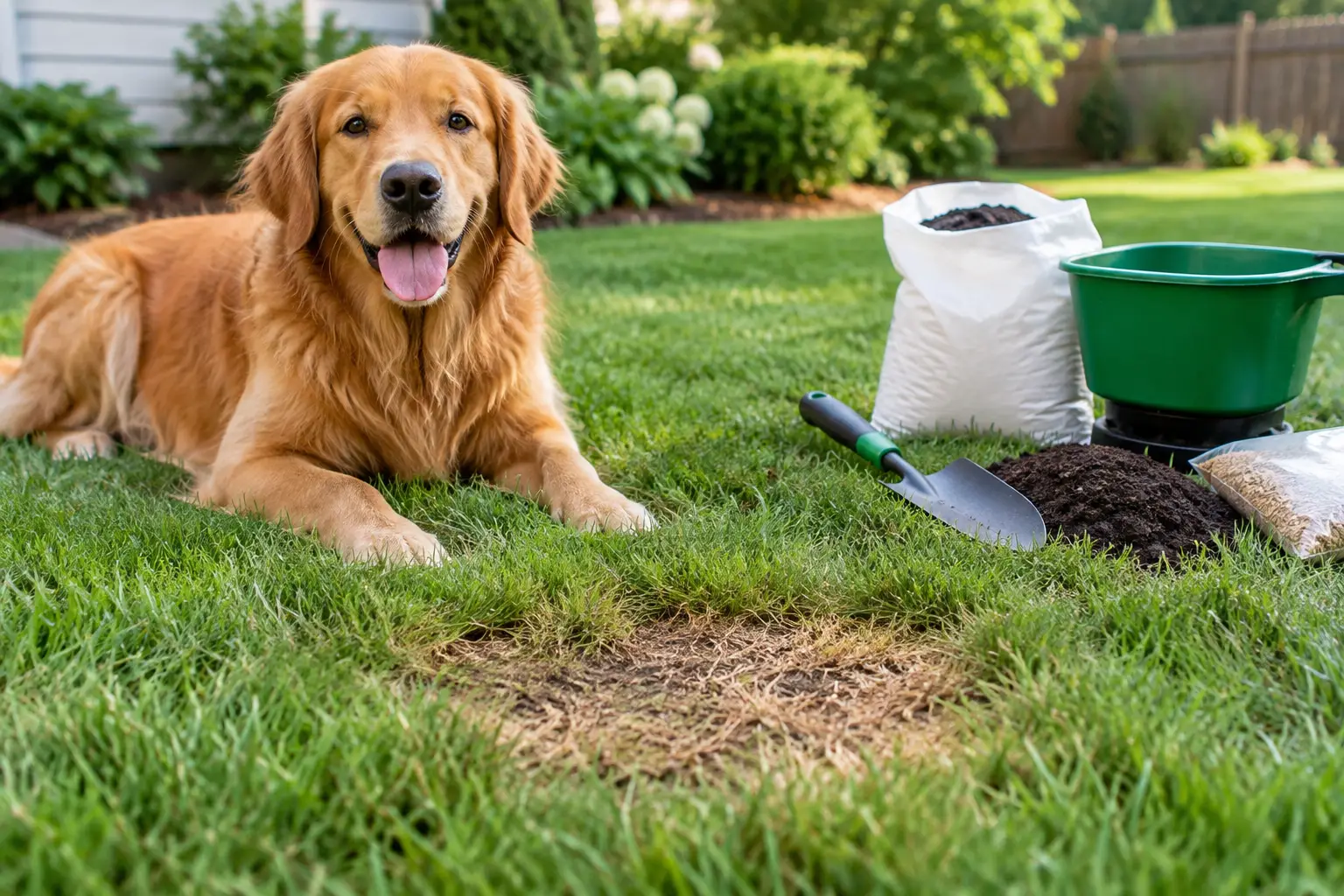
A circular yellow patch with a greener ring around its edge is a familiar sign of concentrated urine, not a mysterious lawn disease. To repair dog urine patches properly, deal with the salts already in the rootzone, restore the damaged grass plant and adjust the conditions that allow the same spot to fail again.
The good news is that most domestic lawns recover well. The poor news is that scattering seed over a scorched patch, then carrying on as before, usually creates a short-lived repair. A dependable result comes from preparing the soil and establishing suitable grass, particularly where the lawn gets regular use from both family and dog.
Why dog urine damages grass
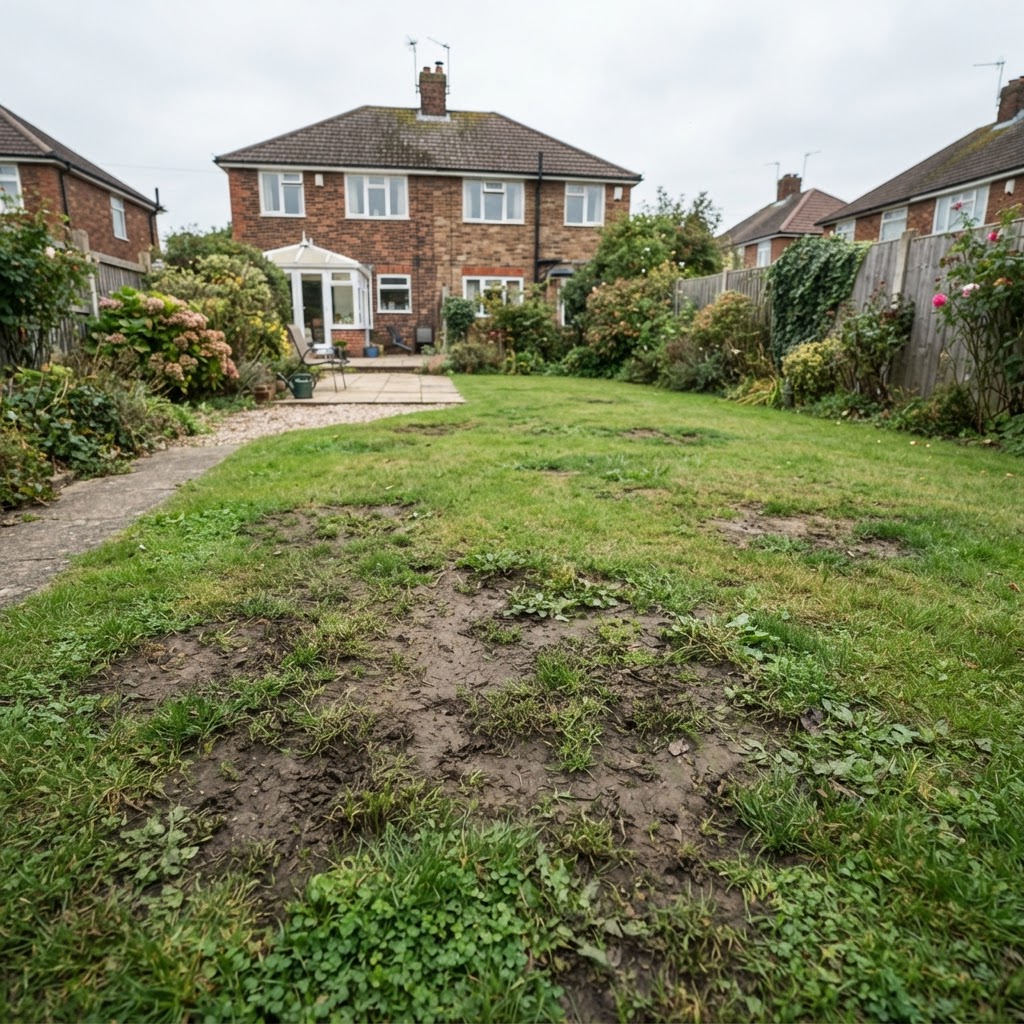
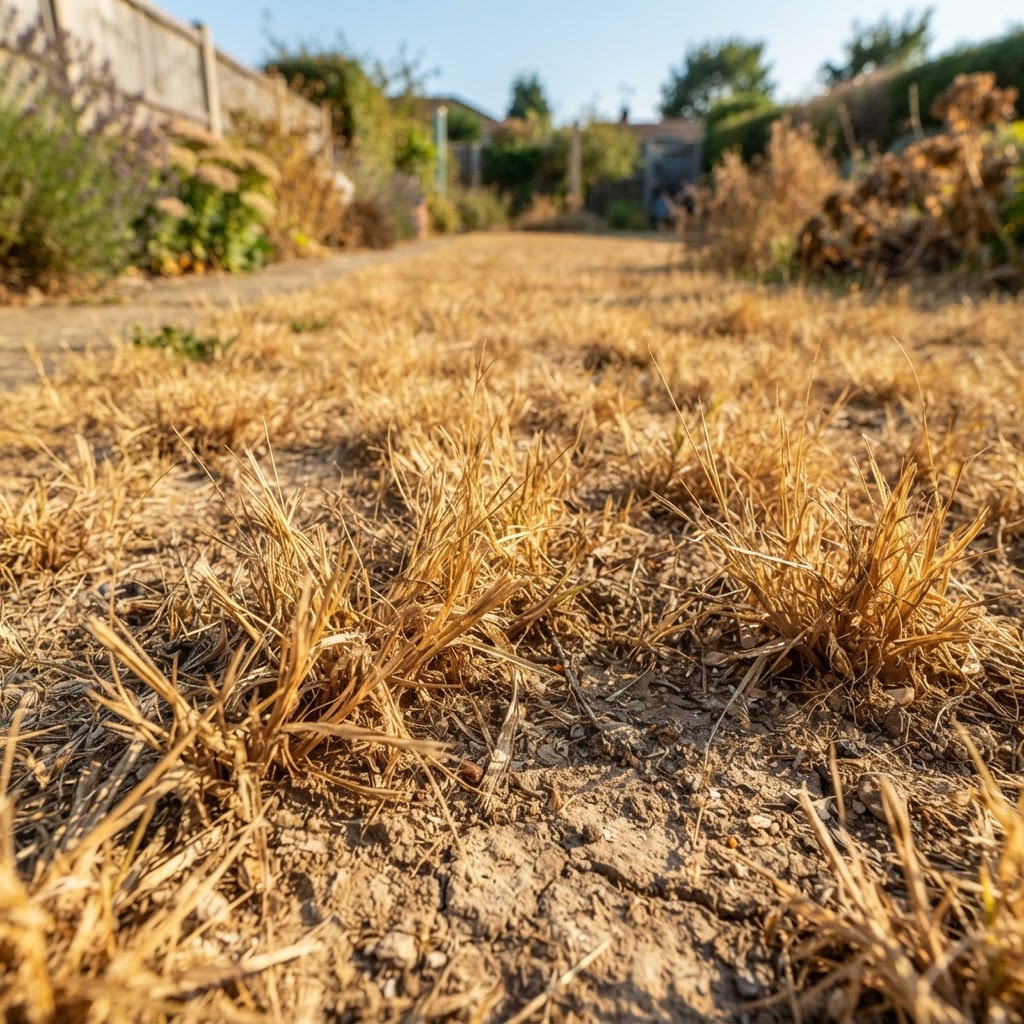
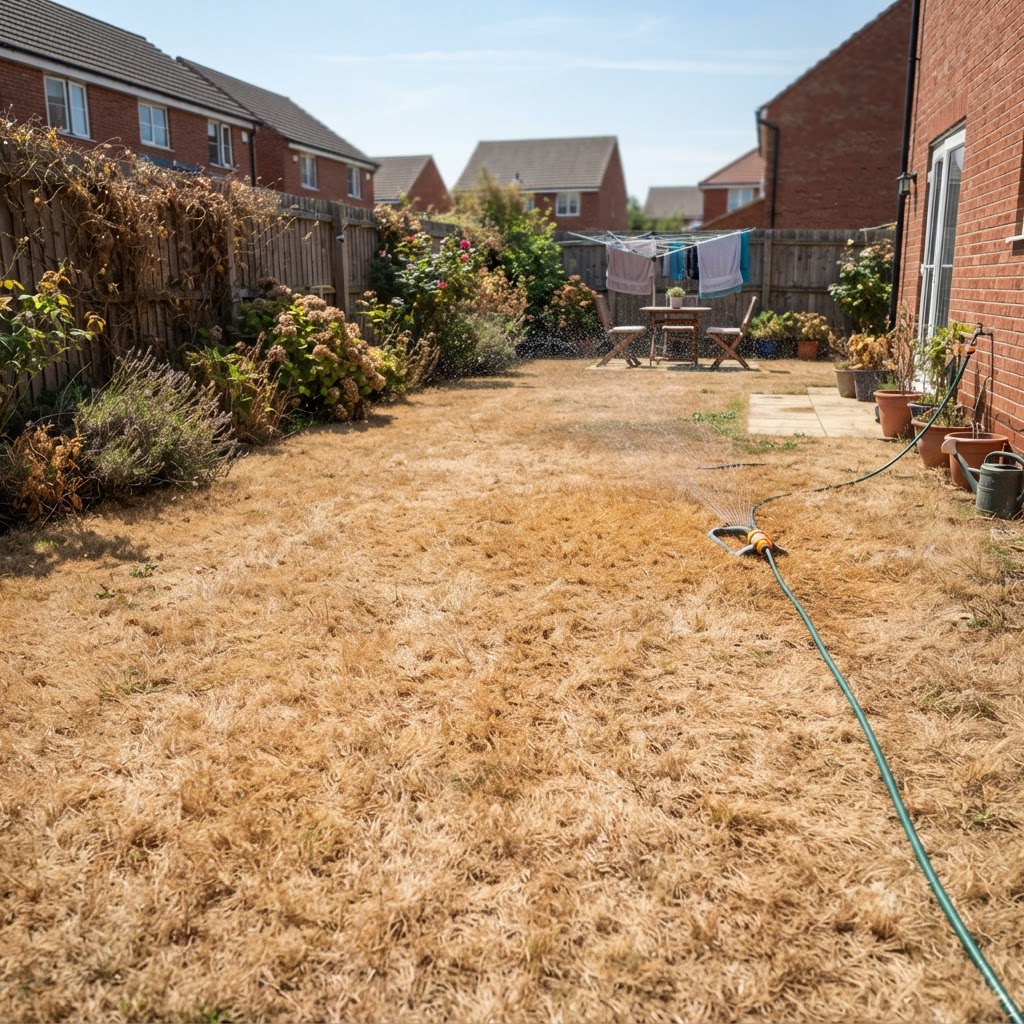
Dog urine contains nitrogen compounds and mineral salts. In small, diluted quantities, nitrogen feeds grass, which explains the dark-green ring sometimes seen around a patch. In a concentrated dose, however, salts draw water away from grass roots and the nitrogen load can scorch leaf tissue. The centre turns yellow or straw-coloured, then thins out or dies back.
It is not simply a question of a dog having an acidic urine pH. Adding lime, bicarbonate of soda or other household remedies is therefore not the answer. Lawn soil in the UK is rarely made unusable by acidity from urine alone, and unnecessary lime can push soil pH beyond the range where nutrients are readily available.
The severity depends on volume, frequency, recent rainfall, soil type and grass species. A small lawn with compacted, dry ground will show damage sooner than a deep, free-draining lawn that receives regular rain. Female dogs are often blamed because they tend to squat in one place, but any dog regularly using the same area can create patches.
Check that the patch is really urine damage
Before reseeding, look at the shape and surrounding turf. Urine patches are usually rounded, roughly 10 to 30cm across, and often have a darker green outer margin. They commonly appear near the patio, along a familiar patrol route or in a preferred corner of the garden.
Chafer grubs, leatherjackets, shade, drought and mower scalping can all produce bare ground, but they require different treatment. Lift a section of loose turf if birds have been pecking or the lawn feels spongy. Grubs may be present. If patches follow a stripe after mowing, inspect the mower height and blade condition instead. Repairing the surface without correcting the underlying cause wastes seed and time.
Flush fresh patches quickly
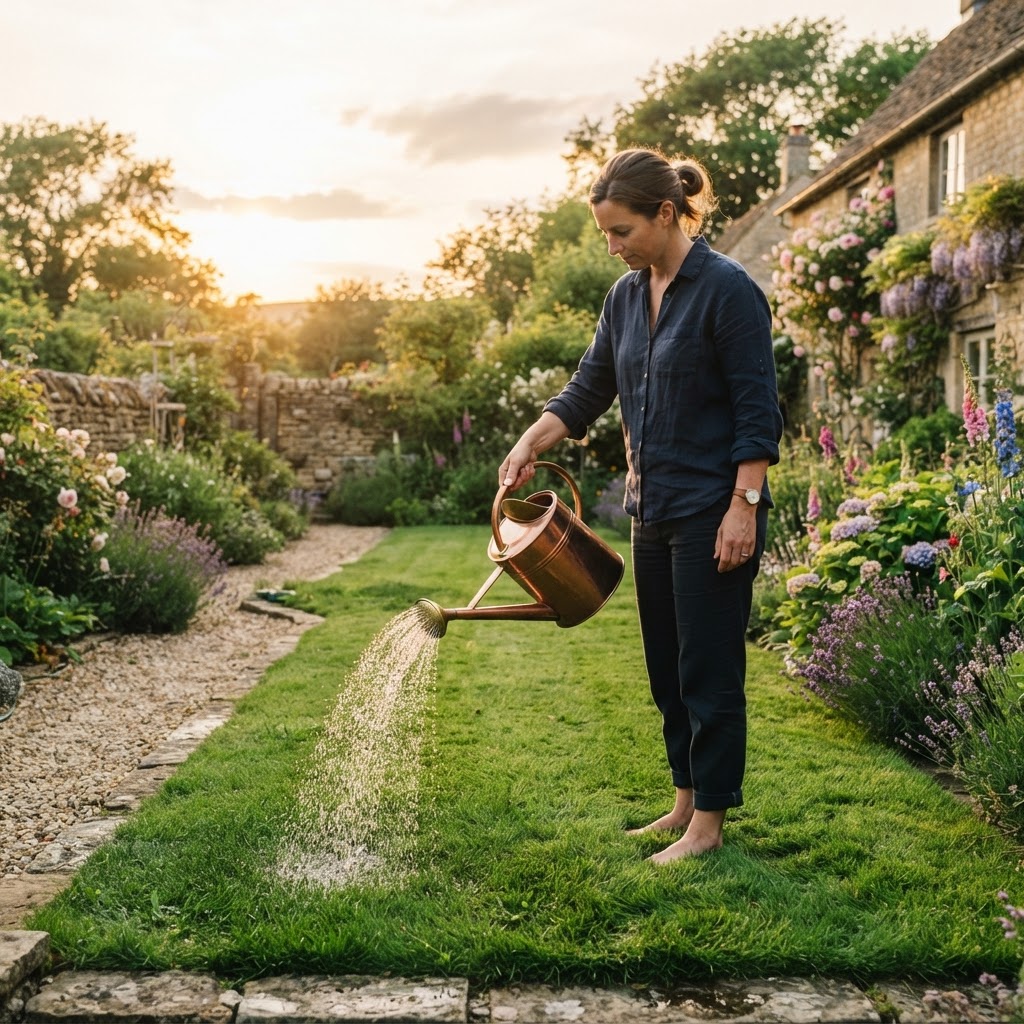
When the urine is fresh, the most effective action is plain water. Thoroughly soak the affected area as soon as practical to dilute and move salts below the active root zone. A brief sprinkle is not enough. Apply water gently for several minutes, allowing it to soak in rather than run across the surface.
This is most useful on free-draining soils and during dry weather. Heavy clay may drain slowly, so water in two or three applications rather than flooding the lawn. Do not use detergent, vinegar, salt-neutralising powders or strong chemical cleaners. They can injure grass further and may make the soil less hospitable to new seedlings.
For a fresh mark that still has green growth in the centre, regular irrigation alone may be enough. Give it 10 to 14 days during the growing season before deciding whether it needs reseeding.
How to repair dog urine patches that are bare
A patch with dead, brittle grass needs a small renovation rather than a cosmetic overseed. Carry this out when grass can actively grow: mid-spring is suitable once the soil has warmed, while late August to September is often the most reliable window in the UK. Autumn soil retains warmth, weed pressure drops and seedlings establish before winter.
Remove damaged material and prepare the soil
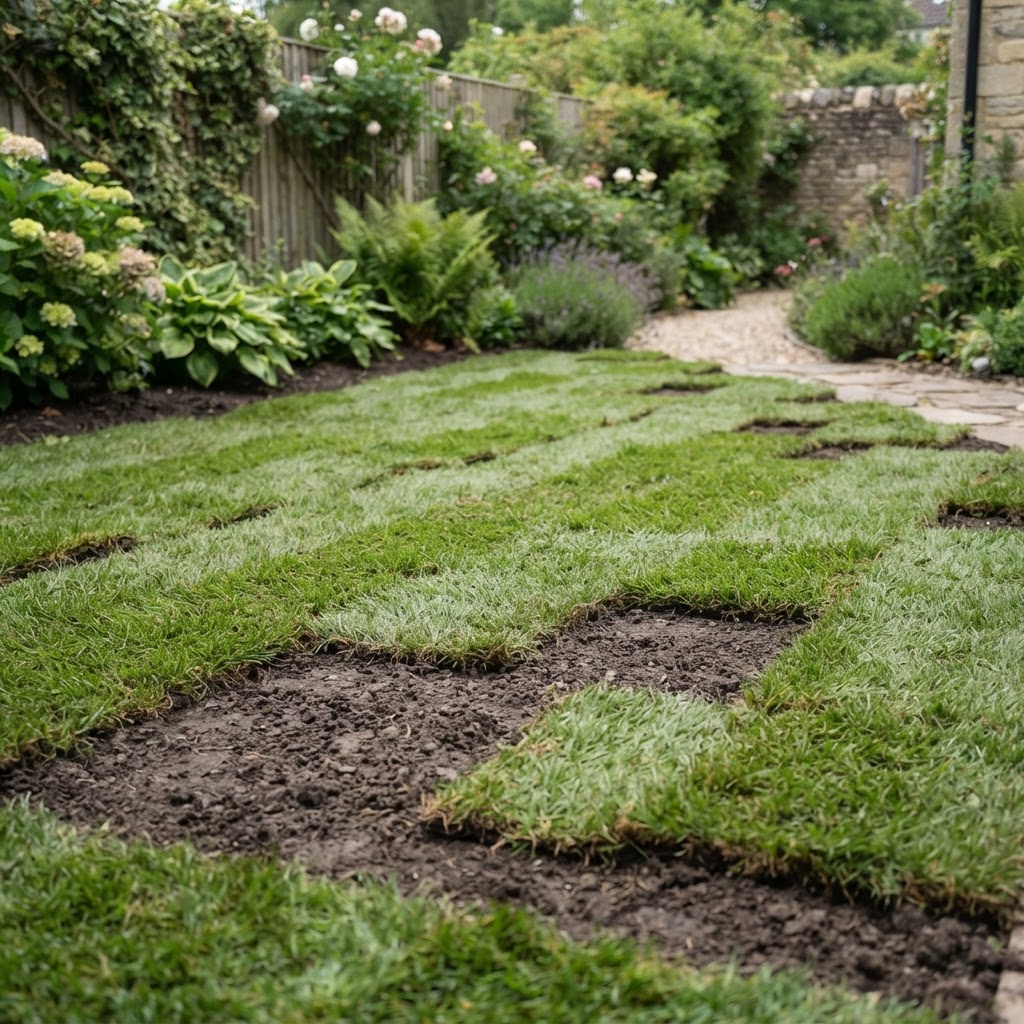
Rake out all dead grass, thatch and loose debris until bare soil is visible. Lightly fork or scratch the top 2 to 3cm of soil to relieve surface compaction and give seed a key. If the soil is hard and dry, water it first, then allow excess surface moisture to drain before working it.
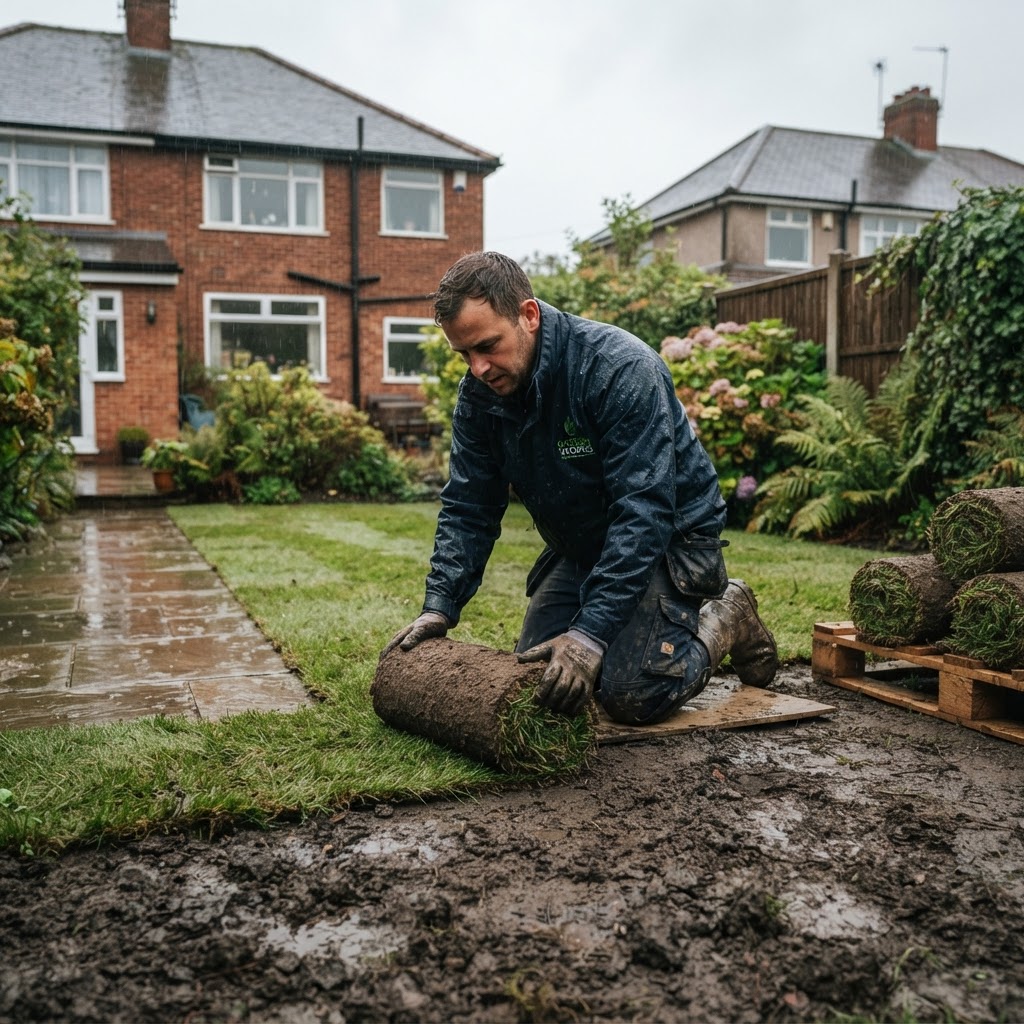
Level the hollow with a modest amount of good-quality, screened lawn topsoil if necessary. Avoid burying the surrounding turf under a thick layer. A repair should finish level with the existing lawn, not form a mound that will be caught by the mower.
Where the ground is repeatedly wet or heavily compacted, investigate drainage and foot traffic before continuing. Seed will not solve an anaerobic, puddled rootzone. On a larger lawn, aeration outside very wet conditions may be the better corrective job.
Sow a durable, compatible seed blend
Use a lawn seed mixture that matches the existing lawn and the job it must do. Fine fescue-dominant mixtures give an attractive finish but can be slower to recover from regular dog traffic. A blend containing perennial ryegrass is generally the practical choice for active family lawns, as it establishes quickly and tolerates wear.
For a quick repair, sow slightly more generously than a standard overseeding rate, while still keeping seed in contact with soil rather than piled on the surface. A trade-standard tetraploid ryegrass blend is particularly useful where rapid establishment and deeper rooting are priorities. Under favourable conditions, ProGrow Tetraploid Ryegrass can germinate in 7-14 days.
Rake the seed in lightly, then firm it with the back of a rake or a lawn roller. Good seed-to-soil contact matters more than burying seed deeply. Covering it too heavily restricts emergence.
Feed roots without scorching seedlings
A low-rate pre-seeder fertiliser can support root development where the soil is poor, but do not apply a high-nitrogen lawn feed directly to a urine-damaged patch. The area has already experienced excess nitrogen. A balanced 6-9-6 formulation, used strictly at its stated application rate, is designed to support establishment without forcing soft, excessive leaf growth.
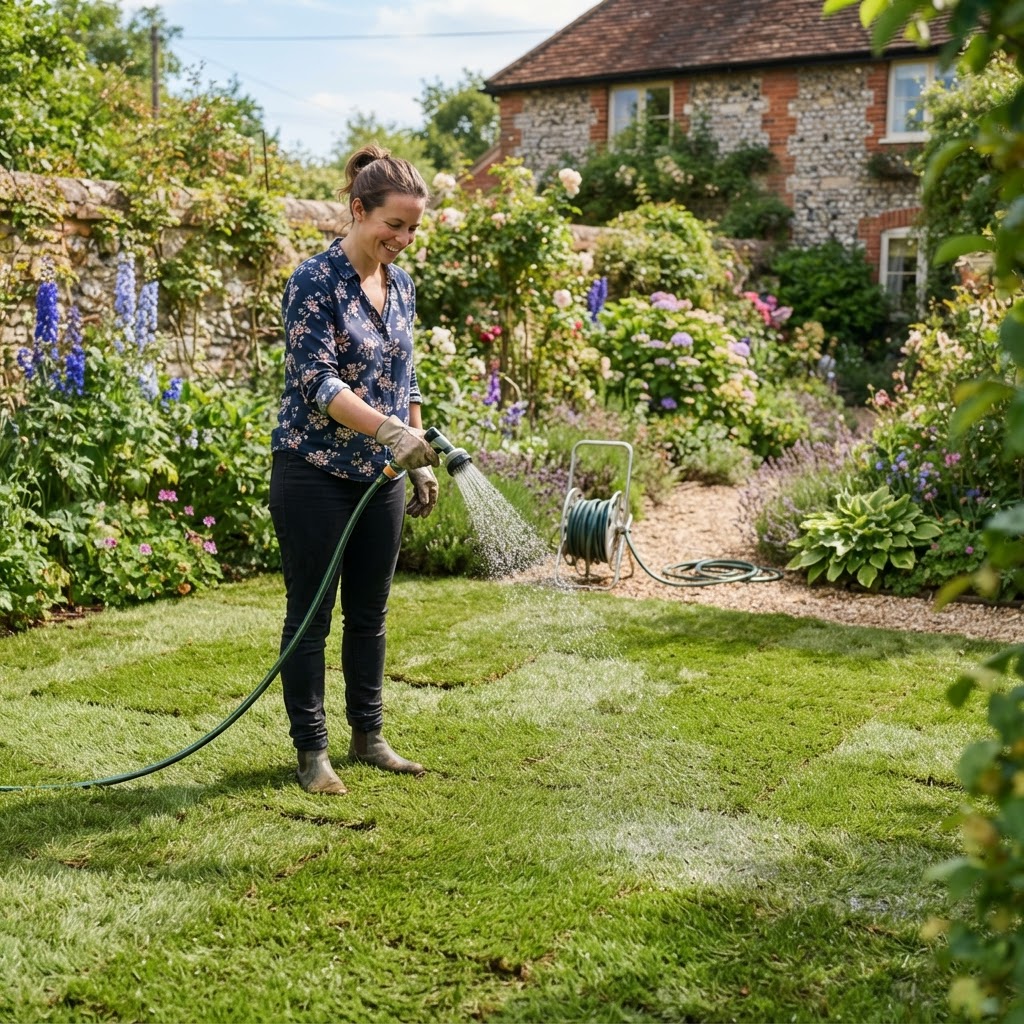
Water gently after sowing and keep the repair consistently moist until germination. In dry, breezy weather, this may mean a light watering once or twice daily. Once seedlings are established, water less frequently but more deeply to encourage roots downwards.
Protect the repair while it establishes
Dogs, children and routine mowing can undo a repair in a single afternoon. Keep traffic off the patch until seedlings are well rooted and have reached around 5-7cm. Make the first cut with a sharp mower blade, removing no more than one-third of the leaf length. A mowing height of about 40-50mm is sensible for a hard-working domestic lawn, particularly through dry spells.
Do not expect every patch to match immediately. Ryegrass may appear first, while slower fescues fill in later. If the repair remains sparse after four to six weeks of active growth, lightly overseed again rather than applying more fertiliser.
Prevent repeat patches without fighting your dog
The most reliable prevention is dilution. If practical, follow your dog into the garden with a watering can or hose and water their usual toilet area. It need not be perfect every time, but prompt watering substantially reduces salt concentration in a small zone.
Training a dog to use one designated section can protect the visible part of the lawn, although it concentrates wear in that chosen area. Select a discrete, free-draining spot and accept that it may need periodic renovation. Gravel is sometimes used, but it needs secure edging and must be comfortable and safe for the dog to stand on.
Keep the wider lawn in good condition. Grass with adequate rooting depth, sensible mowing and seasonal nutrition tolerates stress better than a closely cropped, hungry lawn. In spring and summer, nitrogen supports colour and recovery; in autumn, lower-nitrogen and higher-potassium feeding supports root strength ahead of colder weather. Apply any fertiliser evenly and keep pets away until the product label says the area is safe to re-enter.
There is also a simple management trade-off. Frequent, shallow watering may reduce visible urine marks, but it can encourage shallow roots across the whole lawn. Use targeted watering on fresh urine patches, then maintain the main lawn with deeper irrigation only when conditions require it.
When a veterinary check is sensible
A sudden increase in urination, straining, blood in urine, excessive thirst or a marked change in behaviour is not a lawn-care issue. Speak to a vet. Do not alter a dog's diet or add supplements simply to protect grass unless a veterinary professional recommends it. A healthy dog comes before a perfect lawn.
A repaired patch should be treated as a small piece of lawn establishment: clean soil, suitable seed, measured nutrition and protected early growth. Give it that standard of care, and the lawn will soon stop advertising where the dog has been.