














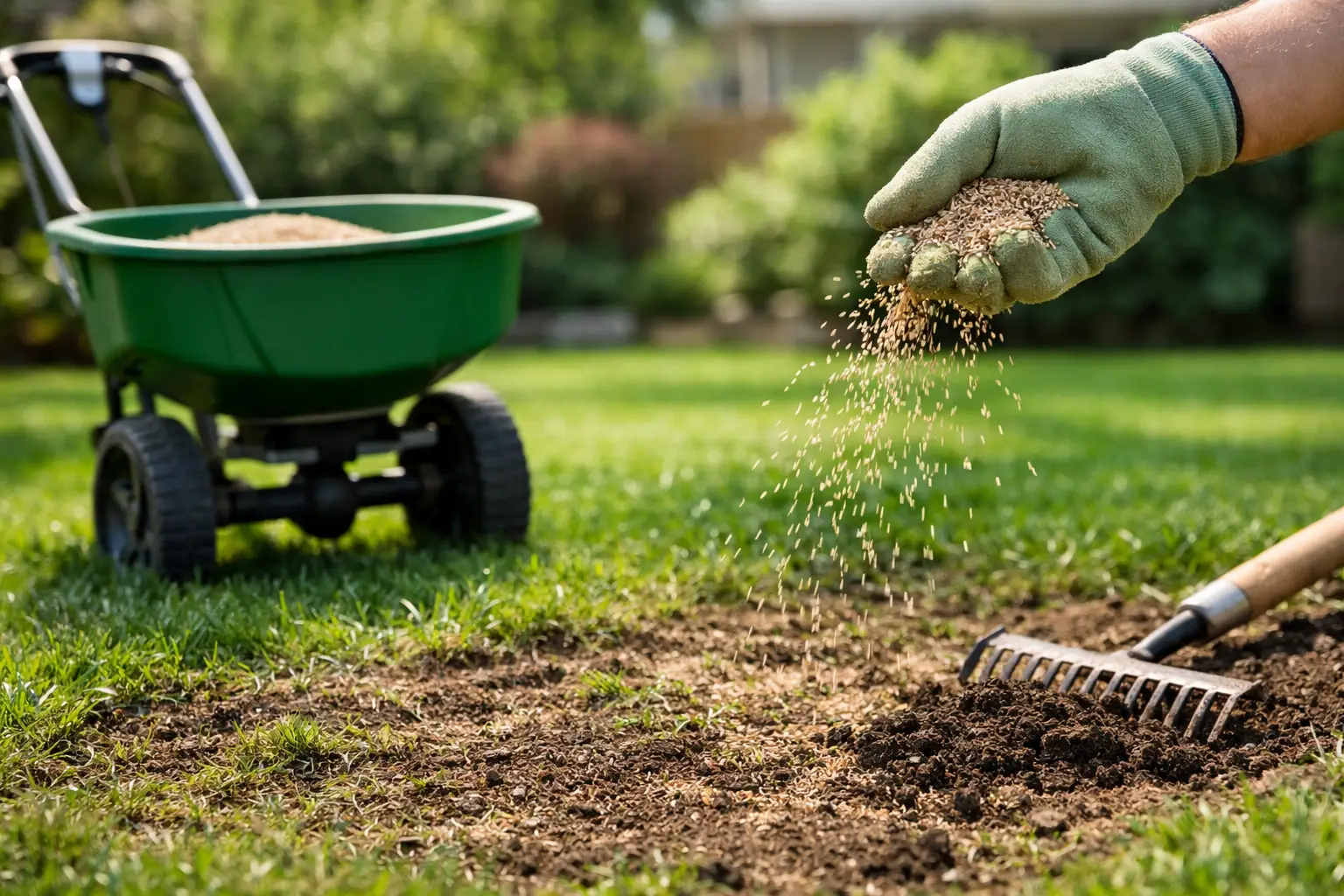
A thin lawn usually tells you exactly what is wrong with it. You will see worn routes across the grass, shaded corners that never quite recover, or open patches where moss and broadleaf weeds move in first. Overseeding an existing lawn is the most efficient way to rebuild density without starting again from bare soil, but it only works when the groundwork is done properly.
If new seed is simply scattered over tired turf, much of it will sit in the thatch, dry out or feed the birds. Good results come from seed-to-soil contact, correct timing, and choosing a grass mixture that suits the site rather than chasing a one-size-fits-all answer.
When overseeding an existing lawn makes sense
Overseeding is best used where the lawn still has a reasonable framework of grass, but coverage has thinned. That includes patchiness after summer drought, winter dieback, pet wear, children's play areas, and lawns weakened by moss or light weed pressure. If more than half the area is poor and the base is mostly weeds, moss or bare ground, a full renovation is often the better route.
In most UK gardens, the best windows are early autumn and mid-spring. Early autumn is usually the strongest option because the soil is still warm, moisture levels are more reliable, and weed competition is lower than in late spring. Spring can work well too, particularly if winter has left heavy damage, but germination can be checked by dry spells and stronger weed growth.
As a rule, aim for soil temperatures consistently around 8 to 10C and rising. That matters more than the date on the calendar.
The real objective is density, not just germination
Many people judge success too early. Seeing green shoots after a week or two is encouraging, but the proper aim of overseeding an existing lawn is a thicker, more competitive sward that resists weeds, tolerates wear and holds colour through the season.
That is why species choice matters. A hard-wearing family lawn will want different characteristics from a fine ornamental lawn under trees. Dwarf perennial ryegrass brings strength and recovery. Fine fescues improve texture and perform better in lower-fertility conditions. Tetraploid ryegrass, with its larger seed and vigorous establishment, can be especially useful where quick cover and deeper rooting are needed, particularly on drought-prone ground or busy lawns that need to recover fast.
The wrong seed blend can still germinate well but leave you with a lawn that looks uneven, grows at the wrong pace or struggles with the conditions that caused the thinning in the first place.
Preparation is where most results are won
Before any seed goes down, mow the lawn shorter than usual, but not to the point of scalping. For most lawns, reducing to around 20 to 30mm is enough to expose the base of the sward and let seed reach the surface.
Then scarify or rake firmly to remove dead material, lateral growth and moss. This is not cosmetic. Thatch blocks seed from reaching the soil and holds moisture in the wrong place. If moss is significant, deal with it first rather than sowing into a sponge of weak material that will only reopen later.
Aeration is the next step if the ground is compacted. On lawns with heavy foot traffic, clay soil or standing water after rain, hollow tining or solid spiking improves oxygen movement and root development. Seedlings establish faster where the soil can breathe and drain properly.
If weeds are active, especially broadleaf weeds such as daisies, clover or dandelions, control them before overseeding. Selective weed killers need time to work, and fresh seed should not be sown straight into a recently treated lawn without checking the product interval. The same principle applies with moss treatments. Kill it, rake it out, then seed the gaps.
How to sow for proper seed-to-soil contact
Once the surface has been prepared, spread the seed evenly at the recommended overseeding rate for the mixture you are using. Too little leaves open ground. Too much creates unnecessary competition between young plants.
For small lawns, sowing by hand in two passes at right angles works well. Larger areas are better done with a spreader for accuracy. After sowing, lightly rake or brush the seed into the top surface so it settles into the grooves and exposed soil. On level ground, a light roll can help press seed in without burying it too deeply.
This is the stage where many domestic lawns fall short. Seed needs contact with the soil, not burial under a heavy layer of dressing. A very light top dressing can help retain moisture and smooth out minor undulations, but if you smother the seed, emergence will be weaker and slower.
Feeding new seed without forcing soft growth
Fresh seed benefits from available phosphate and balanced nutrition, but not from excessive nitrogen that drives soft top growth before roots are ready. A pre-seeder fertiliser with a balanced 6-9-6 analysis is designed for this exact job. It supports root development, establishment and steady early growth without scorching tender seedlings.
On poor soils, this step is often the difference between a lawn that germinates and a lawn that properly knits together. Where the existing grass is hungry as well as thin, feeding at sowing gives both the old plant and the new seedlings a fairer start.
Be wary of using strong spring or summer feeds immediately before overseeding if they are heavily weighted towards nitrogen. They can push the established grass to race ahead and shade the new seedlings.
Watering and aftercare decide the finish
Once sown, the surface needs to stay consistently damp during germination. Not saturated, and not allowed to dry out between occasional heavy waterings. Light, regular irrigation is usually best until seedlings are established.
In a typical British autumn, rainfall may do much of the work for you, but do not assume it will be enough. Sheltered gardens, sandy soils and south-facing sections can dry surprisingly fast even in September.
Keep traffic off the area as much as possible. Young grass is easily disturbed before the roots anchor. If you mow too soon, you risk pulling seedlings from the surface. Wait until the new grass reaches roughly 50 to 60mm, then take the first cut with a sharp mower and remove only the top third. That first cut should tidy the lawn, not punish it.
Common reasons overseeding fails
Most failures are straightforward. The lawn was not prepared well enough, the wrong seed was used, or the timing was poor. Sowing into cold soil in late autumn rarely gives strong establishment before winter. Throwing seed over moss and thatch rarely reaches the soil. Overseeding shaded ground with a standard hard-wearing mix often leaves you back where you started.
There are also site-specific issues that seed alone cannot solve. If the lawn is thinning because of deep shade, chronic compaction, poor drainage or persistent dog wear in one small area, overseeding must be part of the answer rather than the whole answer. Improve the conditions and the seed has a chance. Ignore them and the new grass will follow the old.
Choosing the right grass seed for the job
This is where trade-standard products earn their keep. A general-purpose bargain seed mix may look economical, but if it contains unsuitable agricultural ryegrass or lacks the finer species needed for appearance and density, you may save money only to reseed again.
For fast recovery and durability, ryegrass-based mixtures are often the practical choice. For finer presentation and better adaptation in lower-input settings, fescue-rich blends can be the better fit. For shaded lawns, choose a specialist mix designed to tolerate reduced light. For exposed, dry areas, deeper-rooting and drought-tolerant options are worth serious consideration.
At Ransley Pro Grow, the better approach is to match the blend to the problem. That is how professionals work on sports turf, housing developments and domestic lawns alike.
Should you overseed every year?
Not always, but many lawns benefit from it. High-wear family lawns and professionally maintained grounds often respond well to annual autumn overseeding because it keeps density high and repairs small losses before they become obvious. Lower-wear ornamental lawns may only need it every couple of years, depending on species, shade and maintenance standards.
Think of overseeding as a corrective and preventative practice. It repairs visible thinning, but it also strengthens the sward against future weed ingress and seasonal stress.
A good lawn rarely deteriorates all at once. It gets thinner by degrees, and the best time to intervene is before bare ground becomes the dominant feature. If you prepare the surface properly, use a seed blend suited to the site and support it with measured feeding and aftercare, overseeding becomes less of a gamble and more of a routine piece of sound lawn management. That is usually the difference between a lawn that merely survives and one that holds its quality through the year.