














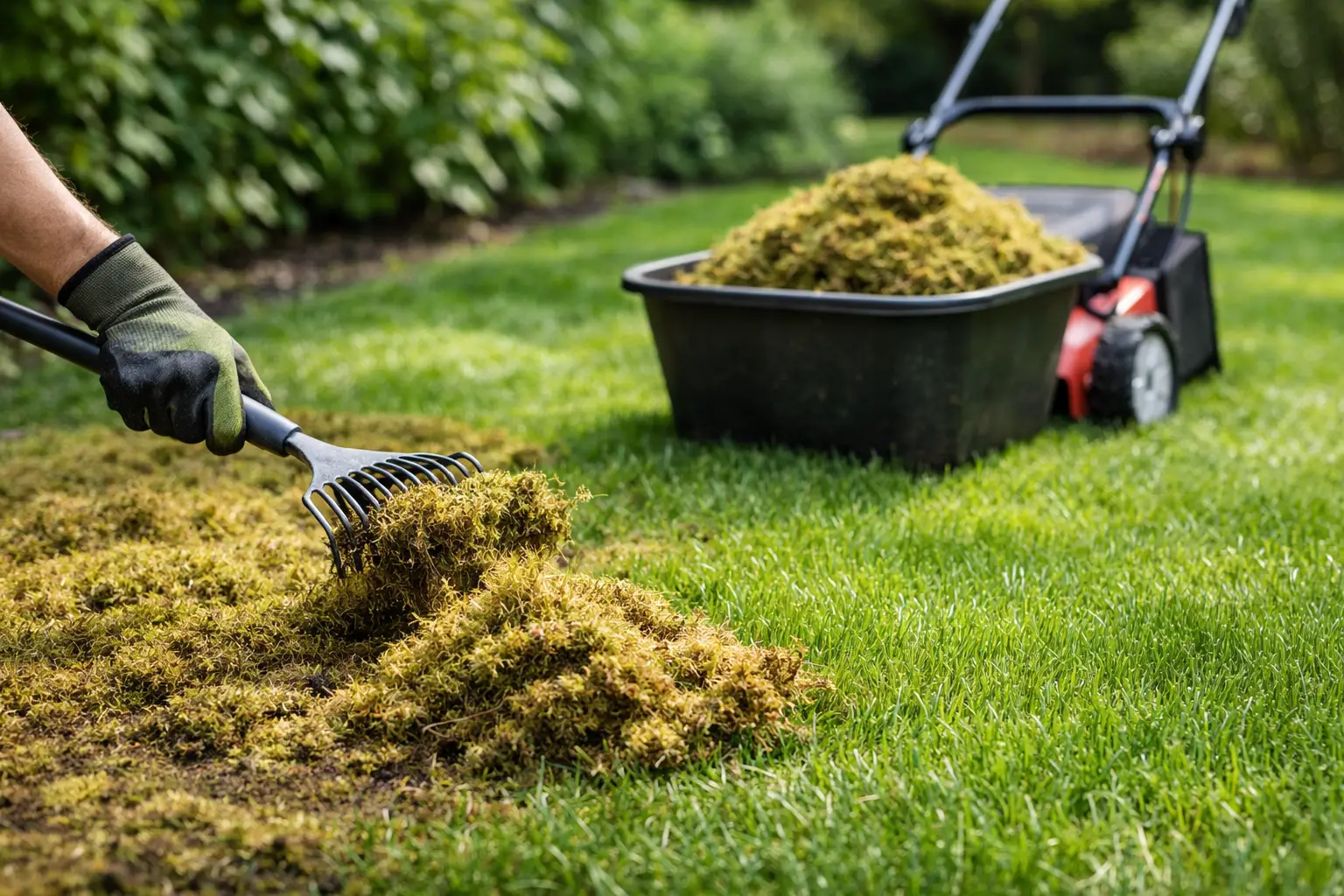
A lawn that feels springy underfoot in winter but looks dark, thin and patchy by March is rarely suffering from moss alone. Moss is usually the visible result of a grass plant under pressure: too little light, compacted soil, poor drainage, close mowing, weak nutrition, or a combination of all five. This moss removal for lawns guide deals with the immediate treatment, but more importantly, the conditions that allowed moss to establish.
Moss does not compete with vigorous turf on equal terms. It takes advantage when grass growth slows and bare soil is exposed. Kill it, remove it, then give the grass the light, air, nutrition and seed coverage it needs to reclaim the space.
Why moss takes hold in UK lawns
British lawns are particularly vulnerable from late autumn through early spring. Low temperatures and reduced daylight slow grass growth, while regular rainfall keeps the surface damp. Moss can continue growing in these conditions, especially where the lawn is compacted or shaded.
Compaction is one of the commonest causes. Repeated foot traffic, play equipment, pets and heavy clay soil squeeze the air spaces from the ground. Water then sits near the surface instead of moving through the root zone. Grass roots receive less oxygen and become shallow; moss thrives in the damp surface layer.
Shade has a similar effect. Grass needs enough light to photosynthesise and replace leaf growth after mowing. Under dense trees, beside fences, or on the north side of a property, the grass may never build sufficient density to resist moss. Falling leaves also block light and trap moisture during autumn.
Do not assume acidic soil is automatically the cause. Moss can grow across a range of soil pH levels. Applying lime without a soil test can create a different problem by pushing pH too high and reducing nutrient availability. Test first, then correct only where the result justifies it.
Moss removal for lawns: the correct order
The most reliable approach is treatment first, physical removal second, then renovation. Raking live moss may spread fragments across the lawn and leaves the underlying problem untouched. An iron-based moss treatment is generally the practical choice for established domestic and professional turf, as it works quickly and also supplies iron to support leaf colour.
Apply any moss control product exactly as directed on its label. This includes the application rate, weather conditions, watering instructions and re-entry guidance for children and pets. Avoid application when frost is expected, when the turf is drought-stressed, or during hot, dry weather. Iron treatments can stain paving, decking and clothing, so sweep granules off hard surfaces immediately and keep the product away from ponds and watercourses.
Within several days, treated moss typically turns black or brown. That colour change is useful: it confirms the moss is dying and makes it easier to identify where removal is needed. Leave it for the label-recommended period, then rake it out firmly with a spring-tine rake or use a scarifier on an appropriate setting.
Do not set a powered scarifier too low on a thin lawn. Removing every trace of organic material may expose more soil and create the ideal seedbed for weeds and fresh moss. Start conservatively, especially on young turf, shaded areas, or lawns already weakened by winter. A second lighter pass is safer than one aggressive pass that strips the crown from the grass plants.
When to treat moss
Early spring and early autumn are the main renovation windows. The soil is usually moist, temperatures are moderate and grass has enough growing time to recover. Autumn is often the stronger option for a full moss-and-repair programme because warm soil encourages seed germination while weed pressure reduces.
A winter moss treatment can be justified where moss is actively spreading, but wait to scarify and overseed until conditions allow grass to recover. Raking a saturated lawn in January will compact it further and can tear out healthy grass alongside the moss.
Repair the gaps before moss returns
Moss removal almost always reveals thin areas. Those gaps need grass seed, not just fertiliser. Overseeding introduces new plants into the lawn, increasing turf density so less light reaches the soil surface.
After raking, collect debris, lightly level uneven patches and sow a seed mix suited to the site. A hard-wearing ryegrass and fescue blend suits busy family lawns and contractor-maintained areas. For difficult locations beneath trees or beside buildings, a shade-tolerant mix is the better specification. Standard seed may germinate in shade, but it often fails to persist through another winter.
For rapid repair where foot traffic is a concern, tetraploid ryegrass can be useful. Its larger seed and vigorous establishment help fill damaged ground quickly, often germinating within 7-14 days in suitable warmth and moisture. It is not a substitute for drainage or light, but it gives the lawn a stronger chance of closing over before moss returns.
Use a pre-seeder fertiliser where soil fertility is low or the lawn has been heavily scarified. A balanced 6-9-6 formulation supports early root development with phosphorus and potassium without overloading tender seedlings with nitrogen. Apply at the specified rate, rake lightly to settle seed into contact with the soil, and keep the surface consistently moist until establishment.
Ransley Pro Grow's professional-grade seed blends and seasonal fertilisers are engineered for this sequence: remove competition, establish dense grass cover, then feed according to the season rather than applying a one-size-fits-all treatment.
Correct the underlying condition
A healthy lawn does not need to be cut short to look smart. In shaded or moss-prone areas, raise the mowing height. Leaving grass at around 40-50 mm gives each plant more leaf area to capture light and supports deeper roots. Never remove more than one-third of the leaf in a single cut. Scalping weak turf is one of the quickest ways to open the surface to moss.
If the ground stays wet for more than a day or two after rain, inspect drainage before adding more feed. On compacted lawns, hollow-tine aeration removes small cores of soil and creates channels for air, water and roots. This is particularly worthwhile on clay soils and lawns used regularly by people or machinery. Brush a suitable free-draining topdressing into the holes afterwards, but do not expect one light sanding to transform heavy ground. Persistent waterlogging may require assessment of falls, drains, downpipes or subsoil conditions.
Shade needs a realistic solution. Prune overhanging branches where appropriate and permitted, clear leaves promptly, and reduce traffic in the darkest areas. Where there are fewer than a few hours of useful daylight in the growing season, grass may remain sparse regardless of treatment. A shade-tolerant seed mix can improve coverage, but a planted bed, mulch path or other surface may be the more dependable long-term choice.
Nutrition should match the season. A high-nitrogen spring or summer feed drives leaf growth and colour when grass is actively growing. In autumn, lower nitrogen with higher potassium helps develop root resilience rather than producing soft leaf growth before frost. Feeding a mossy, compacted lawn without aeration and overseeding may make the grass greener temporarily, but it will not resolve the cause.
Common mistakes that keep moss alive
The first is treating moss as a one-off job. A high-iron product kills what is present, but it cannot create drainage, light or turf density. The second is applying lime by habit rather than testing pH. The third is mowing too close in the belief that shorter grass looks more formal.
Another frequent error is using a combined weed, feed and moss product immediately before overseeding. Selective herbicides can restrict when new grass seed may be sown, so check the label interval carefully. If reseeding is the priority, separate the tasks and allow the stated waiting period. This is slower, but it avoids wasting quality seed.
Finally, do not leave dead moss on the lawn. Once it has blackened, remove it so air and light can reach the soil and new seed has somewhere to establish.
A practical annual routine
Treat visible moss in spring when growth begins, then rake lightly and feed according to the lawn's condition. Aerate compacted ground during the growing season when the soil is moist but not waterlogged. In early autumn, carry out the main scarification and overseeding work, followed by an appropriate pre-seeder or autumn fertiliser programme. Through winter, keep leaves clear, avoid walking on frozen or saturated turf, and mow only when conditions are dry enough to prevent rutting.
The best result is not simply a moss-free lawn for a fortnight. It is a dense, well-rooted sward that leaves moss with no bare, damp ground to occupy. Treat the symptom properly, then give the grass the conditions it has been missing.