

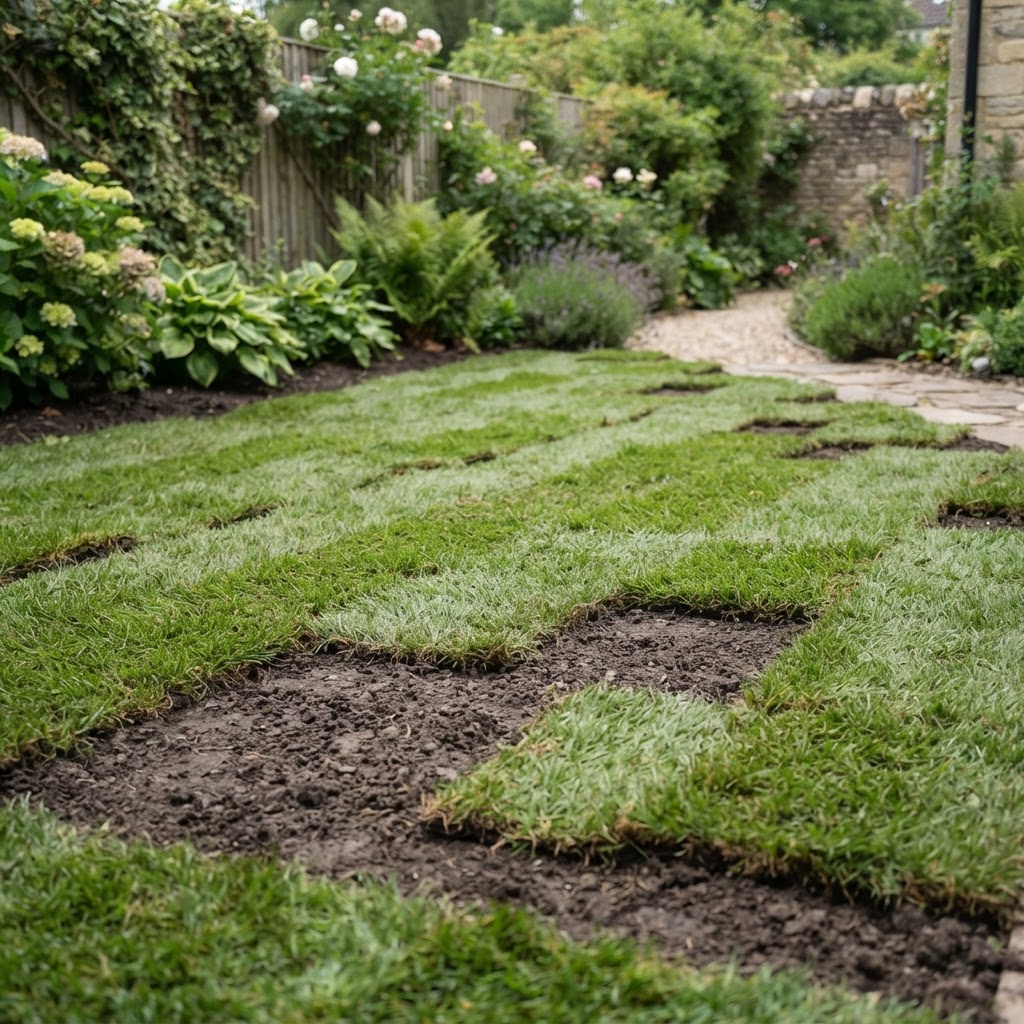
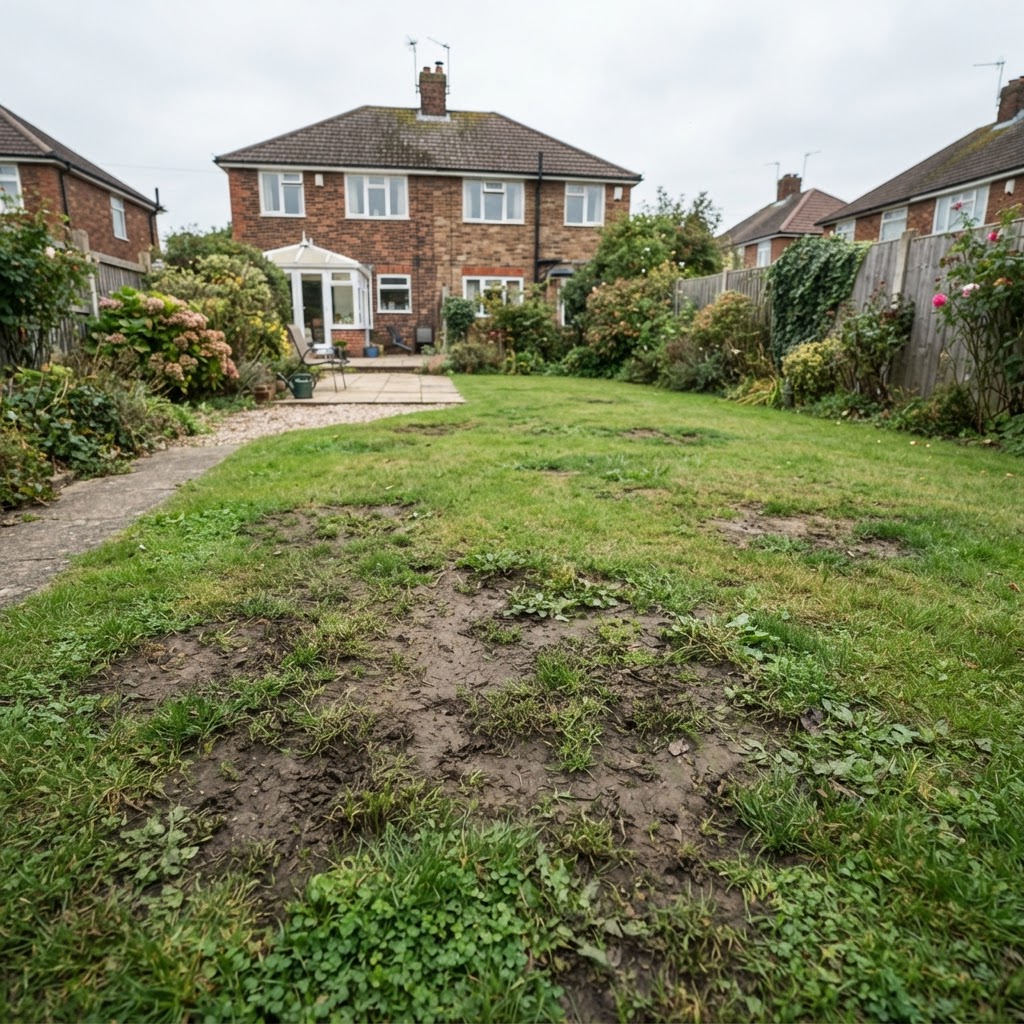
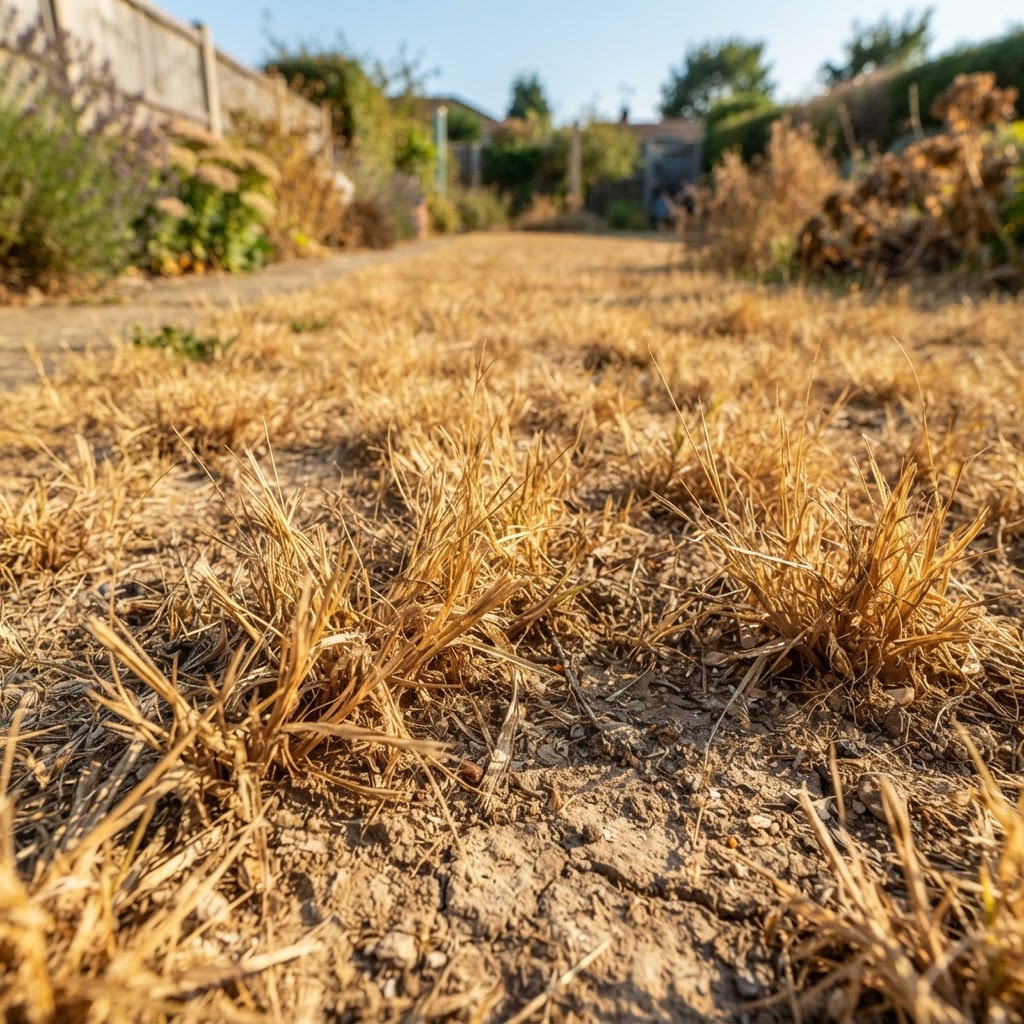
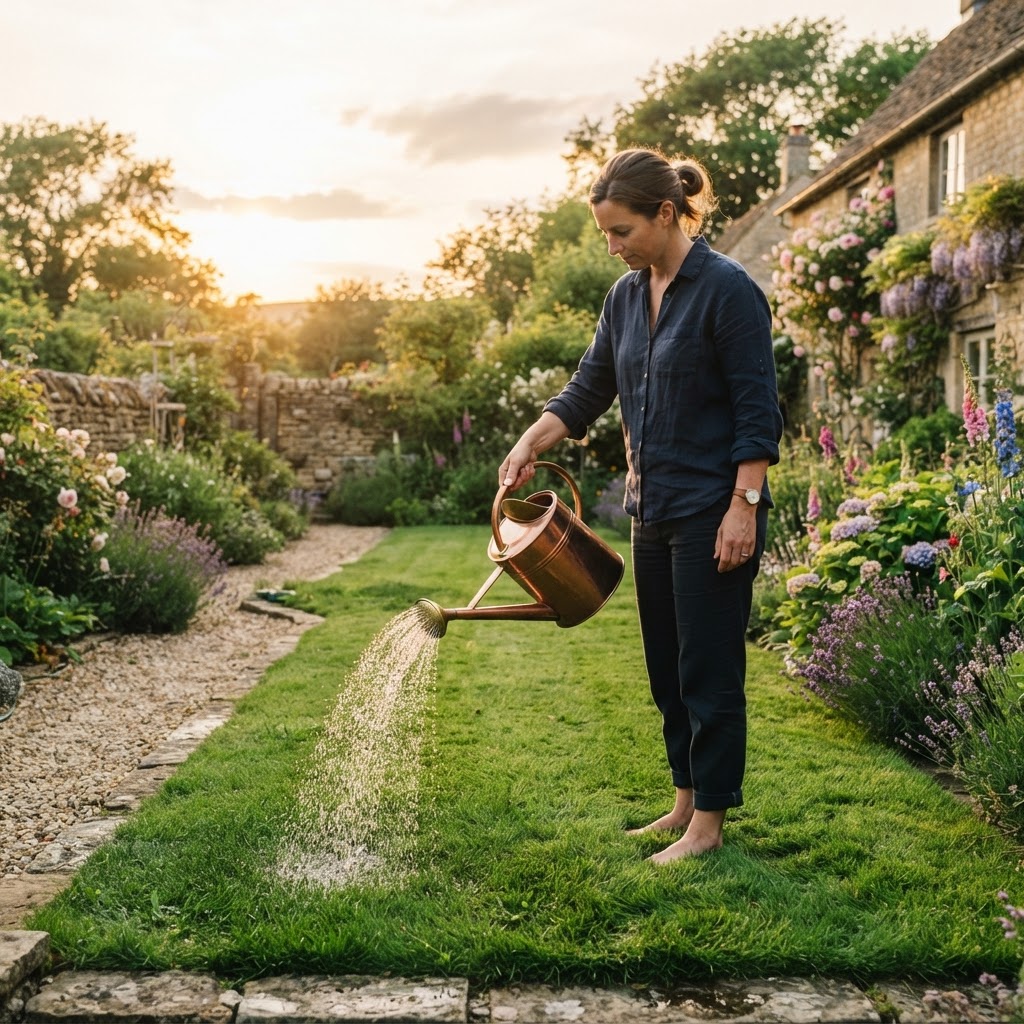


A lawn that feels bumpy underfoot, puddles after rain or thins out every summer does not always need replacing. It often needs its surface soil corrected. This lawn topdressing application guide sets out the practical method: choose a compatible material, apply it lightly, work it into the sward and give the grass time to grow through.
Topdressing is not a cosmetic scattering of compost. Done properly, it gradually improves the upper rootzone, smooths minor surface imperfections and gives seed a better environment in which to establish. Done heavily or with the wrong material, it can bury grass plants, restrict air around the crown and create a layer that water struggles to cross.
What lawn topdressing actually does
Topdressing means spreading a thin, even layer of suitable material across established turf. The aim is to modify the top 10-20 mm of the lawn over repeated applications, rather than make a dramatic change in one afternoon.
A soil-based dressing can improve weak, hungry ground and help with slight hollows. A sand-led dressing can increase surface drainage and firm up a soft, high-wear lawn, but only where the underlying soil and cultivation programme support it. Compost-based dressings add organic matter, which can aid moisture retention and biological activity in light, free-draining soils.
The correct choice depends on the problem. A lawn sitting on heavy clay will not be cured by applying a few bags of sharp sand. In fact, sand added in small, isolated quantities to clay can produce a dense, cement-like layer. Clay ground generally responds better to aeration, a quality loam-based topdressing and repeated light applications. If drainage is persistently poor, investigate compaction, falls, thatch and underlying construction before buying more dressing.
When to apply topdressing in the UK
Early autumn is the most reliable window for most UK lawns. The soil remains warm, moisture levels are usually improving, and grass has enough growing time to recover before winter. It is also the best time to combine topdressing with hollow-tine aeration and overseeding.
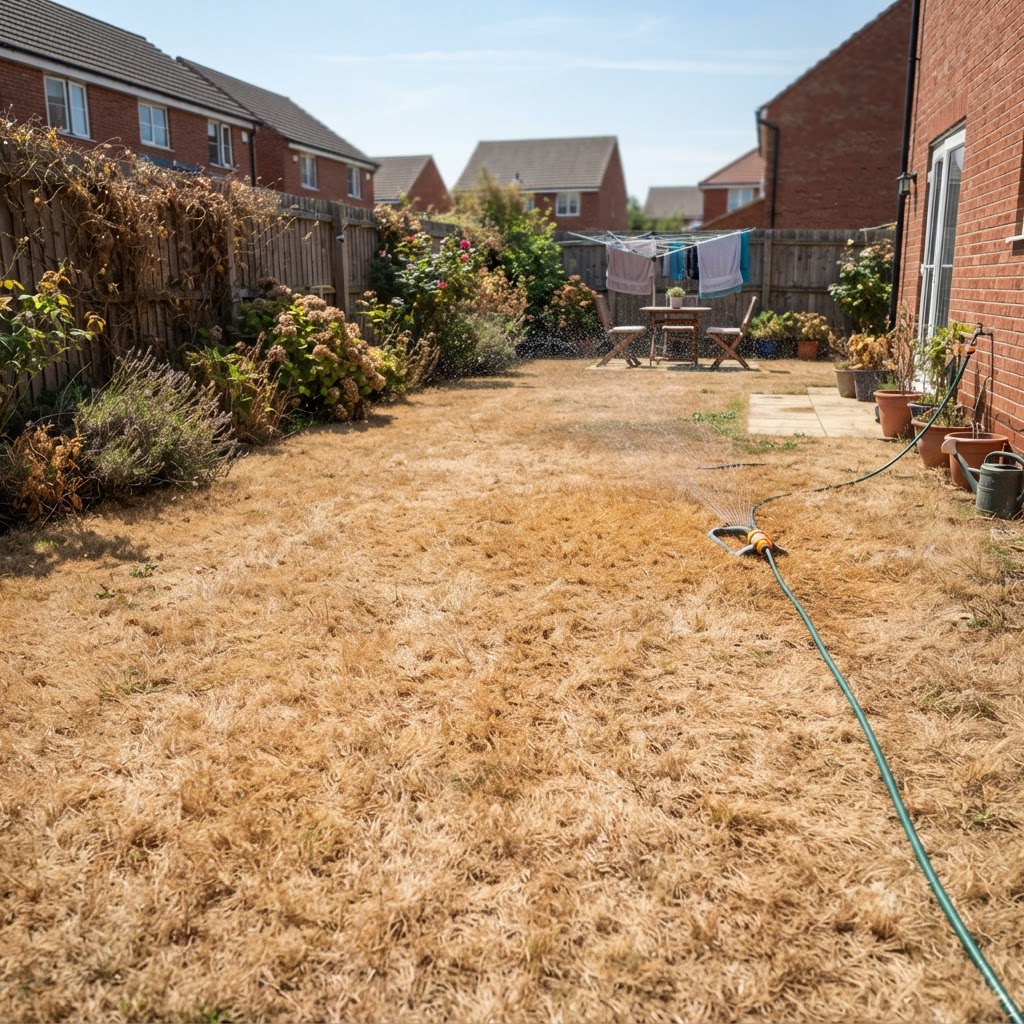
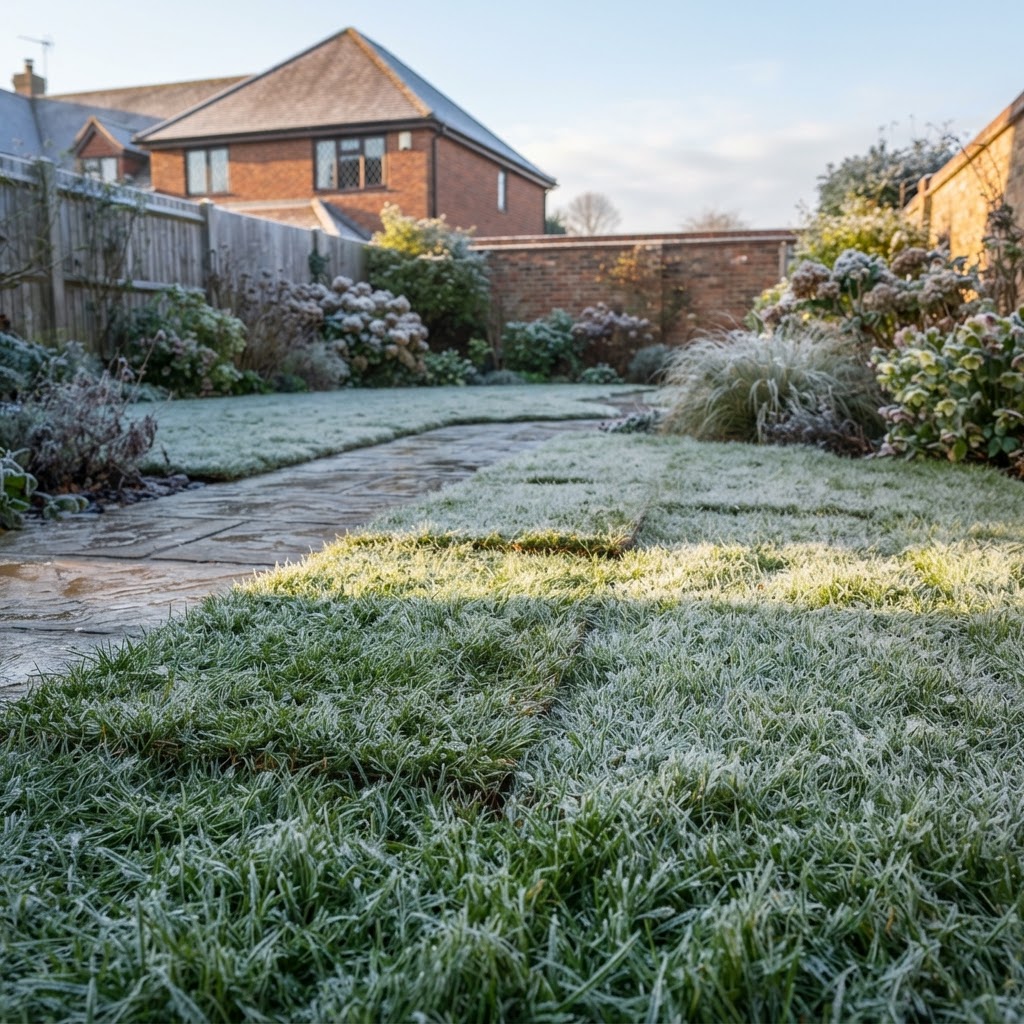
Mid-spring can work well too, once the lawn is actively growing and the ground is no longer waterlogged. Avoid dressing during drought, frost, prolonged wet weather or a heatwave. You need a dry enough surface to spread material evenly, followed by enough moisture for the grass to grow through it.
For professional sites and heavily used family lawns, a light annual dressing is normally more effective than an occasional heavy renovation. Fine turf may receive several very light applications through the growing season. A domestic lawn usually needs one properly planned application a year, or one every other year where the surface and soil are already in good order.
Do not topdress straight after weed or moss treatment
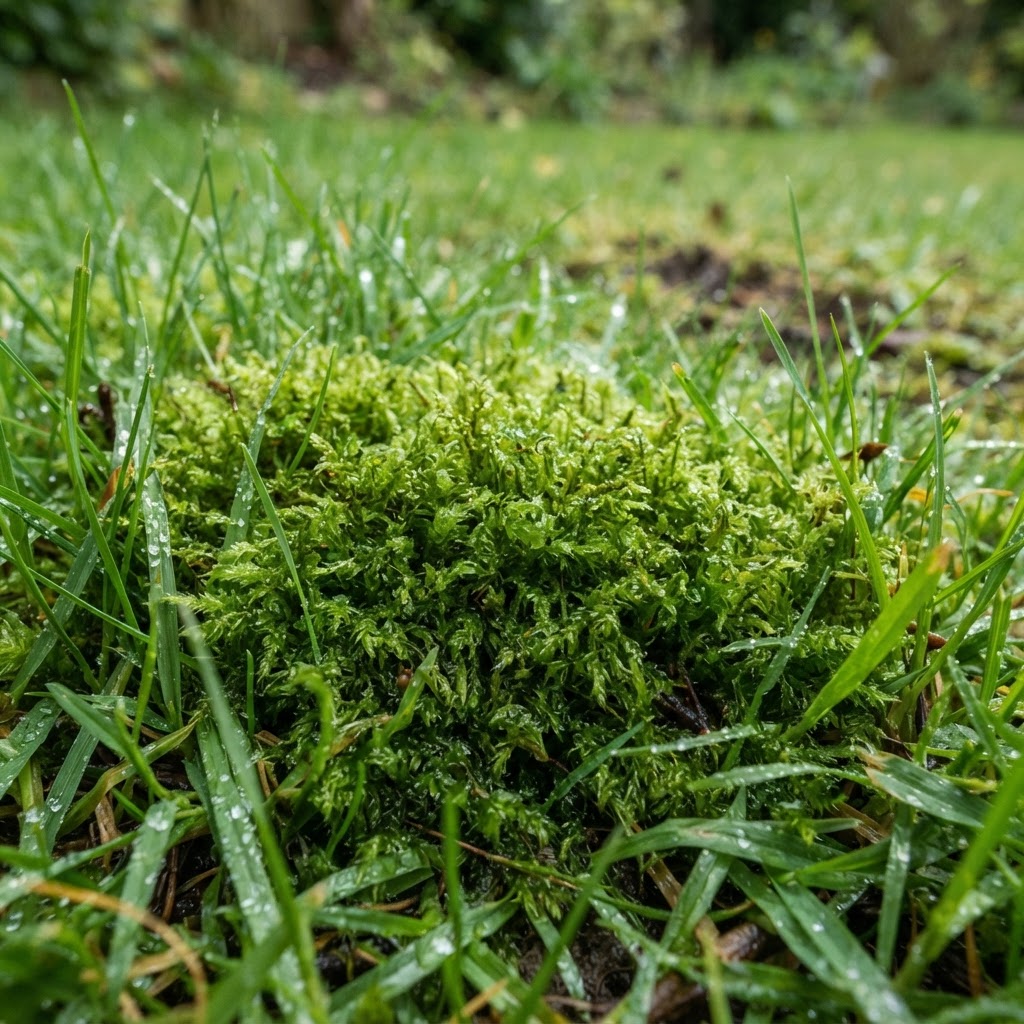
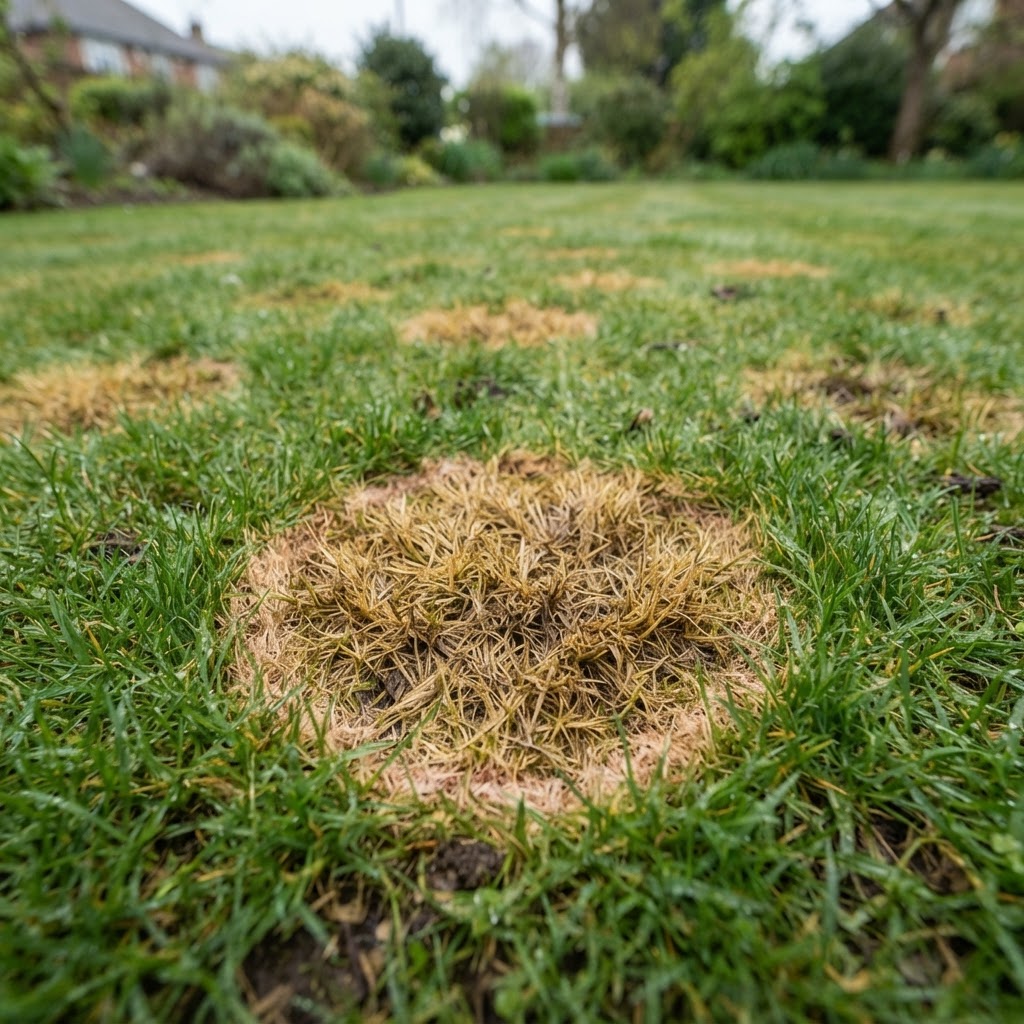
Allow time for the treatment to work and for dead moss or weeds to be removed. Topdressing over moss simply conceals the issue while the grass remains under pressure. Rake out dead material, identify why moss established - shade, compaction, poor drainage or close mowing are usual causes - then prepare the turf for dressing.
Choose a dressing that matches the rootzone
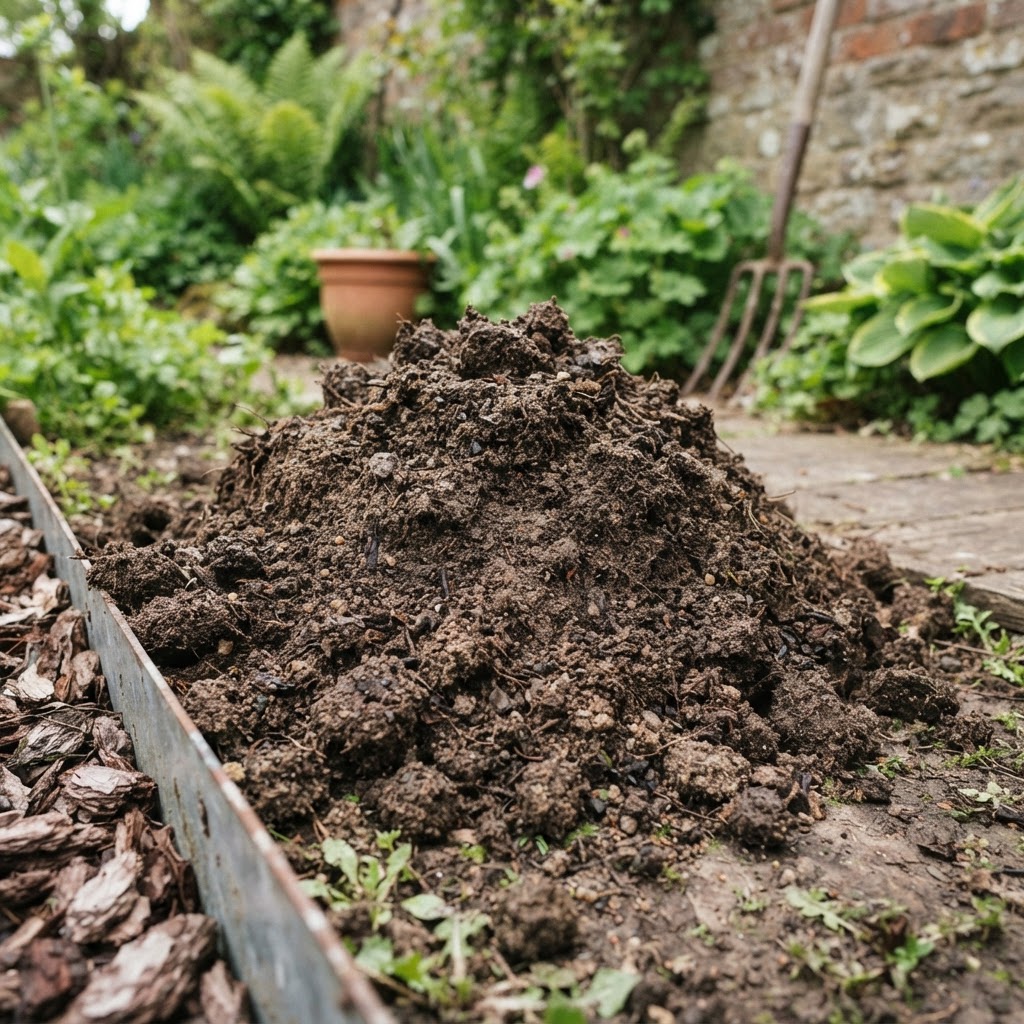
The best material is screened, consistent and appropriate for your existing soil. Random builders' sand, unscreened garden soil and rich multipurpose compost are poor substitutes. They may contain stones, variable salts, weed seed or particles too coarse for a close-cut lawn surface.
For a typical established garden lawn, a screened sandy loam topdressing is the safest general-purpose option. It supplies mineral soil while retaining enough organic content to support grass recovery. Select a finer grade for finer lawns, where large particles would remain visible and affect mowing.
Where the goal is levelling a lawn with shallow dips, use a compatible sandy loam rather than compost alone. Compost shrinks as it decomposes, so a hollow filled with it can reappear. For lawns established on very sandy ground, a loam dressing with stable organic matter may be useful, but keep additions modest to avoid creating a soft, thatchy surface.
A specification matters. Professional materials should be screened and consistent, with particle size suited to turf work. For new lawn construction and larger landscape projects, confirm that the soil specification meets the needs of the scheme, including any relevant British Standard requirements.
Lawn topdressing application guide: preparation first
Topdressing works best when the material can reach the soil surface rather than sit on a mat of thatch. Mow the lawn a little lower than normal, but do not scalp it. For most domestic lawns, reducing the height by around one-third is sufficient.
If there is a heavy layer of thatch or dead moss, scarify or rake it out first. Then aerate compacted ground. Hollow-tine aeration is particularly valuable on dense clay and high-traffic lawns because it removes cores and creates channels for air, water and dressing. Brush or rake the cores across the lawn if they are clean and friable; remove them if they are excessively wet or packed with thatch.
This is also the point to overseed thin turf. Spread grass seed across prepared ground, then apply the dressing so the seed is lightly covered and held in contact with soil. Do not bury it deeply. Perennial ryegrass and fescue mixtures need light, moisture and good seed-to-soil contact, not a thick blanket of material.
If feeding is required, use a fertiliser suited to the season and the task. A balanced pre-seeder fertiliser with an NPK ratio such as 6-9-6 supports root development without forcing soft, excessive top growth. Apply fertiliser at its stated rate, not by guesswork, and avoid combining multiple high-nitrogen products in the same operation.
Set the right application rate
For routine improvement, apply 3-5 mm of topdressing in one pass. One millimetre across one square metre is approximately one litre of material, so a 5 mm application requires roughly 5 litres per square metre. Measure the lawn before ordering. Under-ordering leads to uneven coverage; over-ordering tempts people to apply too much.
A 10 mm layer is the upper limit for a carefully managed levelling pass on established grass, and even that should only be used locally or where the grass tips remain visible. If hollows are deeper than 10-15 mm, build them up in several applications over successive growing periods. Grass can grow through a light dressing. It cannot readily grow through a thick layer of soil.
For a lawn of 50 square metres, a standard 5 mm application needs about 250 litres of material. Add a modest allowance for low spots, but do not use this as a reason to blanket the entire lawn heavily.
How to spread and work in the dressing
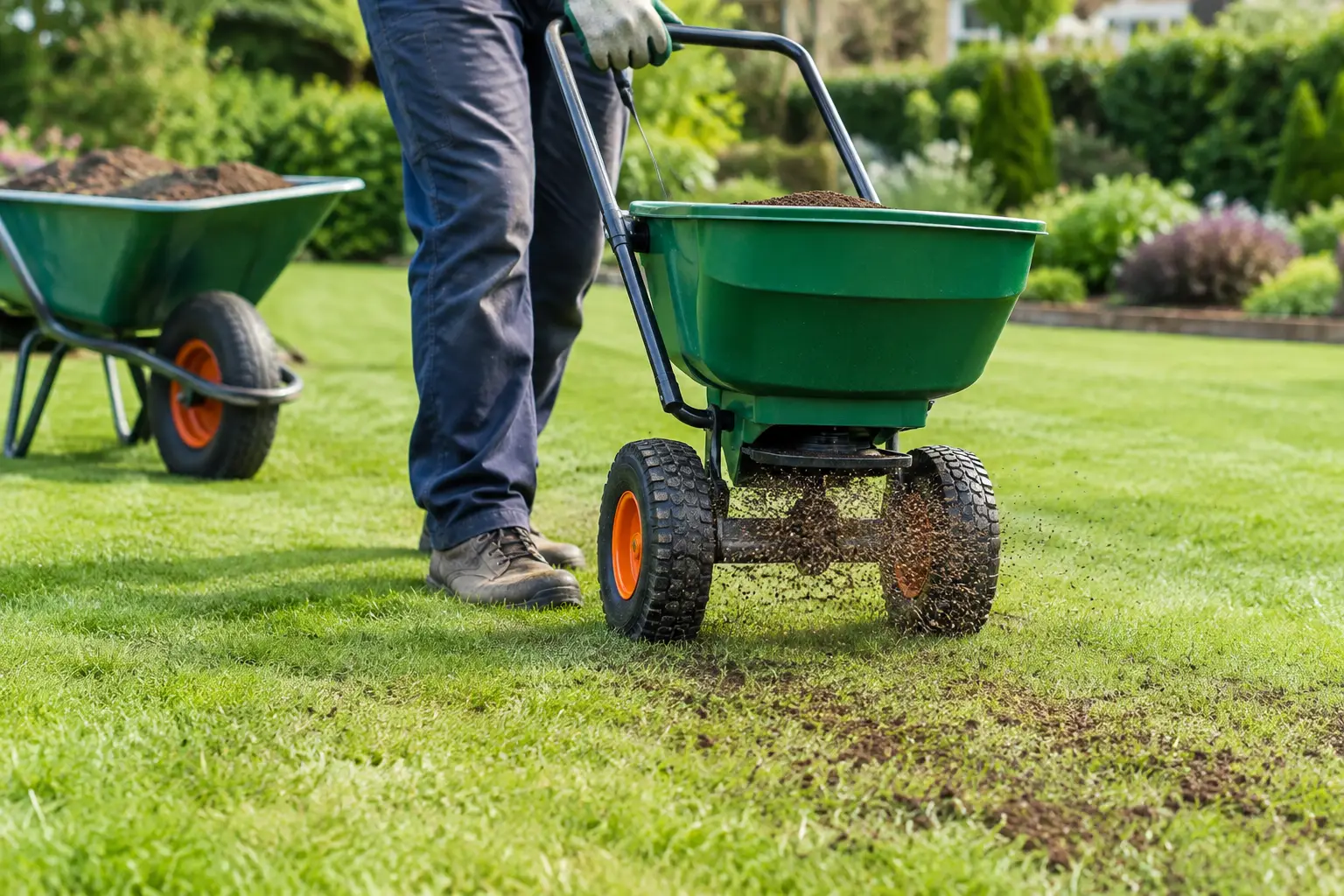
Deposit small heaps across the lawn rather than tipping one large pile in the middle. Use the back of a landscaping rake, a lute or a stiff brush to pull the material across the surface. Work in two directions where possible. The objective is a uniform veil of dressing, not obvious ridges and mounds.
As you spread, keep checking that grass leaf tips are visible. Where the dressing gathers around the edge of a hollow, pull it away and redistribute it. A drag mat can be useful on larger areas, but finish by brushing stubborn pockets from around the grass plants.
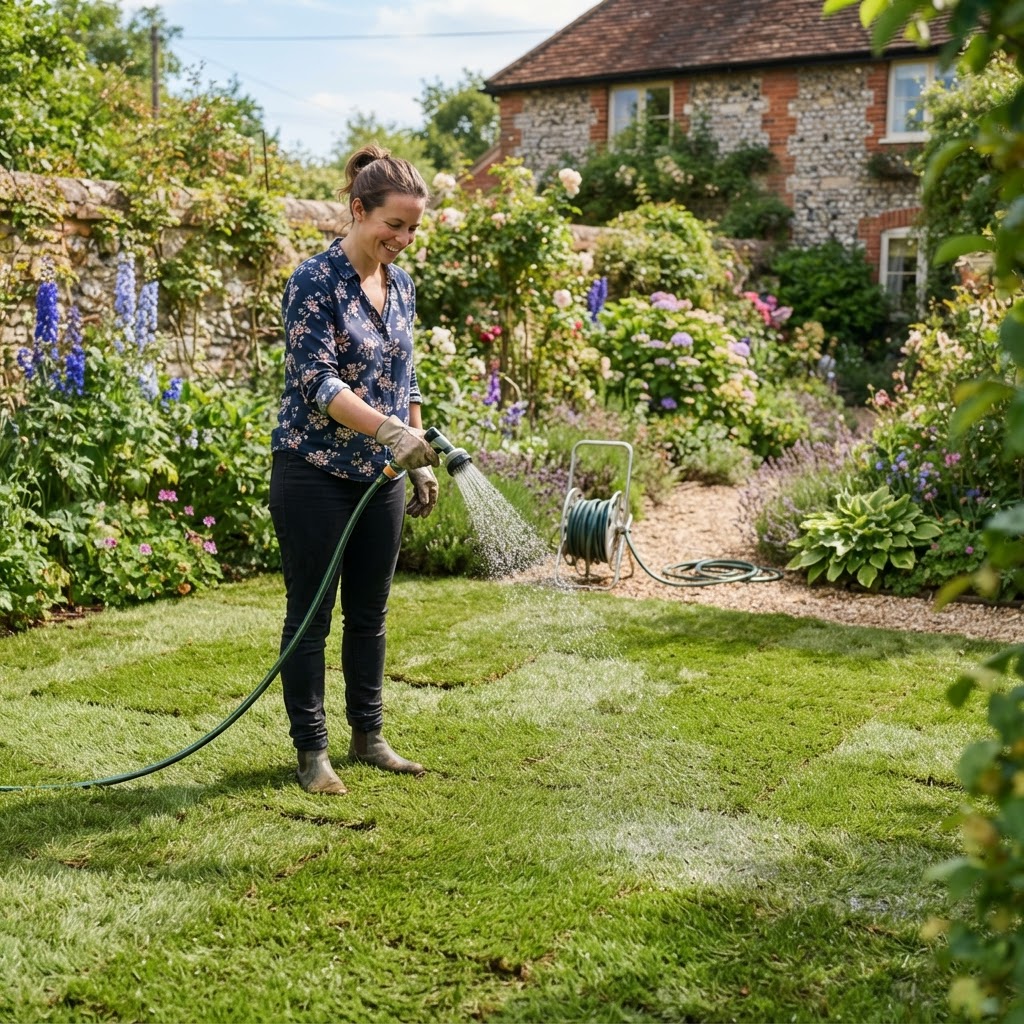
Water lightly after application if conditions are dry. The aim is to settle the dressing and start recovery, not wash material into drains or create standing water. Keep newly overseeded areas consistently damp until germination, then water less often but more deeply to encourage roots downwards.
Avoid mowing until the grass has grown through the dressing and the surface is firm. Then return to mowing gradually. A sharp mower blade and a sensible cutting height will do more for turf density than repeatedly cutting it very short.
Common mistakes that set lawns back
The most common error is applying too much in one go. The second is using a material that does not match the soil beneath it. Both mistakes are usually driven by the desire for a quick levelling result, but lawn improvement is a programme, not a single pass.
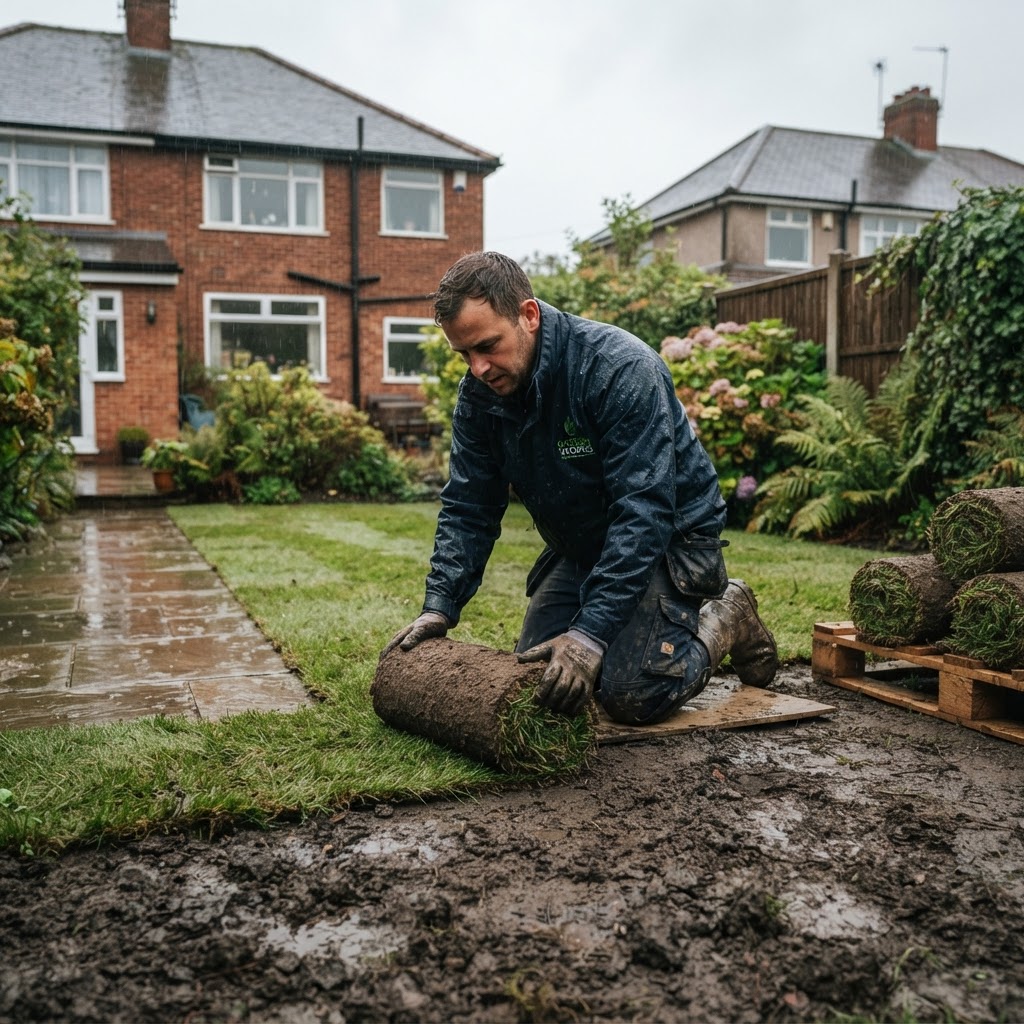
Do not dress wet, saturated turf. The material will smear, compact and stick in lumps. Do not topdress immediately before a period of heavy use, either. Football, pets and regular foot traffic can disturb a freshly dressed surface before grass has re-rooted.
Finally, treat topdressing as one part of lawn management. If shade, poor drainage, aggressive moss, compacted subsoil or unsuitable grass species are left unaddressed, the same symptoms will return. A suitable seed mixture, seasonal nutrition, correct mowing and occasional aeration give the dressing something worthwhile to work with.
A well-dressed lawn should not look as though it has been renovated overnight. Within a few weeks, it should simply feel firmer, drain more evenly and carry a denser, more resilient sward - the quiet result of sound materials applied at the right rate.