



A thin lawn is often not a seed-quality problem. It is a measuring problem. Sow too little and bare ground remains available for weeds and moss; sow too heavily and young plants compete for light, water and nutrients. A lawn seed calculator replaces guesswork with a clear application rate, whether you are establishing a new lawn or thickening worn turf after summer use.
The calculation itself is straightforward. The useful part is choosing the right rate for the job, measuring the area correctly and adjusting for the conditions on site. That is how homeowners and contractors achieve even coverage without buying unnecessary bags or leaving a job short.
What a lawn seed calculator should calculate
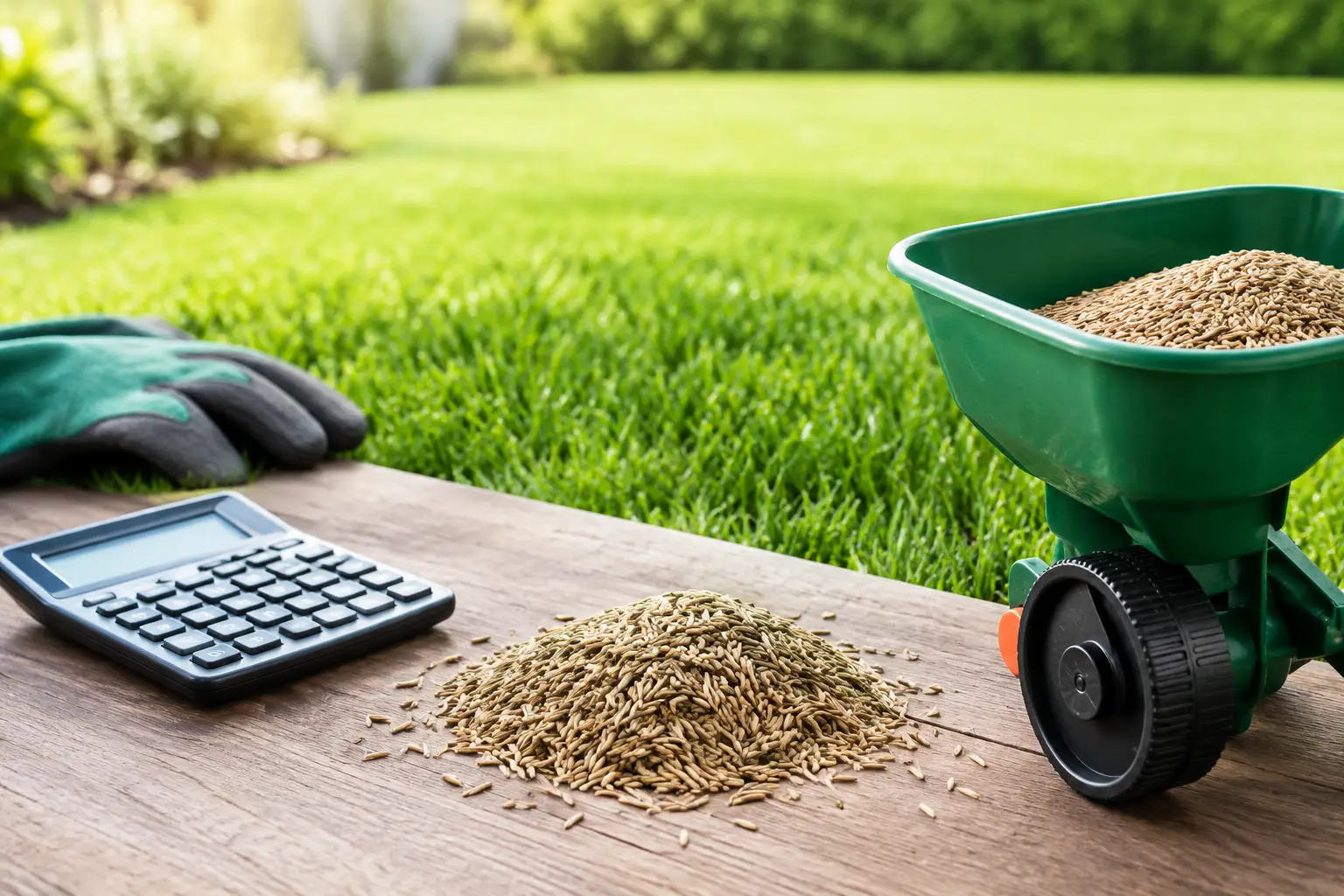
At its simplest, a lawn seed calculator uses two figures: the area to be sown in square metres and the recommended sowing rate in grams per square metre. Multiply the two together to find the total grams required, then divide by 1,000 to convert that figure into kilograms.
Area (m²) × sowing rate (g/m²) ÷ 1,000 = seed required (kg)
For a rectangular lawn, multiply length by width. A 10 m by 8 m lawn is 80 m². If it requires 35 g of seed per m², the calculation is 80 × 35 ÷ 1,000, giving 2.8 kg of seed.
Gardens are rarely perfect rectangles. Break an irregular area into manageable shapes - rectangles, triangles and circles - calculate each section, then add them together. For a triangle, use base × height ÷ 2. For a circular area, multiply the radius squared by 3.14. It is better to measure around beds, paths and patios than to calculate the whole garden and hope for the best.
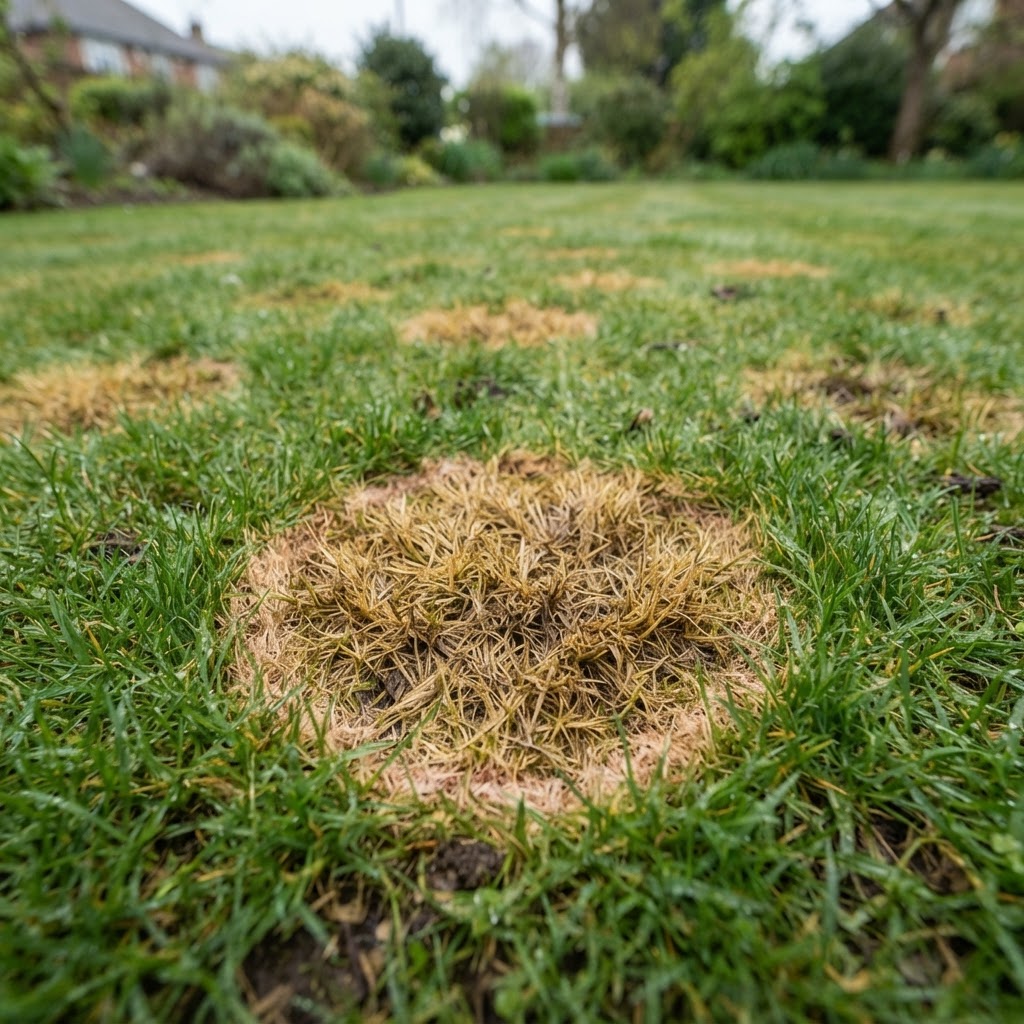
Where a lawn has several small damaged patches, measure the total bare area rather than the entire lawn. This is particularly useful after moss removal, pet damage, building work or drought stress.
New lawn or overseeding: the rate changes
A lawn seed calculator is only as useful as the sowing rate put into it. New establishment and overseeding are different jobs and should not be treated alike.
A new lawn generally needs a higher rate because every square metre must be populated from bare soil. Depending on the mixture and intended use, a typical rate is around 30-50 g/m². A hard-wearing family lawn blend containing perennial ryegrass may sit towards the middle or upper end of that range, while a finer ornamental mixture can require a different rate. Always follow the specification for the actual seed mixture rather than relying on one universal number.
Overseeding is intended to introduce fresh grass plants into an existing sward. The established grass is already taking up space, so rates are commonly lower, often around 20-35 g/m². Sparse, heavily worn turf may justify the higher end of the stated overseeding range. A lawn that is merely losing density can usually be treated at a more moderate rate.
More seed is not automatically better. Overcrowded seedlings produce fine, weak growth and may be more vulnerable when moisture becomes limited. The objective is even plant distribution, not a thick layer of seed on the surface.
A worked calculation for an established lawn
A 120 m² lawn has become thin beneath trees and around a football goal. The plan is to overseed the full area at 25 g/m².
120 × 25 ÷ 1,000 = 3 kg.
Allowing a small margin for awkward edges and calibration is sensible, so 3.2-3.5 kg would be practical. Do not add a large surplus simply because it is available. Accurate preparation and seed-to-soil contact will do more for establishment than excessive sowing.
Choose seed for the site before calculating the quantity
The correct quantity cannot compensate for the wrong grass species. Before entering a rate, consider how the lawn is used and what it must tolerate.
Perennial ryegrass is valued for rapid establishment, wear tolerance and a hard-wearing finish. Tetraploid ryegrass varieties have larger seed, establish rapidly in suitable conditions and can develop deeper roots, making them a sound choice for busy lawns and exposed areas. Germination can begin in 7-14 days when soil temperature and moisture are favourable, but weather remains the deciding factor.
Fine fescues provide a finer leaf texture and cope well with lower fertility, while shade-tolerant mixtures are designed for lawns where light levels are restricted by buildings, hedges or tree canopies. No seed will thrive in deep, permanent shade with compacted, dry soil. In those areas, pruning to improve light, relieving compaction and reviewing drainage may be necessary before sowing.
For new lawns, use the rate stated for the chosen mixture. For repairs, choose a blend compatible with the existing lawn where possible. A very coarse ryegrass patch within a fine fescue lawn can establish well yet still look noticeably different.
Measure the site properly
Use a tape measure or measuring wheel for larger jobs. Site plans can help, but they should be checked against the ground, particularly on new-build plots where beds and paths may have changed. Record dimensions in metres, not feet, to avoid unnecessary conversion errors.
Sloping lawns need a little thought. Measure the surface distance along the slope, rather than just the horizontal footprint, if the slope is substantial. The difference is modest on a gentle bank but meaningful across a large landscaped area.
Contractors should also separate areas by treatment. A shaded rear lawn, a sunny front lawn and a newly levelled section may each need a different mixture or sowing rate. One total figure can conceal the detail that determines the finished result.
Add a sensible allowance, not a vague one
A 5-10% allowance is usually sufficient for shaped boundaries, minor losses during spreading and a small amount retained for later repairs. The lower end suits a simple, measured rectangle; the upper end is reasonable for curved beds, tree circles and awkward access.
Avoid treating the allowance as a substitute for measurement. Ordering 25% extra may feel safe, but it ties up material and encourages over-application. Seed should also be stored cool, dry and protected from rodents, so buying only what the job requires is good practice.
Preparing the ground makes the calculation count
Seed needs contact with soil, consistent moisture and enough oxygen around its roots. A correct application rate applied to a poor seedbed will still disappoint.
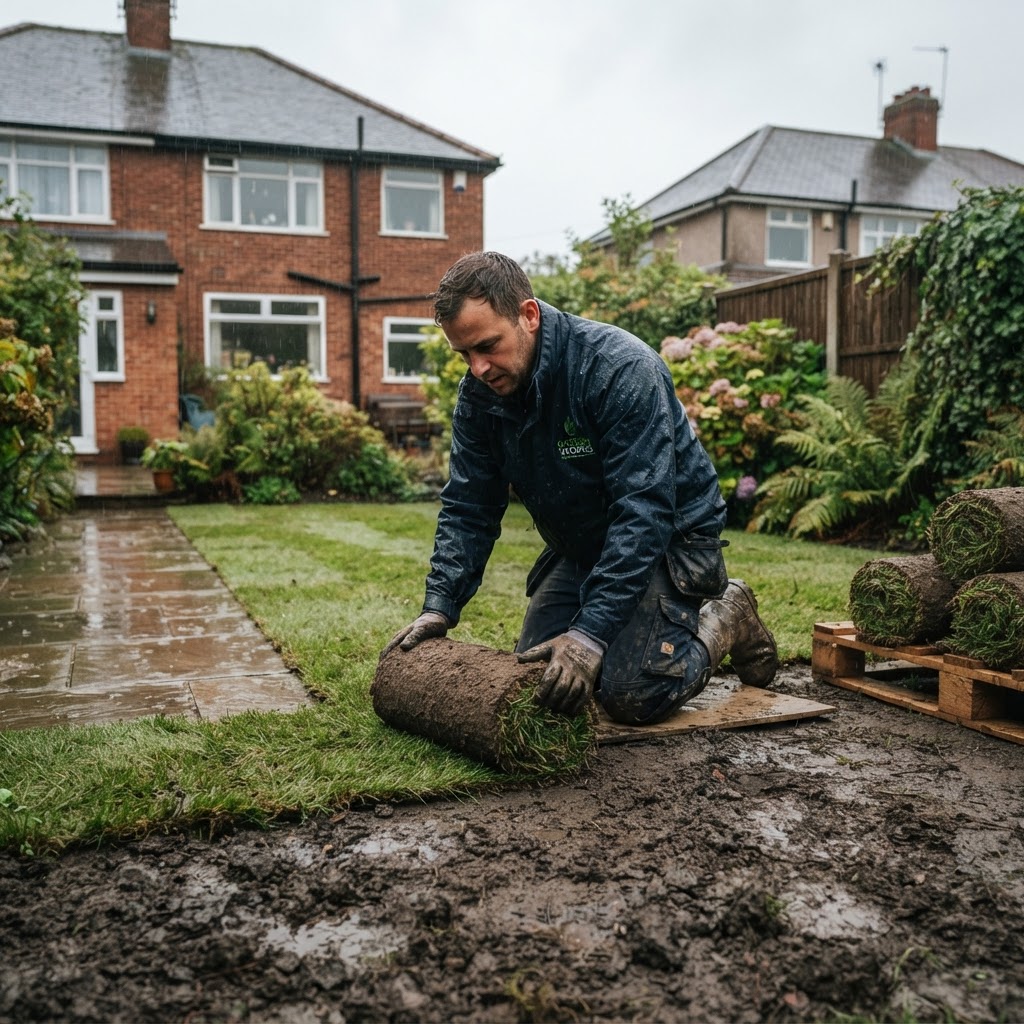
For a new lawn, remove stones, debris and perennial weeds, then cultivate and level the soil. Firm it lightly so footprints are shallow rather than deep. Rake the upper surface to create a fine tilth, but do not reduce soil to dust. On compacted ground, relieve compaction before final levelling so water can infiltrate and roots can move down through the profile.
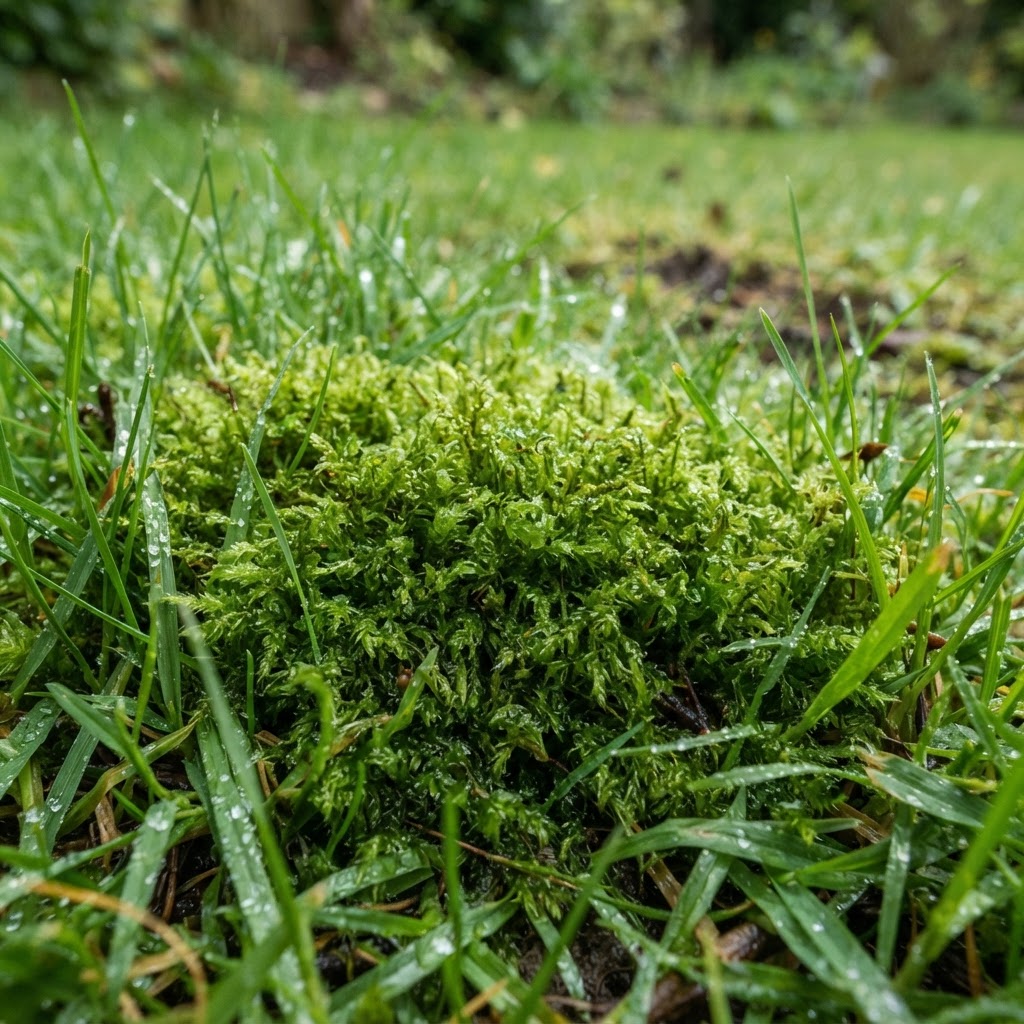
For overseeding, mow the existing grass shorter than normal, scarify or rake out thatch and moss, and collect the debris. Lightly spike or aerate compacted ground where needed. The aim is to expose small areas of soil throughout the sward. Seed lying on a dense mat of thatch may germinate, then fail once its root cannot reach the soil beneath.
A pre-seeder fertiliser can support early root development when used at its stated rate. A balanced 6-9-6 formulation is designed for this establishment stage: phosphorus supports rooting, while the nitrogen level is restrained enough for young grass. Do not use a high-nitrogen summer feed as a substitute. It can push soft top growth before the root system is ready.
Spread evenly and water with discipline
Divide the seed into two equal portions. Spread the first half lengthways and the second half crossways. This simple method is more reliable than trying to achieve full coverage in one pass, whether using a calibrated spreader or hand sowing a small area.
After spreading, rake very lightly or brush the seed into the surface. Most lawn seed should remain close to the top of the soil rather than being buried deeply. Firm with a lawn roller or by treading boards across the surface where appropriate. This improves seed-to-soil contact without creating a sealed, compacted layer.
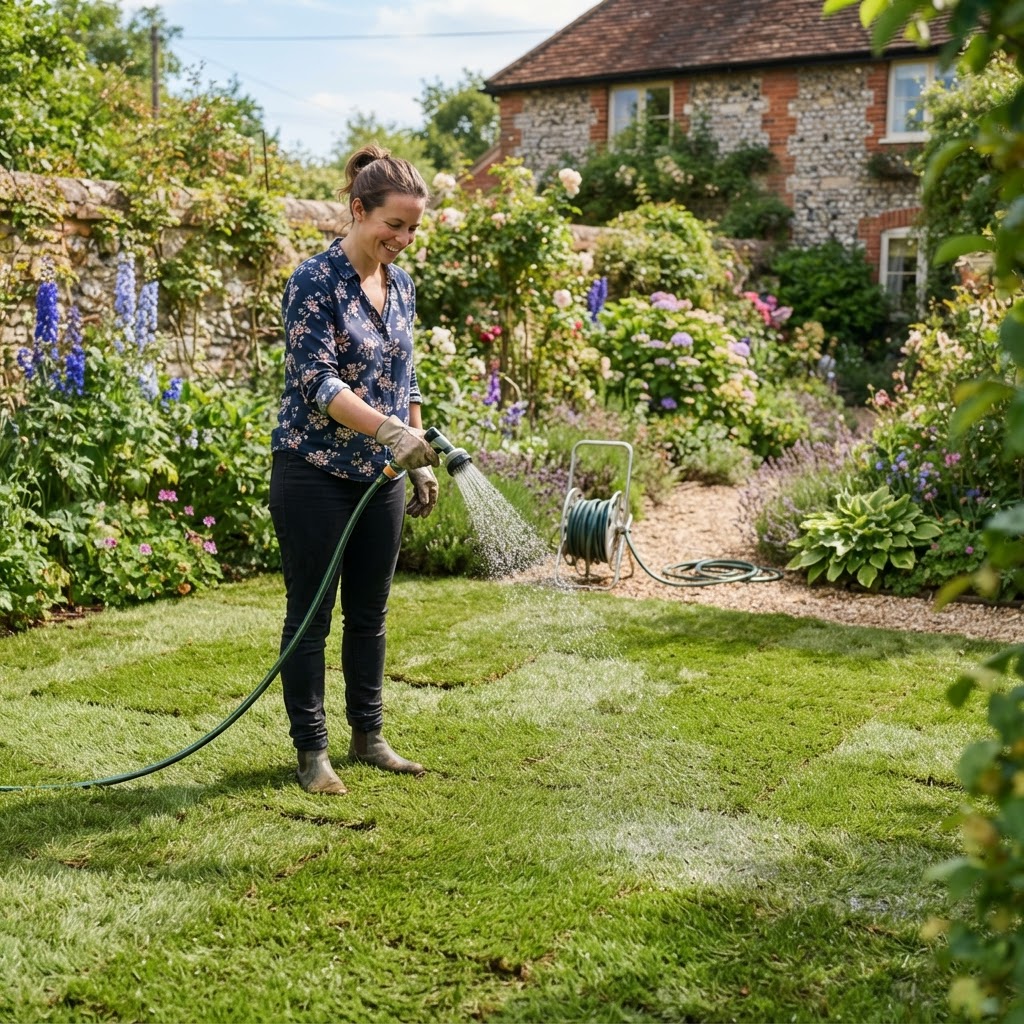
Keep the surface consistently moist during germination. In dry weather that may mean light watering once or twice daily, depending on soil type and temperature. Heavy watering that washes seed into corners creates the very patchiness the calculation was intended to prevent. Once seedlings are rooted, water less often but more deeply to encourage roots downwards.
Common lawn seed calculator mistakes
The most frequent error is confusing kilograms with grams. A rate of 35 g/m² across 100 m² requires 3.5 kg, not 35 kg. Check the unit on both the calculator and the seed bag before ordering.
Another mistake is calculating the lawn area but ignoring paved edges, beds and established shrubs. The opposite problem is common with repairs: calculating only the visibly bare ground when the surrounding thin turf also needs overseeding. Assess density, not just empty patches.
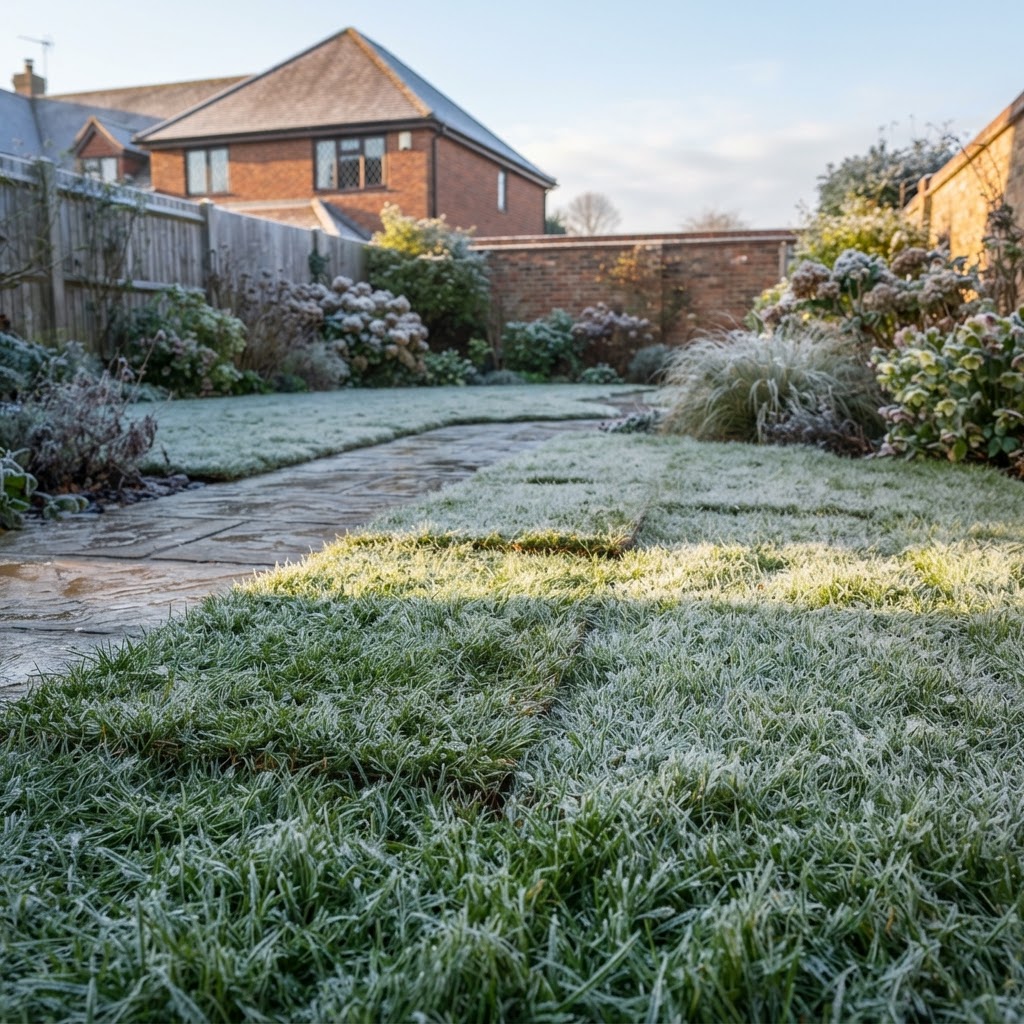
Finally, do not treat the seed rate as a remedy for poor timing. Spring and early autumn are usually the most dependable sowing windows in the UK because soil is warming or still warm, while rainfall is more regular. Cold, saturated ground slows germination; hot, dry weather demands much closer irrigation management.
At Ransley Pro Grow, the principle is straightforward: measure the ground, match the mixture to the site and sow at the stated rate. A lawn seed calculator gives you the quantity. Careful preparation and steady aftercare are what turn that quantity into a dense, durable lawn.