














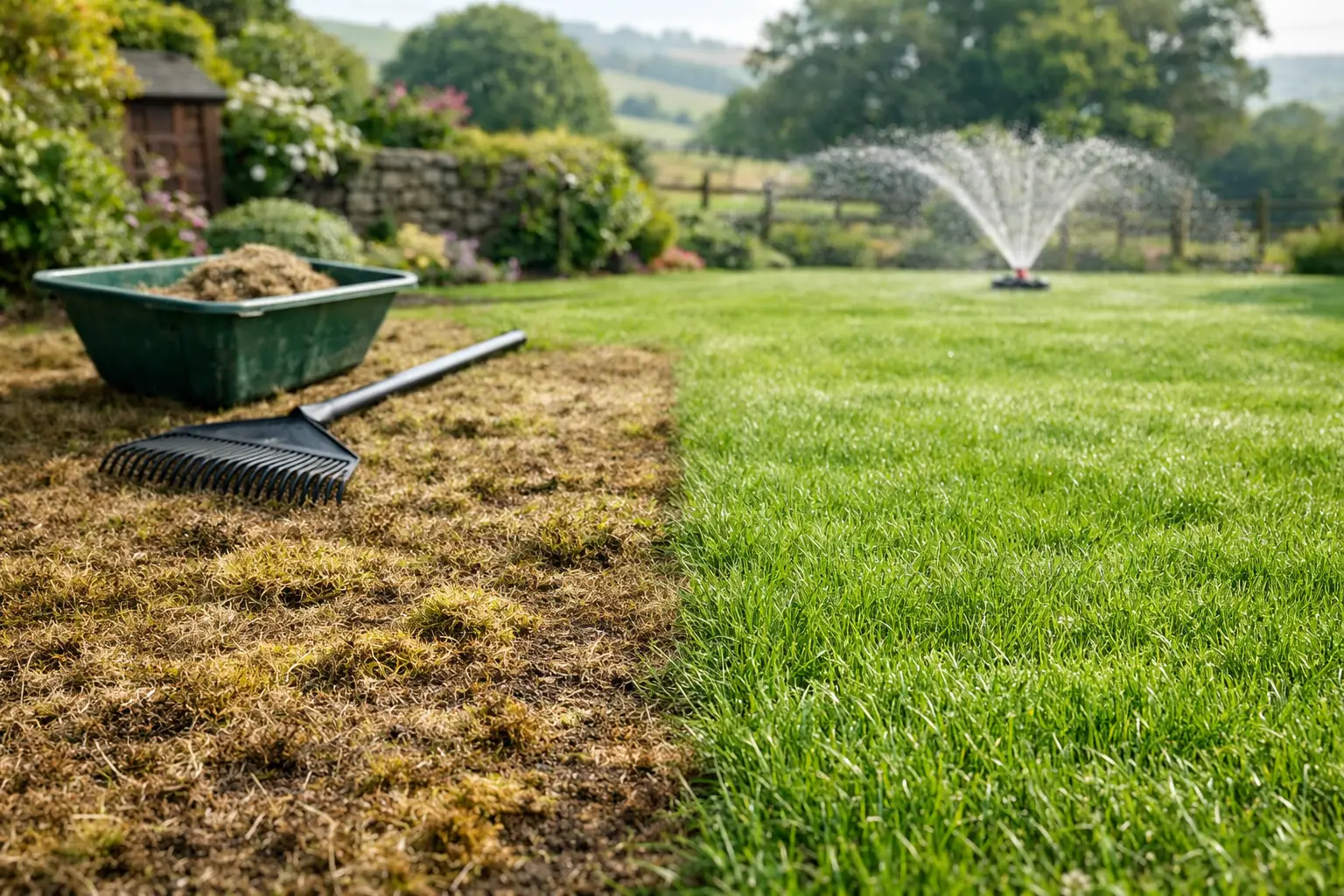
A blackened, thinning lawn after moss control can look worse than the original problem. That is normal. Lawn recovery after moss treatment is the stage that determines whether the grass reclaims the space or the moss returns next wet season. Killing moss is only half the job. The real work is correcting the conditions that allowed it to establish.
High-iron moss treatments are effective because iron damages the moss rapidly, often turning it black or dark brown. Grass can tolerate the application when it is used at the stated rate, but it will not instantly fill the bare areas left behind. A sound recovery plan removes the dead material, relieves compaction where needed, restores seed cover and feeds the roots without forcing soft, weak growth.
Start Lawn Recovery After Moss Treatment at the Right Time
Do not rake out moss the moment a treatment has been applied. Allow the product to work for the period stated on its label. Once the moss has blackened and dried, choose a dry day when the soil is moist but not saturated. Heavy rain, frozen ground and waterlogged turf all make the next stages harder and can cause more damage than improvement.
In most UK gardens, spring and early autumn are the most dependable recovery windows. Soil temperatures are usually high enough for germination, rainfall is more regular and grass has time to establish before prolonged summer drought or winter cold. Early autumn is particularly useful for lawns beneath trees, where falling leaves and reduced light have often contributed to the moss problem.
If treatment has been carried out in late autumn or winter, it may be better to remove the dead moss and wait until spring to overseed. Forcing seed into cold, wet soil wastes material and leaves open ground for moss and weeds to exploit.
Remove the Dead Moss Properly
Moss does not disappear simply because it has turned black. The dead layer still blocks light, holds moisture at the surface and prevents seed from reaching soil. Rake it out firmly with a spring-tined rake, working in two directions where the infestation was heavy. For larger lawns or trade work, a scarifier will produce a cleaner, more consistent result.
Some thatch will come out with the moss. A modest amount is beneficial, particularly if the lawn has felt spongy underfoot. However, do not scarify so aggressively that healthy grass is stripped from thin areas. The aim is to open the surface and remove the debris, not to leave a lawn looking like bare soil unless a full renovation is already planned.
Collect the waste rather than leaving it on the lawn. Moss fragments, thatch and leaves retain moisture, exactly the environment moss prefers. Compost it only if your compost system is hot and well managed; otherwise, dispose of it with garden waste.
Diagnose Why the Moss Took Hold
Moss is a symptom, not a cause. It thrives where grass is weak, light is limited, drainage is poor or the soil surface is compacted. Unless these factors are addressed, even a successful moss treatment becomes a short-term fix.
Shade is one of the most common causes in British gardens. Dense tree canopies, north-facing aspects and fences reduce the light available for grass photosynthesis. Where practical, lift lower branches to improve air movement and light. Do not expect a hard-wearing ryegrass lawn to perform well in deep shade, though. In those areas, a shade-tolerant mixture with suitable fescues is the more realistic choice.
Compaction is another frequent issue, especially on family lawns, gateways and sites with clay soil. If rain sits on the surface or the ground feels hard beneath the turf, aeration is required. Use a garden fork on a small lawn, pushing it 75-100 mm deep at regular intervals, or use a hollow-tine aerator on larger areas. Hollow tining removes small cores and is more effective where compaction is established, although it temporarily leaves a mess on the surface.
Drainage may need a longer-term solution. Repeated moss in the same wet patch can indicate a low spot, compacted subsoil or runoff from paths and patios. Aeration helps, but it cannot cure water continuously draining into the lawn. Regrading or installing drainage may be justified on persistently wet sites.
Soil acidity can also favour moss, but guessing is poor practice. Test the pH before applying lime. Most lawn grasses perform well in a mildly acidic to neutral soil, broadly around pH 5.5 to 7.0. Lime should only be used where a soil test indicates it is needed, and it should not be applied casually alongside fertiliser or moss control products.
Overseed the Gaps Before Moss Returns
Once the dead moss has been removed, overseed promptly if the lawn is thin. A dense grass sward is the most reliable form of moss prevention because it shades the soil surface and competes for water and nutrients.
Choose seed for the site rather than selecting solely for a fine appearance. Dwarf perennial ryegrass provides wear tolerance and rapid establishment for busy family lawns and contractor-maintained areas. Fine fescues bring a finer texture and cope better with lower fertility, while specialist shade-tolerant mixtures are the sensible option beneath trees and along shaded boundaries. For fast repair, a tetraploid ryegrass blend can germinate in around 7-14 days in suitable warmth and moisture, with larger seed and deeper rooting potential than many standard mixtures.
Rake the surface lightly to create a fine, open seedbed, then spread seed evenly at the manufacturer’s overseeding rate. Do not bury it deeply. Most lawn seed needs close contact with soil and light coverage, not a thick layer of topsoil. On heavily scarified areas, a light dressing of screened, suitable lawn topdressing can level the surface and improve seed-to-soil contact, but avoid smothering existing grass.
Press the seed in with a lawn roller or by treading lightly using boards. Water with a fine spray if conditions are dry, keeping the upper soil surface consistently moist until germination. Little and often is better than a heavy soaking that washes seed into hollows.
Bird activity can be frustrating, particularly on newly opened ground. Good seed contact and light raking reduce losses. Netting is an option for small lawns, but it must be securely fitted and checked regularly so wildlife cannot become trapped.
Feed Roots, Not Just Leaf Growth
New seedlings and stressed turf need nutrition, but timing matters. A pre-seeder fertiliser with a balanced 6-9-6 NPK analysis is well suited to recovery work because the higher phosphate content supports root development while nitrogen remains controlled. This is preferable to applying a strong spring or summer feed to bare, recently seeded ground, where excessive top growth can be weak and difficult to manage.
Apply fertiliser at the stated rate and distribute it evenly. More is not better. Over-application can scorch grass, increase unnecessary mowing and raise the risk of nutrient loss in wet weather. Keep granular products off patios, drains and ponds, then brush any stray material back on to the lawn.
Where moss treatment has been combined with weed control, read the label carefully before overseeding. Some selective herbicide products require a waiting period before new seed can be sown. Moss-only iron treatments and multi-action treatments are not interchangeable, and treating them as such can lead to poor germination.
Mow and Maintain for a Thicker Sward
Wait until new grass is well anchored before its first cut. Test this by gently pinching a small tuft: if it resists lifting, it is ready. Use a sharp mower and remove only the top third of growth. A blunt blade tears young leaves, while cutting too low exposes the soil and encourages moss once more.
For most domestic lawns, maintain a mowing height of around 25-40 mm depending on grass type, use and season. Raise the cut in shade, during dry spells and into autumn. A closely shaved lawn may look tidy for a few days, but it weakens the grass plant and lets more light reach the soil surface.
Keep leaves cleared through autumn and avoid repeated foot traffic when the ground is wet. If the lawn is beneath trees, regular leaf removal is not cosmetic work - it is part of disease, moss and light management. Annual autumn aeration and targeted overseeding will usually cost less, and produce better turf, than waiting for a thin lawn to fail.
Ransley Pro Grow’s approach is straightforward: remove the competition, correct the cause and establish grass suited to the site. A lawn does not need to be flawless to be healthy, but it does need enough vigorous grass cover to keep moss from taking the vacant ground.