














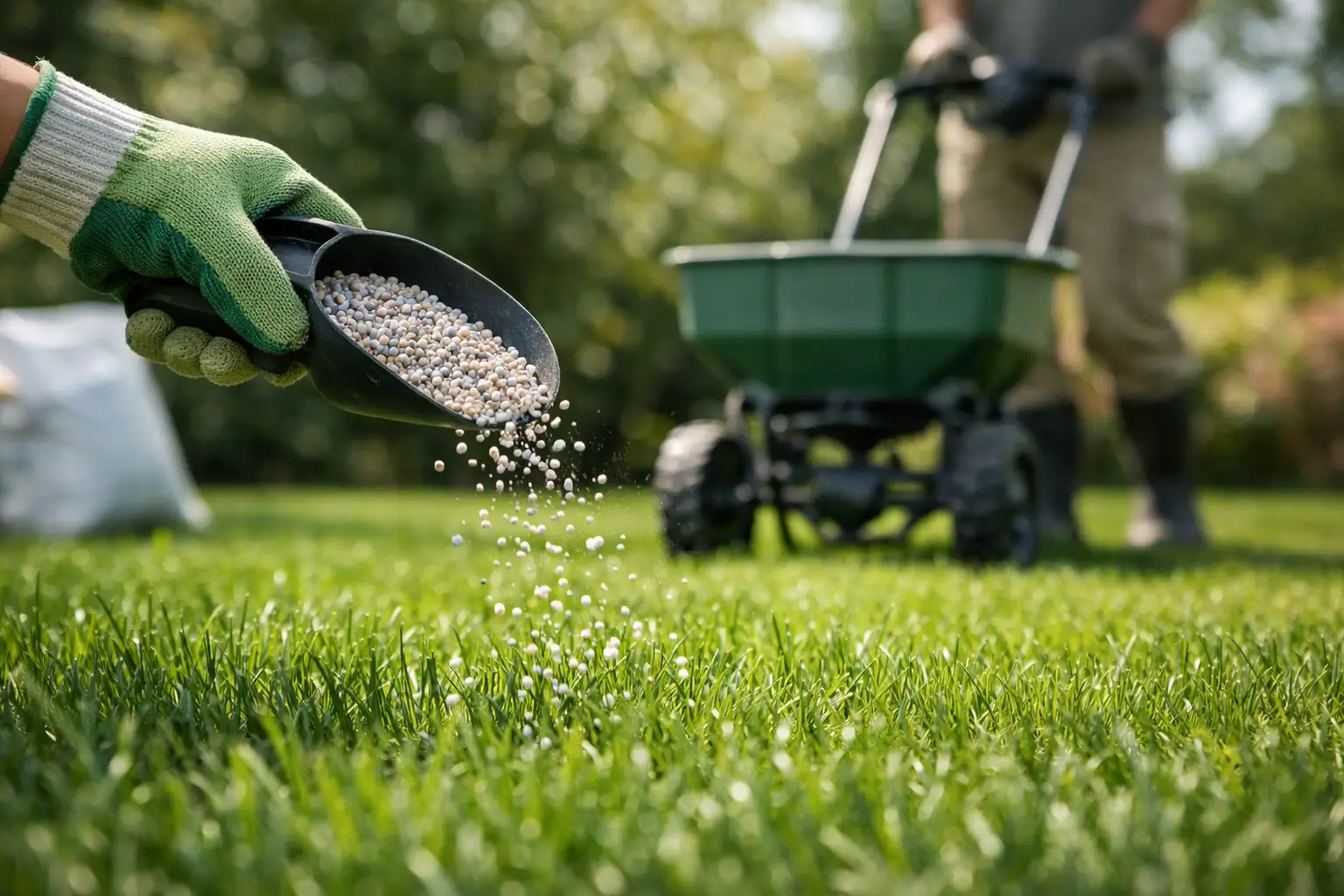
A lawn that looks pale, thin or slow to recover is rarely asking for more water alone. It is usually short of the right nutrients at the right time. If you have searched for fertiliser, the correct term is fertiliser - and choosing it well is what separates a brief flush of green growth from a dense, durable lawn with a proper root system.
For homeowners, that means fewer patchy areas and better colour. For landscapers, it means predictable establishment, reliable presentation and grass that stands up to foot traffic. The principle is simple: feed the plant according to the season, the soil and the job required.
What lawn fertiliser actually does
Grass removes nutrients from the ground every time it grows and is mown. Clippings left on the lawn return a small amount of organic matter, but they do not replace everything the plant needs. On sandy soils, free-draining new-build gardens and intensively managed lawns, nutrient reserves can be particularly limited.
A properly formulated lawn fertiliser supplies three primary nutrients: nitrogen, phosphorus and potassium. These are shown as an NPK ratio on the bag. A 6-9-6 pre-seeder fertiliser, for example, contains 6% nitrogen, 9% phosphorus and 6% potassium by weight.
Nitrogen drives leaf growth and chlorophyll production, producing greener colour and a stronger response after mowing. Phosphorus supports early root development, which matters when establishing seed or repairing bare ground. Potassium helps regulate water movement in the plant and improves resilience against drought, wear, disease pressure and cold weather.
The ratio matters more than a vague promise of a “greener lawn”. High nitrogen is useful when grass is actively growing in spring and summer. Used too late in autumn, however, it can encourage soft top growth that is more vulnerable to frost and disease. A lower-nitrogen, higher-potassium autumn feed takes a different approach: less surge above ground, more support below it.
Choosing lawn fertiliser by season
There is no single fertiliser that suits every lawn, every month. British weather is variable, but grass growth still follows a clear seasonal pattern.
Spring: restore colour and growth
As soil temperatures rise and mowing resumes, grass begins to use nitrogen again. A spring or summer fertiliser with a higher nitrogen content helps the lawn recover from winter, improve leaf density and develop a more even green colour.
Apply only when the lawn is actively growing and moisture is available. Feeding a dry, stressed lawn during a warm spell may scorch leaf blades, particularly if granules sit on the surface without being watered in. If rain is not expected, irrigate after application according to the product instructions.
Spring is also when weeds and moss become more noticeable. Do not assume fertiliser alone will cure either problem. Moss usually indicates shade, poor drainage, compaction or persistently close mowing. Broadleaf weeds compete for space and nutrients. Address the underlying cause while using an appropriate selective treatment where needed.
Summer: support recovery, not constant softness
A well-used family lawn, commercial frontage or newly completed landscape scheme may need a summer feed, especially where regular mowing removes substantial growth. The aim is sustained health, not excessive leaf production.
Avoid applying a strong feed immediately before a heatwave or when the ground is hard and dry. Grass under drought stress naturally slows down. Pushing it with nitrogen before adequate moisture returns can create more demand on an already limited root system. In these conditions, watering, sensible mowing height and patience are often the better tools.
Autumn: build roots before winter
Autumn is the most valuable feeding window for many UK lawns. Warm soil and cooler air favour root growth, while rainfall is often more dependable. It is also the best period for overseeding worn or patchy turf.
Use an autumn and winter formulation with reduced nitrogen and increased potassium. This supports stronger roots and firmer growth without forcing a lush, frost-sensitive canopy. Where seed is being sown, a balanced pre-seeder fertiliser such as 6-9-6 provides phosphorus for young root development without being overly harsh on emerging seedlings.
Winter: usually leave the bag closed
Once growth has slowed significantly, fertiliser is seldom the answer. Frozen, waterlogged or dormant grass cannot make good use of a feed. Walking heavily on saturated turf can compact the soil, while spreading granules before heavy rain risks nutrient run-off.
Winter lawn care is mainly about preventing damage. Keep leaves cleared, avoid mowing when conditions are unsuitable and deal with drainage or compaction plans before spring arrives.
Apply fertiliser accurately
More fertiliser does not produce a better lawn. It produces risk: scorched grass, weak growth, waste and potentially nutrient movement into drains or watercourses. Trade-standard results come from measured application.
Start by calculating the lawn area in square metres. Measure the length and width of straightforward lawns; split irregular shapes into smaller sections and add them together. Then use the stated application rate on the product label. A rate of 35 g per square metre over 100 square metres requires 3.5 kg of product, not an estimate made from the bag by eye.
For larger areas, a wheeled spreader gives the most even coverage. Apply half the required quantity in one direction and the other half at right angles. This crosshatch method reduces striping and missed sections. On small lawns, hand application is possible, but gloves and careful, even distribution are essential.
Choose a calm day. Wind can shift lightweight granules onto beds, paving or ponds, where they should not be left. Sweep any material from hard surfaces back onto the lawn rather than washing it into drainage channels. Water in if the label requires it, but never apply when intense rainfall is imminent.
When fertiliser will not solve the problem
Feeding is not a substitute for correcting poor growing conditions. A lawn beneath dense tree cover may need shade-tolerant seed, selective pruning where appropriate and a lighter feeding programme. Applying extra nitrogen to grass that receives too little light often gives a temporary colour improvement without solving thinning.
Compacted ground is another common issue. If water sits on the surface, roots cannot access sufficient air. Aeration can relieve compaction and improve the movement of water and nutrients into the soil. On very heavy or poorly structured ground, autumn renovation may include aeration, overseeding and a suitable soil conditioner before feeding.
Likewise, a lawn cut too short will struggle even when nutrients are available. Most domestic lawns perform better when kept at roughly 25-40 mm, with a higher cut in dry weather, shade or autumn. Removing no more than one-third of the leaf blade at a time preserves the plant’s ability to photosynthesise and recover.
Establishing seed with the right feed
New grass has different priorities from established turf. It needs roots first. A pre-seeder fertiliser is specially formulated for use before or shortly after sowing, providing balanced nutrition with useful phosphorus for root establishment.
Prepare the seedbed properly: remove debris and weeds, create a level surface, firm it lightly and rake to produce a fine tilth. Apply the fertiliser at the specified rate, work it lightly into the upper surface if directed, then sow the seed evenly. Keep the surface consistently moist during germination without flooding it.
Do not use a high-nitrogen spring feed as a substitute. It may stimulate quick leaf growth, but that is not the same as creating a strong young plant. A well-rooted lawn is more drought tolerant, more stable under traffic and better able to fill gaps naturally.
For rapid establishment, professional ryegrass blends can germinate in around 7-14 days under favourable conditions. Temperature, moisture and seed-to-soil contact still determine the result. Fertiliser supports the process; it cannot compensate for seed left dry on a compacted surface.
A practical feeding rule for better lawns
Read the NPK analysis, match it to the season and apply precisely. Use a growth-led spring or summer feed when grass is actively producing leaf, a balanced pre-seeder fertiliser when sowing, and an autumn formulation when root strength and winter hardiness are the priority.
The best lawn programmes are not complicated. They are observant. Look at colour, density, drainage, mowing pressure and the weather before reaching for the spreader. Give the grass what it can use now, and it will repay the effort with steadier growth long after the first flush of green has passed.