







A sharply defined yellow-brown stripe after feeding is rarely a disease problem. It is usually fertiliser scorch: more nutrient salts have reached the leaf and root zone than the grass can safely tolerate. Effective lawn fertiliser burn prevention is therefore not about avoiding feed altogether. It is about applying the right analysis, at the stated rate, in conditions where the lawn can take it up.
A well-fed lawn is denser, greener and better able to recover from mowing, wear and dry spells. But fertiliser is concentrated by design. Nitrogen, potassium and other salts draw moisture towards themselves; where they are over-applied, they can pull water from grass roots and leaf tissue. The result is dehydration, not nourishment.
What fertiliser burn looks like
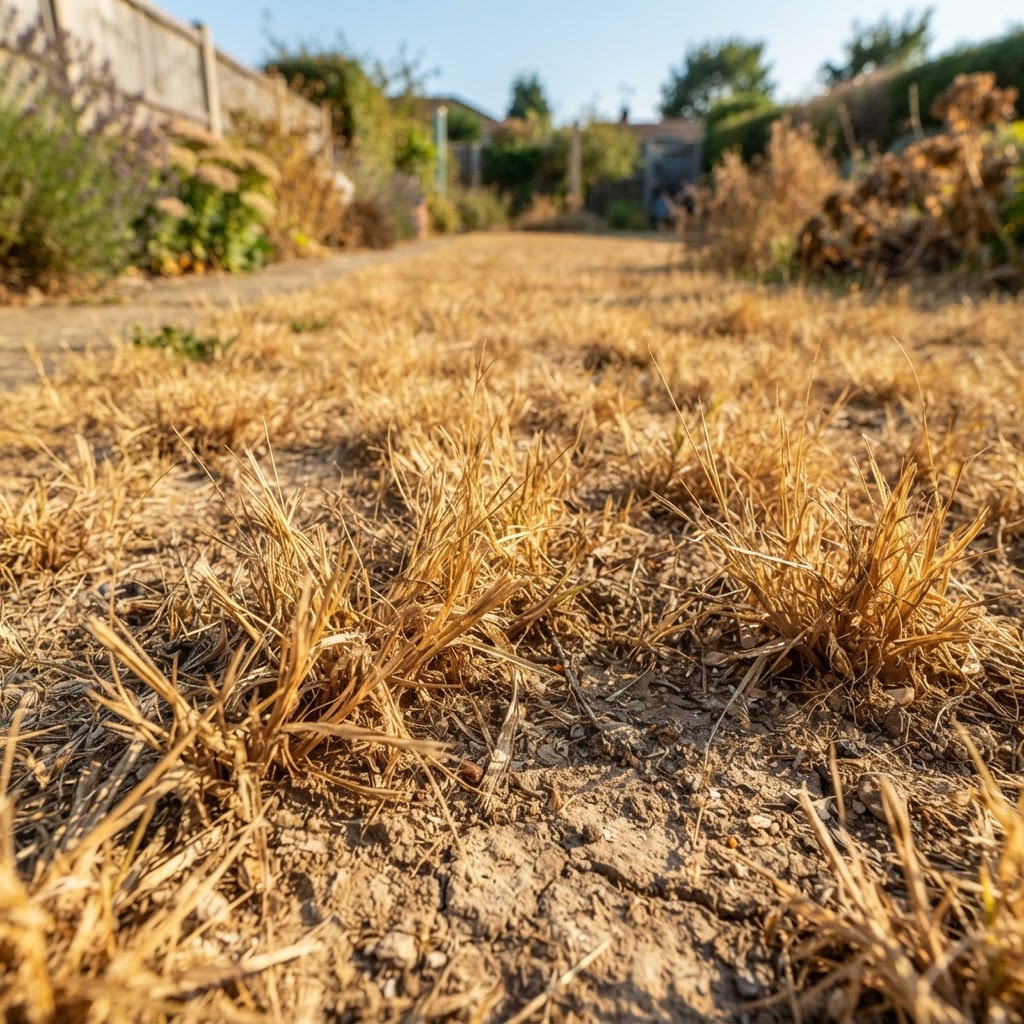
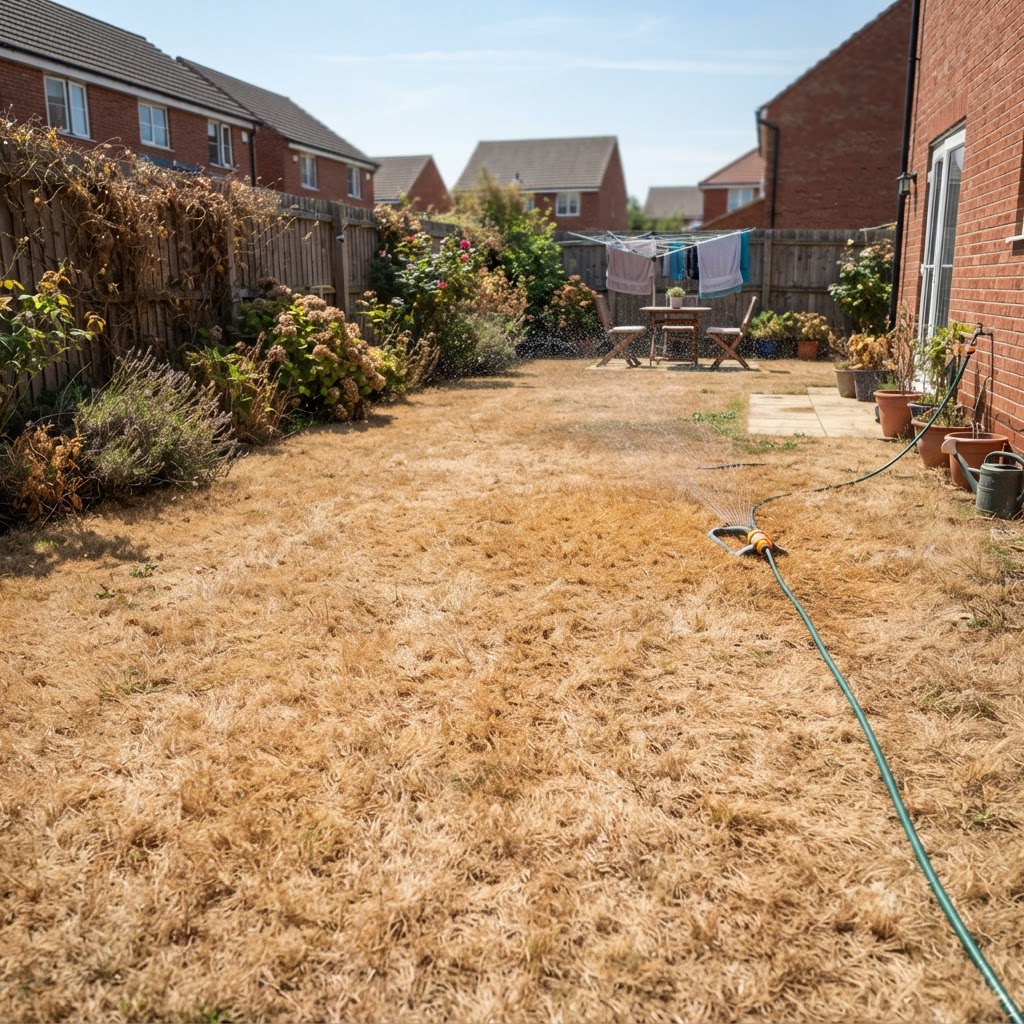
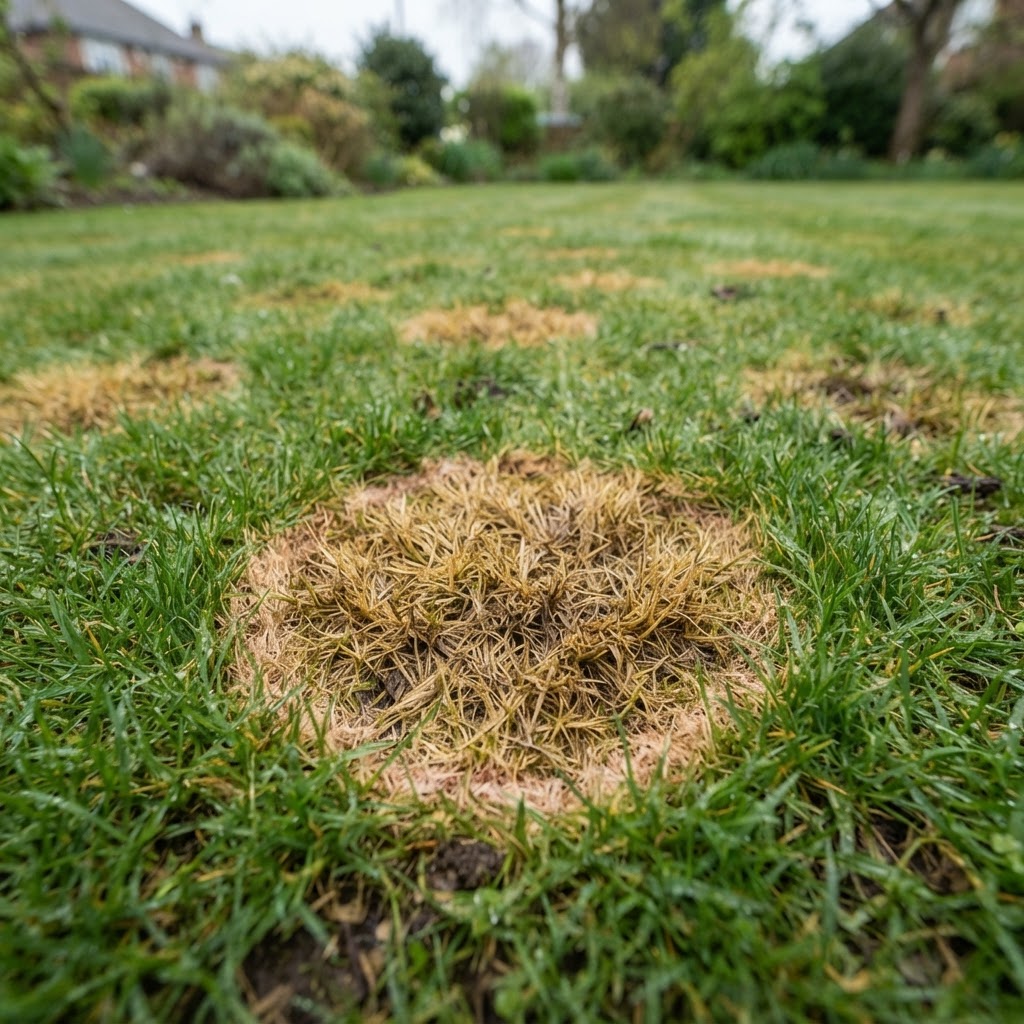
Fertiliser burn often appears within one to five days of application, particularly in warm, dry or windy weather. Look for yellowing that turns straw-brown, usually in lines matching the spreader’s path, at turning points, or around a hand-spread pile. These patterns are the useful clue. Drought stress tends to affect larger, more exposed areas, while fungal disease seldom follows neat application stripes.
The severity depends on dose, soil moisture, grass growth and fertiliser type. A slight yellowing may grow out once conditions improve. Heavy applications can kill plants outright, leaving thin or bare patches that require overseeding.
Lawn fertiliser burn prevention starts before spreading
The most reliable way to prevent scorch is to treat the label application rate as a specification, not a rough suggestion. Professional-grade fertilisers are formulated to deliver a measured amount of nutrient per square metre. Doubling the rate does not create a twice-as-good lawn. It increases salt concentration and encourages soft, excessive top growth.
Measure the lawn before loading the spreader. For rectangles, multiply length by width. Divide irregular lawns into simple sections, calculate each one, then add the totals. This matters most on smaller gardens, where a few kilograms too much product can represent a substantial over-application.
Next, weigh out only the quantity required for that area. If the stated rate is 35 g per m² and the lawn is 100 m², apply 3.5 kg, not a full bag by habit. Contractors working across several areas should keep each lawn’s allocation separate. It prevents the familiar end-of-bag mistake: emptying remaining fertiliser onto the final strip.
Match the feed to the season
Not all fertilisers ask the same thing of the grass. Spring and summer feeds typically contain more nitrogen to support colour and active growth. They work well when the lawn is growing and can be watered if needed, but they demand greater care during dry weather.
Autumn and winter formulations generally use less nitrogen and more potassium. This supports stronger roots and firmer growth rather than a lush flush that is vulnerable to frost and disease. Applying a high-nitrogen summer feed late in the year is not just inefficient; it can leave the lawn less prepared for winter.
Newly seeded turf needs particular restraint. Seedlings have shallow roots and limited tolerance for concentrated salts. A balanced pre-seeder fertiliser such as a 6-9-6 formulation is designed to support root development without the aggressive nitrogen load of a summer lawn feed. Even then, use the specified rate and do not apply onto seedlings that are already stressed by heat, cold or lack of moisture.
Calibrate the spreader, then overlap lightly
Uneven application is one of the main causes of fertiliser burn. A rotary spreader throws granules in an arc, so its distribution is naturally heavier near the centre and lighter at the edges. A drop spreader is more precise at borders but can leave dark or scorched stripes if the wheel tracks overlap too heavily.
Check the spreader setting against the fertiliser label, but do not assume a numbered dial gives identical results across every machine. Run a short test over a measured area using a known weight of product. If too much is discharged, reduce the setting; if too little is used, increase it. This simple check is especially worthwhile when changing between fine granules, larger prills or different products.
Walk at a steady pace and keep overlaps modest. Do not stop with the hopper open, and close it before turning at the end of a run. For difficult shapes, apply half the required quantity in one direction and the other half at right angles. This cross-hatch approach improves coverage and reduces the risk of concentrated bands.
Hand spreading can work on very small areas, but it is less consistent. Never throw fertiliser from a stationary pile or try to judge the final handful by eye. Those concentrated patches are where scorch begins.
Apply only when soil moisture is on your side
Fertiliser needs moisture to move into the soil and become available to roots. Granules sitting on dry leaves or baked ground are more likely to scorch the turf, particularly when bright sun follows application. The ideal lawn is dry enough to walk on and spread evenly, while the soil beneath is moist.
A calm, mild day with rain forecast within 24 hours is often suitable. If rain is not due, water the lawn after application, using enough to wash granules off the leaves and into the top layer of soil. A light sprinkle is not always sufficient. The aim is to dissolve and carry the fertiliser down to the root zone, without creating run-off onto paths, drains or borders.
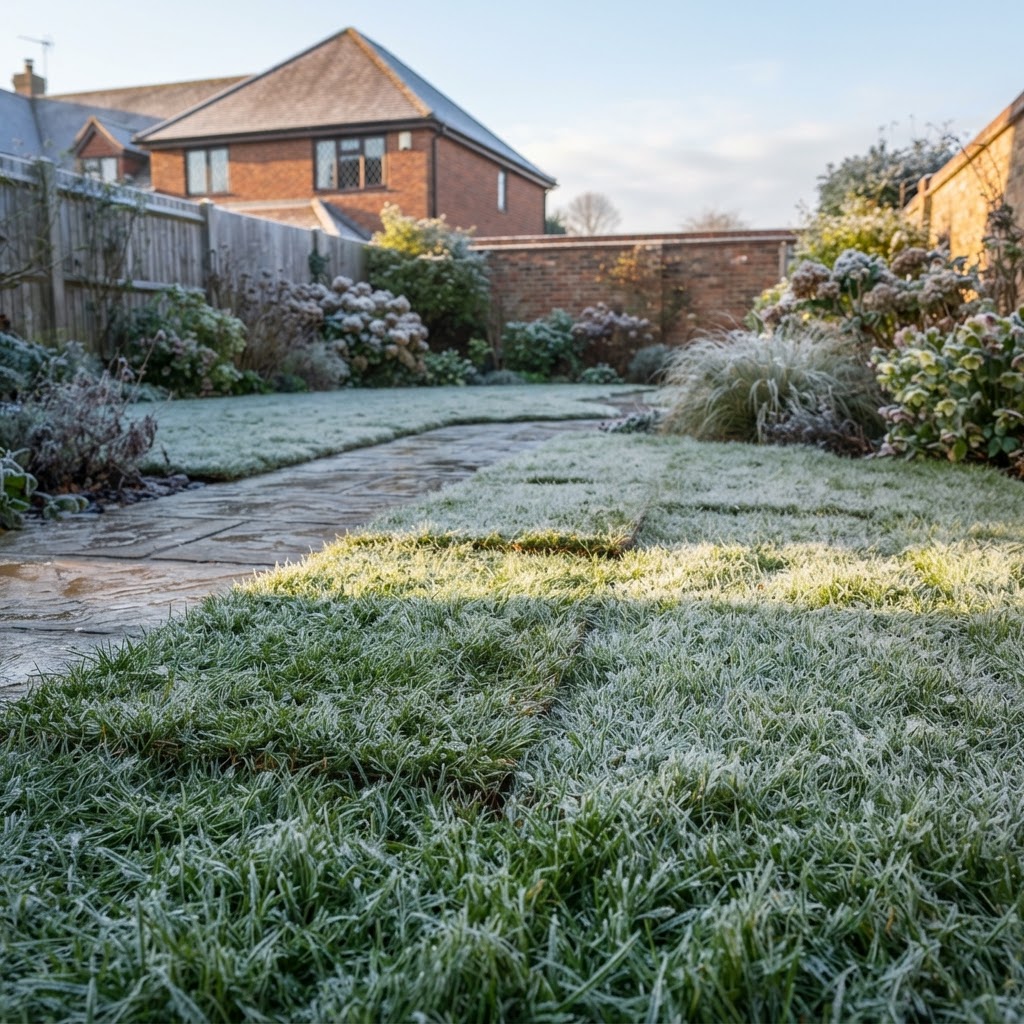
There is a balance to strike. Do not apply immediately before heavy rain, when nutrients may be washed away before roots can use them. Likewise, avoid feeding during drought, heat stress, frost, waterlogging or when the grass has stopped growing. Grass cannot make good use of fertiliser under those conditions, and the risk of damage rises sharply.
Mowing, watering and other practical details
Mow one or two days before feeding rather than immediately afterwards. A freshly cut lawn provides clearer access to the soil surface, while a short pause after mowing gives the grass time to settle. Avoid mowing until the fertiliser has been watered in and the lawn is dry again.
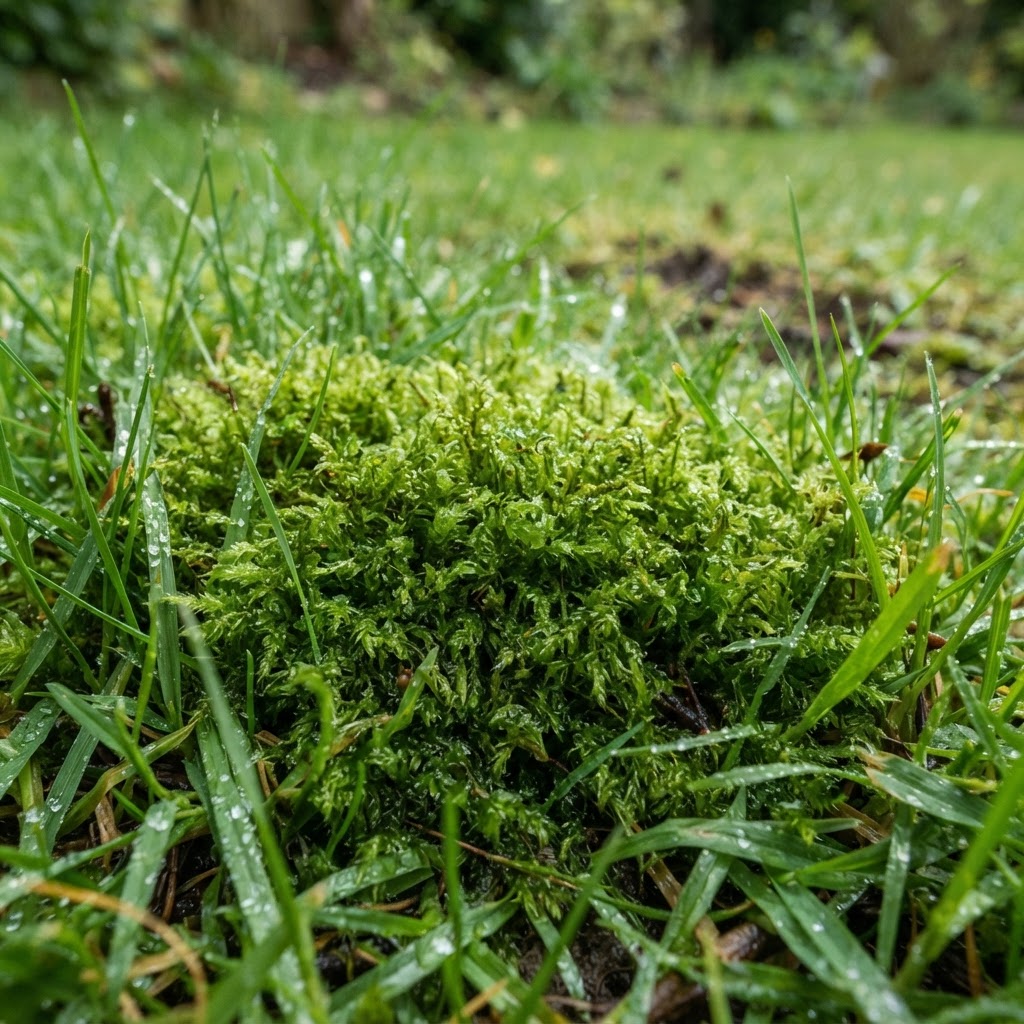
Clear heavy leaf litter, clippings and debris first. Granules trapped in a thick layer of organic material may sit against foliage instead of reaching soil. If moss is extensive, address that separately and rake out dead material before expecting fertiliser to thicken the sward. Feeding moss only helps the moss compete.
Keep granules off paving, decking and driveways. Sweep them back onto the lawn rather than washing them into surface water. The same rule applies around ponds and drains. Accurate application protects the lawn and prevents unnecessary nutrient loss.
Store fertiliser in a sealed, dry container. Damp granules can clump, bridge in the hopper and then release in bursts. A product applied perfectly last time can become uneven simply because it has absorbed moisture in the shed.
If you have already scorched the lawn
Act promptly if you suspect an overdose. Where dry granules are still visible, carefully sweep or collect as much as possible without spreading it further. Then irrigate the affected lawn deeply, provided local water restrictions allow. The purpose is to dilute salts through the upper soil profile, not to leave the surface briefly wet.
Repeat deep watering over the next few days if the soil drains freely and the lawn remains stressed. On heavy clay or waterlogged ground, do not saturate the area indiscriminately. Excess water can exclude oxygen from roots and create a second problem. In that situation, remove visible product, wait for suitable conditions and allow the lawn to recover gradually.
Do not apply more fertiliser, weedkiller or moss treatment to a scorched lawn in an attempt to correct its colour. Let healthy growth return first. Once the affected area is stable, lightly rake out dead grass, improve surface contact with suitable topdressing if required, and overseed bare patches at the appropriate time of year. A durable ryegrass and fescue blend is useful where wear tolerance and recovery are priorities.
The safest feed is not the weakest one. It is the one chosen for the season, measured for the area and applied with enough care to put every granule where the grass can use it. That is how a lawn receives the benefit of professional nutrition without paying for it in brown patches.