


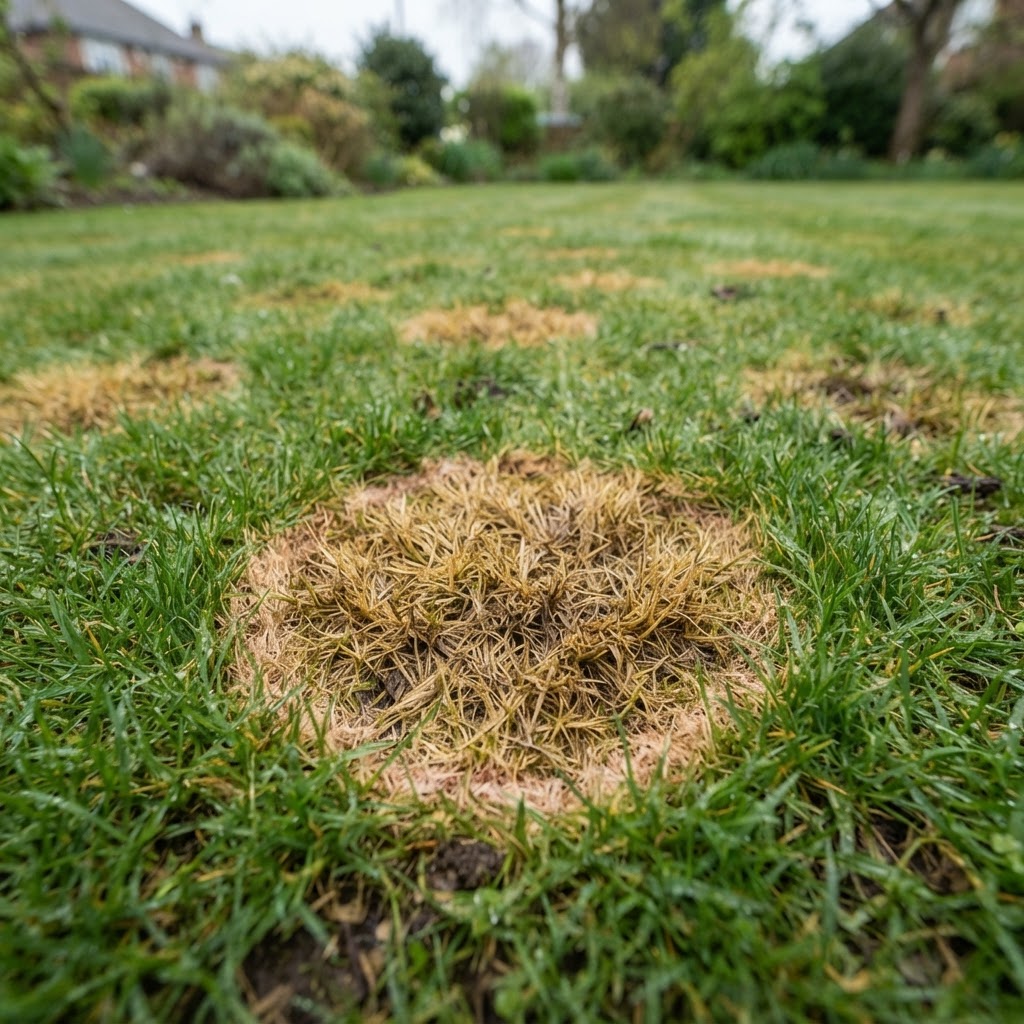
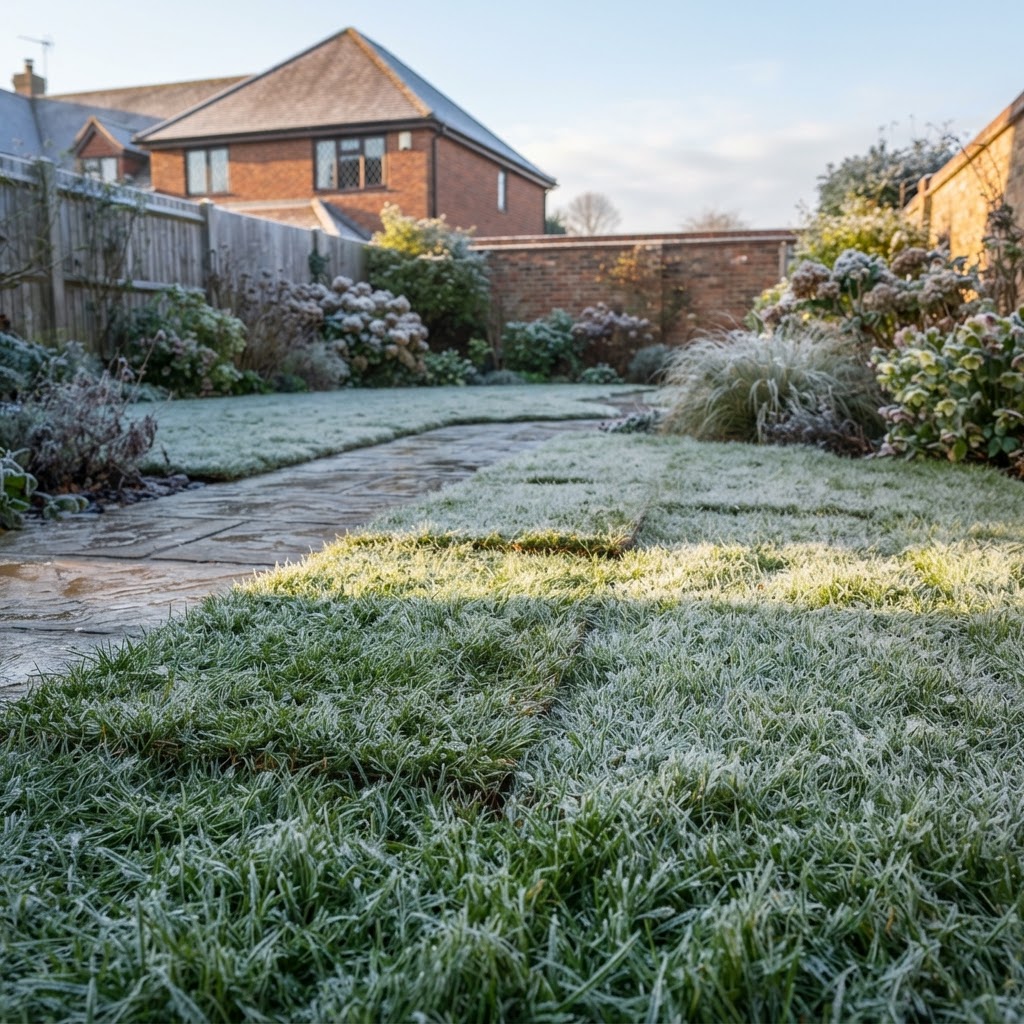

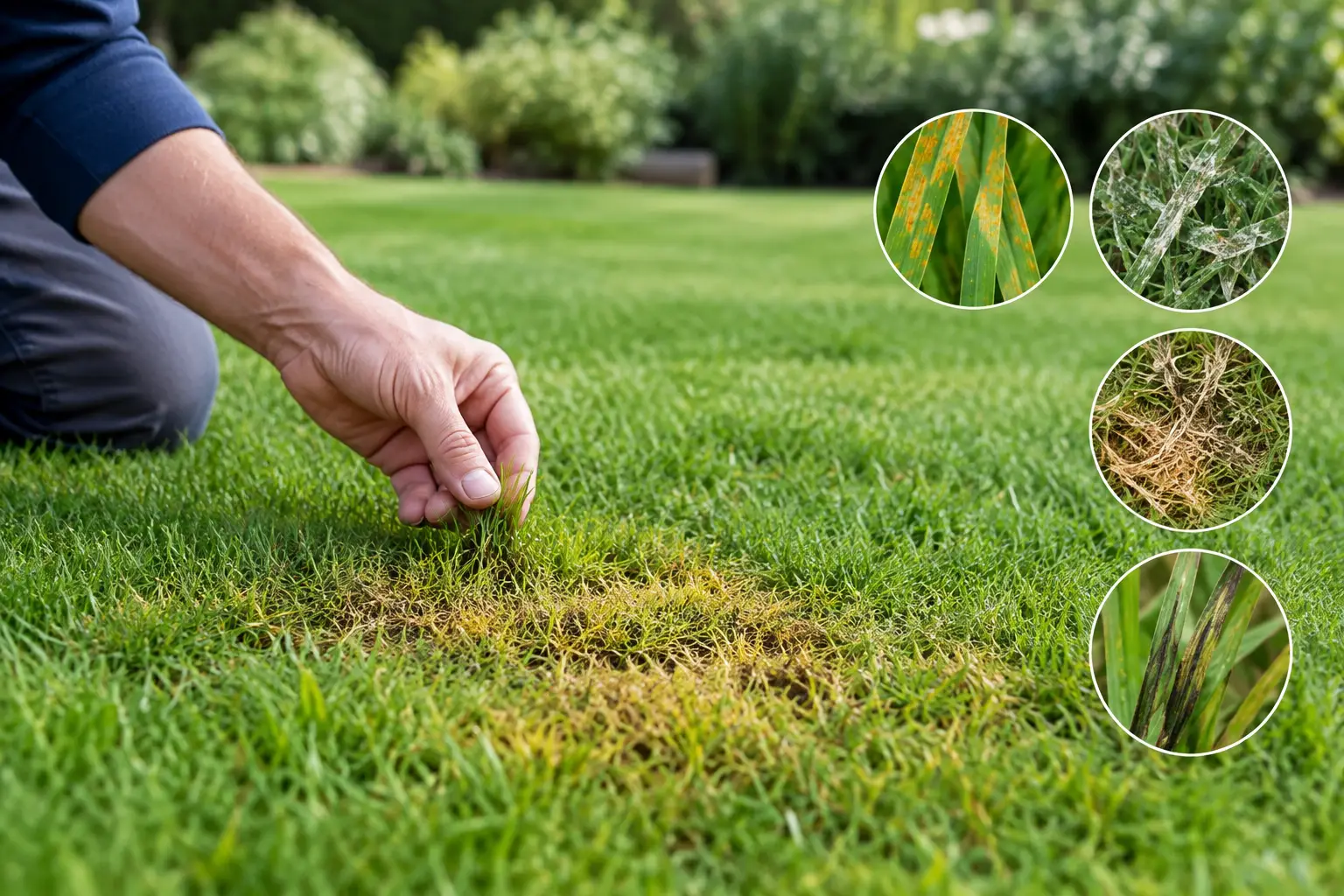
A brown patch is not automatically a lawn disease. On a damp October morning, it may be Microdochium patch. After a week of dry wind, it may simply be thirsty grass on compacted ground. This lawn disease identification guide is built around the distinction that matters: treating the visible symptom and diagnosing the cause are not the same job.
For homeowners, getting that diagnosis right avoids wasted treatment and further damage to the lawn. For landscapers, it prevents a call-back when a patch returns because the underlying shade, drainage or nutrition issue was never corrected. Start with the pattern, the season and the condition of the individual leaf. Only then decide on recovery work.
Start with the lawn, not the product
Turf diseases are usually caused by fungi that take advantage of stressed grass, prolonged leaf wetness or unsuitable growing conditions. They are not a sign that a lawn has been poorly kept in every case. Even well-managed turf can be affected during an extended mild, wet spell.
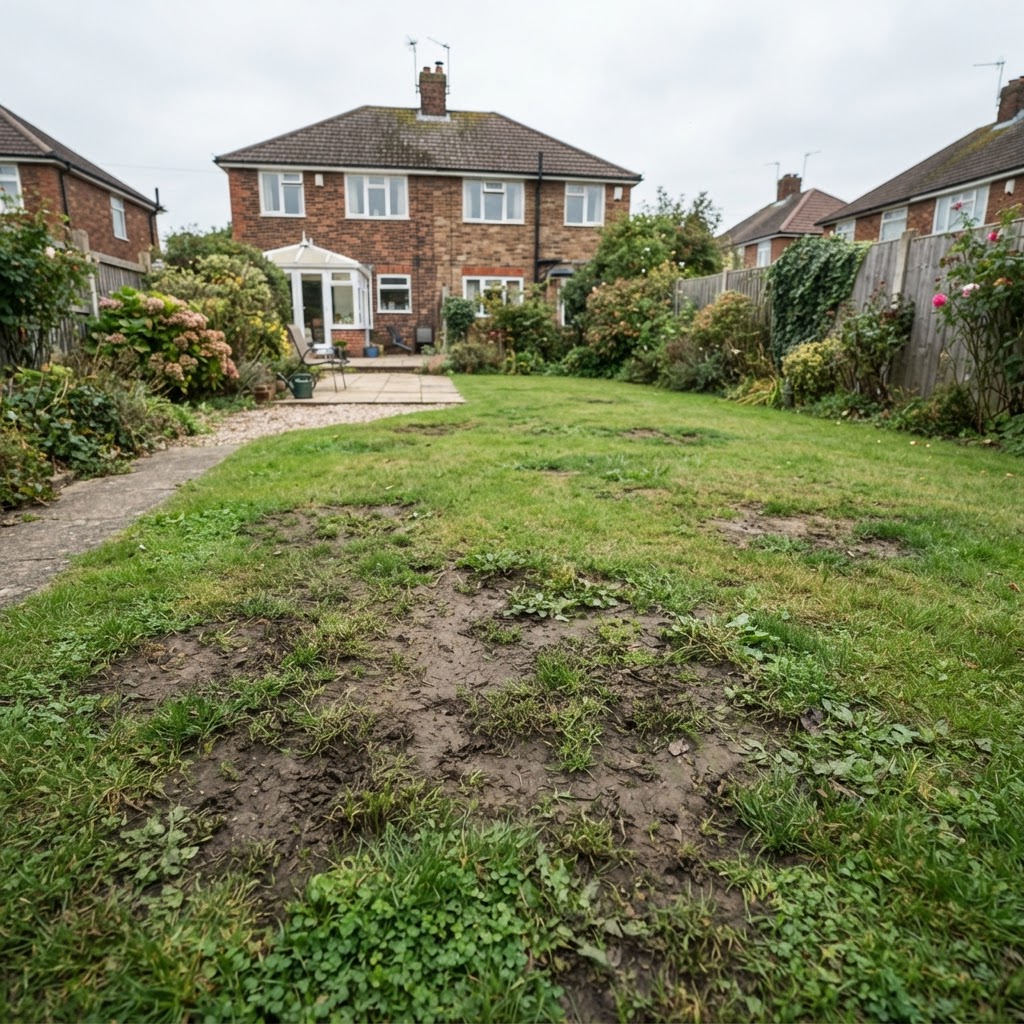
That said, a disease diagnosis should be earned. Walk the lawn before mowing or irrigating, preferably when dew is still present. Note whether the damage is spreading, whether it follows a line, and whether the affected grass pulls out easily. Inspect several patches rather than one. A single circular mark beneath a bird feeder, for example, tells a different story from dozens of small patches across a shaded lawn.
Before calling it disease, rule out four common lookalikes:
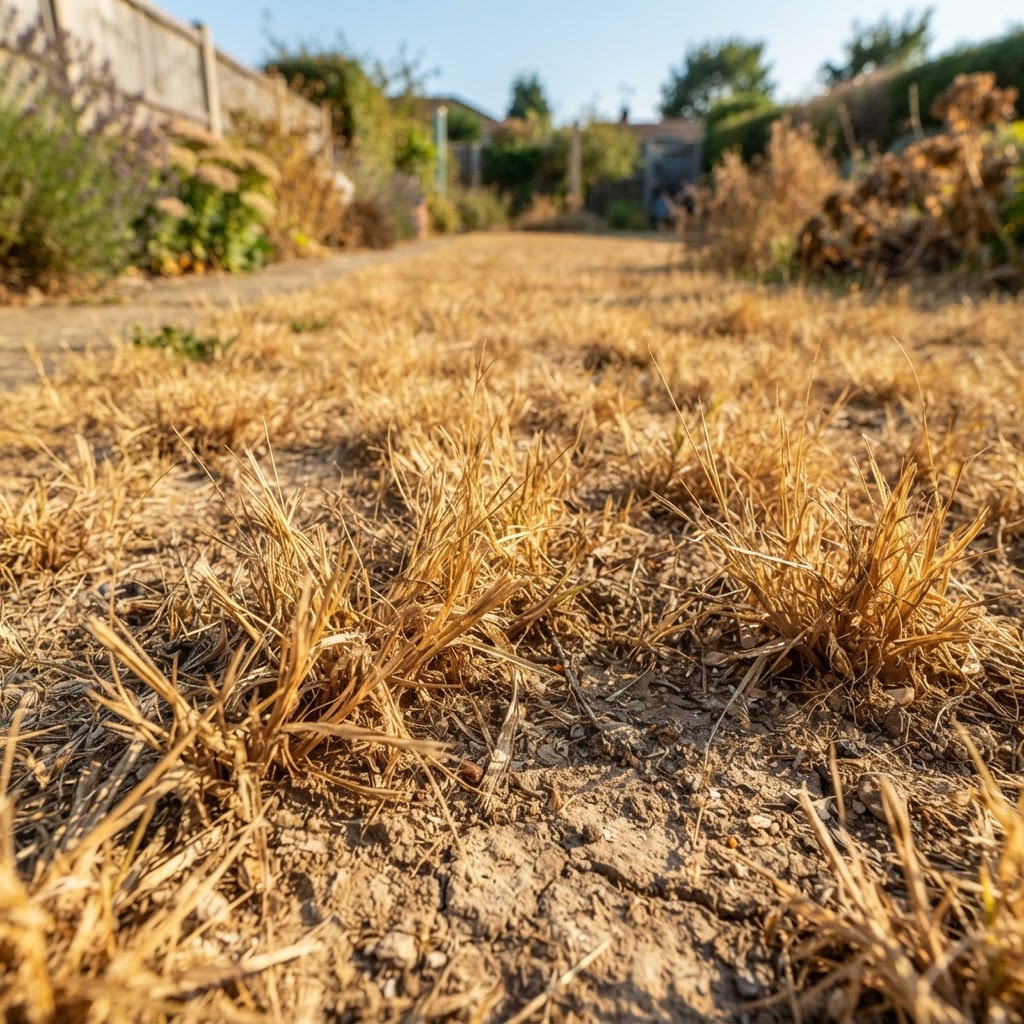
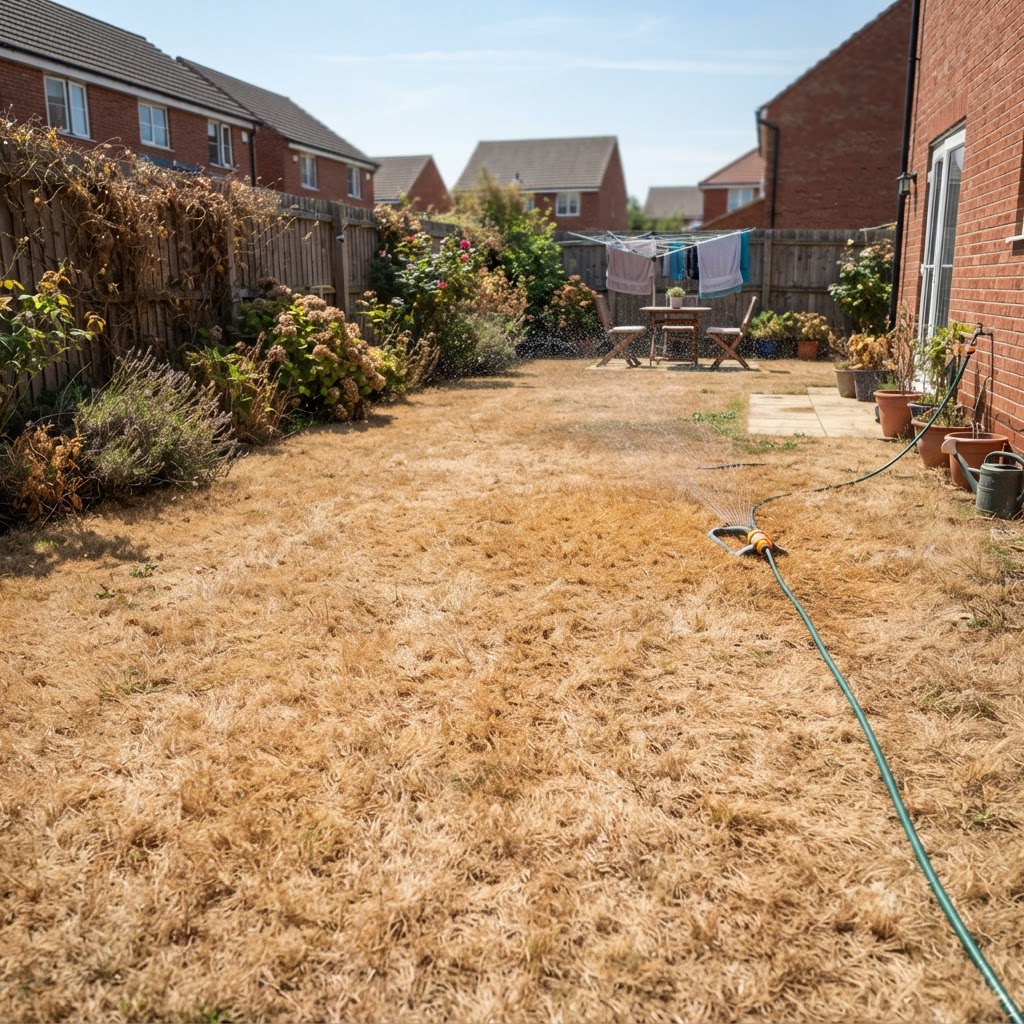
- Drought and compaction usually create dull blue-green grass followed by irregular brown areas. Soil will feel hard and dry, and the damage often appears on ridges, slopes and frequently used routes.
- Mower scalping leaves pale or brown stripes, particularly on uneven lawns cut too low. The pattern follows the mowing direction rather than expanding from a centre.
- Pet urine often causes a scorched brown centre with a darker green edge, commonly in repeated locations.
- Chafer grubs and leatherjackets weaken turf from below. If birds or foxes have been lifting the surface, peel back a small piece of turf and inspect the root zone.
Fertiliser scorch can also resemble disease, especially where granular feed has been spread unevenly or applied to dry grass without sufficient moisture afterwards. The clue is a sharp overlap pattern or lines matching the spreader pass.
Lawn disease identification: the key field signs
Red thread
Red thread is one of the most recognisable diseases in domestic lawns. Affected areas appear as irregular tan, pinkish or straw-coloured patches, usually from late spring into autumn. On close inspection, fine red or coral-pink threads can be seen projecting from the grass leaf tips. In wet conditions, the threads are easier to spot.
It is most common where growth is slow, nitrogen levels are low and warm, humid weather keeps foliage damp. Red thread looks alarming, but it rarely destroys the grass crown. The existing leaves die back, while healthy roots and crowns can produce new growth once conditions improve.
The response is measured feeding, not panic. Use a seasonally appropriate fertiliser to encourage steady recovery, then mow regularly with a sharp blade. Avoid forcing soft, excessive growth with an unsuitable high-nitrogen application late in the year. If the lawn is thin after recovery, overseed when soil temperature and moisture allow.
Microdochium patch, formerly called fusarium patch
Microdochium patch is a regular problem on UK lawns through autumn, winter and early spring. It often begins as small orange-brown spots that expand into roughly circular patches. During mild, wet weather, a pale pink or white fungal growth may appear around the edge, particularly early in the morning.
The disease favours saturated surfaces, restricted airflow, shade and prolonged dew. Heavy autumn nitrogen can make turf more susceptible by producing lush growth at a time when the lawn cannot use it efficiently. Leaves, clippings and other debris left on the surface can also hold moisture against the grass.
Improve the environment first. Remove leaves promptly, avoid late-day watering, and do not mow when the lawn is waterlogged or frosted. If compaction is holding water at the surface, aeration during suitable conditions will help restore oxygen and drainage. Autumn and winter nutrition should favour root strength and hardiness rather than a flush of leafy growth.
Microdochium can leave bare-looking scars, but do not rush to rake out living turf. Wait for active spread to stop and growing conditions to return. Light scarification, topdressing where appropriate, and overseeding can then rebuild density.
Dollar spot
Dollar spot produces small, pale straw-coloured spots, often 2 to 6 cm wide at first. On a larger lawn, these can merge into wider irregular areas. Individual leaves may show distinctive bleached lesions with reddish-brown borders, giving the impression that the leaf has been pinched or girdled.
It is most likely in warm, humid conditions where turf is under nutritional or moisture stress. Low nitrogen availability can be a factor, but overwatering and dew retention are equally relevant. The correct approach depends on the soil and the season. A lawn that is both underfed and dry needs a different correction from one sitting wet on compacted clay.
Maintain consistent, sensible growth. Water deeply when needed rather than applying frequent light watering, and aim to irrigate in the morning so foliage dries through the day. Keep mowing height realistic for the grass mixture and use a clean, sharp mower blade.
Rust disease
Rust is usually seen from late summer into autumn as yellow-orange dust on leaves. Run a hand through affected grass and the spores may transfer to fingers, footwear or the mower. The lawn can look thin, yellowed and tired before the orange pustules become obvious.
Rust is encouraged by slow growth, shade, dry soil and low fertility. It is particularly noticeable where mowing is infrequent and long leaf blades have been allowed to linger. Unlike a sudden scorch, it tends to develop gradually.
A suitable feed, regular mowing and better light or airflow will often move the lawn on. Do not cut the grass extremely short in an effort to remove the disease. Removing too much leaf at once adds stress and can slow recovery.
Fairy rings and take-all patch
Not every fungal problem sits on the leaf. Fairy rings affect the soil and root environment. You may see a dark green ring, a band of dead or drought-stressed grass, mushrooms, or a combination of all three. In severe cases, the soil within the ring becomes water-repellent, so rain runs off rather than reaching the roots.
The remedy is patient wetting and soil management. Aerate the affected zone where conditions permit, apply water slowly enough for it to penetrate, and repeat rather than flooding the surface once. Simply feeding the ring may intensify the green band without correcting the dry soil beneath it.
Take-all patch is more common on fine, closely managed turf than on a typical family lawn. It can create sunken, circular patches in bentgrass-dominant areas, often with weeds colonising the centre. If it is recurring on high-value amenity turf, identify the grass species and site history before planning renovation. A broad diagnosis from a photograph is rarely sufficient.
Record conditions before you intervene
A short record turns guesswork into useful evidence. Note the date, recent weather, mowing height, last feed, irrigation, foot traffic and whether the area is shaded. Take clear photographs from above and at leaf level. If the same disease-like patch appears each year, this record will reveal the trigger.
Also inspect how the lawn drains after heavy rain. Surface water that remains for more than a day is not just a disease risk. It points to compaction, a poor soil profile or a drainage limitation that nutrition alone cannot solve. Conversely, patches that brown first in dry weather often mark shallow soil, buried rubble or a compacted layer restricting roots.
Recovery depends on the season
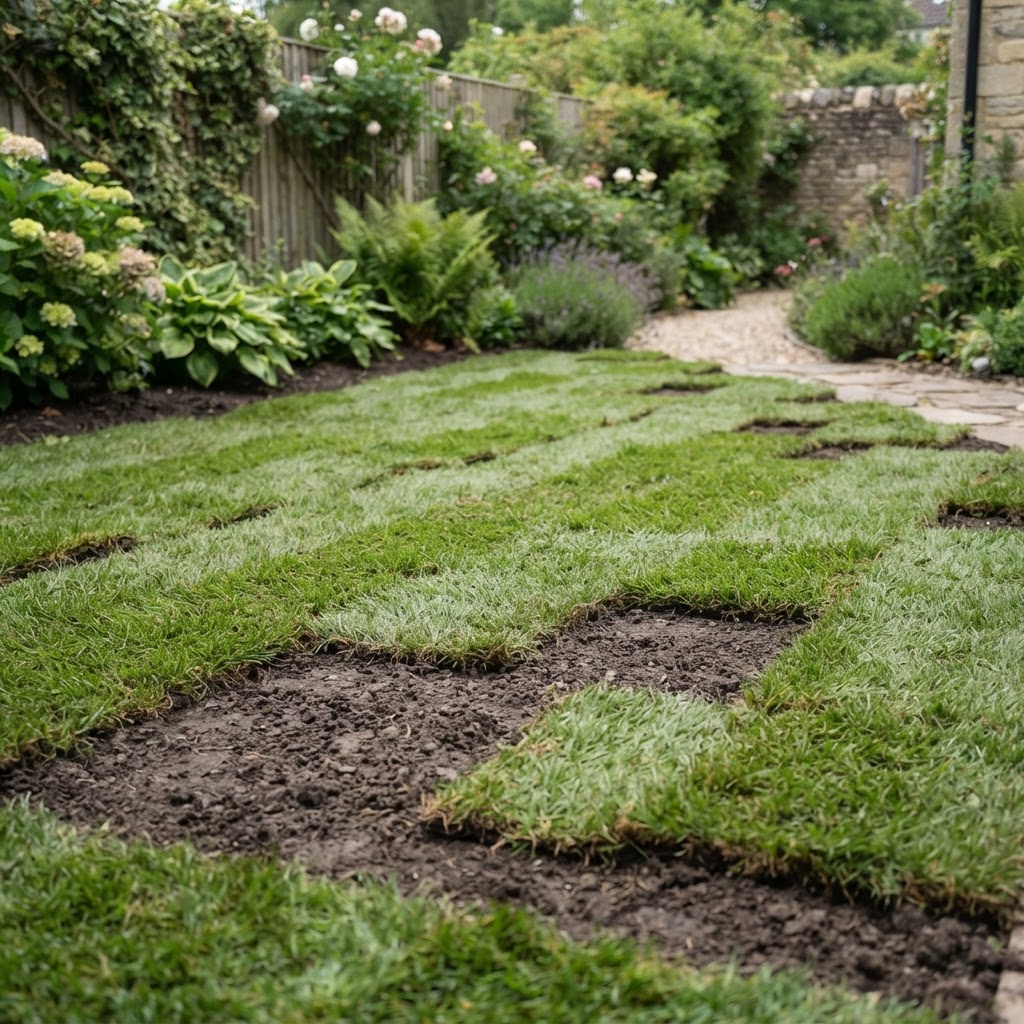
Once active disease has stopped spreading, repair the cause and then repair the sward. Rake out loose dead material lightly, but avoid aggressive scarification when grass is under drought, frost or waterlogging stress. Overseeding is most reliable in spring or early autumn, when soil is warm enough for germination and moisture is easier to manage.
Choose seed to suit the site rather than buying on colour alone. A hard-wearing ryegrass and fescue mixture suits many family lawns and working landscapes. Fine fescue can provide texture and shade tolerance, but it will not welcome heavy wear. For rapid repair, tetraploid ryegrass can establish in around 7 to 14 days under favourable conditions, with larger seed and deeper rooting helping it cope with wear and dry spells. It is not a substitute for correcting persistent shade or poor drainage.
Apply a pre-seeder fertiliser with a balanced ratio such as 6-9-6 around establishment work where required. The emphasis is root development, not a soft burst of top growth. Keep seed consistently moist until it has germinated and rooted, then reduce watering frequency and encourage roots to travel downwards.
Avoid reaching for a fungicide as the first response. Authorised professional products, label requirements and suitable application conditions must be checked carefully, and many lawn situations are better corrected through moisture management, nutrition, aeration and grass selection. Where disease is severe, recurrent or affecting contract-standard turf, obtain a confirmed diagnosis before specifying any treatment.
A sound lawn is not one that never encounters fungal pressure. It is one with enough root depth, drainage, nutrition and plant density to recover cleanly when the weather turns against it. Ransley Pro Grow recommends treating each patch as evidence: read the turf first, then give it the precise work it needs.