



A freshly treated lawn can look ready for football within hours, but appearance is not the test. If you are asking, “is a treated lawn safe for children to play on?”, the correct answer is: only when the specific product label says the treated area is ready for re-entry. The treatment used, its formulation, the weather and whether it has dried or been watered in all matter.
For most families, this is straightforward to manage. Apply the right product at the right rate, keep children off the grass for the stated period, and remove shoes or rinse hands after outdoor play. The label is not small-print bureaucracy. It is the usage instruction established for that formulation and must take priority over general advice.
Is a treated lawn safe for children after fertiliser?
A lawn fertiliser is not the same as a weedkiller, and it should be treated differently. Standard granular feeds supply nutrients such as nitrogen, phosphorus and potassium to support leaf growth, rooting and winter resilience. Once a granular fertiliser has been properly watered in and the lawn surface is dry, the practical risk from ordinary use of the lawn is generally low.
That does not make fertiliser something children should handle. Granules can be mistaken for seeds or sweets by very young children, while concentrated fertiliser can irritate skin and eyes. Keep the bag locked away, sweep any granules from patios and paths, and do not allow children to play on the lawn while visible product remains on the surface.
The key distinction is whether the feed has been incorporated. A dry application left sitting on wet grass can cling to shoes, bare feet and toys. Follow the product directions for watering, then allow the lawn to dry before use. If rain is expected shortly after application, it may do the watering-in job, but only where the label permits that approach.
Take extra care with iron treatments
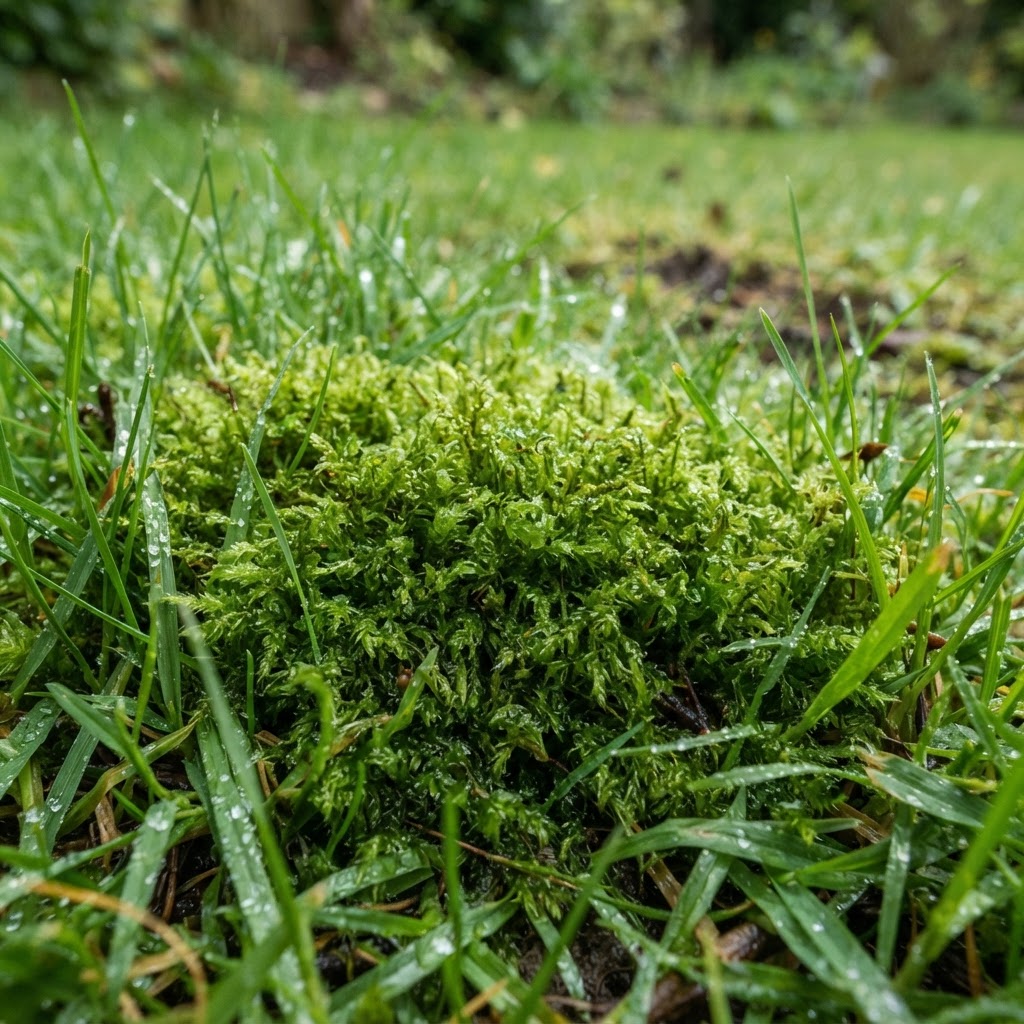
High-iron moss treatments are effective because iron sulphate quickly blackens and suppresses moss, allowing it to be raked out. They can also mark paving, decking, clothing and skin. Keep children away until the product has been watered in or dried as directed, and wash off any treatment tracked onto hard surfaces.
Iron is a useful lawn nutrient in the right dose, but a professional-grade treatment is still a concentrated product. Apply accurately, avoid over-spreading at lawn edges and store it out of reach.
Weedkiller changes the re-entry rules
Selective lawn weedkillers are formulated to control broadleaf weeds such as dandelion, daisy, clover and plantain without killing established grass. They are often applied as a liquid spray, though some granular lawn treatments combine feed, moss control and herbicide.
With a spray, the usual practical rule is simple: keep children, pets and toys off the lawn until the spray has dried completely, unless the label requires a longer interval. Do not assume a light shower has made the area safe. Rain soon after spraying may reduce effectiveness and can move product from leaf surfaces before it has worked.
For granular weed-and-feed products, follow the stated re-entry interval and watering instruction exactly. Some products need to remain on damp foliage for a period so the active ingredient can adhere to weeds. Others are watered in after a specified time. Letting children onto the lawn early can transfer granules to hands and footwear, as well as reduce treatment performance.
Never use a total herbicide on a family lawn. Glyphosate-based products are designed to kill vegetation rather than selectively remove lawn weeds. They are useful for clearing unwanted growth on paths, driveways and planting areas before renovation, but they are not a shortcut for treating weeds in turf.
A sensible re-entry routine for family gardens
Treating the lawn on a dry, still day makes safe use easier. Wind can carry spray onto play equipment, garden furniture, washing or neighbouring areas. Wet grass can cause granular products to stick unevenly, and a forecast downpour can wash material where it is not wanted.
Before applying any treatment, move trampolines, paddling pools, toy boxes and pet bowls away from the area. If this is not practical, cover them securely or postpone the job. Toys left on treated grass are a far more likely route of accidental contact than the grass itself after the proper waiting period.
Use the product at its stated application rate. More fertiliser does not produce proportionately better grass, and too much nitrogen can scorch the sward, force weak lush growth and increase mowing demand. More weedkiller can damage desirable plants and creates unnecessary exposure. A calibrated spreader for granules and a measured sprayer for liquids are trade-standard habits worth adopting at home.
After application, wash your hands and clean the spreader or sprayer according to its instructions. Keep children indoors or in an untreated part of the garden until the relevant drying or watering-in period has passed. Once the lawn is ready for use, ordinary handwashing after outdoor play remains sensible, particularly before food.
Why product labels matter more than blanket waiting times
It is tempting to look for one universal answer such as “wait 24 hours”. That can be unnecessarily restrictive for one product and inadequate for another. Re-entry advice depends on the active ingredients, the concentration, whether the product is liquid or granular, and how it is intended to work.
UK plant protection products carry clear directions covering application, protective equipment, environmental precautions and re-entry. Read these before opening the pack, not after spreading the product. If the wording says to keep people and pets away until dry, wait until the grass is fully dry across the treated area, including shaded patches. If it gives a set number of hours or days, use that interval.
Where advice is unclear, take the cautious option: keep children off longer, prevent contact with cuttings and do not allow them to pick flowers or eat anything grown immediately beside the treated lawn. This matters especially for toddlers, who are more likely to put hands, grass or objects in their mouths.
Reduce the need for corrective treatments
The safest treatment is often the one you do not need to apply. A dense, well-rooted lawn naturally leaves less room for weeds and moss. That does not mean a perfect lawn without intervention, particularly in compacted, shaded or poorly drained gardens, but good routine care reduces the frequency of chemical treatments.
Mow regularly without removing more than one-third of the leaf at a time. In dry weather, raise the cutting height slightly to protect the crown and retain moisture. Aerate compacted ground so air and water can reach the root zone, and address shade by choosing a suitable grass seed mixture rather than repeatedly forcing a sun-loving lawn to perform in difficult conditions.
Overseeding thin areas in spring or early autumn also helps. A quality blend containing perennial ryegrass and fine fescues can provide durability alongside a finer finish, while specialist shade or drought-tolerant mixtures should match the site. New seed needs time to establish, so keep children off freshly sown patches until the young plants have rooted and had their first few cuts.
Ransley Pro Grow seasonal fertilisers are designed to match the lawn’s growth cycle: higher nitrogen support through active spring and summer growth, then lower nitrogen and higher potassium for autumn root strength. Used at the correct rate, a programme like this can build a thicker sward and reduce the temptation to reach for a multi-action treatment at every sign of trouble.
When to seek specific advice
If a child has swallowed granules, concentrated liquid or treated plant material, do not wait for symptoms. Take the product packaging with you and contact NHS 111, a pharmacist or emergency services as appropriate. For product on skin or in eyes, follow the first-aid instructions on the label and rinse thoroughly with clean water.
For normal play after the stated re-entry period, there is rarely a reason to keep a family off a properly treated lawn indefinitely. The aim is not to make lawn care alarming. It is to apply professional standards: use only what the lawn needs, respect the label, and keep people off the surface while the treatment is doing its job.
A healthy lawn should be a place children can use, not an area permanently out of bounds. Plan treatments around school hours, weekends and dry weather, then give the product its proper working time. That small amount of discipline protects both the result and the people enjoying it.