














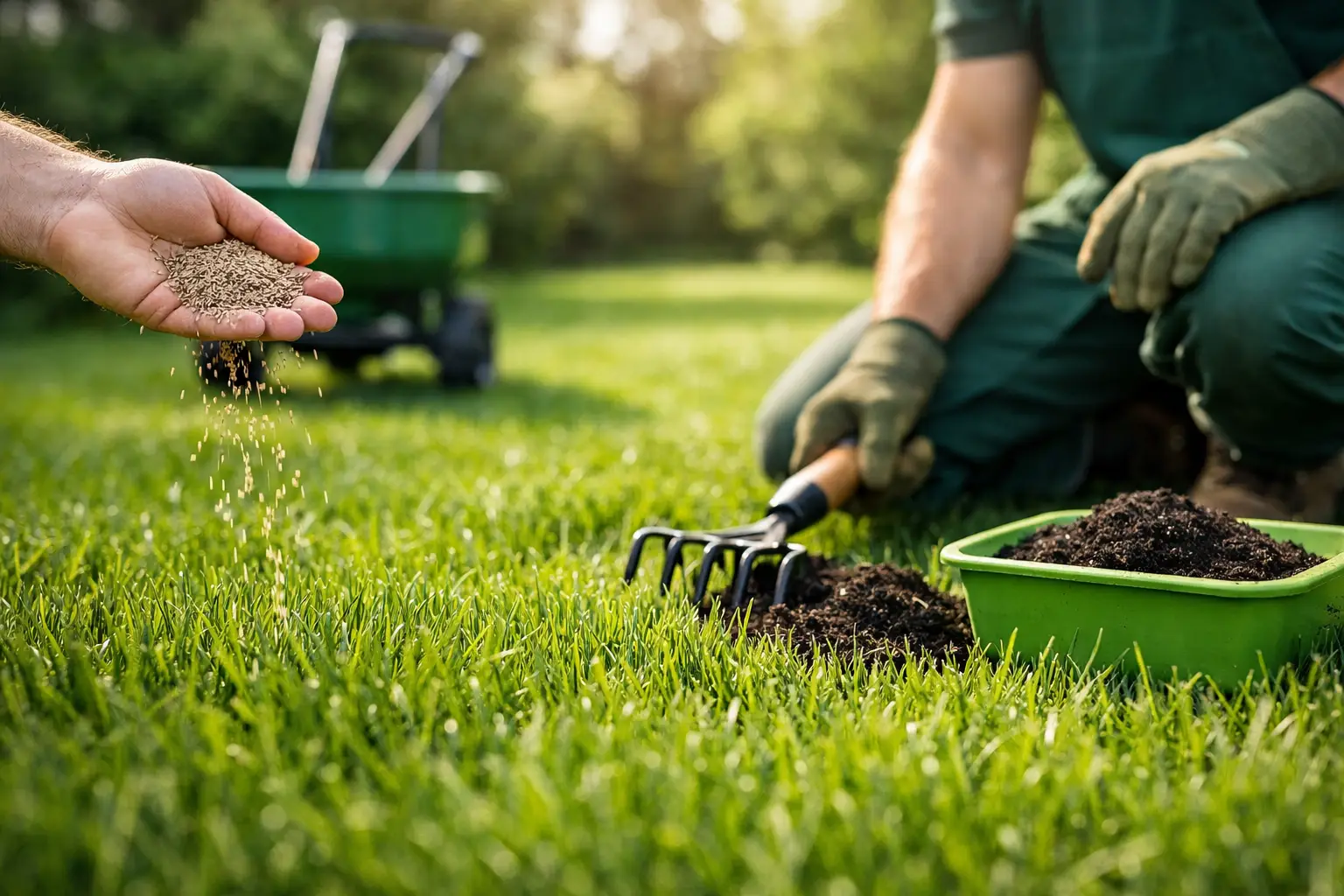
A lawn rarely turns thin for no reason. If the grass is sparse, patchy or open enough for moss and weeds to move in, the problem is usually a mix of weak growth, poor seed density, worn areas or unsuitable maintenance. If you want to know how to thicken lawn grass, the answer is not one quick fix. It is a sequence - improve the growing conditions, reduce competition, then introduce fresh seed and support it properly.
That approach works whether you are repairing a family garden in Kent or maintaining a hard-wearing amenity lawn. Thick turf is built from plant density, healthy roots and consistent recovery, not just greener leaf blades.
How to thicken lawn grass by fixing the cause first
Before adding seed or fertiliser, look at why the lawn has thinned. In UK gardens, the usual causes are shade, nutrient deficiency, compacted soil, poor drainage, close mowing, drought stress and competition from moss or broadleaf weeds. Heavy foot traffic and pet wear can also open the sward quickly.
This matters because the right remedy depends on the weakness. A lawn under tree cover needs a shade-tolerant seed blend, not simply more nitrogen. A compacted lawn may not respond to feeding until air and water can move through the soil profile. Moss is another common clue. Moss does not cause weak grass on its own - it usually tells you the grass is already under stress from shade, acidity, surface moisture or lack of vigour.
Start with a practical inspection. If you can see bare soil between plants, you need more grass plants per square metre. If the lawn is yellow-green and slow, nutrition may be limiting growth. If water sits after rain and the ground feels hard, compaction is likely part of the issue.
Start with mowing changes
Many thin lawns are cut too short, too often, or with blunt blades. Scalping weakens the plant by reducing leaf area, which in turn reduces photosynthesis. Less energy means slower recovery, shallower roots and more open space for weeds.
For most domestic lawns, keep the mowing height around 25 to 40mm through the main growing season. In shade or dry weather, stay at the higher end. Forcing a close-cut ornamental finish on a general-purpose lawn often leads to thinning, especially in summer.
Keep blades sharp and avoid removing more than one third of the leaf in a single cut. If the lawn has become overlong, bring it down gradually over two or three cuts rather than all at once. That small change alone often improves density within a few weeks because the plant can hold more leaf and recover more strongly.
Feed the lawn for density, not just colour
Grass thickens when it has enough nutrition to produce new tillers - the side shoots that create a denser sward. Nitrogen is the main driver for top growth and colour, but phosphorus and potassium also matter for root establishment and overall resilience.
Timing is important. In spring and summer, a higher-nitrogen feed supports active growth and helps the lawn knit together. When overseeding or repairing bare areas, a pre-seeder fertiliser with a balanced analysis such as 6-9-6 is particularly useful because it encourages root development without pushing soft, weak growth.
The trade-off is straightforward. Too little feed and the lawn remains pale, slow and open. Too much nitrogen, especially in hot or dry conditions, can create lush top growth that needs constant mowing and may become more vulnerable to stress or disease. Professional results come from measured feeding, not heavy-handed application.
If you are working on a thin lawn after summer wear, avoid guessing. Apply the right product for the season and the job in hand - establishment feed for new seed, then seasonal fertiliser once the grass is actively growing.
Overseeding is the fastest route to a thicker lawn
If you are serious about how to thicken lawn grass, overseeding is usually the turning point. Feeding existing grass can improve vigour, but it will not fill open areas properly if there are not enough plants there to begin with.
Overseeding means introducing fresh seed into the existing lawn to increase plant density. For most UK lawns, early autumn is the best window because the soil is still warm, moisture levels are more reliable and weed pressure is lower than in spring. Spring can also work well, provided the soil has warmed and you can keep the surface moist through germination.
Preparation determines the result. Mow the lawn, then scarify or rake out dead matter and surface moss so the seed can reach the soil. If the ground is compacted, aerate before sowing. Hollow tining is best on heavier soils, while solid tining helps improve air exchange and surface infiltration on more general lawns.
Seed choice matters just as much as timing. A hard-wearing family lawn will usually benefit from a blend containing perennial ryegrass for durability, often balanced with fescues for finer texture. Shaded gardens need a seed mix designed for lower light levels. Fast-establishing tetraploid ryegrass can be especially useful where quick recovery and drought tolerance matter, because the larger seed supports rapid establishment and stronger root development.
Sow evenly, making two passes at right angles if needed. Lightly rake or brush the seed into the surface, then firm it with a roller or by treading boards over the area. Good seed-to-soil contact is what drives germination. Leave seed sitting loosely on top and results will always be patchy.
Watering and aftercare make or break the result
Fresh seed needs consistent surface moisture. Not saturation, and not a heavy soaking once every few days. The goal is to keep the top layer damp during germination so the seed does not dry out between watering cycles.
In settled conditions, that may mean a light watering once or twice a day. In cooler autumn weather, less frequent irrigation may be enough. Once the seedlings are up and rooting in, water more deeply but less often to encourage stronger roots.
Keep foot traffic off newly overseeded areas as much as possible. Do not rush the first mow. Wait until the new grass is well anchored and has reached a sensible cutting height, then trim lightly with a sharp mower. Pulling immature seedlings out with a heavy or blunt machine is a common setback.
Deal with weeds and moss before they win the space
Thin grass invites competition. Broadleaf weeds and moss are not just cosmetic issues - they occupy space, block light and stop grass from thickening evenly.
If moss is prominent, tackle the underlying cause as well as the symptom. Excess shade, poor drainage and compacted ground all favour moss. A high-iron treatment can clear it quickly, after which the dead material should be raked out and the lawn overseeded so grass fills the gaps. If you skip the reseeding stage, moss often returns to the same open patches.
Weeds should also be controlled in a way that suits the lawn's condition. Selective lawn weed treatments are effective against common broadleaf weeds without harming established grass, but timing around seeding matters. Recently sown areas are more sensitive, so treatment schedules should be planned rather than piled on at once.
Soil condition decides how thick the lawn can become
A lawn will only thicken to the level the soil allows. If the rootzone is compacted, waterlogged or very low in fertility, you can improve the appearance briefly, but not sustainably.
Heavier clay soils often need regular aeration to relieve pressure and improve drainage. Sandy soils drain faster and may need more frequent feeding and careful moisture management. Where levels are uneven or the lawn is very worn, a light topdressing after aeration and overseeding can help create better seed contact and a smoother finish.
pH can play a role too, although it is not the first thing to blame. Most lawn grasses perform well in a slightly acidic to neutral range. Extreme acidity or alkalinity can affect nutrient availability, but in many home lawns, mowing, compaction and poor feeding are the bigger issues.
What results should you expect?
A thicker lawn does not appear overnight. With suitable temperatures and moisture, fast-germinating seed may show in 7 to 14 days, but meaningful thickening takes longer because the new plants still need to tiller and mature. Existing grass may respond to fertiliser within a week or two with improved colour and growth, yet density builds over a season, not a weekend.
The best results come from stacking the basics correctly - mow at the right height, feed for the season, relieve compaction, control moss and weeds, then overseed with the right blend for the site. That is the same logic used by professionals because it works reliably, whether you are managing a domestic back garden or a larger landscaped area.
If your lawn is thin now, treat it as a diagnosis job rather than a cosmetic one. Once the cause is clear, the fix is usually straightforward, and a denser, harder-wearing sward is well within reach with the right materials and a bit of timing.