














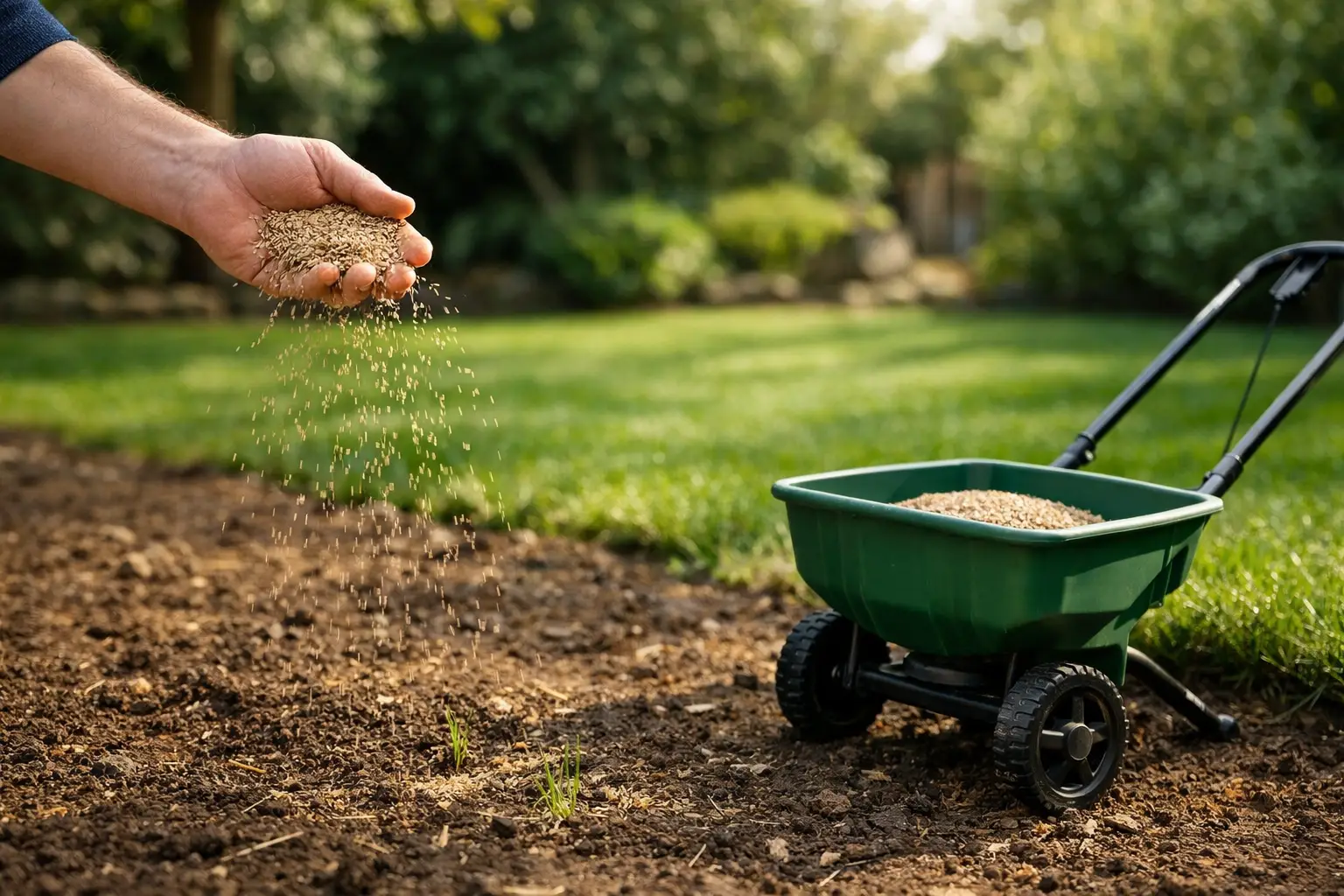
Patchy lawns rarely fail because the seed was poor. More often, the problem starts earlier - rushed soil preparation, the wrong timing, or seed left sitting on the surface where birds and dry weather finish the job. If you want to know how to sow grass seed properly, the aim is straightforward: get good seed-to-soil contact, steady moisture, and the right conditions for rapid establishment.
For most UK gardens, that means working with the season rather than against it. Grass seed will germinate in spring and autumn when soil temperatures are consistently warm enough, but each window has its trade-offs. Spring gives you a long growing season ahead, though weed competition is usually stronger. Early autumn is often the better choice because the soil is still warm, moisture levels are more reliable, and annual weeds begin to slow.
When to sow grass seed in the UK
The best time to sow depends on soil temperature, not just the date on the calendar. As a practical rule, aim for periods when the soil is at least 8-10°C and likely to stay there. In most parts of the UK, that puts the main sowing windows from April to June and again from late August to early October.
Spring sowing suits new-build gardens, renovation work after winter damage, and sites that need a full season to knit together before heavy use. Autumn sowing is often more forgiving, especially for homeowners trying to establish a lawn without constant watering. The ground remains warm from summer, dews are heavier, and seedlings can root in before winter.
Avoid sowing into cold, waterlogged soil or during hot, dry spells. Seed can sit dormant for too long in cold ground, and in dry weather it may germinate unevenly then fail before it establishes. If conditions are poor, waiting a fortnight is often the sounder decision.
How to sow grass seed - start with the soil
The quality of the seedbed decides the quality of the lawn. Even the best professional-grade mixture cannot compensate for compacted ground, poor levels, or a surface full of rubble and perennial weeds.
Start by clearing the site thoroughly. Remove stones, building debris, old roots and any obvious weed growth. If you are replacing an exhausted lawn entirely, strip out the weak turf or kill off the existing vegetation before cultivation. On a patch repair or overseeding job, rake out dead material and moss first so the seed can reach the soil.
Once the area is clear, cultivate the top 100-150mm. A garden fork is adequate for small lawns, while larger areas may justify a mechanical cultivator. The purpose is not to produce fluffy, loose ground that sinks later. You want a worked top layer with enough tilth for roots to penetrate, but firm enough to hold level.
This is the stage to correct the soil if needed. Heavy clay benefits from improved structure and drainage, while very sandy soils may need organic matter to help retain moisture. If fertility is low, a pre-seeder fertiliser can make a measurable difference. A balanced 6-9-6 formulation is particularly useful because the phosphate content supports root development without forcing weak, lush top growth.
After cultivation, level the area carefully using a rake. Fill low spots, reduce high spots and aim for a fine, even surface. Then tread or roll the ground lightly to firm it. If your footprints sink deeply, it is still too soft. A properly prepared seedbed should feel firm underfoot with just a slight impression.
Choosing the right seed mixture
Not all lawns have the same job to do. A front garden that needs fine presentation is different from a family lawn dealing with children, dogs and regular wear. Shade, drought exposure, soil type and expected use all matter.
For general domestic lawns, a blend containing perennial ryegrass and fescues is usually the most reliable choice. Ryegrass brings wear tolerance and speed of establishment, while fescues improve texture and density. On difficult sites, specialist mixtures are the sensible route. Shade-tolerant seed performs better under trees and beside fences, while drought-resistant blends are better suited to free-draining soils and exposed plots.
If rapid establishment is the priority, tetraploid ryegrass mixtures are worth attention. Larger seed size, faster germination and deeper rooting can improve early take, especially when conditions are less than perfect. That does not remove the need for proper preparation, but it gives the lawn a stronger start.
Sowing grass seed evenly
Once the ground is prepared, sowing itself is simple, but accuracy matters. Applying too little seed leaves gaps that weeds exploit. Applying too much creates overcrowding, where seedlings compete for light, water and nutrients and end up weaker.
Always follow the stated application rate for your chosen mixture. As a general guide, new lawns are often sown more heavily than overseeding work, because you need full coverage from bare ground. Divide the seed into two equal portions and sow one half lengthways and the other crossways. This criss-cross method gives much more even distribution than trying to spread it all in one pass.
On small areas, hand sowing is perfectly workable if done carefully. On larger lawns, a spreader produces more consistent results and reduces waste. Try to sow on a still day. Even a light breeze can push finer seed off line and leave visible striping later.
After sowing, lightly rake the surface so most of the seed is just covered by a thin layer of soil, around 5-10mm. Do not bury it deeply. Grass seed needs moisture and contact with soil, but it also benefits from light and warmth near the surface. Finish by lightly firming again with a roller or by treading boards across the area. This one step is often overlooked, yet it is one of the main reasons some lawns establish evenly while others remain thin.
Protecting seed after sowing
Freshly sown areas are vulnerable. Birds can take a surprising amount of seed, heavy rain can wash it into hollows, and foot traffic can ruin levels before germination even begins.
If birds are a persistent problem, use lines or visual deterrents temporarily. On slopes, sowing just before torrential rain is asking for trouble, so keep an eye on the forecast. If a downpour is likely, it is better to delay than to redo the job.
Keep people and pets off the area as much as possible. Seedlings in the first few weeks are less resilient than they look.
Watering and early aftercare
The first priority is moisture consistency. The seedbed should remain damp, not saturated, through the germination period. In dry weather this may mean light watering once or twice daily, depending on soil type and exposure. Heavy drenching is a mistake because it can puddle the surface, displace seed and encourage patchy emergence.
Germination speed varies by species and conditions. Ryegrass often appears quickly, sometimes within 7-14 days in favourable temperatures, while finer grasses can take longer. Do not panic if emergence is not perfectly uniform at first. Different species within the mix naturally come through at different rates.
Resist the urge to feed heavily straight away unless the area was prepared with a suitable pre-seeder fertiliser. Young grass needs support, but excessive nitrogen too early can push soft top growth before roots have anchored properly.
The first cut should happen when the new grass reaches roughly 50-75mm and is dry enough to mow cleanly. Use a sharp mower and take only the top third off, setting the height fairly high. Scalping a new lawn is one of the quickest ways to check its progress.
Common mistakes that spoil new lawns
Most failures come down to a few repeat errors. Sowing on hard, compacted ground leaves roots nowhere to go. Sowing too late in autumn can mean seedlings enter winter weak and underdeveloped. Letting the surface dry out during germination can kill the crop in a day or two, especially on lighter soils.
There is also the temptation to chase instant thickness by oversowing. In practice, that usually gives you a crowded stand of thin plants rather than a dense, durable lawn. The better result comes from correct rates, sound nutrition and patience.
On existing lawns, another common issue is trying to sow seed into a mat of thatch, moss or dead grass without opening the surface. Seed sitting on organic debris rather than soil rarely establishes well. If you are overseeding, rake or scarify first so the seed has a proper bed.
New lawn or overseeding - the method changes slightly
A new lawn needs full ground preparation and generally a higher sowing rate. The goal is complete coverage and good levelling from the outset. Overseeding is different. Here, you are trying to improve density, repair bare patches or introduce stronger varieties into an existing sward.
For overseeding, mow the lawn shorter than usual, remove debris, and scarify or rake aggressively enough to expose soil. Seed-to-soil contact still matters just as much as on bare ground. Watering remains critical, but because established turf competes for moisture, the new seed can dry faster than expected.
Where lawns are thin because of moss, weed pressure or shade, it pays to correct the underlying issue as well as sowing fresh seed. Otherwise the same weakness returns and the new grass struggles to hold its place.
A good lawn is rarely the result of one product or one afternoon's work. It comes from getting the basics right in the right order - timing, preparation, the correct seed mixture, firm sowing and disciplined aftercare. Treat those as trade standards rather than optional extras, and the lawn will usually repay you with fast, even establishment.