














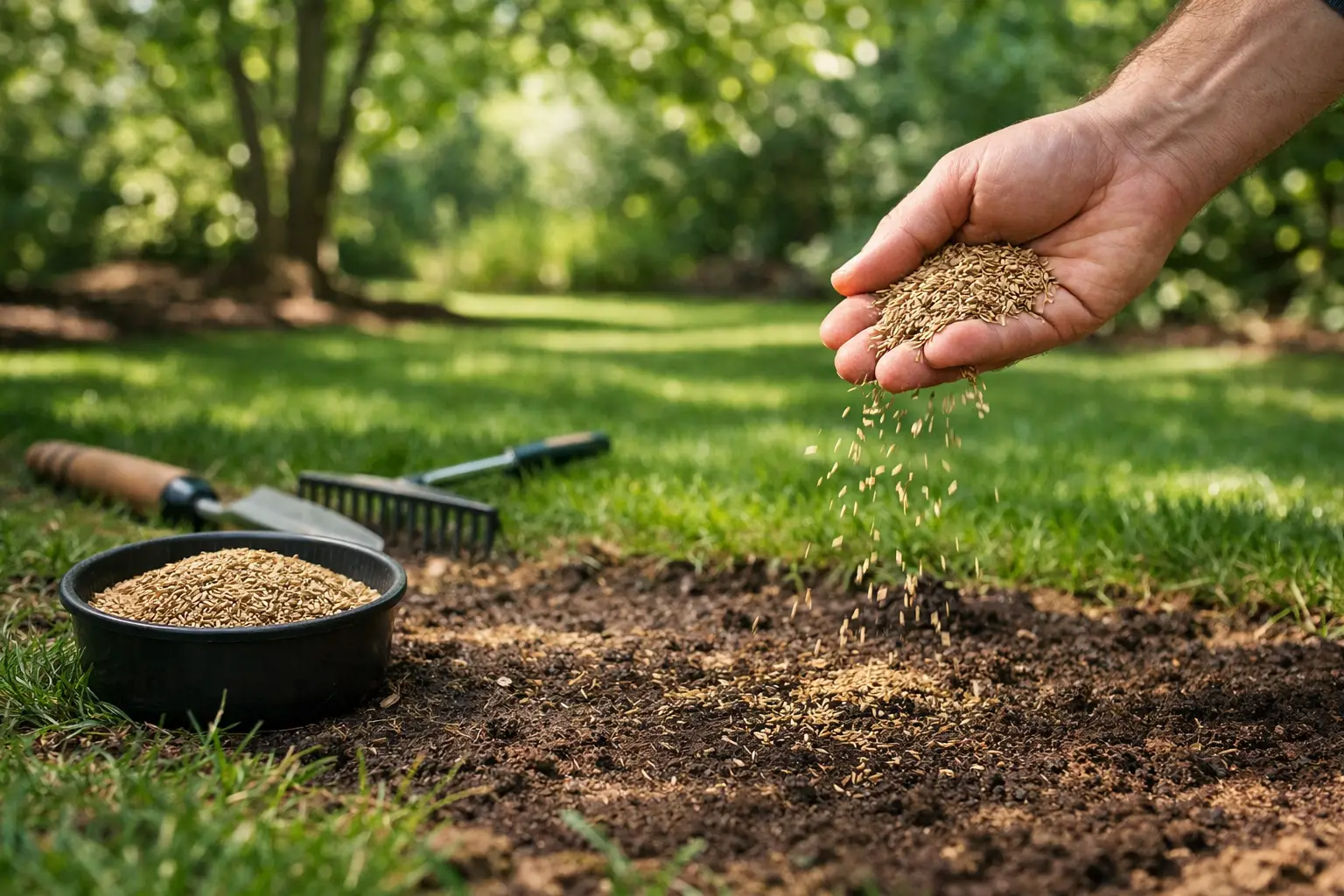
A thin lawn beneath a mature tree is rarely a simple seed problem. Shade reduces photosynthesis, tree roots compete for moisture and nutrients, and fallen leaves can smother young plants before they establish. Knowing how to seed shady grass properly means dealing with all three conditions, rather than scattering a standard lawn mix and hoping for the best.
The realistic aim is not a bowling-green finish in permanent deep shade. It is a dense, healthy sward that tolerates lower light levels and recovers well where conditions allow. In a UK garden, fine fescues are usually the backbone of that solution.
First, decide whether grass can grow there
Grass needs light. An area that receives several hours of filtered light, or morning and late-afternoon sun, can support a shade-tolerant lawn. A spot beneath a dense evergreen canopy, beside a north-facing wall, or under overhanging shrubs may be too dark for reliable turf, whatever seed blend is used.
Assess the area during the growing season, not only in winter when deciduous trees are bare. If the ground receives less than two hours of direct sun and remains dim for most of the day, grass will struggle to thicken. Consider a planted bed, bark mulch or a shade-tolerant groundcover instead. Forcing a lawn into permanent darkness usually creates bare soil, moss and repeated renovation costs.
Where the shade is seasonal or dappled, seeding is worthwhile. It is especially effective beneath deciduous trees where light levels improve before leaf-out and again in autumn.
Choose seed engineered for shade, not speed alone
A general-purpose seed mixture often contains a high proportion of perennial ryegrass. Ryegrass establishes quickly and handles wear well, but it is not the first choice for low-light areas. Under shade, it can thin out and leave space for moss and weeds.
Look for a specialist shade-tolerant mixture with a strong proportion of fine fescues. Chewings fescue, hard fescue and creeping red fescue are useful species because they tolerate reduced light, produce fine foliage and require less feeding than ryegrass-dominant lawns. Creeping red fescue also spreads gradually by underground stems, helping smaller gaps knit together over time.
A little dwarf perennial ryegrass can still be useful where there is foot traffic, pets or intermittent sun. It gives faster initial cover and improves wear tolerance. The trade-off is that a ryegrass-heavy blend needs more light and more regular management. Match the mix to the site, not the photograph on the bag.
For worn shaded areas, overseeding is usually sufficient. For bare ground, severe moss infestation or soil damaged during building work, treat it as a new lawn establishment and prepare the whole area properly.
When to seed shady grass in the UK
Early autumn is normally the most dependable seeding window. Soil retains summer warmth, rainfall is more frequent, and weed competition is lower than in spring. Seed sown from late August to early October often has enough time to establish roots before winter.
Spring can also work, generally from April into May, once the soil has warmed and prolonged frosts have passed. The risk is that tree canopies soon come into full leaf, reducing light just as seedlings need it most. Spring-sown grass also needs closer attention during dry spells.
Avoid sowing into waterlogged ground, cold soil or a forecast of hard frost. Fine fescue germination can be slower than ryegrass, particularly in cool weather. Patience is preferable to adding excessive seed in an attempt to force density.
Prepare the ground before seed goes down
Seed-to-soil contact determines whether germination becomes a lawn. In shaded gardens, the surface is often compacted by tree roots, damp conditions and foot traffic. Start by removing leaves, twigs, old grass cuttings and surface debris. Leaves left in place exclude light and hold moisture against the crown of the grass.
For overseeding, mow the existing lawn a little lower than usual, then rake firmly to remove dead material and open the surface. A spring-tine rake is suitable for small areas. For larger lawns, mechanical scarification makes the work more consistent. The objective is not to strip every living plant out, but to create visible soil between the remaining grass plants.
If the soil is hard, aerate it with solid tines or a garden fork. On heavy clay, this improves oxygen movement and helps water enter the profile rather than sitting at the surface. Do not aggressively rotovate around established trees. Most feeder roots sit near the surface, and damaging them can affect the tree as well as destabilise the soil.
Bare areas need a more thorough preparation. Remove weeds first and allow sufficient time for any treatment to work before sowing. Rake out moss once it has been controlled, level the soil, and incorporate a suitable peat-free lawn dressing only where levels or soil structure need correction. A deep layer of rich compost is not a substitute for light and can create a soft, uneven surface.
A pre-seeder fertiliser with a balanced 6-9-6 NPK analysis is useful at this stage. The higher phosphate content supports early root development, while moderate nitrogen encourages establishment without pushing weak, lush top growth. Apply at the stated rate. More fertiliser does not compensate for shade and can stress young seedlings.
Sow at an even rate and firm the surface
Divide the seed into two equal portions. Sow the first half lengthways across the area and the second half across it. This simple crossing pattern gives more even coverage than trying to judge the full quantity in one pass.
Use the application rate stated for the blend and the job. Overseeding rates are lower than new-lawn rates because established grass is already present. Applying too much seed creates overcrowded seedlings that compete for light, water and nutrients, then thin out later.
After sowing, lightly rake the seed into the top few millimetres of soil. Most lawn seed should not be buried deeply. Firm the ground with a lawn roller or by treading boards across the area. This improves seed contact and reduces the chance of seed drying out, being washed into hollows or being taken by birds.
On slopes or very exposed sites, a light covering of lawn dressing can help retain moisture. Keep it thin enough for light to reach the emerging shoots.
Water for establishment, then manage for shade
Keep the seedbed consistently damp while germination takes place. In dry weather, this may mean a light watering once or twice a day. The aim is moisture in the surface layer, not puddles. Heavy watering can displace seed and compact fine soil.
Once seedlings are visible, water less often but more deeply so roots begin to explore downwards. Rainfall beneath dense trees can be deceptive: the canopy may shed most showers, leaving the soil dry even after wet weather. Check beneath the surface before assuming irrigation is unnecessary.
Mow when the new grass reaches roughly 7-8 cm and the roots resist a gentle lift. Use a sharp blade and take off no more than one-third of the leaf at a time. In shade, maintain a higher mowing height than on open lawn - typically 50-60 mm. Longer leaves capture more light and protect the soil from drying out.
Do not scalp shaded grass to match a closely cut sunny lawn. It weakens the plant, exposes soil and gives moss an advantage. Reduce mowing frequency during slow growth, particularly in autumn and through winter.
Control the conditions that keep turf thin
Shade itself is only one pressure. Moss becomes dominant where light is poor, drainage is slow, soil is compacted and grass is cut too short. Treating moss without correcting those causes gives only a temporary improvement. Once moss has been controlled and raked out, overseed promptly so desirable grass occupies the open space.
Keep leaves cleared throughout autumn. A weekly pass with a rake or mower collection box is far more effective than waiting until the lawn is buried. Where practical and appropriate for the tree, selective pruning by a qualified professional can improve air movement and filtered light. Never remove major limbs simply to grow grass.
Feeding should be measured. Shaded lawns generally need less nitrogen than sun-exposed, high-wear turf. A restrained spring feed can support colour and recovery, while an autumn formulation with lower nitrogen and higher potassium helps root strength and winter hardiness. Excess nitrogen produces soft growth that is more prone to disease in damp, low-light conditions.
Ransley Pro Grow shade-tolerant seed blends and pre-seeder nutrition are designed for this sort of practical renovation work: establish the right species first, then support roots without overfeeding the surface.
Common questions about seeding grass in shade
Can I seed grass under a tree?
Yes, provided the area receives enough filtered light and the soil can be kept moist during establishment. Use a fescue-led shade blend, aerate carefully, clear leaves promptly and avoid damaging surface roots. Where roots are dense and the canopy is very dark, a non-grass surface may be the more durable choice.
How long does shady grass take to germinate?
Timing depends on soil temperature, moisture and the species in the blend. Perennial ryegrass may emerge in 7-14 days in favourable conditions, while fine fescues can be slower. Judge success over several weeks, not after the first green shoots appear.
Why is my new grass thin in shade?
The usual causes are insufficient light, dry soil beneath tree canopies, poor seed-to-soil contact, overcrowded sowing or mowing too low. Check each condition before adding more seed. A thin lawn is often telling you something useful about the site.
A shaded lawn earns its density through steady management. Give it a seed blend suited to lower light, keep the surface open and moist while it establishes, and let the grass retain enough leaf to do its work. That is how a difficult corner becomes usable turf rather than a recurring patch of moss.