














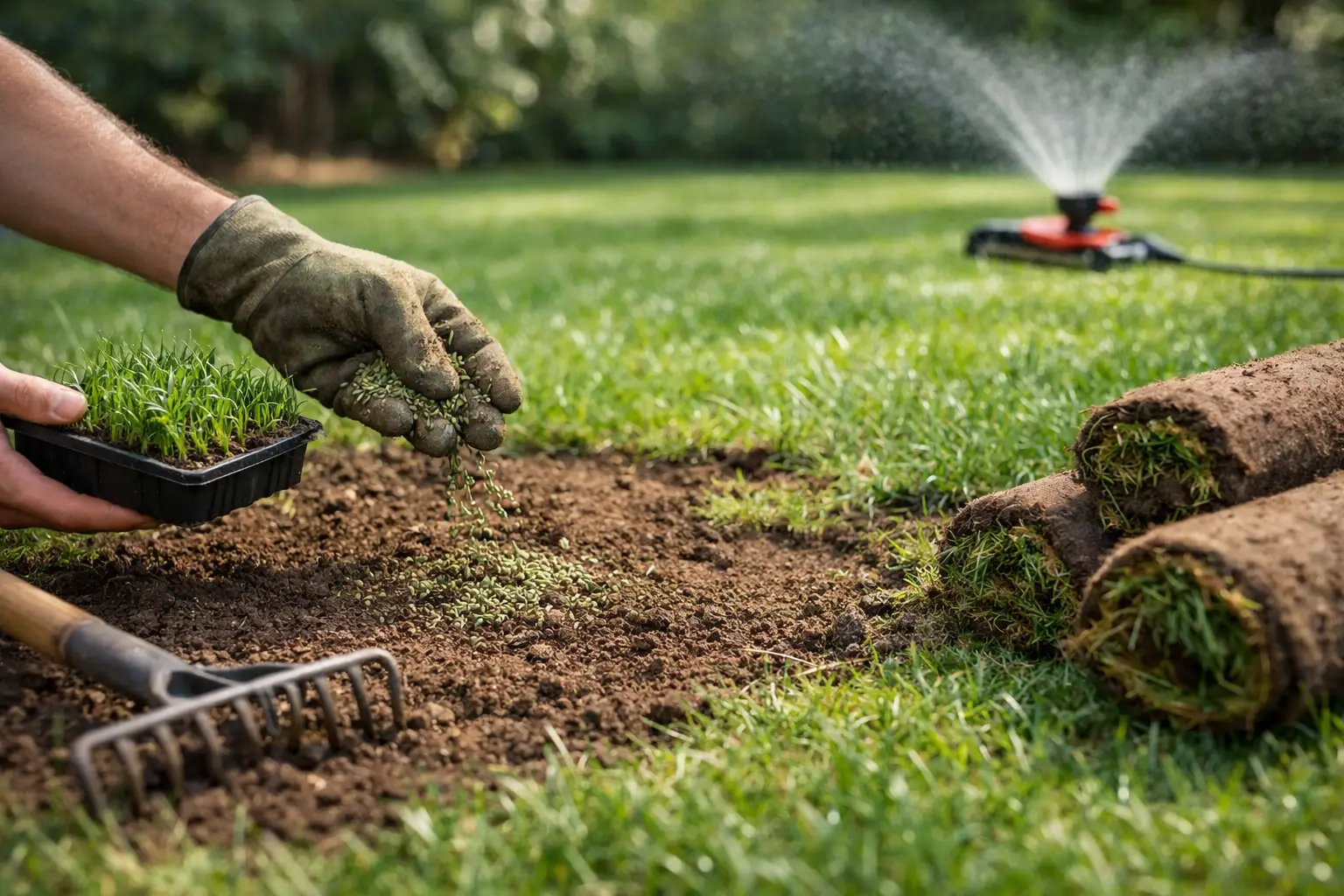
A lawn rarely goes patchy for no reason. Thin grass, bare circles, weak colour and mossy gaps are usually a sign that something underneath is off - poor seed choice, compaction, shade, wear, drought stress or nutrient imbalance. If you want to know how to repair patchy lawn areas properly, the job is not just to throw down seed and hope for rain. The aim is to correct the cause, then establish new grass quickly enough that weeds and moss do not take the space first.
How to repair patchy lawn without wasting seed
The first step is diagnosis. A patch under a tree needs a different approach from a worn route between the patio and the shed. Likewise, a lawn thinned by summer drought will respond differently from one weakened by waterlogging over winter. Good repair work starts with looking at pattern, not just damage.
If the patches sit in heavy shade, standard ryegrass-heavy seed may germinate but struggle long term. If the area is baked in full sun, shallow-rooting grasses can thin out every dry spell. If the surface feels hard underfoot, compaction is likely restricting root growth and water movement. And if the gaps are full of moss or broadleaf weeds, the grass is losing the competition before it gets established.
Once you know what you are dealing with, the repair becomes much more precise. That matters because overseeding into the wrong conditions often gives a short-lived flush of green, then the same bare patches return within a season.
Start by dealing with the cause
Before any seed goes down, clear out what is suppressing the grass. Dead moss should be raked out. Broadleaf weeds should be controlled with a selective treatment if they are widespread. If the area is on a shortcut across the garden, consider whether foot traffic needs redirecting for a few weeks. New grass is vulnerable in its early stages, however good the seed is.
Compaction is one of the most common hidden causes. On heavy soils, repeated walking and mowing can close up the surface so roots sit shallow and water either runs off or lingers at the top. A garden fork or hollow tine aerator can open the profile and improve oxygen exchange. For small domestic repairs, even fork holes worked across the patch can make a marked difference.
Soil fertility also matters. Lawns do not need excessive feeding, but young seedlings need phosphate and potash to build root mass and cell strength. A balanced pre-seeding fertiliser, such as a 6-9-6 formulation, is designed for this stage. It supports establishment without forcing soft, lush top growth that can leave young grass vulnerable.
If moss is the real problem
Moss is not the cause in itself. It is a symptom of poor drainage, shade, weak grass coverage or low vigour. High-iron treatments can be effective for rapid knockdown, but unless the underlying issue is corrected, the moss will return and the lawn will keep thinning.
If the lawn is in shade
Choose a seed blend engineered for lower light levels. Fine fescues and shade-tolerant mixtures generally hold up better than a standard general-purpose lawn seed in these areas. In deep shade, expectations also need adjusting. Grass can improve, but it will not perform like an open, south-facing lawn.
Preparing the patch for reseeding
Preparation is where most successful lawn repairs are won. Remove dead grass, rake out debris and rough up the top layer so the seed can make direct contact with soil. Seed sitting on a smooth thatch layer or on top of old dead material dries out quickly and germinates unevenly.
For smaller patches, use a hand fork or rake to create a light tilth in the top 10 to 15 mm. For larger thin areas, scarifying first can help remove thatch and open the surface. If the patch has sunk or become uneven, top dress lightly with a free-draining lawn dressing before sowing. Avoid burying existing grass too deeply - a thin, even layer is enough.
The seed itself should match the use and conditions of the lawn. For fast repair on family lawns and high-wear areas, tetraploid ryegrass blends are particularly useful because of their larger seed size, rapid establishment and stronger rooting. Under the right temperatures and with consistent moisture, they can germinate in around 7 to 14 days. That speed is valuable because the faster the ground is occupied by grass, the less chance weeds have to move in.
Sowing seed for a lasting repair
Apply seed evenly across the patch and a little beyond the visible edge. That overlap helps the repaired section blend into the existing lawn rather than leaving a sharp circle of newer grass. On small areas, sowing half the seed one way and half at right angles improves coverage.
Rates vary by mixture, but overloading an area with seed is not always beneficial. Excessively dense sowing can lead to competition between seedlings, weaker root systems and poorer airflow. Follow the recommended application rate for the specific blend.
After sowing, lightly rake again or brush the seed into the surface. The goal is shallow coverage, not burial. A very light top dressing of screened soil or lawn dressing can help retain moisture and improve seed-to-soil contact, especially in warm or breezy weather.
Watering after repair
New seed needs steady moisture, not saturation. In practice, that means keeping the upper soil layer damp through germination and early rooting. Light, frequent watering is often better at first than occasional heavy soaking, particularly on small repaired patches.
Once seedlings are up and beginning to anchor, reduce frequency and increase depth. That encourages roots to travel down rather than staying at the surface. The exact schedule depends on weather, soil type and exposure. Sandy ground dries quickly. Clay holds water longer but can cap over if heavily watered.
Feeding and aftercare
Freshly repaired lawn areas need support, but they do not need every product in the shed. A pre-seeder or establishment feed applied at the right rate is usually enough at sowing. After that, the next step depends on season.
In spring and summer, once the grass is actively growing and established, a higher-nitrogen feed can help build density and colour. In autumn, lower-nitrogen and higher-potassium fertilisers are better suited to strengthening roots and improving winter hardiness. Feeding out of season can push growth at the wrong time and create more mowing stress than benefit.
Mowing should wait until the new grass reaches a sensible cutting height, usually around 5 to 8 cm depending on the mix. Then trim lightly with a sharp blade. Do not scalp it. Removing too much leaf in the first cut can check growth just when the plant is trying to establish its root system.
Keep traffic off repaired sections for as long as possible. This is especially important with children, dogs and regular garden routes. Seedlings that are repeatedly crushed in the first month rarely thicken properly.
When is the best time to repair patchy lawn areas?
For most of the UK, early autumn is the strongest window. Soil is still warm, moisture levels are generally more reliable and weed pressure is lower than in late spring. The grass gets enough time to establish before winter slows growth.
Spring is also workable, particularly from mid-season onward once soil temperatures rise consistently. The trade-off is that spring-sown repairs often need more attention with watering, mowing and weed competition. Summer repairs can succeed, but only if irrigation is dependable. Winter is usually a poor choice because germination is slow and surface damage lingers.
Common mistakes that keep patches coming back
The most common mistake is treating all patchy lawns the same. A shaded lawn, a compacted lawn and a drought-stressed lawn may all look thin, but they need different remedies. The second mistake is sowing poor-quality seed that is cheap upfront and expensive in repeat work.
Another frequent issue is skipping preparation. Seed on hard ground, on top of moss, or scattered into thick thatch has a low chance of becoming a durable sward. Overfeeding is another problem. Too much nitrogen too early can produce soft top growth while root development lags behind.
There is also the question of patience. Many repairs fail not because the seed was wrong, but because the area was mown too soon, walked on too early or allowed to dry out during the first fortnight.
For homeowners wanting a professional-grade result, and for contractors who cannot afford patch repairs to fail, the principle is the same: match the seed to the site, prepare the ground properly and feed for establishment rather than speed alone. That is why specialist products tend to outperform one-size-fits-all mixes. A targeted blend, combined with a measured fertiliser programme, gives the lawn a proper chance to knit back together.
If you need trade-standard seed, fertiliser or moss and weed treatments for UK conditions, Ransley Pro Grow offers specialist options at https://ransleyprogrow.co.uk/.
A patchy lawn can usually be turned round, but the best results come from treating it like groundwork, not a cosmetic fix. Get the first few steps right and the grass will do the rest.