














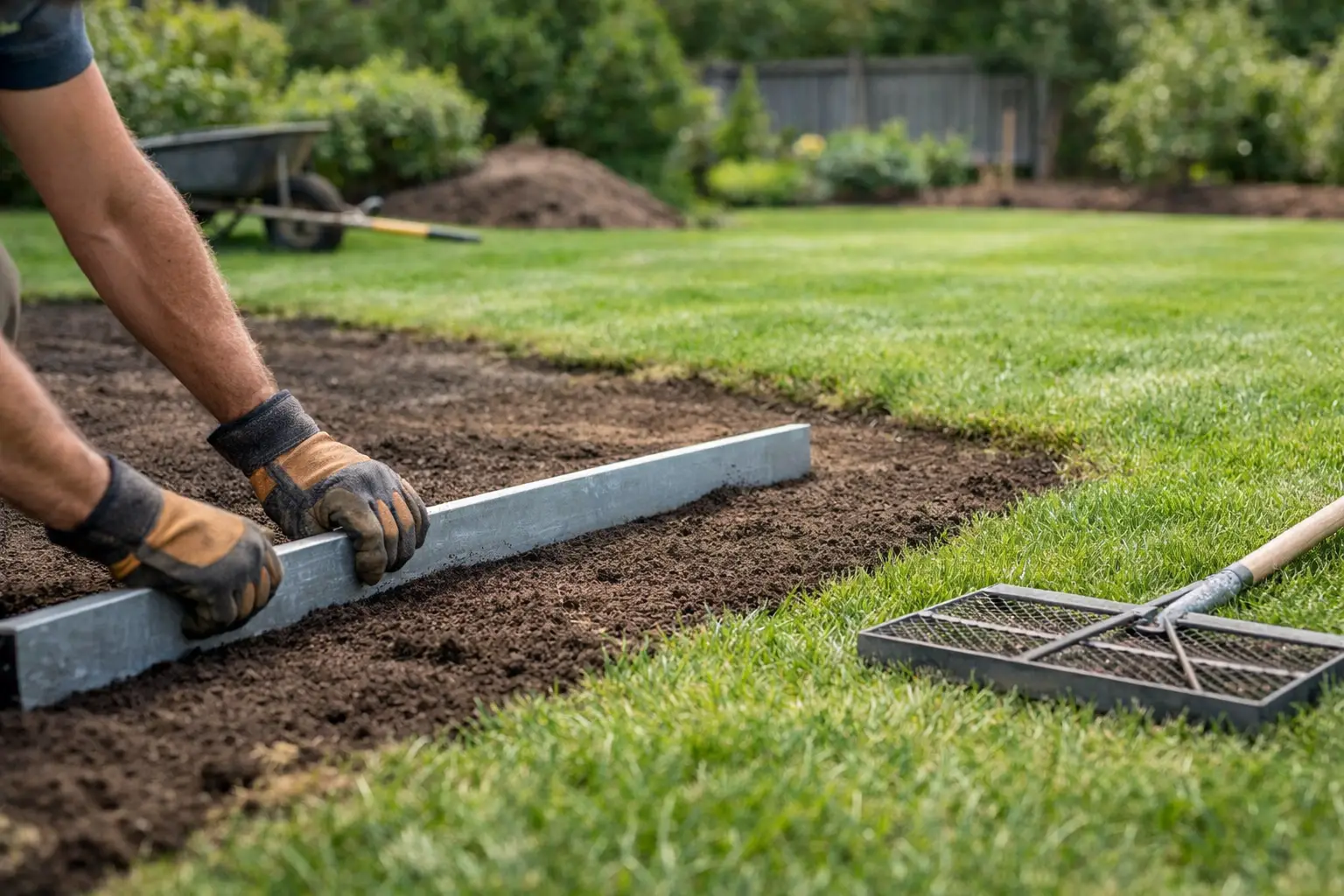
A lawn can look healthy from the patio and still feel like a ploughed field underfoot. Scalped high spots, puddling in shallow hollows and a mower that rattles over every pass are all signs the surface needs correcting. If you are wondering how to level a lawn, the answer is not simply to throw soil at the problem and hope for the best. The right method depends on how uneven it is, what caused it, and whether you are working with an established lawn or starting again.
What causes an uneven lawn?
Most lawns do not become bumpy for one single reason. In UK gardens, the usual culprits are settlement after building work, poor initial preparation, worm casting, old tree roots, pet damage and wear on frequently used routes. Clay soils can also swell in wet periods and shrink back in dry spells, which gradually distorts the surface.
It is worth diagnosing the cause before you start. A shallow dip in the middle of a lawn is often simple settlement and can be corrected with topdressing. Repeated ridges above roots are different. If a mature tree is driving the problem, heavy levelling may only be temporary. Likewise, if drainage is poor and water sits for days, levelling the surface without addressing the soil profile may improve the look but not the performance.
How to assess the lawn before levelling
Before any material goes down, mow the lawn lightly and inspect it from several angles. Low evening sun is useful because it throws shadows across hollows and raised patches. For a more exact check, lay a long straight edge or timber board across the lawn and measure the gaps beneath it.
As a rule, minor undulations of 10-20mm can usually be corrected by topdressing over time. Hollows of 20-40mm may need a more deliberate fill and local overseeding. Anything deeper than that, especially if there are multiple areas across the lawn, often points to more substantial renovation. At that stage, lifting turf, adding rootzone and relaying or reseeding may be the cleaner job.
The best time to level a lawn
For most British lawns, the best window is spring or early autumn. Soil temperatures are workable, grass is actively growing and there is usually enough moisture for recovery. Early autumn is especially reliable because warm soil helps seed germination while weed pressure tends to be lower than in late spring.
Avoid levelling in very wet conditions. Wet soil smears, compacts and becomes difficult to spread evenly. High summer can also be awkward. Newly levelled areas dry out quickly, and young seedlings do not enjoy a week of heat followed by a hosepipe restriction.
How to level a lawn with topdressing
If the lawn is generally sound and the bumps are minor, topdressing is the professional route. This means applying a thin layer of suitable material over the surface and working it into the sward so that shallow hollows are gradually filled while existing grass grows through.
For domestic lawns, a sandy loam or quality lawn topdressing is normally the safest choice. Straight sharp sand is rarely ideal on its own unless it matches the existing rootzone, and heavy garden soil can cap the surface. The aim is compatibility with the soil below, not just filling space.
Start by mowing to a sensible height and scarifying or raking out excess thatch if it is present. Thatch acts like a sponge and prevents your dressing from settling where it is needed. Then apply the dressing in thin layers, usually no more than 10-15mm at a time. Brush or lute it across the surface so grass tips remain visible. If you bury the leaf completely, you slow recovery and may kill parts of the sward.
This is where patience matters. A lawn with shallow ripples may need two or three light applications across a season rather than one heavy one. Trade-standard results usually come from gradual correction, not brute force.
How much topdressing should you apply?
A common mistake is overfilling depressions in one go. Grass can tolerate a light dressing and grow through it. It struggles when covered too deeply. For low spots deeper than 15mm, apply part of the fill, let the grass recover, then repeat. If the hollow is bare or thin already, fill to level and overseed the area instead.
How to level a lawn with deeper hollows
Where depressions are obvious underfoot or hold water after rain, a more direct repair is often needed. If the grass is still intact, use a half-moon edger or spade to cut an H-shape over the hollow, fold the turf back carefully, add and firm suitable soil beneath, then relay the turf and water it in.
This method keeps the existing grass cover and gives a neater finish than burying a deep dip from above. It is especially useful on established family lawns where appearance matters straight away. The important detail is firming the soil in layers. If you simply dump loose material into the void, it will settle and the hollow will return.
For larger dead patches or badly damaged sections, it may be quicker to remove the poor surface, add a prepared topsoil or rootzone, rake level and reseed. A professional-grade seed blend suited to the conditions makes a difference here. In sunny, hard-wearing areas, ryegrass-based mixtures provide rapid establishment and durability. In more ornamental or shaded gardens, fescue content improves texture and tolerance.
What to do if the whole lawn is badly uneven
Sometimes levelling patch by patch is false economy. If the surface is extensively ridged, compacted or poorly constructed, full renovation may be the more efficient route. That means stripping back the surface if necessary, relieving compaction, importing or redistributing suitable soil, grading properly and then reseeding or turfing.
For contractors, this is standard preparation work. For homeowners, it is the point at which accuracy matters more than enthusiasm. Levels should fall away from buildings without creating a visible slope, and the finished grade needs to account for settlement. A lawn that looks flat on day one but sinks by 20mm after winter was not properly consolidated.
Levelling and reseeding go together
Freshly levelled areas are often thin because the process disturbs the sward. That is normal. Once the surface is true, overseed where density has dropped. Seed-to-soil contact is critical, so rake lightly if needed and keep the surface consistently moist until germination is established.
A pre-seeder fertiliser can help at this stage because it supports root development without forcing soft, top-heavy growth. A balanced analysis such as 6-9-6 is designed for establishment work and is far better suited to new seed than a high-nitrogen summer feed. The objective is steady rooting into the corrected profile.
If you are repairing a family lawn that sees regular use, a fast-establishing ryegrass blend can produce visible cover quickly. On better ornamental lawns, blend selection should reflect the finish you want as well as the wear it must tolerate. There is always a trade-off between fine appearance and hard-wearing performance.
Aftercare matters more than most people think
Levelling is only half the job. The aftercare determines whether the lawn knits back in evenly or ends up patchy. Keep foot traffic light for the first couple of weeks, particularly in damp conditions when the new surface can shift. Water enough to keep the top layer from drying out, but do not keep it waterlogged.
Hold off mowing until the grass is actively growing and the surface feels firm. Then take only the top off with a sharp mower. If you scalp the repaired areas on the first cut, you undo a lot of careful work. As the lawn settles, continue mowing regularly at an appropriate height for the season.
Feeding should also match the timing. In spring and summer, nitrogen supports recovery and colour. In autumn, lower-nitrogen feeds with more potassium are better for root strength and winter resilience. If moss or broadleaf weeds are also present, deal with those as separate issues where possible rather than trying to cure every problem at once.
Common mistakes when learning how to level a lawn
The biggest error is using the wrong material. Builders' sand, spent compost and random soil from elsewhere in the garden often create more inconsistency than they solve. The second is trying to fix severe unevenness with one thick layer. Grass is resilient, but it is not magic.
Another common problem is ignoring the cause. If compaction, drainage or tree roots are behind the unevenness, the lawn may quickly revert. Finally, do not rush the finish. A properly levelled lawn should still look natural. If it appears heavily smeared, spongy or freshly buried, it has usually been overworked.
For most gardens, the best results come from measured correction, compatible materials and the right seed and fertiliser to help the lawn recover. That is the same principle used by groundsmen and landscapers alike: prepare accurately, correct in stages where necessary, and let the grass do its job in a sound profile. If you treat levelling as part of lawn establishment rather than a cosmetic shortcut, the finish will hold for far longer.