














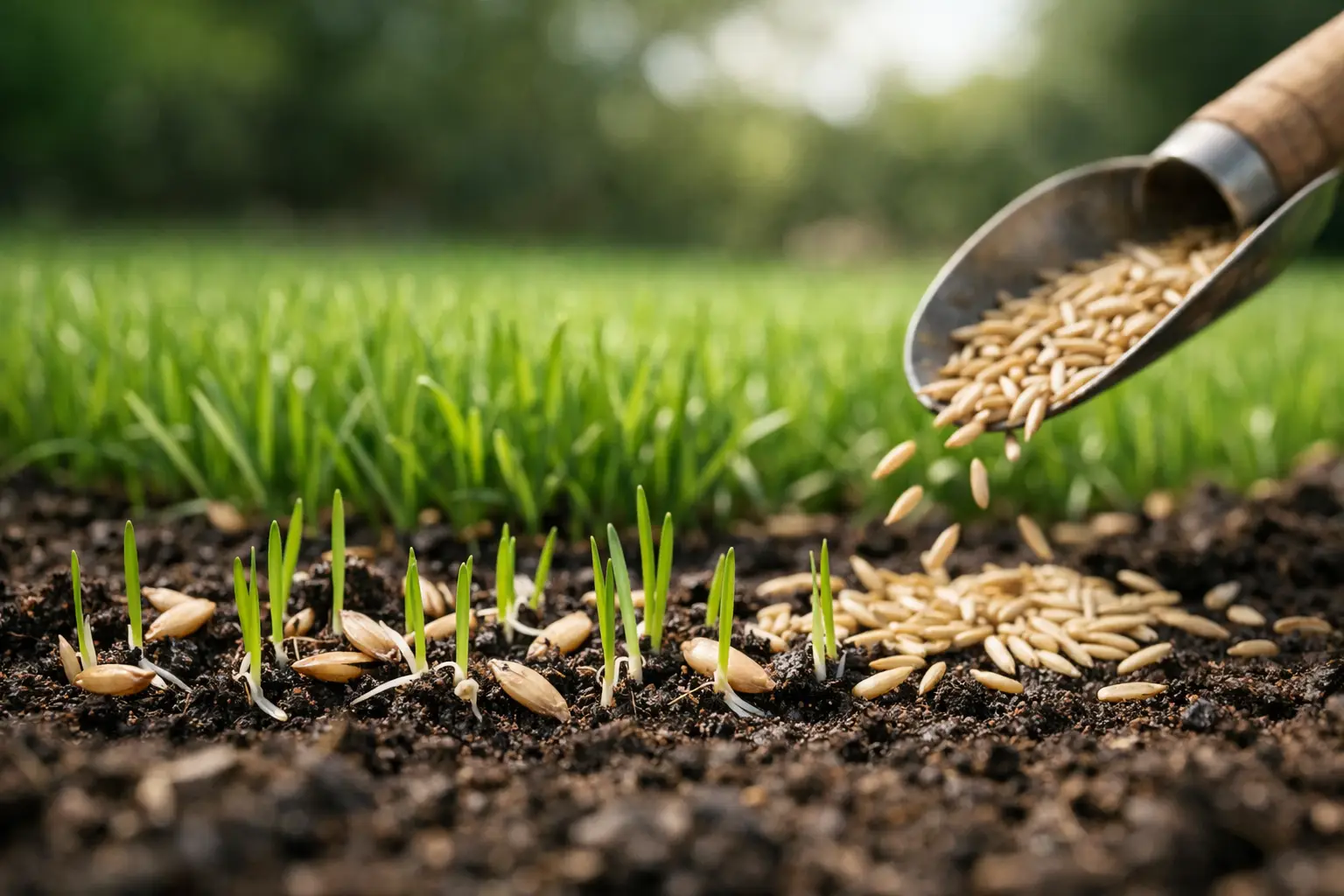
A newly seeded lawn can look unchanged for several days, then suddenly show a fine green haze across the surface. That waiting period is normal. Grass seed germination time depends less on the date printed on the packet than on soil temperature, consistent moisture, seed species and the quality of the seedbed beneath it.
For most UK lawns, expect the first visible shoots between 7 and 21 days after sowing. Fast perennial ryegrass can appear earlier in suitable conditions, while finer fescues are slower and may emerge unevenly at first. The practical target is not simply quick germination. It is a dense, rooted sward that can withstand mowing, foot traffic, dry spells and winter weather.
Typical grass seed germination time by species
Different grasses operate on different timescales. A lawn mixture is usually made up of several species for a reason: rapid establishment, durability, fine texture and tolerance of shade or drought do not all come from one grass.
Perennial ryegrass is normally the quickest component in a standard lawn mixture. In warm, moist soil it may germinate in 5-10 days, although 7-14 days is a more dependable expectation in typical British conditions. Tetraploid ryegrass is valued for its larger seed, vigorous early growth and deeper rooting potential. It is particularly useful where a new lawn needs rapid establishment or where a worn area is being overseeded.
Fine fescues, including creeping red fescue and chewings fescue, commonly take 10-21 days. Their seedlings are finer and less dramatic initially, but they contribute density, texture and tolerance in lower-fertility soils. Strong creeping red fescue can also help a lawn knit together over time.
Smooth-stalked meadow grass is often the patient member of the mixture. Germination may take 14-28 days, particularly in cooler soil, but its underground rhizomes make it useful in hard-wearing turf that needs to recover from damage. Do not mistake its slower appearance for failure when it is part of the blend.
Soil temperature matters more than air temperature
Grass seed does not respond to a pleasant afternoon in the same way a gardener does. It responds to the temperature around the seed itself. Soil temperatures of roughly 8-18°C provide the most reliable germination range for common UK lawn grasses.
Spring sowing can be successful once the soil has warmed, usually from April onwards in many parts of the country. However, cold nights, heavy rain and late frosts can slow progress. Autumn is often the more forgiving establishment window. Soil retains summer warmth, moisture levels are usually better, and there is less pressure from drought. September is frequently excellent, with early October still workable where conditions remain mild.
A week of mild weather does not guarantee fast emergence if the ground is cold, compacted or waterlogged. Equally, seed sown during a hot, dry spell may germinate quickly after watering, then fail if the surface dries out. Consistency is what counts.
Germination is not the same as a usable lawn
The seed has germinated once the root and first shoot break from the seed coat. You may not see this stage immediately. Visible emergence follows when the shoot reaches the surface, and this can vary across a lawn due to shade, soil depth and differences in moisture.
Even after green shoots appear, the roots are still shallow. A newly seeded lawn generally needs 6-8 weeks before it can tolerate normal use, and longer in cool weather or on poor ground. Fast establishment is useful, but rushing it with heavy traffic or close mowing is a common cause of thin, patchy turf.
What slows grass seed germination?
Most disappointing results trace back to a handful of practical problems. The first is inconsistent watering. Seeds need moisture to begin germination, but a dry surface can stop young seedlings before their roots have reached deeper reserves. Keep the top 10-15 mm of soil consistently damp with a fine spray. Avoid heavy watering that shifts seed into channels or creates puddles.
Poor seed-to-soil contact is another regular issue. Seed dropped onto rough ground, thatch or loose debris may germinate poorly because it cannot access sufficient moisture. Rake the surface level, sow evenly, lightly rake the seed into the top few millimetres and firm it with a lawn roller or by gently treading boards across the area. Firm soil is beneficial. Compacted soil is not.
Bird activity can reduce the amount of seed left in place, especially on small bare patches. A light covering of soil, or a suitable germination covering where needed, helps conceal seed while retaining moisture. Do not bury it deeply. Most lawn seed should sit close to the surface, generally no deeper than 10 mm.
Old seed is also less predictable. Seed stored somewhere hot, damp or exposed to repeated temperature swings loses viability over time. Trade-standard mixtures should be stored cool and dry in sealed packaging, then used within the stated period for the best result.
Prepare the ground before you sow
A new lawn is decided from the soil upward. Clearing weeds, rubble and old turf is not cosmetic work. It removes competition and gives grass roots room to develop evenly. For persistent perennial weeds, clear them fully before cultivating and allow the recommended interval before sowing.
Work the soil to relieve surface compaction, then rake out stones and create a level, fine tilth. The finished ground should be firm enough that a footprint is shallow, not soft enough to sink into. On poor or recently disturbed soil, incorporate suitable topsoil or soil conditioner where necessary to improve structure.
Pre-sowing nutrition supports root development during the establishment phase. A balanced pre-seeder fertiliser with a 6-9-6 NPK analysis provides nitrogen for early leaf growth, phosphorus for rooting and potassium for plant resilience. Apply at the specified rate and work it into the surface before sowing, or use it as directed after sowing. More fertiliser is not better: excessive application can scorch young seedlings and create weak, overly lush growth.
How to keep seedlings moving after emergence
Once shoots are visible, continue light watering until the roots have begun to establish. Then gradually water less often but more deeply, encouraging roots to travel down through the soil rather than remain at the surface. Adjust for rainfall. A wet autumn lawn does not need additional irrigation simply because it was seeded recently.
Wait until the grass reaches around 50-75 mm before the first cut. Use a sharp mower and remove only the top third of growth, leaving the lawn at roughly 40-50 mm. This first cut encourages tillering, where grass plants produce side shoots and begin to thicken. Do not scalp new grass in pursuit of a striped finish.
Avoid weed killer on young lawns until the grass is properly established and has been mown several times. Herbicide timing depends on the product label and the condition of the lawn, but young seedlings are more vulnerable than mature turf. Hand-remove obvious annual weeds where practical while the lawn develops.
When should you worry about no germination?
If there are no visible shoots after 21 days, assess the conditions before reseeding. Check whether seed remains on the surface, whether the topsoil has dried out, and whether a spell of cold weather has held soil temperatures below the effective range. Fine fescue and meadow grass may still be on schedule, particularly in a mixed seed blend.
If ryegrass has not appeared after three weeks in mild, consistently moist weather, inspect the seedbed more closely. Compaction, waterlogging, poor seed quality or birds may be the cause. Rake the bare areas lightly, correct the underlying problem and overseed rather than simply applying more seed to the same unsuitable surface.
Ransley Pro Grow mixtures are selected around the practical demands of UK lawns, from rapid ryegrass-led repair to finer blends for more considered finishes. Match the seed to the site, then give it the temperature, moisture and firm seedbed it requires. That is how germination turns into a lawn worth keeping.