

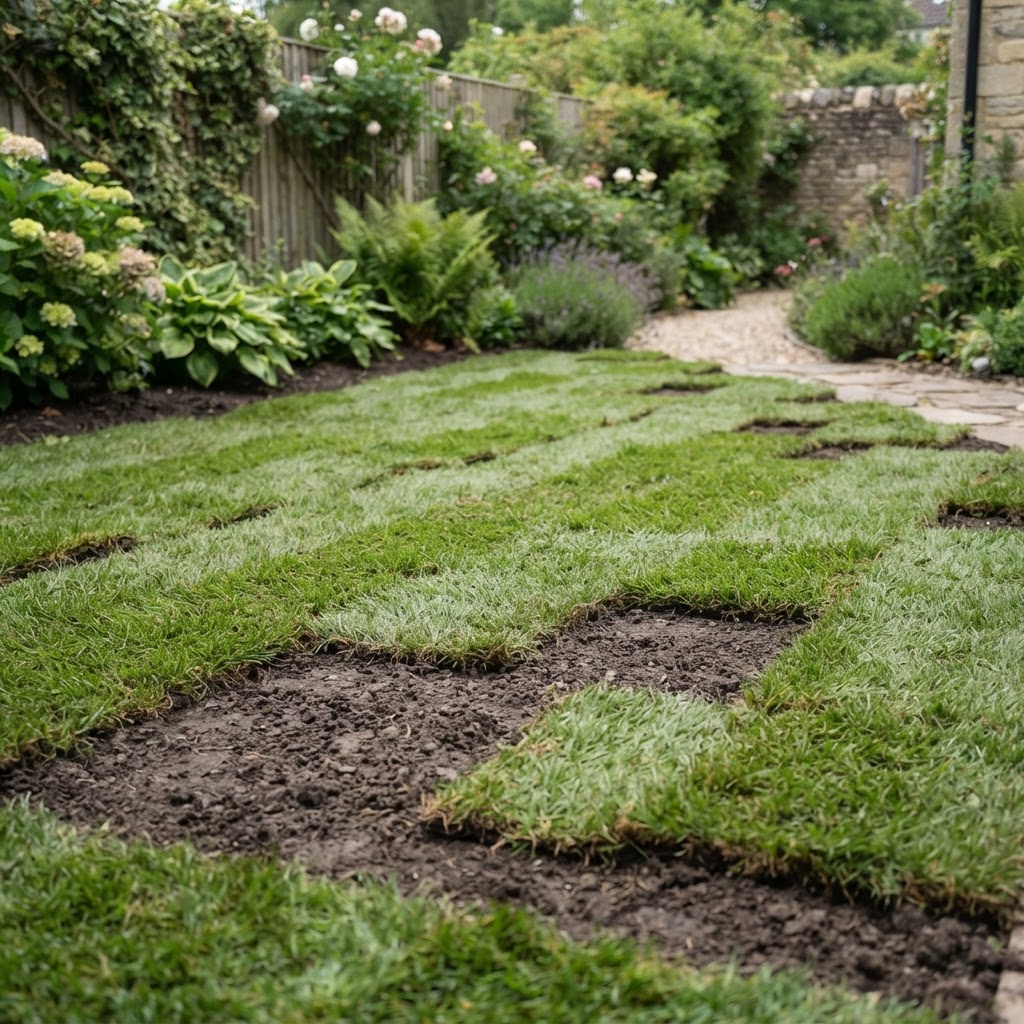
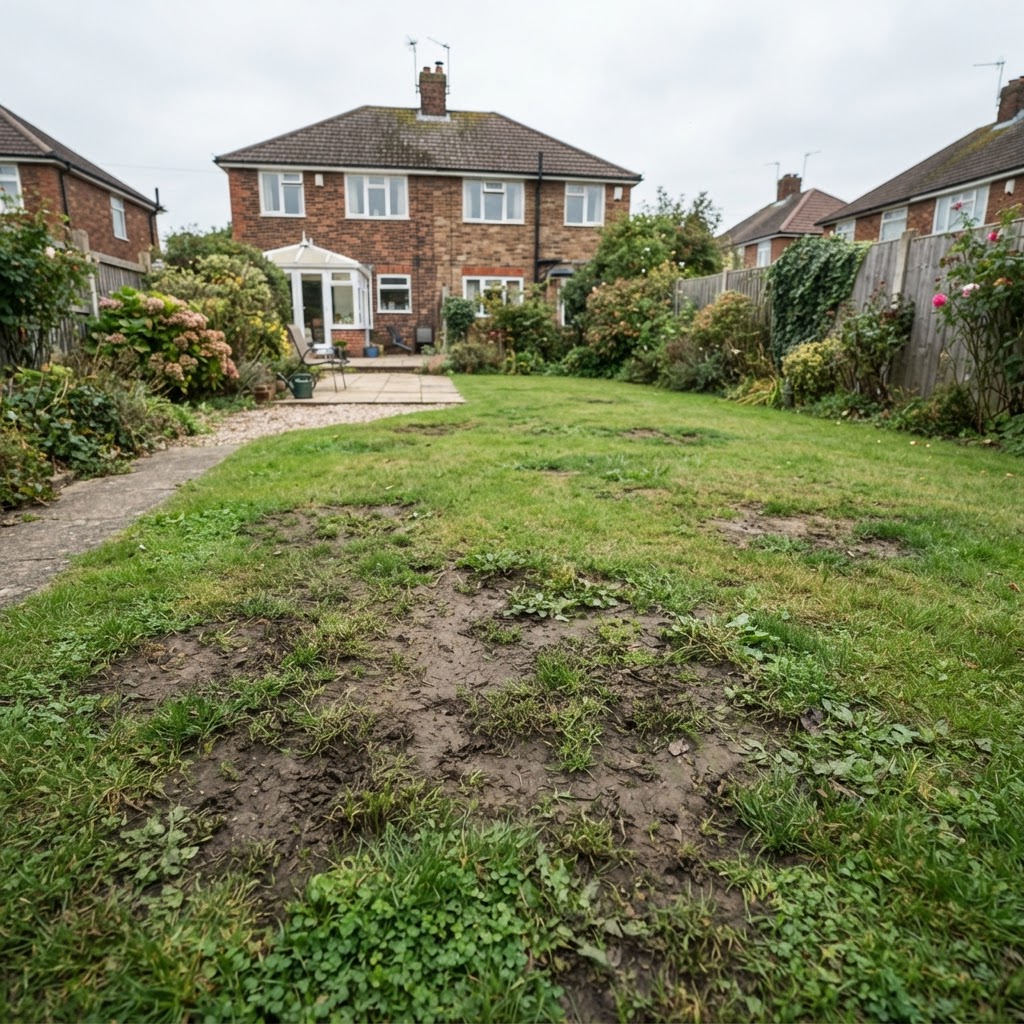
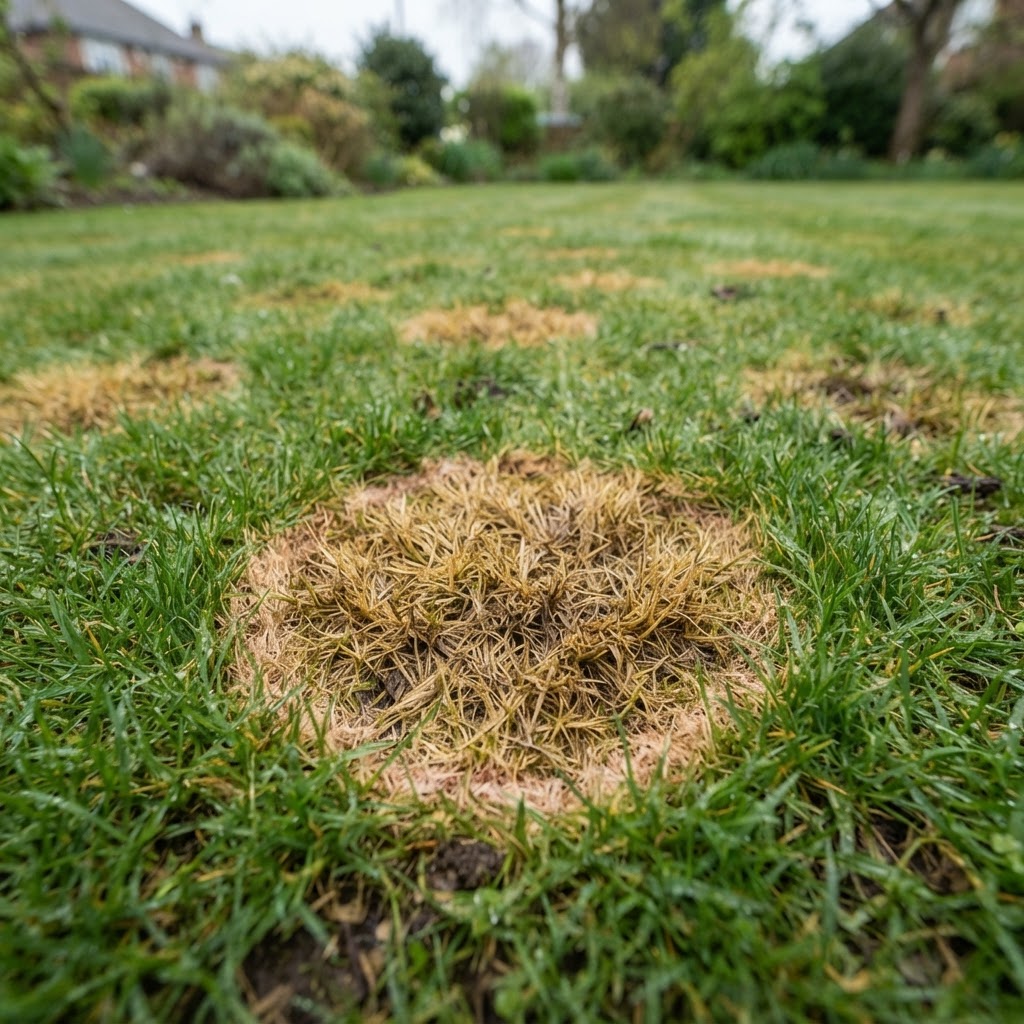

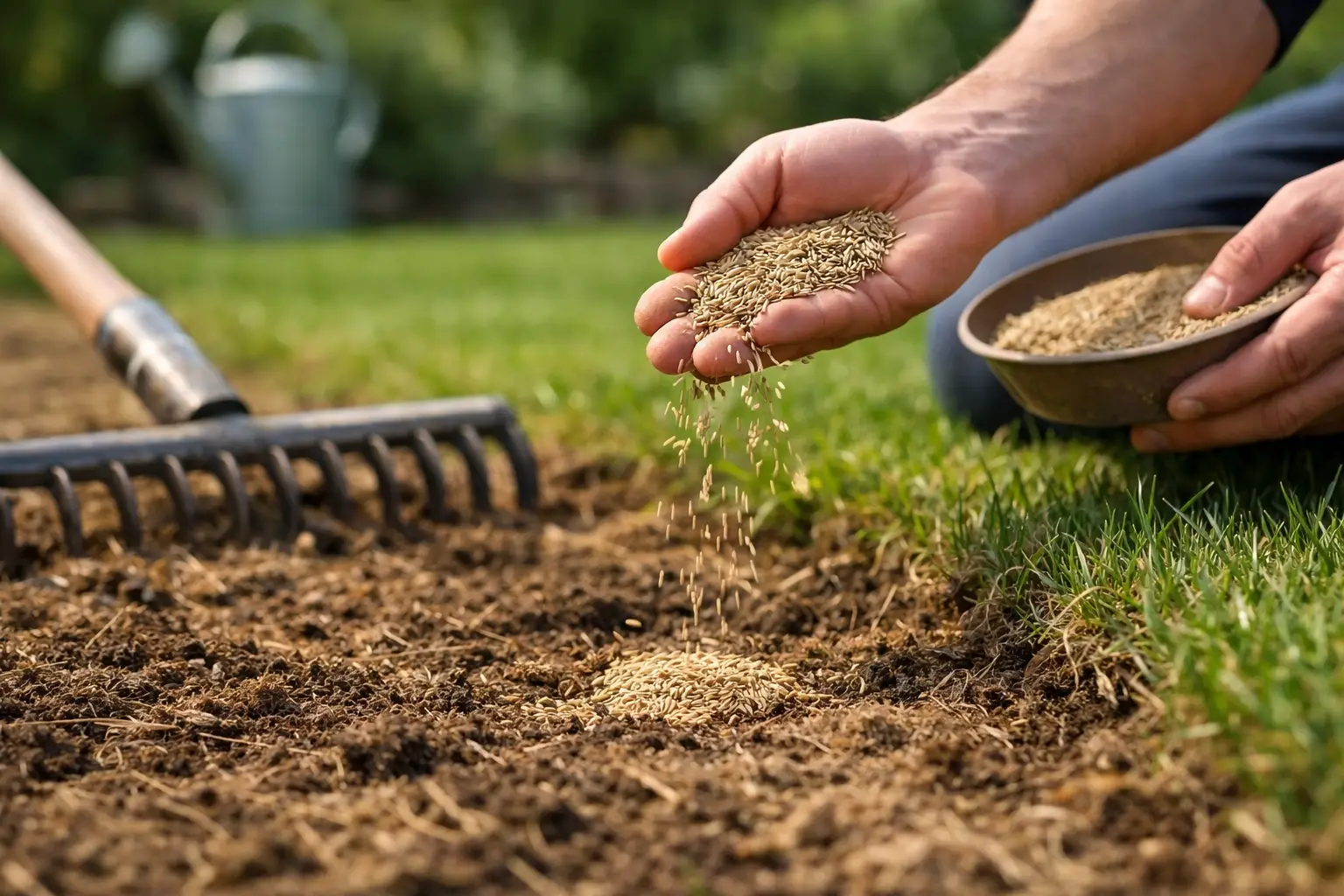
A scarifier can leave a lawn looking worse before it looks better. That is normal. It has removed the thatch, moss and weak lateral growth that were stopping air, water and nutrients reaching the soil. Applying grass seed after scarifying is how you turn those thin, exposed areas into a denser, more resilient lawn rather than simply waiting for existing grass to recover.
The work is most effective when scarifying, overseeding and feeding are treated as one operation. Seed needs direct contact with damp soil, not a bed of dry debris or compacted turf. Get that foundation right and an autumn renovation can establish strongly before winter; a spring renovation can repair wear ahead of summer use.
When to apply grass seed after scarifying
Sow as soon as practical after scarifying, ideally on the same day. The scarifier has opened the surface and exposed small pockets of soil, which gives seed the contact it needs to germinate. Leaving the lawn for a week allows the surface to dry, weeds to occupy the gaps and loose material to settle back into the sward.
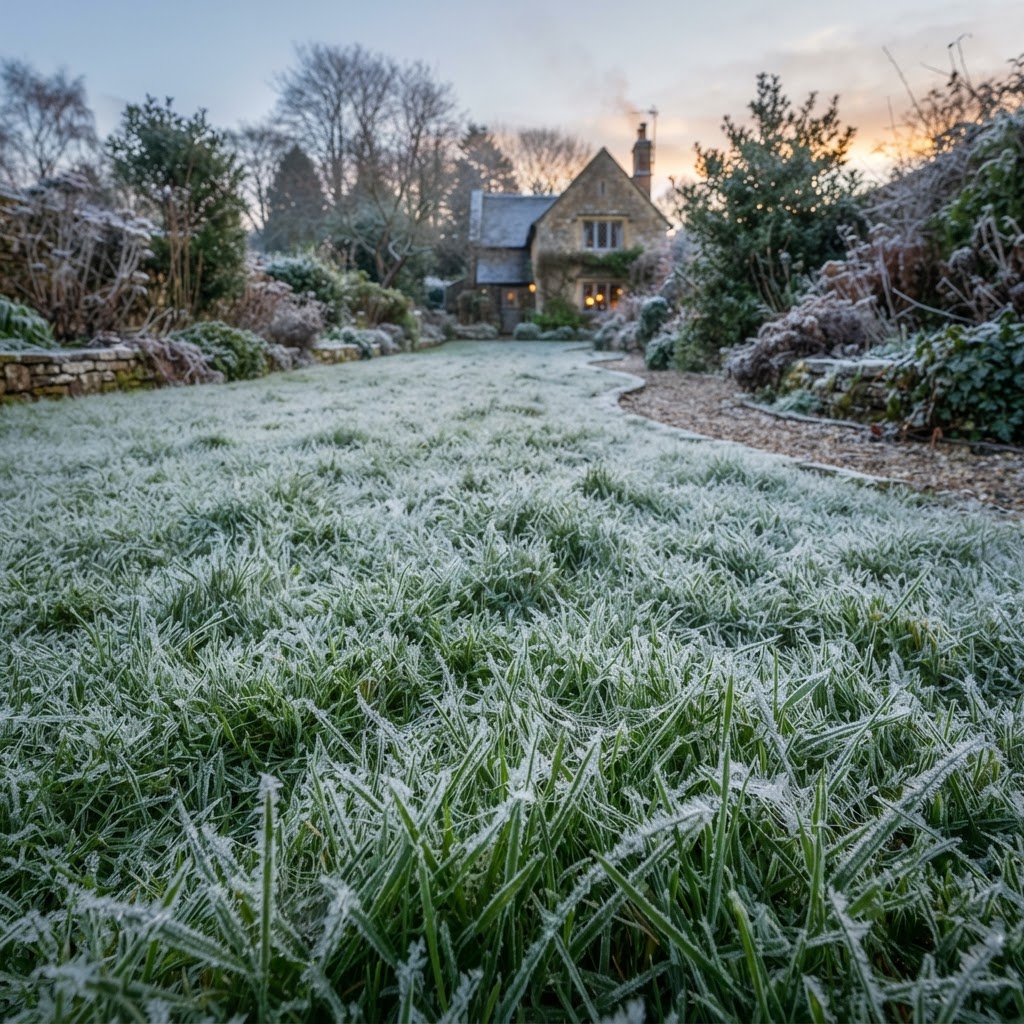
For most UK lawns, early autumn is the most dependable window. Soil is still warm from summer, rainfall is more regular and annual weed pressure is falling. September is often particularly useful, although local conditions matter more than the calendar. Seed will germinate well when soil temperatures are consistently around 8°C or above.
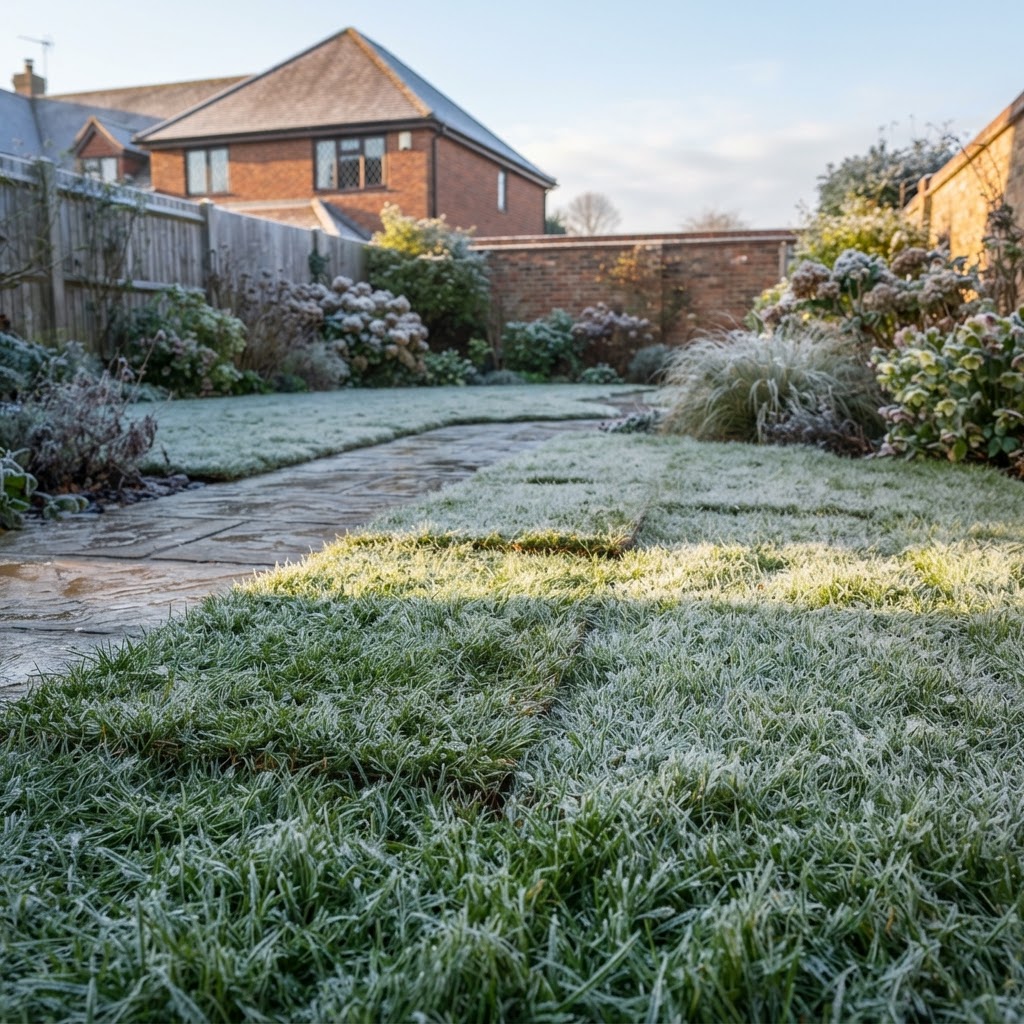
Spring is the second option, generally from April into May once frosts have passed and the ground is warming. It can produce quick results, but seedlings may face dry spells, heavier foot traffic and more weed competition. In either season, avoid sowing into waterlogged ground, hard baked soil or a forecast of prolonged frost.
Prepare the surface before sowing
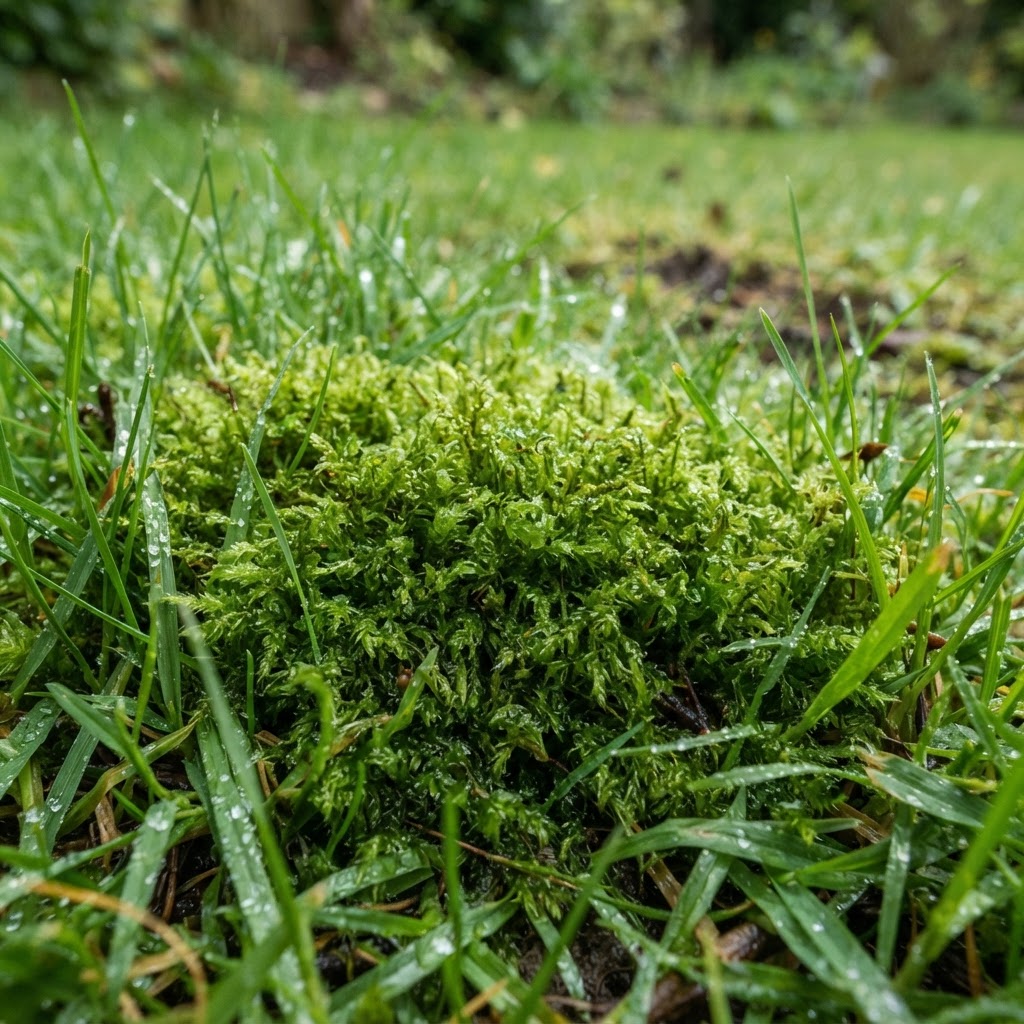
Scarifying alone does not always create a proper seedbed. First, collect every trace of moss, thatch and pulled-out material. A lawn rake or mower with a collection box is useful for the final pass. Seed sitting on a layer of debris may germinate, but it will struggle to root into the soil below.
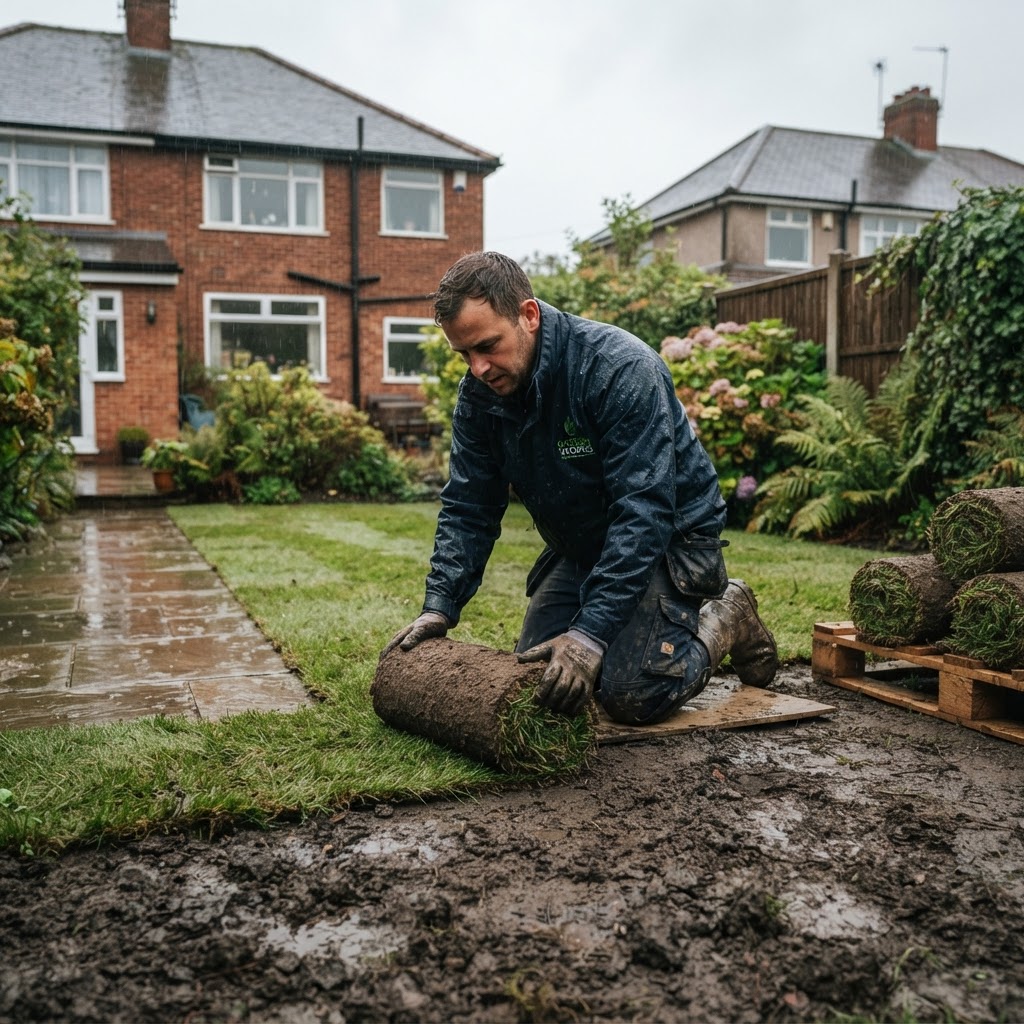
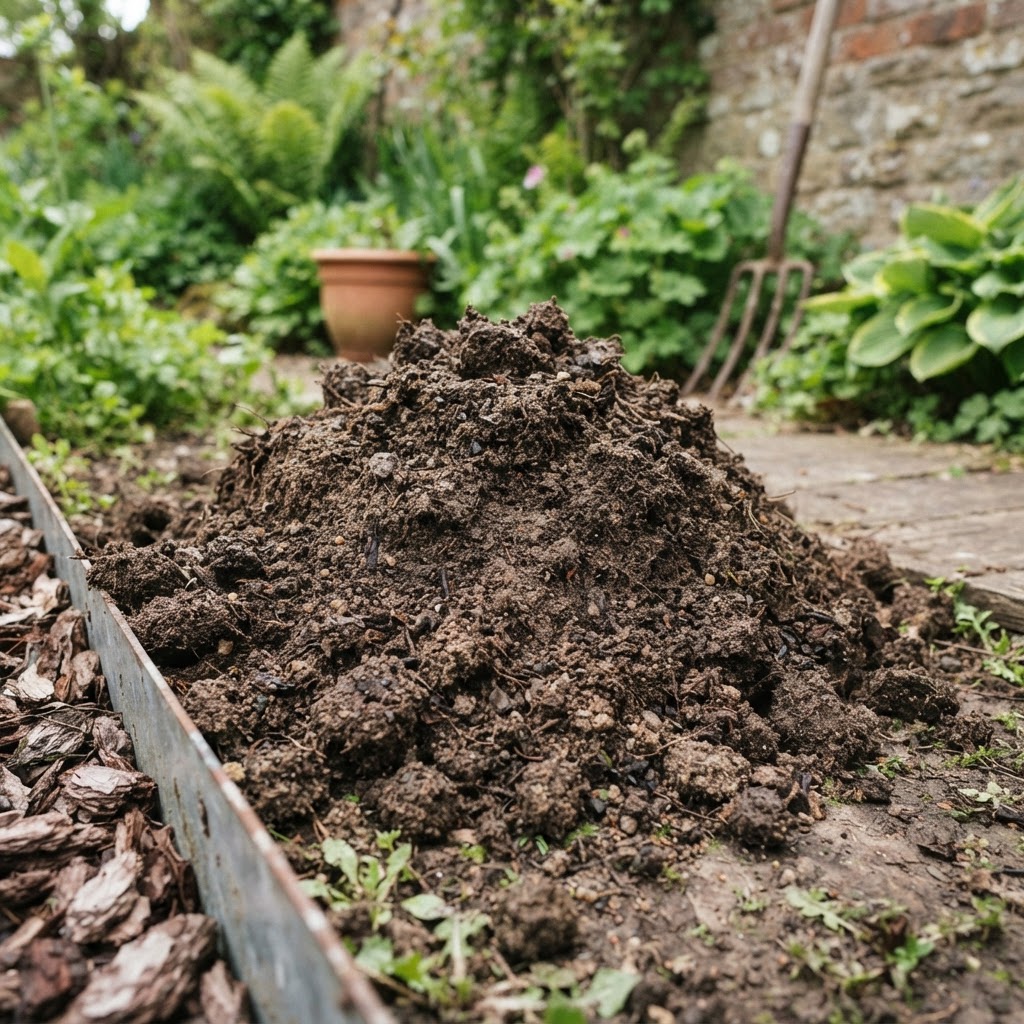
Inspect the lawn once it is clear. If scarifying has revealed shallow hollows, compacted patches or areas of bare soil, work a fine lawn topdressing into them. A light dressing levels minor imperfections and improves seed-to-soil contact. Do not bury the remaining grass beneath a thick layer: the existing leaves still need light.
Where the surface is firm, scratch the top 5-10 mm with a rake. The aim is not to cultivate deeply. It is to create a fine, open surface where seed can settle, retain moisture and send roots down without obstruction.
Deal with weeds and moss in the right order
Moss should be controlled before scarifying where possible. Once it has blackened and died back, it can be removed cleanly rather than spread through the lawn. However, do not sow straight after applying a selective weedkiller unless the product label specifically permits it. Most weed treatments require a waiting period before reseeding, commonly several weeks, because herbicide residues can affect new grass plants.
If broadleaf weeds are limited, it is often better to renovate first, establish the new grass, then address weeds later when the seedlings are mature enough for treatment. Read the label and follow its mowing and reseeding instructions rather than relying on a fixed rule.
Choose seed for the lawn, not the label
Overseeding is a repair job, so the seed should suit both the site and the existing lawn. A hard-wearing family lawn or contractor-maintained area benefits from a blend containing dwarf perennial ryegrass, which establishes rapidly and tolerates traffic. Fine fescues add density and a neater texture, while shade-tolerant blends are the sensible choice beneath trees, beside fences and on north-facing lawns.
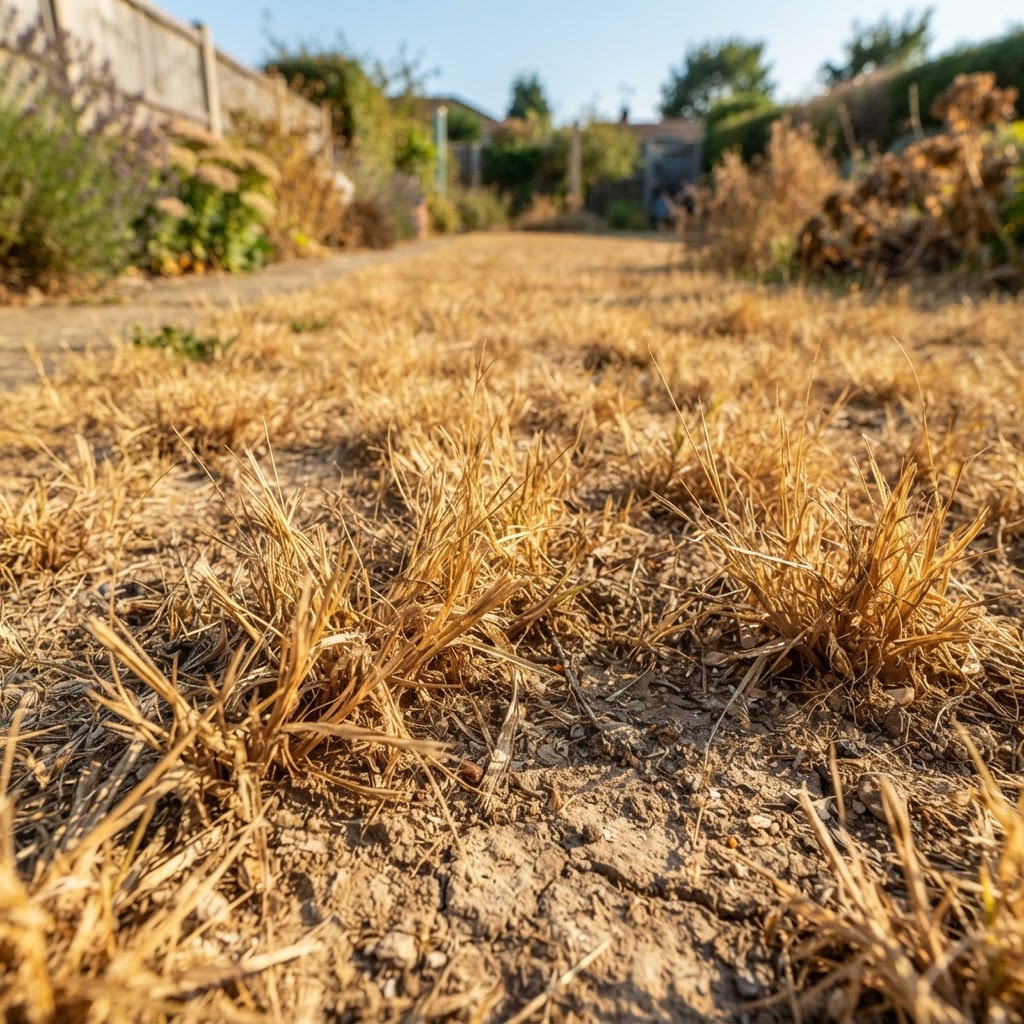
For an exposed garden that dries quickly, rapid emergence is only part of the answer. A deeper-rooting ryegrass blend can establish fast and cope better once irrigation is reduced. Ransley Pro Grow Tetraploid Ryegrass is designed for this purpose, with larger seed, 7-14 day germination in suitable conditions and improved drought tolerance through its root development.
Do not expect a fine ornamental blend to withstand repeated football, dogs or heavy contractor traffic. Equally, a ryegrass-heavy blend may look coarser than a formal fescue lawn. The best result comes from matching the species to the pressure the lawn receives.
How much seed to use after scarifying
For a normal overseed, apply grass seed at roughly 25-35 g per square metre. Use the lower end where the existing sward remains reasonably dense and the higher end on thin, heavily scarified ground. On genuinely bare patches, 35-50 g per square metre is more appropriate.
More seed is not automatically better. Over-applying creates too many seedlings competing for the same moisture, light and nutrients, which can lead to weak, spindly growth. Measure the lawn area, weigh the seed and split it into two equal portions. Spread the first half lengthways and the second half across the lawn. This simple cross-pattern gives more even coverage than trying to judge the rate by eye.
After spreading, lightly rake the seed into the surface or brush it so that most seed is just covered. Grass seed does not need to be buried deeply. A depth of around 5 mm is sufficient. Finish by gently treading or rolling the area to firm the surface. Firm soil contact is one of the most overlooked parts of overseeding.
Feed roots without forcing top growth
New grass needs phosphorus for early root growth as well as modest nitrogen and potassium. A pre-seeder fertiliser with a balanced 6-9-6 NPK analysis is well suited to renovation work because it supports establishment without pushing lush leaf growth that young roots cannot sustain.
Apply it at the stated rate immediately before or after sowing, then water it in if conditions are dry. Avoid using a high-nitrogen spring or summer feed at this stage. It may green up old grass quickly, but it is not the most measured approach for seedlings that need to root first.
If topdressing has been used, apply fertiliser after the dressing is worked in and before the final watering. This keeps nutrients in the root zone rather than sitting on loose surface material.
Watering is what decides the result
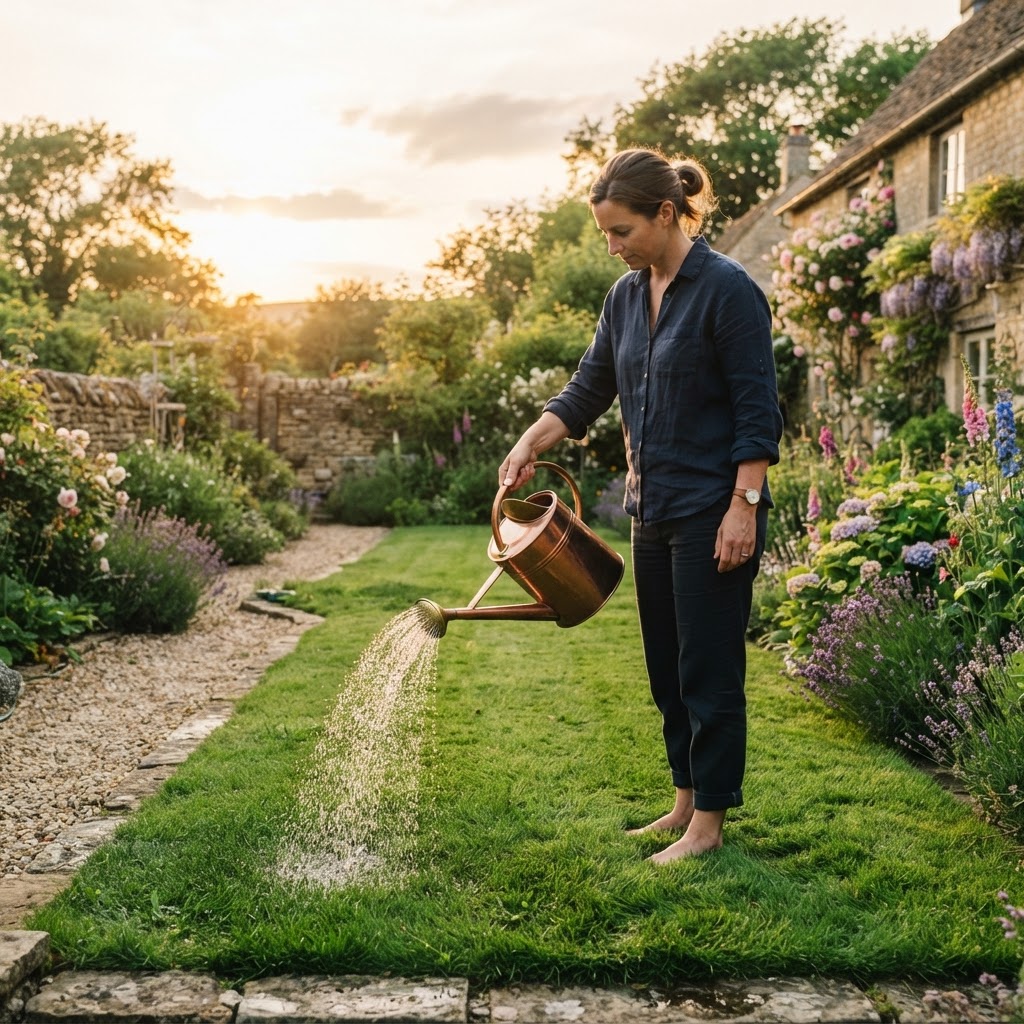
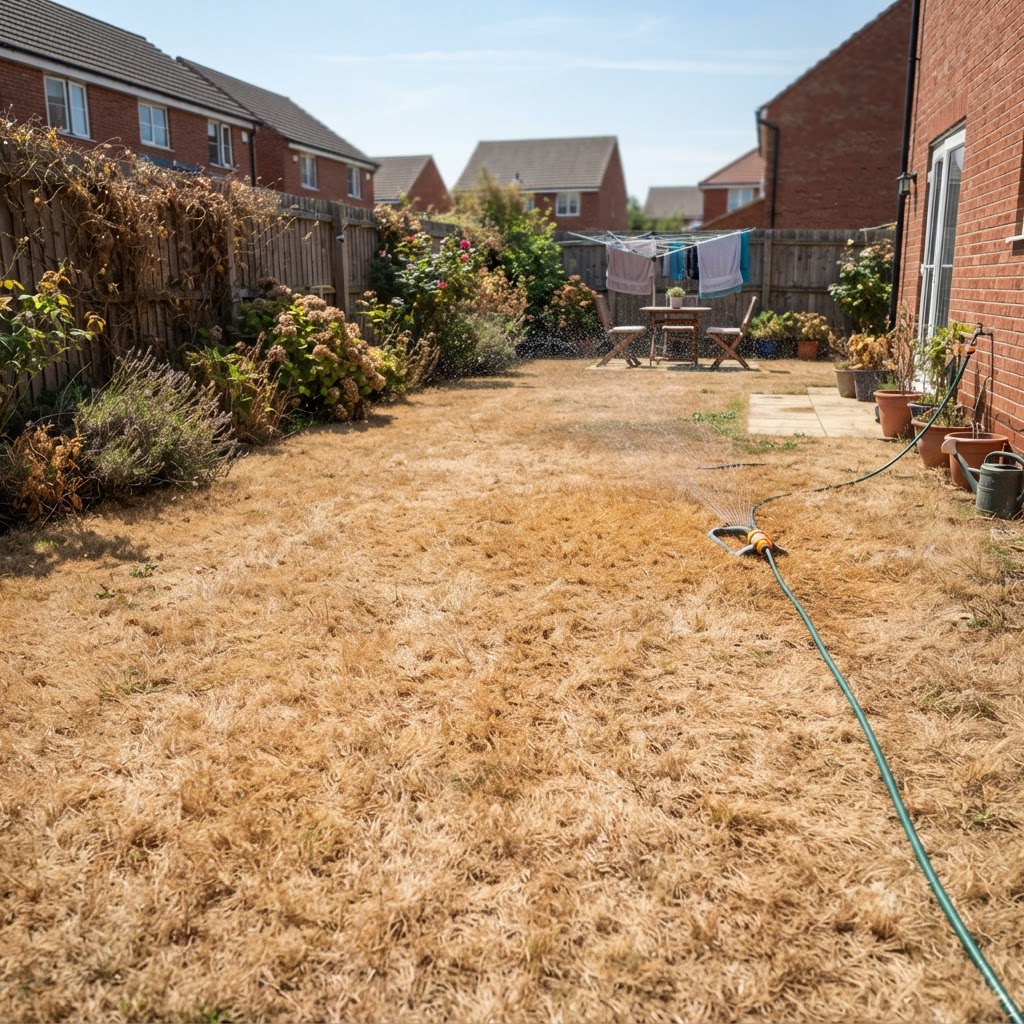
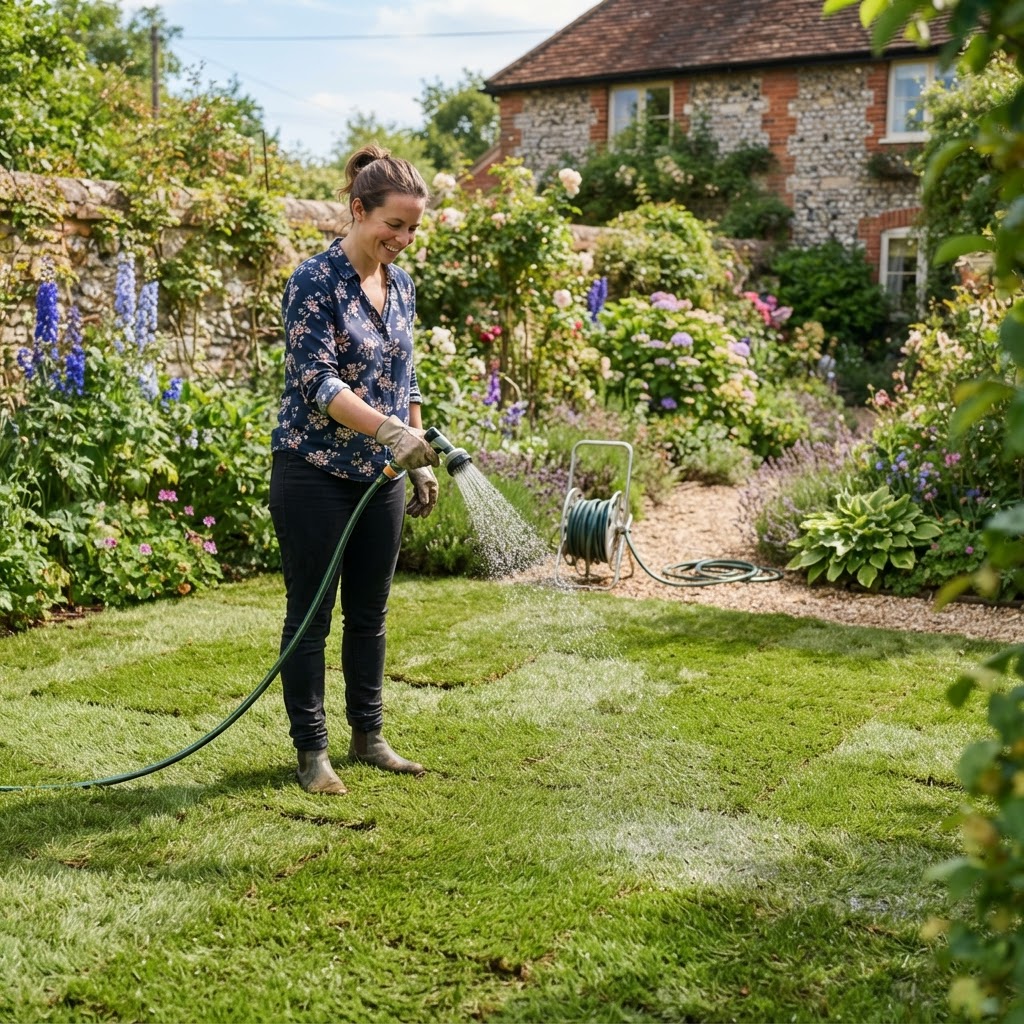
The seedbed must stay consistently moist through germination. In dry weather, water lightly once or twice daily, preferably early morning and later in the day when evaporation has eased. The objective is to moisten the top layer of soil, not to flood it. Puddles can wash seed into lines and leave bare strips elsewhere.
Once seedlings are visible, gradually water less often but more deeply. This encourages roots to move down into the soil instead of remaining dependent on surface moisture. A newly seeded lawn can fail quickly in a warm, windy week, even when the forecast suggests occasional showers. Check the soil beneath the surface rather than judging moisture by the appearance of the grass alone.
Keep people, pets and machinery off the lawn as much as possible. Young ryegrass may emerge quickly, but emergence is not the same as establishment. Roots need time to anchor.
First mowing and aftercare
Mow for the first time when the new grass reaches approximately 50-75 mm. Use a sharp mower blade and remove no more than one third of the leaf height, leaving the lawn at about 35-50 mm. A blunt blade can pull out poorly rooted seedlings; a low cut can check growth just as the lawn is beginning to thicken.
Continue mowing regularly, reducing the height gradually over several cuts. Keep the lawn slightly longer during dry weather, under trees and in autumn. The extra leaf area helps the plant produce energy and shades the soil, reducing moisture loss.
A scarified lawn does not need perfection in its first fortnight. It needs soil contact, steady moisture and patience. Give the new plants a proper run of mild weather before asking them to handle traffic, close mowing or another chemical treatment, and they will repay the work with a noticeably stronger sward.