

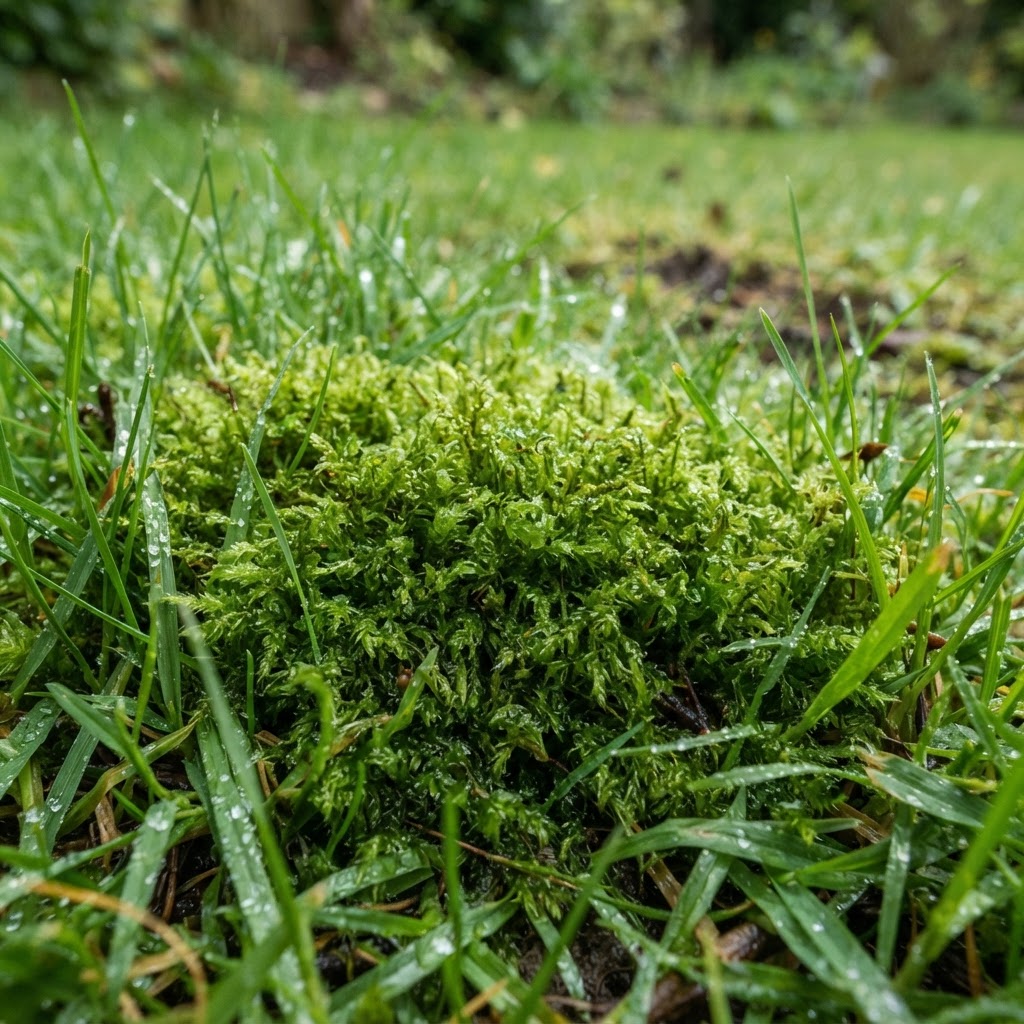

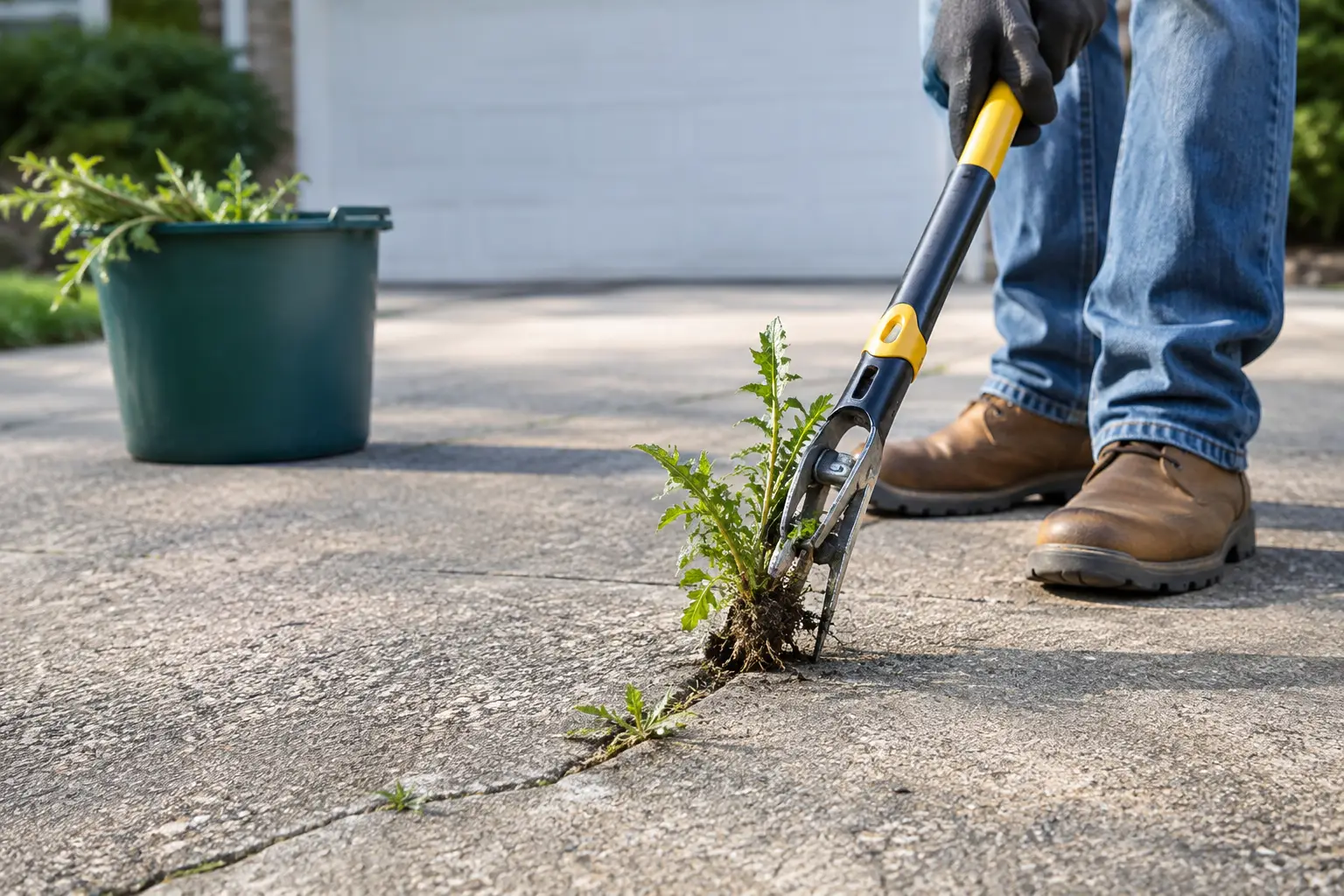
A clear driveway can lose its finish surprisingly quickly. One tuft of grass through a block-paving joint soon becomes a line of weeds along the kerb, and moss makes the surface look neglected and slippery. Effective driveway weed removal is not simply a matter of spraying whatever is to hand. The right method depends on the surface, the weed’s growth stage, nearby planting and whether you need a short-term tidy-up or a proper clear-out before repair.
For most UK driveways, the dependable approach is to remove established top growth, use a suitable total herbicide where appropriate, then deal with the gaps and drainage conditions that allow seeds to settle. Get those stages in the right order and regrowth becomes far easier to manage.
Start by identifying why weeds are growing
Weeds do not usually force their way up through sound tarmac, concrete or paving. In most cases, airborne seed has landed in accumulated dust, leaf litter and organic debris sitting in cracks, joints or at the driveway edge. Given moisture and a little light, it germinates.
This distinction matters. Killing the visible weed without clearing the material in which it is rooted leaves a ready-made seedbed behind. On block paving, the jointing aggregate may also have thinned through weathering or over-enthusiastic pressure washing. On gravel, weeds often establish in a layer of silt below the stones rather than in the sub-base itself.
Look closely before choosing a treatment. Annual weeds such as chickweed, groundsel and hairy bittercress are easily controlled when small. Perennial weeds, including dandelion, plantain, couch grass, bindweed and bramble, have more substantial roots or rhizomes. They need a systemic treatment that moves into the plant, rather than a product that merely scorches the leaves.
Driveway weed removal methods compared
Hand weeding for isolated plants
Hand removal is worthwhile for a few young weeds in paving joints, particularly after rain when roots release more easily. Use a narrow jointing knife or hooked weeder and lift as much of the root as possible. It is a tidy choice beside delicate borders or where chemical use is unsuitable.
The limitation is straightforward: it is labour-intensive, and perennial roots often break below the surface. A dandelion crown left in a joint can produce fresh leaves within weeks. Treat hand weeding as precise maintenance, not the best answer to a heavily infested driveway.
Boiling water and flame treatments
Heat destroys plant cells quickly and can be useful for seedlings in hard-to-reach joints. Boiling water is readily available, while purpose-built flame weeders are commonly used by contractors on larger hard-surface areas.
Neither method is selective, and neither reliably controls deep perennial roots after one pass. Take particular care around dry debris, timber edging, plastic drainage channels and parked vehicles. Flame treatment is unsuitable in dry, windy conditions and should never be used where there is a fire risk. Repeated applications are normally required.
Total herbicide for established growth
For widespread weeds on a driveway, a total, systemic herbicide is generally the most efficient option. Glyphosate-based products are commonly used because they are absorbed through actively growing leaves and transported to the root system. This makes them useful against grasses and many established perennial weeds on paths, gravel and paving.
The trade-off is that total herbicides kill any green plant they contact. Drift onto a lawn edge, ornamental border or hedge can cause serious damage. Apply only to dry foliage on a calm day, using a coarse, controlled spray pattern or a suitable applicator. Avoid spraying when rain is expected before the product’s stated rainfast period, and do not treat drought-stressed or recently cut weeds. Healthy, actively growing foliage gives the treatment the best route into the root.
Always follow the individual product label for dilution, application rate, protective clothing, timing and re-entry instructions. Labels are legal documents, not optional guidance. Never use a product intended for lawns to clear a driveway, and never apply more than the stated rate in the belief that it will work faster.
Ransley Pro Grow supplies professional-grade total herbicide options for hard-surface clearance, but product choice should always match the site and the label-approved use.
A practical treatment sequence for paved and gravel drives
A systematic approach prevents wasted work. First, choose a dry spell and allow weeds to put on enough leaf area for treatment. For small annual weeds, this may be only a few centimetres of growth. For established perennials, wait until there is a healthy spread of leaves.
Apply the herbicide carefully, covering the foliage without soaking the surface or creating run-off. Keep people and pets away until the treated area is dry, or for the period specified on the label. Do not brush, pull, mow or pressure wash immediately afterwards. Systemic products need time to travel through the plant. Depending on species and weather, visible decline may take several days, while tough perennials can take two to three weeks.
Once the weeds are fully dead, remove the dry material and sweep out leaf litter, soil and loose moss from joints. This is the stage many people miss. On block paving, replenish joints with the correct kiln-dried or polymeric jointing material for that paving system. On gravel, rake the surface, remove the silted debris and top up stone where necessary. A clean, well-filled joint gives germinating seeds fewer places to lodge.
Pressure washing can improve the appearance of paving, but it is not a weed killer. Used too aggressively, it strips jointing material and opens the door to faster regrowth. If washing is needed, work methodically and refill joints afterwards. Do not wash residues or debris into surface-water drains.
Protect lawns, borders and drainage
Driveways often meet the most valuable part of the garden: the lawn. A total weedkiller has no ability to distinguish a dandelion from fine fescue or perennial ryegrass. Shield nearby turf where practical, keep the nozzle low and avoid spraying in gusty weather. A paint-on application can be sensible for weeds growing tight against a lawn edge.
Be equally careful around drains, gullies, ponds and watercourses. Do not apply herbicides to water, directly over drains or where spray can run off on a sloping surface. Choose calm, dry conditions and use only the quantity needed to wet the target foliage. This is good practice for homeowners and essential discipline on commercial sites.
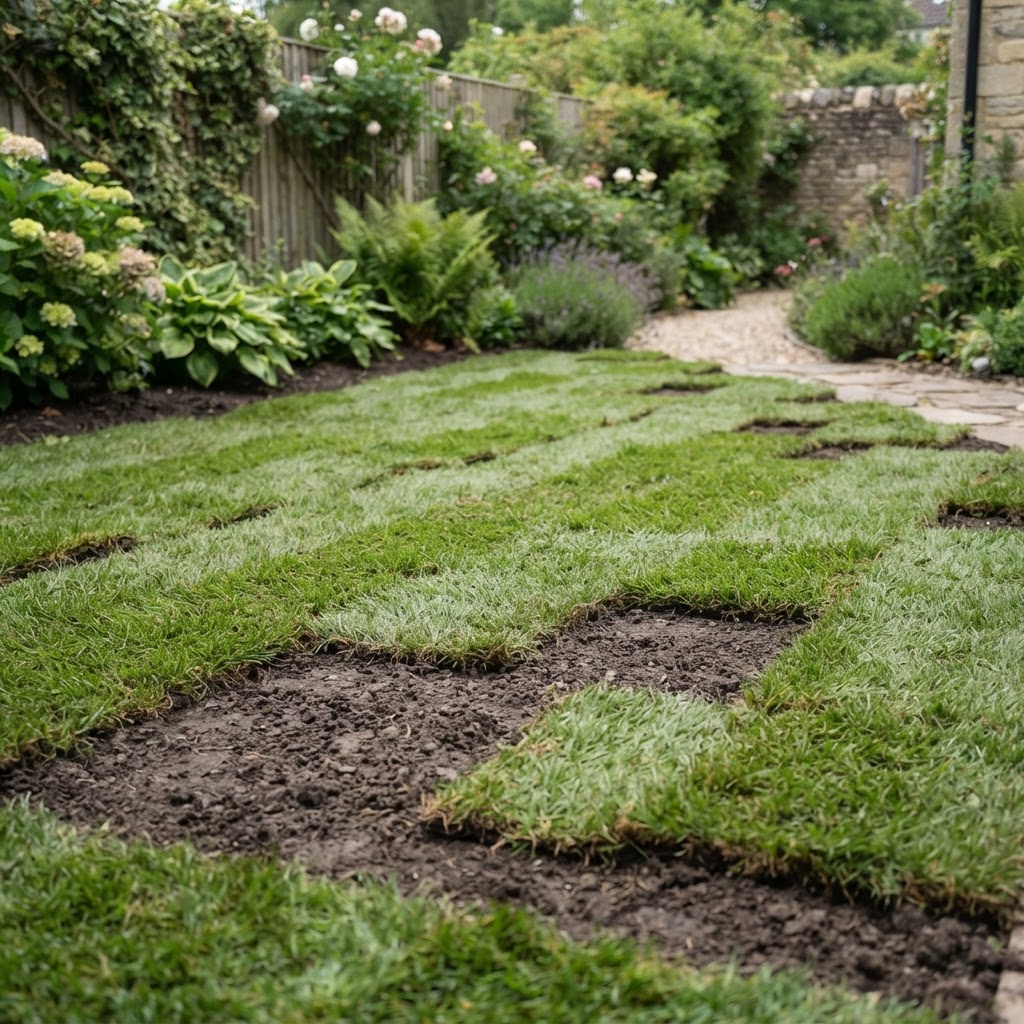
If weeds are emerging from the boundary between the driveway and a lawn, inspect the edging. A failing edge lets soil and runners migrate into the surface. Re-establishing a crisp edge and repairing bare turf can be more effective than repeatedly treating the same strip.
Prevention is lighter work than repeated clearance
No driveway is permanently weed-free. Seeds travel on wind, footwear, vehicles and birds, so the sensible target is early control rather than impossible perfection. Sweep the driveway regularly, especially in autumn when leaf litter breaks down into a growing medium. Remove small weeds before they flower and set seed.
For gravel, maintain an adequate depth of clean aggregate and rake it periodically. Thin gravel exposes the fine material below, where seeds readily root. For block paving, inspect joints each spring and after winter weather. Refill any that have sunk or washed out before they become weed channels.
A residual weedkiller may be appropriate on certain commercial hard surfaces, but it is not a default choice for domestic driveways. Its use depends on the product approval, site conditions, surface drainage and proximity to planted areas. Where there is any doubt, use a non-residual method and maintain the surface more frequently.
When to act
Spring and early autumn are usually the most productive times for driveway weed removal because plants are actively growing and temperatures are moderate. Spring treatment stops annual weeds before they seed. Early autumn can be especially effective against perennials, as many are moving resources back towards their roots.
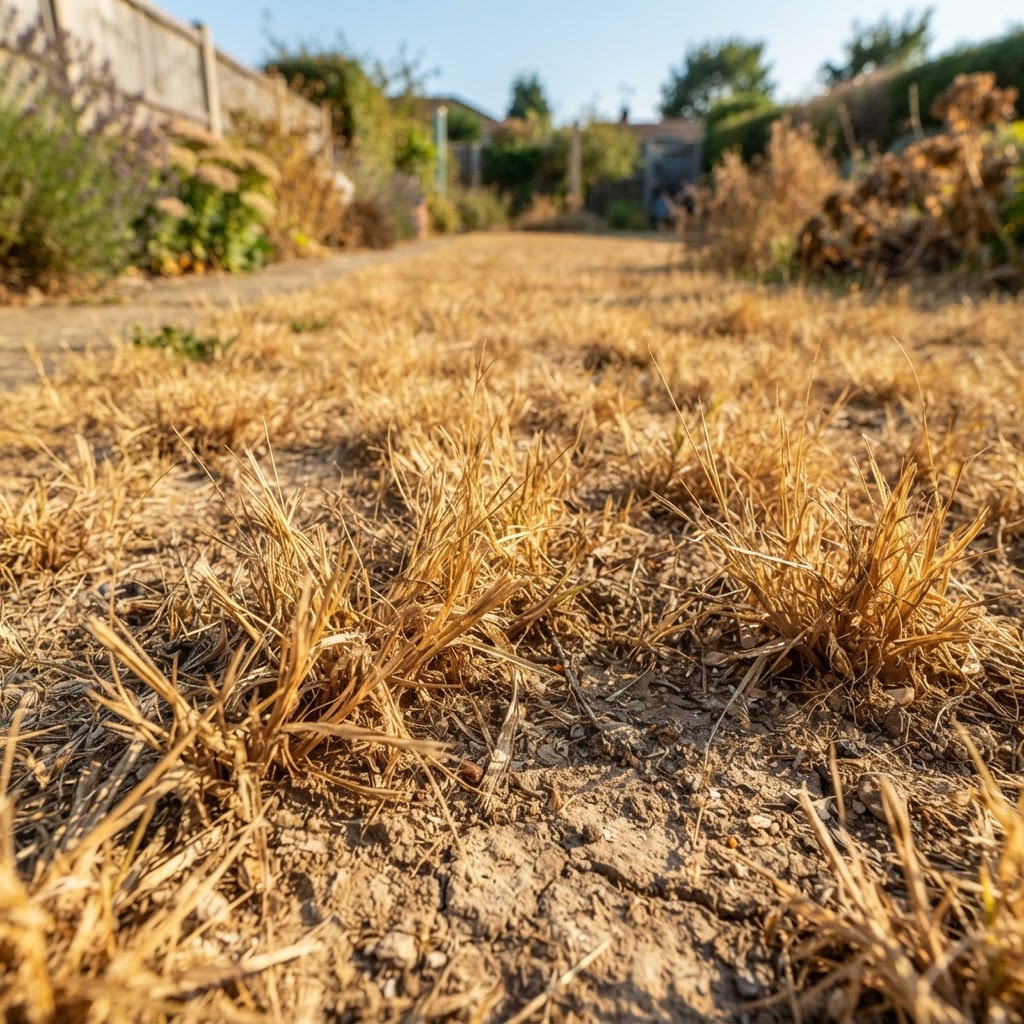
Avoid treating during frost, heat stress, heavy rain or prolonged drought. Winter spraying is rarely worthwhile when weeds are dormant or barely growing. A dry, still day with healthy foliage will outperform a rushed application in poor conditions.
A driveway does not need constant heavy treatment to stay presentable. Inspect it little and often, deal with seedlings while they are small, and reserve stronger measures for established growth. That measured approach protects the surrounding lawn, keeps the surface sound and delivers the clean finish a well-kept property deserves.