














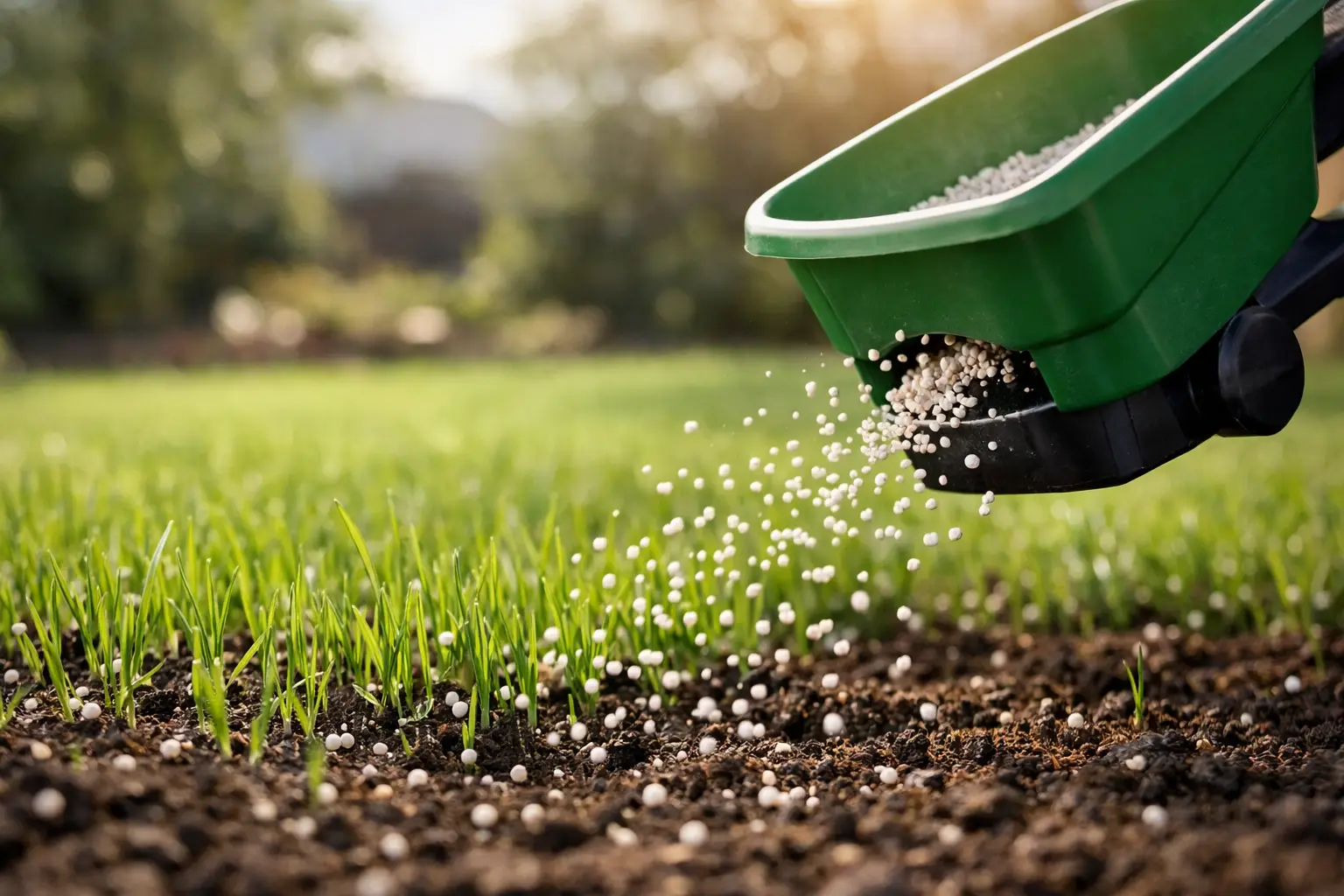
Freshly sown grass can look thin, pale and hesitant just when you want it charging away. That is usually the point people ask, can you fertilise new grass? The short answer is yes, but timing and product choice matter. Feed too hard or too early with the wrong analysis and you can push soft top growth, scorch young seedlings or waste nutrients before roots have a chance to establish.
A new lawn is not the same as an established one. Seedlings are busy building roots, producing their first true leaves and competing with weather, soil temperature and moisture loss. What helps mature turf in late spring will not always suit newly germinated grass. If you want rapid establishment and durable cover, you need fertiliser that supports rooting first and leaf growth second.
Can you fertilise new grass without damaging it?
Yes, provided you use the right formulation and apply it at the right stage. New grass benefits most from a pre-seeder or starter fertiliser with balanced nutrition and a sensible nitrogen level. A 6-9-6 analysis, for example, is specially formulated to encourage root development through available phosphate while still providing enough nitrogen and potassium for steady early growth.
That balance matters. High-nitrogen spring and summer feeds can make established lawns green up quickly, but on new grass they can be too much of a good thing. Excess nitrogen drives leaf production faster than the root system can support it. In practical terms, that leaves seedlings lush but less resilient, especially if dry weather follows or mowing begins before the grass has anchored properly.
There is also a difference between feeding before sowing and feeding after germination. Both can work. The safer approach on most domestic lawns and landscape jobs is to incorporate a pre-seeder fertiliser into the top layer before sowing, or apply it immediately after seeding according to the label rate. That way nutrients are in place as the seed wakes up, rather than arriving later as a corrective measure.
When to fertilise new grass
The best timing depends on whether you are laying seed or reacting to weak early growth.
If you are preparing a seedbed from scratch, fertiliser should usually go on at sowing time. Rake it evenly into the topsoil, then sow the seed and lightly rake again so there is good soil contact. This gives young plants access to phosphate and potassium from day one, which supports root initiation and general stress tolerance.
If the grass has already emerged, wait until seedlings are established enough to benefit. In most UK conditions, that means once the lawn has germinated evenly and put on a little height, rather than at the first sign of green. Feeding too soon after germination can be unnecessary if the seedbed was prepared correctly. Feeding too late can slow establishment on poor soils where nutrient reserves are low.
As a rule, new grass is best treated in stages. First, support establishment with a starter feed. Later, once the lawn has been cut a few times and is behaving more like a young turf surface than a seedling bed, you can move to a seasonal fertiliser programme.
What fertiliser is best for new grass?
For new lawns, look for a starter or pre-seeder fertiliser rather than a standard lawn feed. The specification matters more than the marketing on the bag.
A suitable new grass fertiliser should provide moderate nitrogen, useful phosphate and enough potassium to strengthen young plants. Phosphate is particularly important at establishment because it supports root growth and energy transfer within the plant. Potassium helps regulate water movement and improves tolerance to stress. Nitrogen still has a role, but it should not dominate the analysis.
This is why a trade-standard pre-seeder formulation such as 6-9-6 is a reliable fit for sowing and early establishment. It is engineered for root-first development. By contrast, a strong summer lawn feed designed to push deep green colour on established turf can be counterproductive on seedlings.
Avoid weed and feed products on new grass. Selective herbicides are generally intended for mature lawns and can check or damage young plants. The same goes for multi-action moss and weed treatments. They have their place later on, but not on a lawn that has only just germinated.
How to apply fertiliser to a newly seeded lawn
Application needs to be even. Uneven feeding shows up quickly on new grass, often as patchy colour and inconsistent growth.
Prepare the soil first. Remove debris, level the surface, and create a fine, firm tilth. If you are applying a pre-seeder fertiliser, spread it at the recommended rate and rake it into the top 25 to 50mm of soil. Then sow the grass seed evenly, lightly cover, and firm the surface with a roller or the back of a rake.
Watering is just as important as fertiliser. Nutrients do very little in dry soil, and grass seed cannot establish without consistent surface moisture. Keep the seedbed damp, not saturated, until germination is complete. Once the seedlings are up, shift towards less frequent but slightly deeper watering to encourage roots downward.
If you are feeding after germination, apply only when foliage is dry and rain is expected soon after, or water in lightly. Granules sitting on tender leaves can increase the risk of scorch, especially in warm, bright weather.
For contractors and larger domestic plots, calibrated spreaders are worth using. Guesswork causes stripes. A measured application gives you the coverage and nutrient rate the product was designed to deliver.
Common mistakes when fertilising new grass
The biggest error is using too much fertiliser. More product does not mean faster establishment. It usually means more stress, more mowing pressure and a greater chance of scorching. Always work to the stated rate.
The second is choosing the wrong product. New grass is not ready for a high-nitrogen green-up feed, and it is certainly not ready for herbicide-based lawn treatments. Keep the chemistry simple in the early weeks.
The third is poor timing. Feeding into cold, waterlogged ground in winter is inefficient because roots are not actively taking up nutrients. Equally, feeding during a hot, dry spell without proper irrigation can leave seedlings struggling. Soil condition and forecast matter as much as calendar date.
Another common issue is blaming fertiliser for poor germination when the real problem is seedbed management. No feed can compensate for seed sown too deep, poor seed-to-soil contact, compaction, shade or missed watering. Fertiliser is part of the establishment process, not a substitute for it.
How long before you can use normal lawn feed?
Once the new grass has been mown several times and the root system has knitted into the soil, you can begin treating it more like an established lawn. The exact timing varies with species, weather and usage. Fast-establishing ryegrass blends can move on quicker than finer, slower fescue-dominant mixtures.
A practical checkpoint is this: if the lawn is taking regular cuts, pulling resistance from the soil and showing consistent colour across the area, it is usually ready for a seasonal feed rather than a starter feed. At that point, choose the fertiliser according to the time of year. In spring and summer, higher nitrogen supports active growth and colour. In autumn, lower nitrogen and higher potassium are better for root strength and winter hardiness.
For anyone sowing a family lawn or a contractor handing over a fresh landscape, patience pays. A young lawn should be established before it is pushed hard for appearance.
So, can you fertilise new grass in every situation?
Not always, and that is where experience matters. If you have already used a proper pre-seeder fertiliser and the lawn is germinating evenly, adding more feed immediately may do nothing useful. If the soil is naturally fertile and moisture is good, the grass may only need time. On the other hand, sandy soils, low-fertility sites and high-wear projects often benefit from a planned follow-up feed once seedlings are properly established.
For most UK lawns, the sound approach is straightforward: use a starter fertiliser at sowing, keep moisture consistent, mow at the right height once the grass is ready, and only then move onto the relevant seasonal programme. That is how you build a lawn that is not just green for a fortnight, but dense, rooted and fit for use.
If you want a better result from new grass, stop chasing fast top growth and focus on establishment. The strongest lawns are usually the ones that were fed with restraint and managed with precision from the start.