














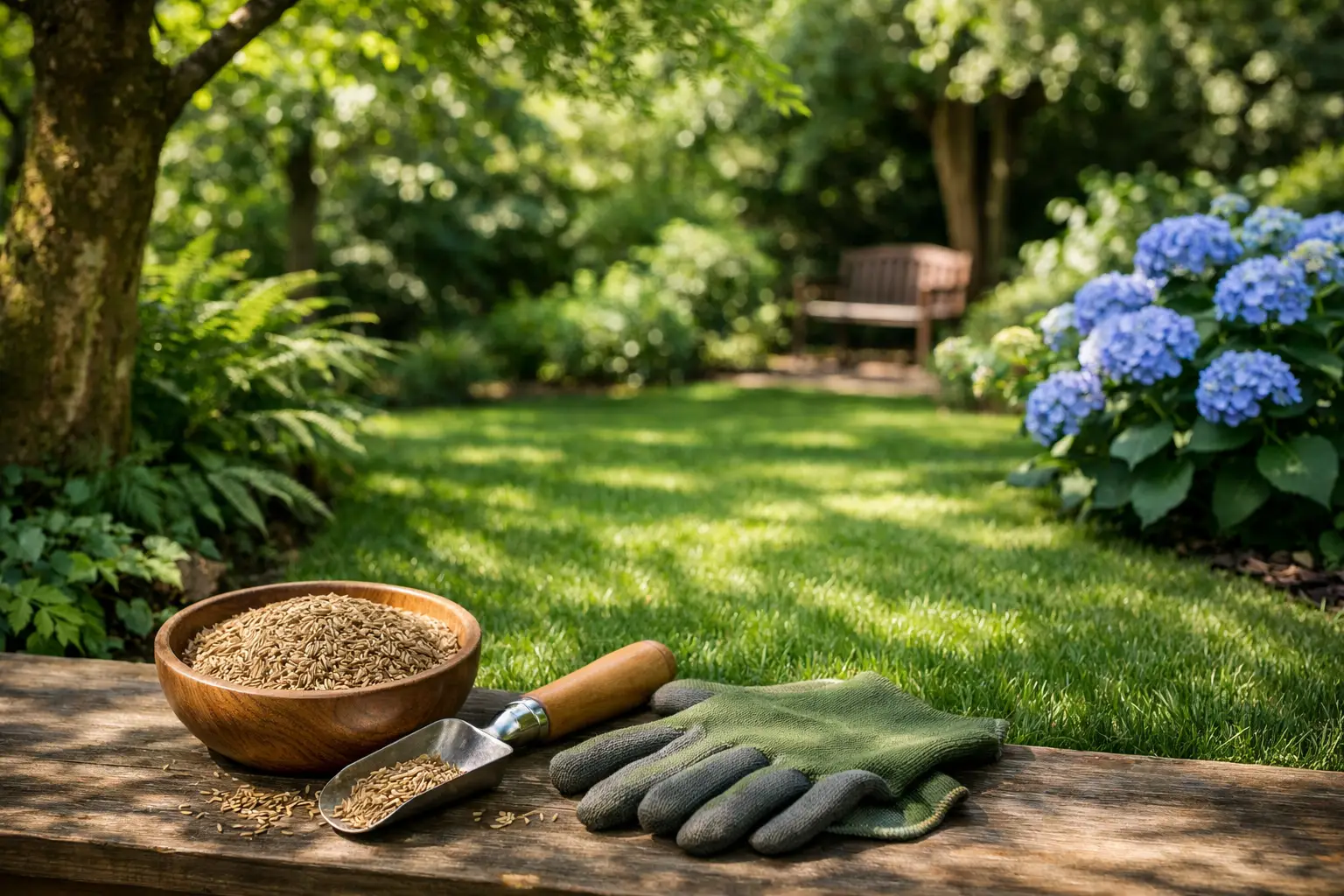
A lawn that thins out beneath trees or along a north-facing fence is not failing by chance. Shade changes everything - light levels, soil temperature, moisture retention and even how quickly moss moves in. If you are looking for the best grass seed for shade, the right answer is rarely a single species. It is usually a considered blend, chosen for the type of shade, the soil beneath it and how the lawn is actually used.
Most poor results come from a simple mistake: sowing a general-purpose seed mix in an area that never receives enough direct light to support vigorous ryegrass growth. Standard family lawn mixtures often perform well in open ground, but in shaded positions they can struggle, thin out and leave bare patches. Shade-tolerant lawns need finer-leaved grasses with better low-light performance and a management plan that accepts slower growth.
What makes the best grass seed for shade?
The best grass seed for shade is one engineered around species that can maintain density with reduced sunlight. In UK conditions, that usually means a strong proportion of fine fescues, sometimes supported by smooth-stalked meadow-grass or a modest amount of dwarf perennial ryegrass where traffic tolerance matters.
Fine fescues are often the backbone of a shade mix because they cope better with lower light intensity than ryegrass-heavy blends. They also produce a finer texture, which suits ornamental and domestic lawns. Chewings fescue and slender creeping red fescue are particularly useful. Chewings fescue brings density and a neat finish, while creeping red fescue offers rhizomatous spread, helping the sward knit together over time.
Smooth-stalked meadow-grass has a role where recovery is important, though it is slower to establish. It spreads by rhizomes and can help a shaded lawn repair itself, but patience is required. Perennial ryegrass is the fastest out of the gate and excellent for wear, yet it is not usually the lead player in heavy shade. In partial shade, a small percentage can be beneficial. In deep shade, too much of it becomes a weakness rather than a strength.
That is the trade-off. The more shade tolerance you build into the blend, the more you often give up in terms of rapid establishment and hard-wearing performance. There is no point pretending otherwise.
Shade is not one condition
Before choosing seed, separate the area into one of three categories. Partial shade gets a few hours of direct sun or bright open light for much of the day. Dappled shade sits beneath trees and shifts through the day and seasons. Deep shade receives very little direct light at all, often beside walls, under dense evergreen cover or behind structures.
Partial shade gives you the most flexibility. A mixture containing fine fescues with some dwarf perennial ryegrass can establish reasonably quickly and still tolerate everyday garden use. Dappled shade often suits fescue-led blends best, especially where tree roots are competing for moisture and nutrients. Deep shade is where expectations need to be reset. Grass may establish, but even the best mixture will be thinner and slower than the same seed in open sun.
If the area is in near-permanent darkness, grass may not be the correct surface at all. That is not defeatist - it is sound groundsmanship. Sometimes the professional answer is to reduce the canopy, improve light penetration or use a non-grass ground cover where turf cannot be sustained.
The grass species that actually matter
For most UK gardens, the strongest shade seed blends rely on a few proven performers.
Chewings fescue is valuable for forming a dense, fine-textured lawn in reduced light. It is slower than ryegrass but visually far superior in shaded ornamental areas. Slender creeping red fescue adds lateral spread, which helps fill small gaps and improves long-term coverage.
Strong creeping red fescue can also feature in some mixtures, particularly where soil is lighter and you need extra knitting power. Hard fescue is drought tolerant and fine leaved, though its use depends on the exact site conditions. Smooth-stalked meadow-grass is useful in quality blends where recovery and rooting matter, but it will not give instant results.
Tetraploid ryegrass, while excellent for rapid establishment in many lawn situations, should be used carefully in shade. It brings larger seed, quick germination and stronger rooting, often within 7 to 14 days in suitable conditions, but heavy shade is not where ryegrass shows its best form. In partial shade or mixed-light gardens, it can still contribute to establishment speed and resilience. Under dense tree cover, fescues remain the more dependable choice.
How to choose the right mix for your garden
Start with the light, then assess the pressure the lawn takes. A front garden under light tree cover is different from a back lawn shaded by buildings where children and dogs use it daily.
If appearance is the priority, choose a fine fescue-dominant blend. You will get a more refined finish and better shade tolerance, but growth will be steadier and recovery from wear slower. If the lawn needs to handle more traffic, look for a balanced mixture with enough fescue to cope with lower light and enough ryegrass or meadow-grass to improve strength.
Soil moisture also matters. Shaded ground often stays damp for longer, which can favour disease pressure and moss. Under mature trees, the opposite can happen - the surface looks shaded, but roots strip out moisture quickly. That is why one “shade seed” does not fit every site.
A proper pre-seeding approach usually makes more difference than gardeners expect. Low-light areas benefit from good root development, so a balanced pre-seeder with phosphorus, such as a 6-9-6 analysis, can support establishment without forcing soft top growth. That matters in slower, cooler shaded soils.
Sowing shade-tolerant seed properly
Even the best seed will underperform if it is thrown on compacted, mossy ground and left to fend for itself. Shade areas need careful preparation because the environment is already working against establishment.
Start by removing debris, fallen leaves and any heavy moss layer. Moss is not the original problem, but it is a clear sign that light, drainage, fertility or all three are out of balance. Rake thoroughly to expose soil, relieve surface compaction if needed, and level the area before sowing.
Seed-to-soil contact is critical. Broadcast evenly at the recommended rate, then lightly rake or dress so the seed sits in the top few millimetres of soil. Do not bury it deeply. Shaded lawns are often slower to dry, so watering should be measured rather than excessive. Keep the surface consistently moist through germination, not saturated.
Timing helps. Early autumn is often the strongest window in the UK because the soil is still warm, moisture is more reliable and competition from summer stress drops away. Spring can also work, but shaded soils warm more slowly, so establishment may lag behind sunnier parts of the garden.
Why shaded lawns often fail after germination
A lawn can germinate well and still fade within weeks if aftercare is wrong. This is especially common in shade, where people either overwater or cut too short.
Mowing height should stay a little higher in low-light areas. A slightly taller leaf captures more available light and supports stronger recovery. Scalping a shaded lawn is one of the fastest ways to thin it out. Likewise, avoid overfeeding with high nitrogen in places that already stay damp and soft. You want steady, resilient growth, not lush tissue that invites disease.
Leaf litter must be kept under control. A thin layer left sitting for days blocks light and traps moisture at the crown. Under trees, regular clearing is part of the job, not an optional extra.
Where tree roots are dominant, overseeding may need to become an annual habit. That is normal. In some gardens, a shaded lawn is not a one-off project but an area that benefits from routine reinforcement each autumn.
When a shade mix is the wrong fix
There are times when seed choice is being asked to solve a structural problem. If branches are blocking nearly all daylight, if the soil is heavily compacted, or if drainage is poor enough for water to sit after rain, no grass blend will perform to its specification.
This is where a practical site correction pays off. Crown-lifting trees can improve light and airflow. Scarifying out moss and applying a targeted feed can help the grass compete. If weeds and moss have already taken hold, dealing with that pressure before sowing gives the new grass a fair start.
For homeowners who want trade-standard results and contractors who need predictable performance, that joined-up approach matters more than any label on the bag. A good shade seed is part of the system, not the whole system. Ransley Pro Grow builds its lawn range around that principle - matching seed, fertiliser and renovation inputs to the actual conditions on site.
The closing test is a simple one. If the area gets enough light for grass to photosynthesise, a fescue-led shade blend, sown into prepared ground and managed correctly, will usually outperform a standard lawn seed by a clear margin. If it does not get enough light, the honest answer is to change the environment or change the surface. That saves far more time than reseeding the same failing patch every spring.